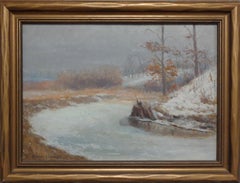
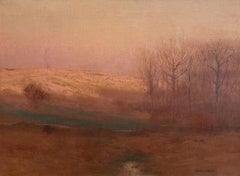
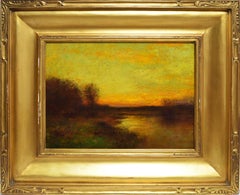
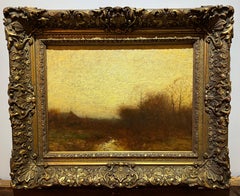
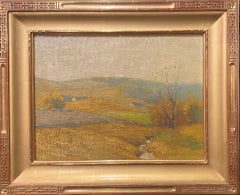
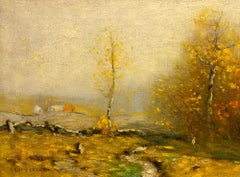
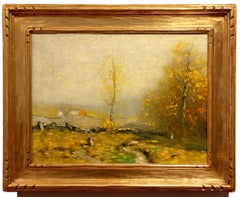
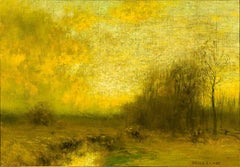
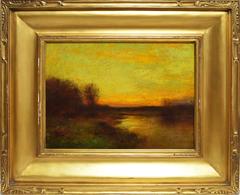
By Bruce Crane
Located in New York, NY
Signed (at lower right): BRUCE CRANE
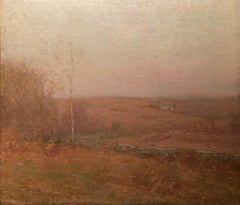
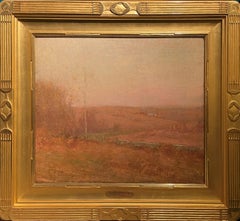
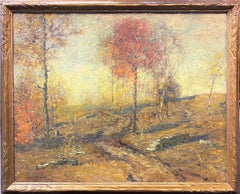
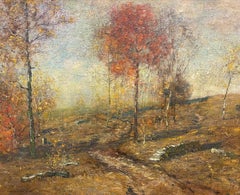
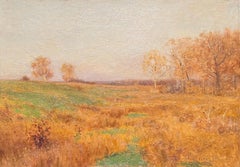
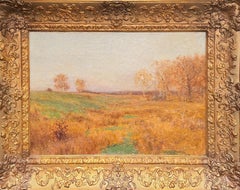
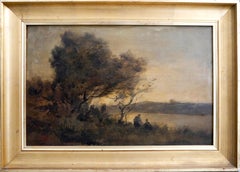
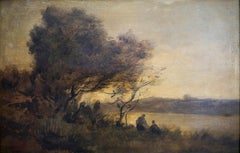
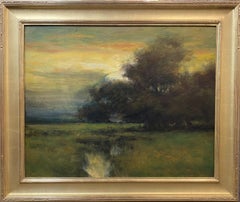
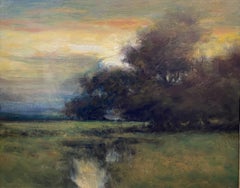
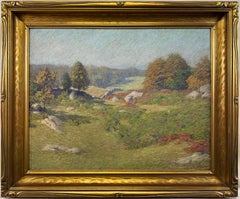
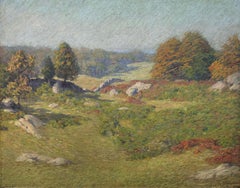
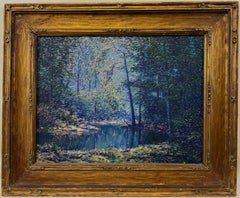
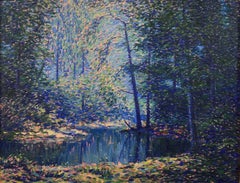
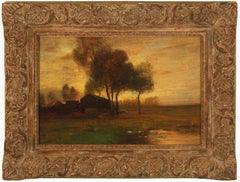
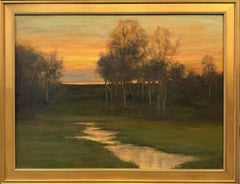
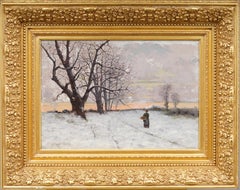
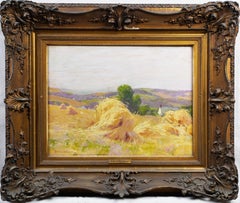
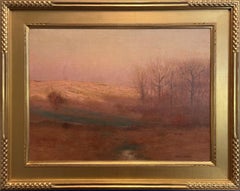
Bruce Crane was a highly successful, widely honored landscape painter in the decades that framed the turn of the century. He was an accomplished artist, best-known for his Barbizon-influenced and, later, tonalist, canvases. Crane turned decisively to tonalism after 1884. “Russet and Gold” may be the same work he exhibited by that name at the National Academy of Design in 1887. Because the title is descriptive, however, the identification remains tentative.
Crane was born in New York City, where he attended public schools and accompanied his father, an amateur painter, to art galleries and museums. Crane studied painting with Alexander Wyant. Wyant had begun his career as a landscape artist working in the panoramic, realist style of the Hudson River School, but was subsequently much influenced by a dovetailing constellation of the French Barbizon painters, the work of John Constable, and the influence of his friend, George Inness.
Crane’s early work reflects his training with Wyant. The young artist progressed rapidly, supplementing private study with classes at the recently founded Art Students League. He first exhibited at the National Academy of Design in New York City in 1876, and showed there almost every year thereafter until his death (missing only three years). He was named an associate in 1897, and a full academician in 1901. In 1878, Crane went to France, and returned there in 1880 and 1882. He studied in Grez-sur-Loing with Jean-Charles Cazin, a French landscape painter. At the same time, he established a winter studio in Manhattan and spent summers on Long Island.
Crane was much honored in his time. He exhibited a landscape owned by Andrew Carnegie in the World’s Columbian Exposition in Chicago in 1893. He won the Webb prize at the Society of American Artists in 1897...
Category
Late 19th Century American Realist Bruce Crane Art