Bruno Innocenti Art

to
2
Overall Height
to
2
2
2
2
2
2
2
2
2
11,770
2,886
2,541
1,621
2
Artist: Bruno Innocenti
Ritratto figurativo di fanciulla in gesso arte toscana del novecento

Ritratto figurativo di fanciulla in gesso arte toscana del novecento

By Bruno Innocenti

Located in Florence, IT

Questo ritratto femminile in gesso, h. 44 cm, è segnato con il numero di inventario 237 e corrisponde a "Ritratto di Albertina, 1959". nonostante non compaia la firma, la sua presenz...

Category

1950s Post-War Bruno Innocenti Art

Materials

Chalk

Ritratto di fanciullo figurativo fiorentino del XX secolo in gesso

Ritratto di fanciullo figurativo fiorentino del XX secolo in gesso

By Bruno Innocenti

Located in Florence, IT

"Ritratto di fanciullo" in gesso di h. 44 cm, risalente al 1959. Viene riportato nell'Inventario dell'artista al n. 69 ed è accompagnato dall'autentica del professor Marco Fagioli.

Category

1950s Post-War Bruno Innocenti Art

Materials

Chalk

Related Items
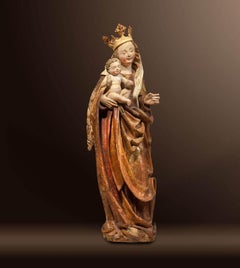
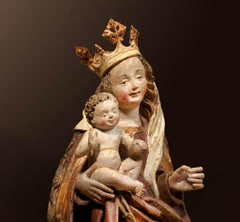
Virgin and Child
Virgin and Child

Virgin and Child, 1515/20

$180,000

H 23.63 in W 7.09 in

Virgin and Child

Located in Wien, Wien

OUTSTANDING MADONNA Bavaria Around 1515/20 Lime wood carved Original, polychrome version Height 60 cm This masterfully carved, full-round Madonna was created around 1515-20 in...

Category

16th Century Medieval Bruno Innocenti Art

Materials

Wood

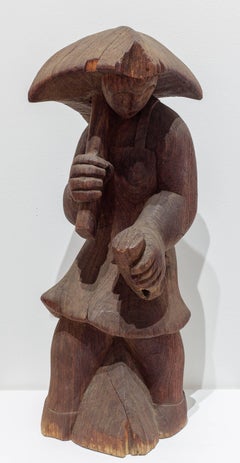
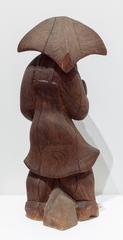
Woman with Square Umbrella

Woman with Square Umbrella

By Alexander Calder

Located in Palm Desert, CA

A sculpture in wood depicting a woman holding an umbrella. "Woman with Square Umbrella" by Post War artist Alexander Calder is signed underneath, "Calder." "Woman with a Square Umbre...

Category

1920s Post-War Bruno Innocenti Art

Materials

Wood

Mezuza - The twelve tribes - Shimon

Mezuza - The twelve tribes - Shimon

By Marc Chagall

Located in Jerusalem, IL

The Chagall mezuzah collection is a limited edition art project celebrating the art of one of the most iconic Jewish artist in history. This edition, ...

Category

Late 20th Century Bruno Innocenti Art

Materials

Screen

Mother & Child
Mother & Child

Bettina SeitzMother & Child, 2024

$2,651

H 10 in W 8 in D 5 in

Mother & Child

Located in Knowle Lane, Cranleigh

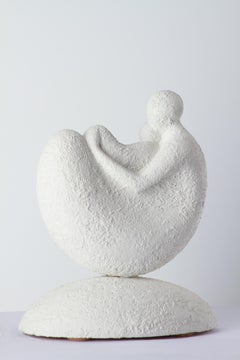
The sculpture titled "Mother & Child" by Bettina Seitz beautifully captures the intimate bond between a caregiver and an infant through its elegant form. Crafted from a unique white ...

Category

2010s Contemporary Bruno Innocenti Art

Materials

Stone

Corpus Christi
Corpus Christi

Corpus Christi, 1250

$48,000

H 43.12 in W 38.59 in

Corpus Christi

Located in Wien, Wien

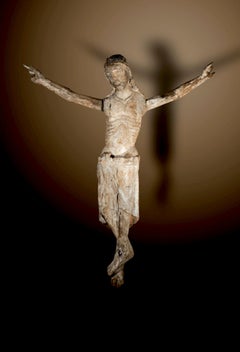
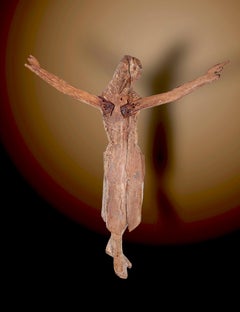
MUSEUM CORPUS CHRISTI Spain/Catalonia or Asturias Around 1250 Corpus hardwood, arms softwood Remains of the original polychrome setting Height 109.5...

Category

15th Century and Earlier Bruno Innocenti Art

Materials

Wood

Roman 18th century terracotta model for the sculpture of San Camillo de Lellis

Roman 18th century terracotta model for the sculpture of San Camillo de Lellis

Located in London, GB

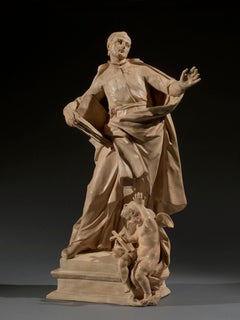
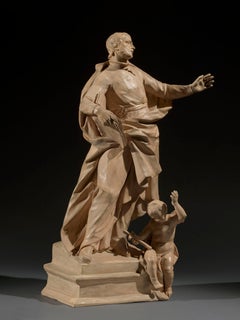
This remarkably fluid terracotta bozetto was made in preparation for Pietro Pacilli’s most important public commission, a large-scale marble statue of San Camillo de Lellis for the nave of St Peter’s Basilica in Rome. Expressively modelled, this terracotta sculpture is a rare and significant work made by a major Roman sculptor at a transformative moment of European sculpture. Pacilli began his working life on the great Baroque decorative projects initiated in the seventeenth century, but he found success as a restorer of ancient sculpture working to finish antiquities for a tourist market, becoming an important figure in the emergence of an archaeologically minded Neoclassicism. Pacilli trained Vincenzo Pacetti and provided important decorative work for the Museo Pio-Clementino, at the same time he is recorded restoring some of the most celebrated antiquities excavated and exported during the period. Pacilli was born into a family of Roman craftsmen, his father Carlo was a wood carver, and Pacilli is recorded working with him on the Corsini Chapel in San Giovanni Laternao as early as 1735. In 1738 his terracotta model of Joseph and Potiphar’s Wife won the first prize in the second class of the sculpture concorso at the Accademia di San Luca, this is particularly notable as Bartolomeo Cavaceppi came third. He worked as a carver and stuccoist completing works for the churches of San Marco and SS. Trinita dei Domeniciani Spagnoli. Pacilli operated as a sculptor and restorer of antiquities from his studio at the top of the Spanish Steps, close to Santa Trinita dei Monti, where he is listed as a potential vendor to the Museo Pio-Clementino in 1770. In 1763 Pacilli completed a silver figure of San Venanzio for the treasury of San Venanzio. He is recorded as Pacetti’s first master and it was evidently through Pacilli that he began to acquire his facility as a restorer of ancient sculpture. Pacilli, at his studio ‘poco prima dell’Arco della Regina alla Trinita dei Monti,’ exercised, what the nineteenth-century scholar, Adolf Michaelis called ‘rejuvenating arts’ on several important pieces of classical sculpture, including in 1760 the group of a Satyr with a Flute for the natural brother of George III, General Wallmoden, Hanovarian minister at Vienna. In 1765, Dallaway and Michaelis record that Pacilli was responsible for the restorations, including the addition of a new head, to the Barberini Venus which he had acquired from Gavin Hamilton. The Venus was then sold to Thomas Jenkins, who in turn passed it on to William Weddell at Newby Hall. In 1767 Pacilli exported a series of ancient busts ‘al naturale’ including portraits of Antinous, Julius Ceaser and Marus Aurelius, also a statue of a Muse and a Venus. As early as 1756 Pacilli seems to have been operating as an antiquarian, helping to disperse the collection of the Villa Borrioni. Pacilli supplied sculpture to notable British collectors, including Charles Townley, who on his first trip to Italy purchased the Palazzo Giustiniani statue of Hecate from Pacilli. Pacilli was involved with the Museo Pio Clementino from its conception, supplying busts of Julius Ceaser and a Roman Woman as well as completing stucco putti surmounting the arms of Pope Bendedict XIV to signal the entrance to the new Museo Critiano. In 1750 Il Diario Ordinario del Chracas announced that Pacilli had begun work on a sculpture of San Camillo de Lellis for St Peter’s. Camillo de Lellis founded his congregation, the Camillians, with their distinctive red felt crosses stitched on black habits in 1591. Having served as a soldier in the Venetian army, Camillo de Lellis became a novitiate of the Capuchin friars, he moved to Rome and established a religious community for the purpose of caring for the sick. In 1586 Pope Sixtus V formerly recognised the Camillians and assigned them to the Church of Santa Maria Maddalena in Rome. Camillo de Lellis died in 1614 and was entombed at Santa Maria Maddalena, he was canonised by Benedict XIV on June 26, 1746. It was an occasion that prompted the Camillians to make a number of significant artistic commissions, including two canvases by Pierre Subleyras showing episodes from San Camillo’s life which they presented to Benedict XIV. In 1750 Pacilli was commissioned to fill one of the large niches on the north wall of the nave with a sculpture of San Camillo. The present terracotta bozetto presumably had two important functions, to enable Pacilli to work out his ideas for the finished sculpture and at the same time to show his design to the various commissioning bodies. In this case it would have been Cardinal Alessandro Albani and Monsignor Giovan Francesco Olivieri, the ‘economo’ or treasurer of the fabric of St Peter’s. Previously unrecorded, this terracotta relates to a smaller, less finished model which has recently been identified as being Pacilli’s first idea for his statue of San Camillo. Preserved in Palazzo Venezia, in Rome, the terracotta shows San Camillo with his left hand clutching his vestments to his breast; the pose and action more deliberate and contained than the finished sculpture. In producing the present terracotta Pacilli has expanded and energised the figure. San Camillo is shown with his left hand extended, his head turned to the right, apparently in an attempt to look east down the nave of St Peter’s. The model shows Pacilli experimenting with San Camillo’s costume; prominently on his breast is the red cross of his order, whilst a sense of animation is injected into the figure through the billowing cloak which is pulled across the saint’s projecting right leg. The power of the restrained, axial contrapposto of bent right leg and outstretched left arm, is diminished in the final sculpture where a baroque fussiness is introduced to the drapery. What Pacilli’s terracotta demonstrates, is that he conceived the figure of San Camillo very much in line with the immediate tradition of depicting single figures in St Peter’s; the rhetorical gesture of dynamic saint, arm outstretched, book in hand, head pointed upwards was perhaps borrowed from Camillo Rusconi’s 1733 sculpture of St. Ignatius...

Category

18th Century Baroque Bruno Innocenti Art

Materials

Terracotta

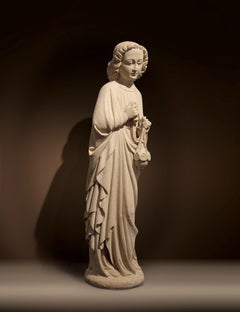
Youth with censer, Il-de-France Around 1285

Youth with censer, Il-de-France Around 1285

Located in Wien, Wien

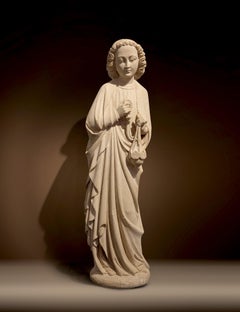
With a style-critical analysis by Dr. Arthur Saliger, former curator of the medieval department in the Belvedere, Vienna and a scientific pigment analysis by Prof. Dipl.Ing. Dr. Manf...

Category

15th Century and Earlier Bruno Innocenti Art
Materials

Limestone

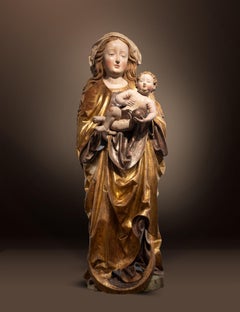
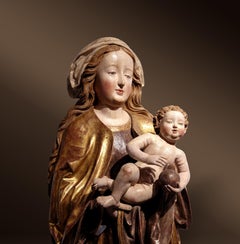
Museum Madonna
Museum Madonna

Nikolaus WeckmannMuseum Madonna, 1500

$428,000

H 51.97 in W 17.72 in

Museum Madonna

Located in Wien, Wien

Museum Madonna Nikolaus Weckmann Ulm 1481 - 1526 Ulm Carved limewood Polychrome painted & gilded Height 132 cm Niklaus Weckmann was an important sculptor who was active in the l...

Category

15th Century and Earlier Bruno Innocenti Art
Materials

Wood

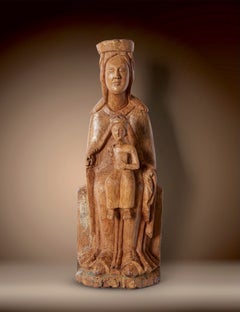
The Enthroned Madonna – Sedes Sapientiae, Second half of the 12th century

The Enthroned Madonna – Sedes Sapientiae, Second half of the 12th century

Located in Wien, Wien

SEDES SAPIENTIAE Pornic / Loire-Atlantique, France Second half of the 12th century Carved from walnut Remnants of polychrome paint Height 61 cm Bibliography: Illustrated in “THE STU...

Category

15th Century and Earlier Bruno Innocenti Art
Materials

Wood

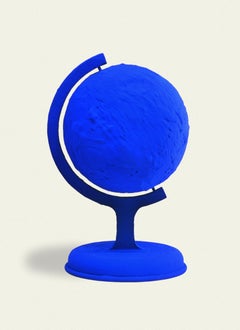
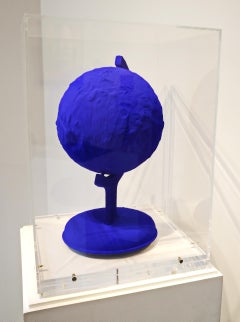
Yves Klein Blue Earth Sculpture IKB Pigment Plaster Cast in Plexiglas Box

Yves Klein Blue Earth Sculpture IKB Pigment Plaster Cast in Plexiglas Box

By Yves Klein

Located in Paris, FR

Concieved in 1957, this edition started to be executed in 1988 IKB pigment and synthetic resin on plaster cast, in plexiglas, signed Rotraut Klein Moquay and numbered HC XXX/L on the base on a label affixed under the base. 300 editions numbered from “1/300” to “300/300″ 50 editions numbered from”HCI/L” à “HC L/L” H. 36 cm With the Plexiglas box: 41.5 x 29.5 x 29.5 cm Yves Klein is an influential French conceptual artist who works in a wide variety of fields. Arguably best known for his use of a very vibrant shade of blue, he began to create his monochrome series in the 1950s by developing and patenting his own signature shade known as IKB or International Klein Blue. Born April 28, 1928 in Nice, the artist founded the New Realism movement with the art critic Pierre Restany...

Category

1980s Post-War Bruno Innocenti Art
Materials

Plaster, Synthetic Resin, Pigment

Previously Available Items
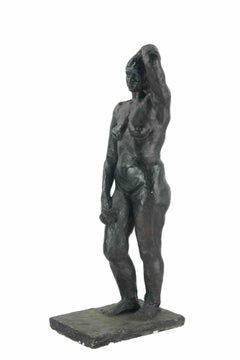
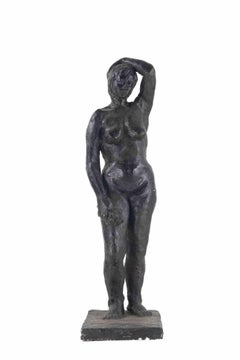
Bruno Innocenti, Female Nude, 1966-1967, wood, signed and dated

Bruno Innocenti, Female Nude, 1966-1967, wood, signed and dated

By Bruno Innocenti

Located in Florence, IT

From the 1950s Bruno Innocenti started being interested in wood sculpture. He experimented new forms, modeling the figures in order to adapt them to the pre-existing movement of the ...

Category

1660s Post-War Bruno Innocenti Art
Materials

Wood

Bruno Innocenti art for sale on 1stDibs.

Find a wide variety of authentic Bruno Innocenti art available for sale on 1stDibs. You can also browse by medium to find art by Bruno Innocenti in plaster, bronze, ceramic and more. Much of the original work by this artist or collective was created during the 20th century and is mostly associated with the post-war style. Not every interior allows for large Bruno Innocenti art, so small editions measuring 15 inches across are available. Bruno Innocenti art prices can differ depending upon medium, time period and other attributes. On 1stDibs, the price for these items starts at $4,313 and tops out at $8,871, while the average work can sell for $4,645.