Charles Jervas Paintings

Irish, 1670-1739
Charles Jervas was born in Dublin in 1675 who later lived in England. After moving to England, Jervas became an apprentice to the painter Sir Godfrey Kneller. He later studied drawing in Rome and then returned (c. 1709) to England. Succeeding Kneller, he became court painter to the English kings George I and George II. His home became a centre for literary figures, among them Alexander Pope and Jonathan Swift, whose portraits Jervas painted, in addition to that of George II (1728). He produced a translation of Miguel de Cervantes’s Don Quixote (published posthumously, with his surname spelled Jarvis, in 1742).
to
1
Overall Height
to
1
1
1
1
1
1
1
1
1
1
1
757
752
734
671
1
1
Artist: Charles Jervas
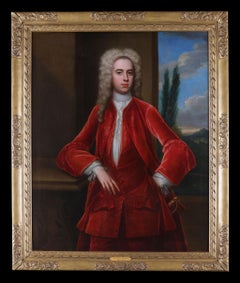
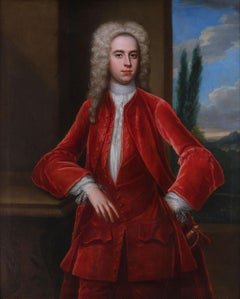
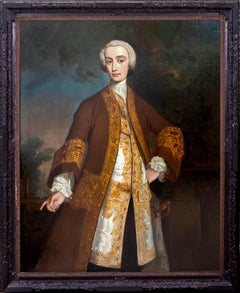
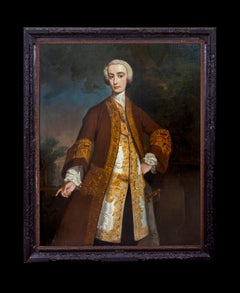
Portrait Of 1st Baron Hawkstone, Sir Rowland Hill, Tory MP for Lichfield

Portrait Of 1st Baron Hawkstone, Sir Rowland Hill, Tory MP for Lichfield

By Charles Jervas

Located in Blackwater, GB

Portrait Of 1st Baron Hawkstone, Sir Rowland Hill, Tory MP for Lichfield (1705-1783) by Charles JERVAS (1675-1739) Large 18th Century portrait of Baron Hawkstone, Sir Rowland Hill,...

Category

18th Century Charles Jervas Paintings

Materials

Canvas, Oil

Related Items
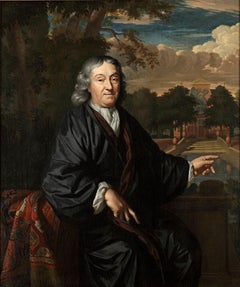
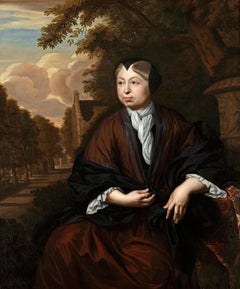
Male and female portrait, both in silk kimono, possibly textile dealers

Male and female portrait, both in silk kimono, possibly textile dealers

By Christoffel Lubieniecki

Located in Amsterdam, NL

CHRISTOFFEL LUBIENIECKI (1659-1729) Pair of portraits of a gentleman and a lady, both in silk kimono, before a country house (circa 1680) Indistinctly signed “C.......” on a box under the man’s left hand Oil on canvas, 79.5 x 67 cm each Both sitters are portrayed wearing a silk “Japanese” coat. During the second half of the seventeenth the Japanese silk coat, an adapted Japanese kimono, became a real vogue in the Dutch elite. The exclusive Dutch trade contacts with Japan can explain the popularity of the kimono-style silk coats in the Netherlands. Everybody who could afford one, dressed in such a fashionable and comfortable coat and, like the present sitters, some proud owners had themselves portrayed in a “Japanese” coat often together with an oriental carpet to underline their standing and international connections. These portraits are the work of the Polish-born portraitist Christoffel Lubieniecki (also known as Lubienitski, Lubinitski or Lubiniecki) Lubieniecki was first trained in Hamburg under Julian Stuhr and after 1675 in Amsterdam under Adriaen Backer and Gerard de Lairesse. He specialized in landscapes, generally of an Italianate character, and in portraits. The loving execution of these contented burghers, enjoying the garden vistas of their country house, places him alongside Amsterdam portraitists such as Constantijn Netscher and Michiel van Musscher...

Category

1680s Old Masters Charles Jervas Paintings

Materials

Canvas, Oil

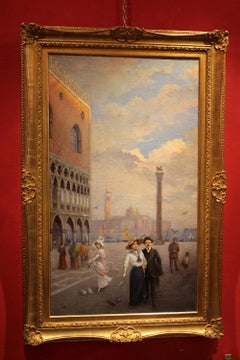
Venice Landscape Italian Oil on Canvas Painting in Gilt Wood Frame, Belle Epoque

Venice Landscape Italian Oil on Canvas Painting in Gilt Wood Frame, Belle Epoque

Located in Firenze, IT

This delightful turn of the century (early 20th century) oil on canvas painting represents an Italian landscape with one of the most famous squares in the world: Piazza San Marco in ...

Category

Early 20th Century Impressionist Charles Jervas Paintings

Materials

Canvas, Oil

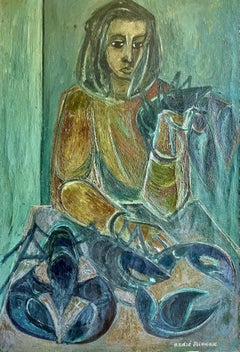
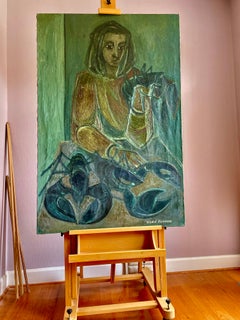
"Femme et Homards" (Woman with Lobsters), 1948 -André Minaux (French, 1923-1986)

"Femme et Homards" (Woman with Lobsters), 1948 -André Minaux (French, 1923-1986)

By Andre Minaux

Located in Berlin, MD

Behold a mid-century marvel by André Minaux, a titan of the French School whose stylized Social Realist visions continue to captivate the art world. Painted in 1948, “Femme et Homard...

Category

Mid-20th Century French School Charles Jervas Paintings

Materials

Cotton Canvas, Oil

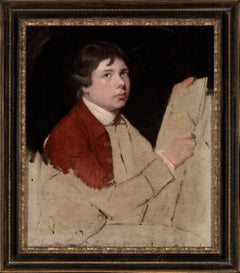
Self-Portrait
Self-Portrait

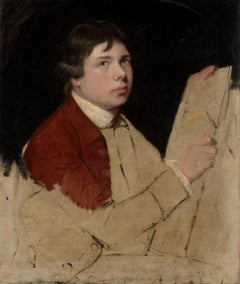
John Hamilton MortimerSelf-Portrait, 1758

$224,612

H 30.01 in W 25.12 in

Self-Portrait

By John Hamilton Mortimer

Located in London, GB

Oil on canvas 30 x 25 ⅛ inches; 762 x 638 mm Verso: after Sir Joshua Reynolds, a self-portrait Not signed Painted c. 1758 Collections: Philip Gell (1775–1842), Hopton Hall, Derbyshire; By inheritance at Hopton Hall to his daughter, Isabella, who married William Pole Thornhill, who renounced Hopton and its contents in favour of his kinsman, Henry Chandos-Pole-Gell (1829–1902); By descent to his son, Brigadier General Harry Chandos-Pole-Gell (1872–1934), who sold Hopton Hall in 1918 and moved the family to Newnham Hall, Northamptonshire; By descent to his son, Lt Colonel John Chandos-Pole (1909–1993), Newnham Hall; Thence by descent until 2015, when acquired By descent to 2015; Lowell Libson & Jonny Yarker Ltd. Literature: Algernon Graves and Walter V. Cronin, A History of the works of Sir Joshua Reynolds P.R.A., London, 1901, IV, p. 1394. David Manning...

Category

18th Century Old Masters Charles Jervas Paintings

Materials

Canvas, Oil

Oil on Canvas Painting Portrait of the Italian Noble Family of Zanardi Count

Oil on Canvas Painting Portrait of the Italian Noble Family of Zanardi Count

By Lucia Casalini Torelli

Located in Firenze, IT

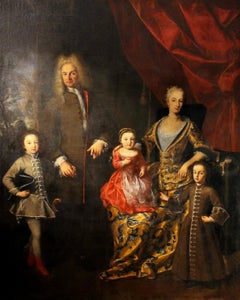
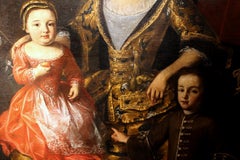
This museum quality old master oil on canvas formal portrait painting depicting the family of the Count Zanardi is signed by the artist- the female painter Lucia Casalini Torelli- and published in a book dedicated to Casalini Torelli’s workshop and academy. This palatial masterpiece artwork comes directly from the ancient Villa Maraini Guerrieri - Palidano di Gonzaga (Mantua), an historic Italian heritage building owned by the descendants of the family portrayed for more than two centuries, until 1998. The big scale of this oil on canvas masterpiece painting states the relevance of Lucia Casalini Torelli as a painter. The present artwork is a formal family portrait painting that aim to introduce the characters depicted according to their social role in the society. The noble family is all gathered under a loggia overlooking a park, the landscape in the background is partially covered by a beautiful red cloth on the right side. The father stands up and holds the hand of his eldest son, proudly introducing his future heir. The son wears a light-blue dress and red boots, he is depicted in a serious pose holding a black tricorn hat under his arm and a rapier sword on his belt. The mother wears an elegant gold and dark green brocade dress, she is sitting with her youngest daughter on her knees while her second son is by her side. The little daughter wears a lovely long red and dress with white lace and holds an apple on her hand. The son stands next to his mother and is dressed in a brown priestly clothes. This palatial old masters piece was probably painted in 1740 due to the similarities with Cardinal Doria’ s portrait, now on display at the Doria Palace Museum, the official residence of the Prince of Genoa. The painting features original canvas (“prima tela”) and antique original patina, it is in excellent overall condition considering the age, use and its large scale. A formal detailed condition report and the results of the inspection with the UV lamp accompanied by photos is available on request. As well as for its exceptional quality and quite perfect state of conservation, this painting is particularly important and even more valuable both for the artist who painted it and for its absolutely exclusive provenance. Lucia painted the most prominent and powerful noble families of her time, the location of these paintings is unknown to the art market as it is extremely likely that the portraits are still kept in private collections. Furthermore, Lucia was one of the most appreciated artists of her time, so important that she was admitted as a member of the academy at a time when women were forbidden to attend these studies. In 1706, Felice Torelli...

Category

18th Century Old Masters Charles Jervas Paintings

Materials

Canvas, Oil

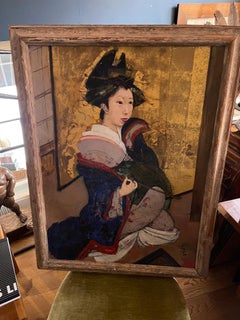
Portrait of a Geisha

Roland StrasserPortrait of a Geisha

$49,715

H 29.93 in W 18.51 in D 1.58 in

Portrait of a Geisha

By Roland Strasser

Located in Amsterdam, NL

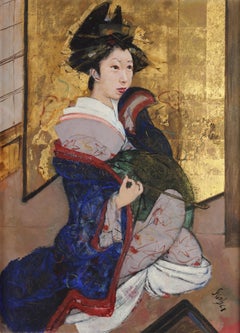
Roland Strasser (1895-1974) "Japanese Geisha" Signed lower right Oil and gold leaf on canvas, measures: 76 x 46 cm In fine white-wash wood frame. ...

Category

1930s Expressionist Charles Jervas Paintings

Materials

Gold Leaf

Sir Charles Frederick

Andrea CasaliSir Charles Frederick, 1748

$162,020

H 50.01 in W 40.01 in

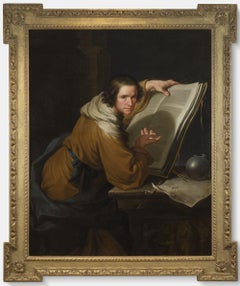
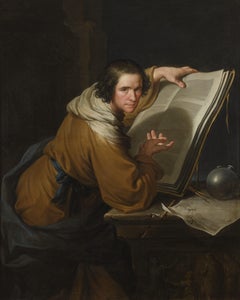
Sir Charles Frederick

Located in London, GB

Oil on canvas 50 x 40 inches; 127 x 101.6 cm Framed dimensions: 151.5 x 127 cm Inscribed on plinth: ‘VOTIS X ET XX’ Not signed Painted c.1748 Collections: Christie’s London, 23rd December 1954, lot.272; J. Singer; Somerville & Simpson Ltd, London, by 1985; The Matthiesen Gallery, London; Richard Feigen, New York; Matthew Rutenberg, New York to 2019; Lowell Libson and Jonny Yarker Ltd. Literature: Stella Rudolph, La Pittura del’ 700 a Roma, Milan, 1983, reproduced pl.133; Jacob Simon, Handel, a celebration of his life and times 1685-1759, exh. cat. London, (National Portrait Gallery), 1985, no.196; Catherine Whistler, Baroque & Later Paintings in the Ashmolean Museum, London, 2016, pp.102-105, reproduced p.104 Exhibited: London, National Portrait Gallery, Handel, a celebration of his life and times 1685-1759, 1985-86, no.196, reproduced p.198 This powerful portrait of the antiquarian and courtier Sir Charles Frederick was completed in 1748 by the Roman painter Andrea Casali. Frederick, as comptroller of the royal laboratory, one of the ‘great officers’ of the Board of Ordinance at Woolwich, had just been responsible for the famed pyrotechnic display celebrating the Peace of Aix-la-Chapelle: the so-called ‘Royal Fireworks’ for which George Frederick Handel composed music. Casali’s portrait pays tribute to Frederick’s role as comptroller of the royal laboratory, showing him with a firing diagram and mortar, it also points to Frederick’s interests as an antiquarian with the inclusion of antique relief. Casali had first met Frederick in Rome in 1738, where he had painted his portrait, Frederick subsequently encouraged Casali to travel to London. This probably accounts for the unusual format; rather than a modern man of science, Casali casts Frederick as an alchemist bent on some mystic discovery, as such, it is one of the most unusual portraits of the period. Andrea Casali was a pupil of Sebastiano Conca and then of Francesco Trevisani, who recommended him to the Spanish court in 1736. He enjoyed some success in Rome as a painter of frescoes and altarpieces, notably a large cycle of Scenes from the Life of St Dominic at the cloister of S. Sisto Vecchio, for which he was made a Knight of the Golden Spur in 1729. Casali began painting Grand Tourist portraits in Rome around 1738. His first portrait of Sir Charles Frederick is dated that year Ashmolean Museum, Oxford), it casts Frederick as a focused scholar, showing him seated at an elaborately carved console table, hard at work. In common with other Grand Tour portraiture of the period, Casali includes a famous Roman landmark in the background, in this case the façade of the Pantheon. Horace Walpole noted that it was thanks to the encouragement of ‘Mr Frederick and his Friends at Rome’ that Casali travelled to London in 1741. Charles Frederick was a fascinating Augustan polymath. Born at Fort St George, Madras, where his father, Sir Thomas Frederick, was governor, he successively matriculated at New College, Oxford (1725), was called to the Middle Temple (1728), became a Fellow of the Royal Society (1731) and Director of the Society of Antiquaries (1735). His interests were wide ranging. Frederick was an amateur architect, he designed the monument to Lucy, Lady Lyttleton, in Hagley Church and the monument to Thomas Miller, bishop of Waterford, in Highclere church, Hampshire. He was a numismatist and collector of antiquities, as well as an amateur scientist. It was in the last capacity that he was appointed comptroller of the royal laboratory at Woolwich and clerk of the deliveries in 1746, this was the most junior of the ‘great officers’ who made up the membership of the royal Board of Ordnance. This appointment came through the good offices of the master-general of the Ordnance, a fellow antiquarian, John, 2nd Duke of Montagu. As comptroller, Frederick was responsible for the fireworks celebration of the treaty of Aix-la-Chapelle, for which Handel composed his celebrated music. As Horace Walpole wrote to his cousin, Henry Seymour Conway: ‘Charles Frederick has turned all his virtu into fireworks, and, by his influence with the Ordnance has prepared such a spectacle for the proclamation of Peace as is to surpass all its predecessors of bouncing memory. It is to open with a concert of fifteen hundred hands, and conclude with so many thousand crackers all set to music, that all the men killed in the war are to be wakened with a crash, as if it was the day of judgement, and fall a-dancing, like the troops in the Rehearsal. I wish you could see him making squibs of his papillotes, and bronzed over with a patina of gunpowder, and talking himself still hoarser on the superiority that his fireworks will have over the Roman naumachia.’ Performed in Green Park, the fireworks were mounted on a temporary structure designed by the architect Giovanni Niccolò Servandoni decorated by Adrea Soldi and Casali. Casali’s second portrait of Frederick was completed following the success of the firework display. In this remarkable image, we discover Frederick at work, dressed in almost monastic garb, pouring over an impossibly large tome propped on an antique altar. The altar is identifiable as a Roman relief depicting Victory writing on a shield, the original is at Villa Medici in Rome, but was engraved by Pietro Santi Bartoli...

Category

18th Century Old Masters Charles Jervas Paintings
Materials

Canvas, Oil

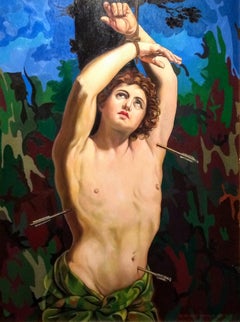
Neoclassical, renaissance, Biblical, St Sebastian "Martyrdom" (After Guido Reni)

Neoclassical, renaissance, Biblical, St Sebastian "Martyrdom" (After Guido Reni)

By Giancarlo Impiglia

Located in Bridgehampton, NY

Part of Giancarlo Impiglia's iconic "camouflage" series in which, deviating from his signature style, he expresses his classical education, flawless technique, and concerns about the...

Category

2010s Charles Jervas Paintings

Materials

Canvas, Oil

Boeckhorst, Rubens, Saint Ursula, Decorative Old Master, Woman, Baroque, Flemish

Boeckhorst, Rubens, Saint Ursula, Decorative Old Master, Woman, Baroque, Flemish

By Jan Boeckhorst

Located in Greven, DE

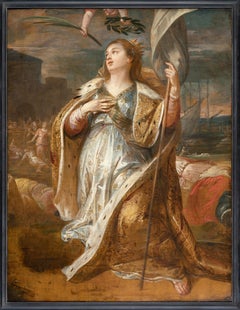
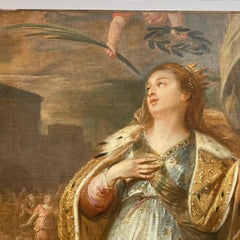
Johann Boeckhorst (Münster 1604 - Antwerp 1668) Saint Ursula Oil on canvas, 112 x 86 cm Provenance: New York, Christe's, 20.3.1981, lot 88 (as Van Diepenbeeck's circle) The presen...

Category

17th Century Baroque Charles Jervas Paintings

Materials

Canvas, Oil

Topaz from the Mirror Stone series (Portrait Painting - Hedy Lamarr)

Topaz from the Mirror Stone series (Portrait Painting - Hedy Lamarr)

Located in New York City, NY

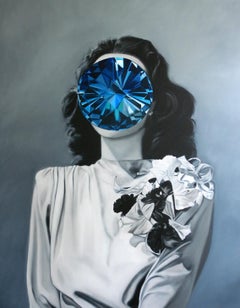
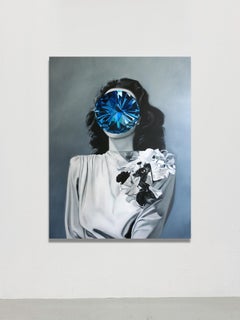
CAROLINA GOMEZ Emerald from the Mirror Stone series (Portrait Painting - Hedy Lamarr) 60 x 48 inches - Unique OIL ON CANVAS Carolina Gomez’s works have become known for the powerful...

Category

2010s Contemporary Charles Jervas Paintings

Materials

Canvas, Oil

Alfred Baldwin, Esq.

Alfred Baldwin, Esq.

By Edward John Poynter

Located in London, GB

Oil on unlined canvas, stamped 26 x 21¼ inches; 66.5 x 54 cm Framed dimensions: 95.5 x 83.5 cm ‘Wood & Co 190 Brompton Road London SW’ Signed with monogram and dated ‘1878’, centr...

Category

19th Century Old Masters Charles Jervas Paintings
Materials

Canvas, Oil

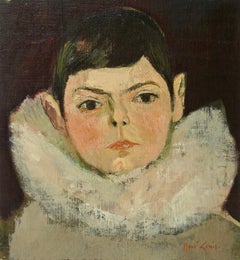
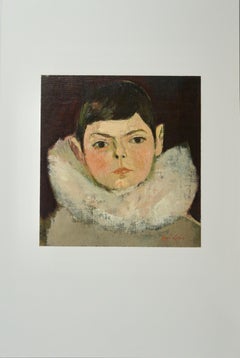
“Enfant A La Collarette” The Child in the Collar.

“Enfant A La Collarette” The Child in the Collar.

By René Genis

Located in Berlin, MD

Rene Genis (French 1922-2004) “Enfant A La Collarette” The Child in the Collart. Portrait of a disturbing young man with a rather defiant, petulant look in his expression. Dark eye...

Category

Mid-20th Century Charles Jervas Paintings

Materials

Canvas, Oil, Laid Paper

Previously Available Items
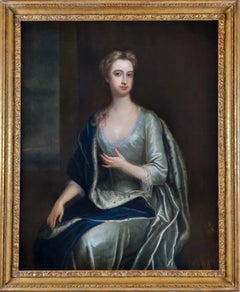
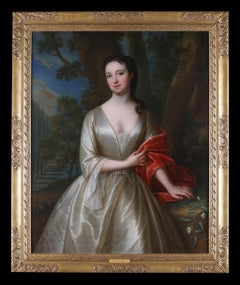
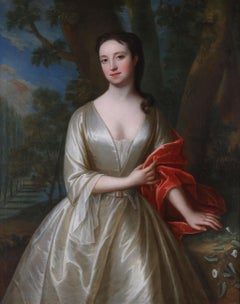
Portrait of Frances, Viscountess Scudamore in a Silver Dress & Blue Cloak

Portrait of Frances, Viscountess Scudamore in a Silver Dress & Blue Cloak

By Charles Jervas

Located in London, GB

Portrait of Frances, Viscountess Scudamore in a Silver Dress and Blue Cloak c.1709-1719 By Charles Jervas (1675-1739) This elegant and graceful portrait, presented by Titan Fine Ar...

Category

18th Century Old Masters Charles Jervas Paintings
Materials

Canvas, Oil

Portrait of a Man possibly Arthur Viscount Irwin, Temple Newsam Oil on canvas

Portrait of a Man possibly Arthur Viscount Irwin, Temple Newsam Oil on canvas

By Charles Jervas

Located in St. Albans, GB

Charles Jervas Possibly Arthur, 6th Viscount Irwin (Temple Newsam) Oil on Canvas Picture Size: 50 x 40" Outside Frame Size: 58 x 48" 1675 – 1739 Charles Jervas, who was born in Cl...

Category

Early 1700s English School Charles Jervas Paintings

Materials

Oil

Portrait of a Lady possibly Frances Thynne, Lady Worsley 1673-1750 Oil on canvas

Portrait of a Lady possibly Frances Thynne, Lady Worsley 1673-1750 Oil on canvas

By Charles Jervas

Located in St. Albans, GB

Charles Jervas Possibly Frances Thynne, Lady Worsley 1673-1750 Oil on Canvas Picture Size: 50 x 40" Outside Frame Size: 58 x 48" 1675 – 1739 Charles Jervas, who was born in Clonli...

Category

Early 1700s English School Charles Jervas Paintings

Materials

Oil

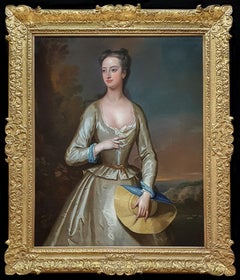
Portrait of Hannah Clements as a Shepherdess c.1730; by Charles Jervas

Portrait of Hannah Clements as a Shepherdess c.1730; by Charles Jervas

By Charles Jervas

Located in London, GB

This elegant and graceful portrait is said to represent Hannah Clements (1710-1781) nee Gore. Painted by Charles Jervas - who was in 1723 appointed to the post of King’s Painter by George I and in 1725 to George II - it is one of his finest and most impressive examples. Jervas was considered the supreme practitioner of female portraiture in the 1720s and 1730s, and was the foremost successor to Sir Godfrey Kneller after the latter's death in 1723. Presented in an outstanding carved and gilded antique frame, a remarkable work of art in itself. The sitter is captured in a moment of relaxation in a country landscape. Jervas continued the idiom of Sir Godfrey Kneller, his master, whilst introducing a new ease and suggestion of informality into his portraits. By depicting the sitter within the landscape with sheep Arcadian simplicity is being suggested. This draws from the tradition of pastoral literature and by the early 17th century was already popular in art; all educated individuals were familiar with Latin and Greek pastoral poetry. The mythological world of Arcady was an idyll that the ladies and gentlemen of the Court could inhabit in the guise of shepherds and shepherdesses. The pastoral tradition in literature and plays had been embraced by an aristocratic class since classical times. Life in the country was perceived as peaceful, contemplative and free of worry of hardships, a time to pursue pleasure. To be painted in such a manner created a tangible expression of power and wealth. When the portrait was painted the pastoral was so ingrained that the mere inclusion of such elements suggested Arcadia to the viewer. And this is further emphasised by painting the light to reflect sunset and the suggestion of tranquillity. Of course, the sitter did not live in such a place and this masterful painting was a flight from chaos to a tranquil world. Hannah Catherine Clements (nee Gore) (1710-1781) was the daughter of Rev. William Gore (and granddaughter of Sir William Gore, 3rd Baronet), and Honora Prittie. She married Nathaniel Clements (1705-1777), an important Irish politician and financial figure, in January 1730. Nathaniel became the main financial manager of the British and Irish Government in Ireland during the period, and was de facto Minister for Finance from 1740 to 1777. He had an extensive property portfolio, including Abbotstown, County Dublin, estates in County Leitrim and County Cavan and was developer of property in Dublin, including part of Henrietta Street where he lived at No. 7 from 1734 to 1757 in what was described as “Parisian luxury”. The couple had six children. Charles Jervas was born in Clonliske in Kings Country, Ireland in 1675. He received his artistic training in Kneller’s studio and was later, by the 1690’s, Kneller’s assistant. According to Vertue Jervas made small copies of the Raphael cartoons, then at Hampton Court, in about 1698 and sold them to Dr George Clarke of All Souls, Oxford who lent him £50 to embark on the then essential ‘grand tour’ in 1699. Taking in Paris and settling in Rome by 1703, he furthered his artistic training and became a voracious copyist of the old masters. George Vertue noted that he was known as “Carlo Jervasi” and was a “good, engenious painter”. On his return to London in 1709 Tatler (15th April 1709) remarked that he was 'the last great painter Italy has sent us' and noted that he “painted many ladies as shepherdesses and country girls”. The style that he cultivated made him Kneller's natural successor when that artist died in 1723. In 1727 he married a widow, Penelope Hume, a lady of considerable means (£20,000). In September 1738 he travelled to Italy seeking some reprieve from his asthma, returning in May 1739. He died in November that year and bequeathed £1000 to his friend, Pope, should he outlive his widow: this did not happen as she survived until 1747. The following spring his considerable art collection was sold in 2265 lots in a sale lasting 9 days. Apart from royalty Jervas gained the patronage of many of the ruling and intellectual elite. He moved in the highest circles of the literary and social world and became an intimate of Sir Robert Walpole and the poet Alexander Pope, to whom he gave drawing lessons. Jervas’ portrait of Elizabeth Felton, of Playford, Later Countess of Bristol (1677-1741) realised £45,410 at Christies London 11th June 2002, lot 13. His portrait of Lady Barbara North realised £42,050 at Christies London 11th July 2008, lot 55. Titan Fine Art are pleased to offer this work, which is representative of the artist’s best work. Provenance: Private collection, Beal House...

Category

18th Century Old Masters Charles Jervas Paintings
Materials

Canvas, Oil

Charles Jervas paintings for sale on 1stDibs.
Find a wide variety of authentic Charles Jervas paintings available for sale on 1stDibs. You can also browse by medium to find art by Charles Jervas in oil paint, paint, canvas and more. Much of the original work by this artist or collective was created during the 18th century and is mostly associated with the Old Masters style. Not every interior allows for large Charles Jervas paintings, so small editions measuring 20 inches across are available. Customers who are interested in this artist might also find the work of Studio of Sir Peter Lely, Sir Godfrey Kneller, and Giulio Di Sotto. Charles Jervas paintings prices can differ depending upon medium, time period and other attributes. On 1stDibs, the price for these items starts at $12,104 and tops out at $19,172, while the average work can sell for $14,516.