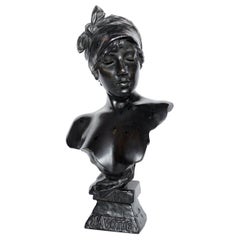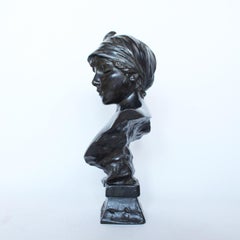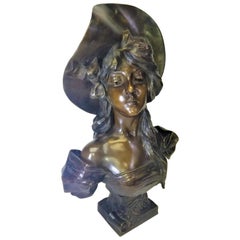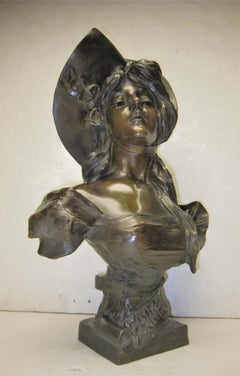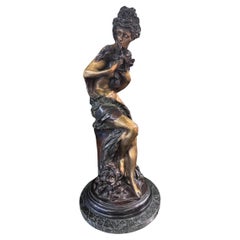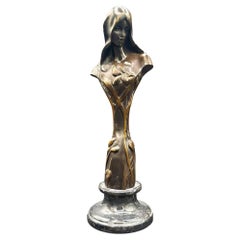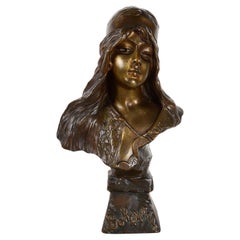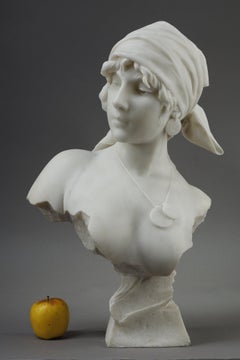
French Art Nouveau Bronze Bust Carmen by Emmanuel Villanis, circa 1900
By Emmanuel Villanis
Located in Boven Leeuwen, NL
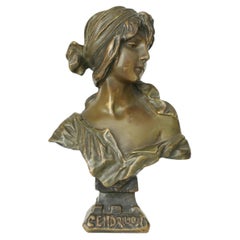
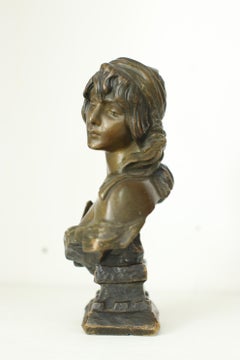
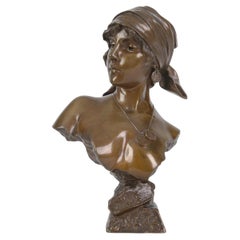
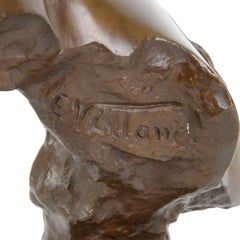
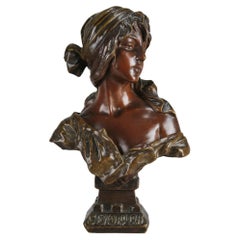
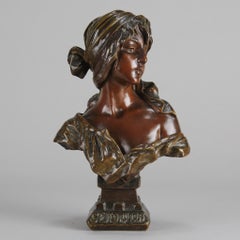
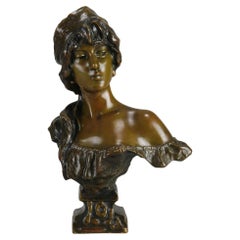
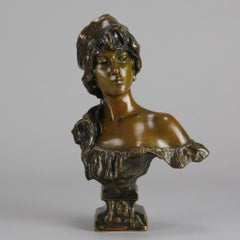
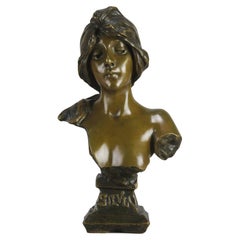
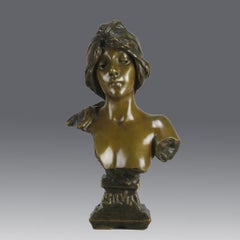
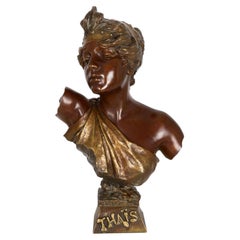
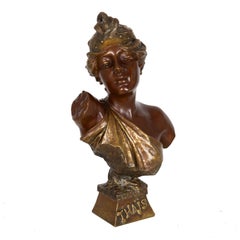
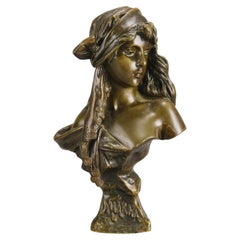
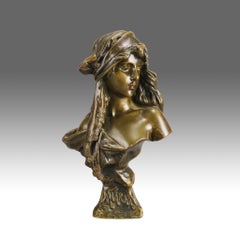
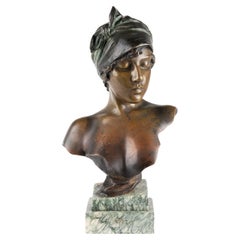
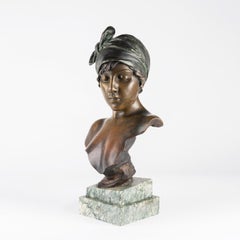
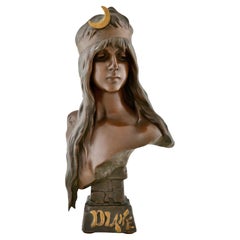
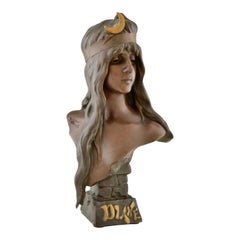
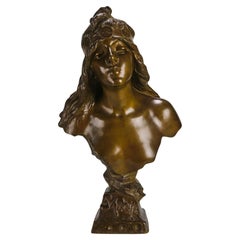
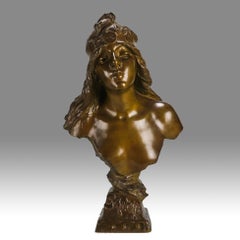
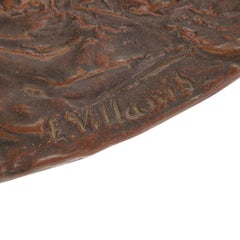
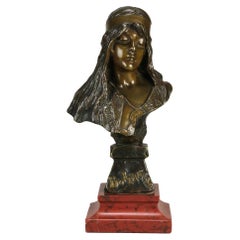
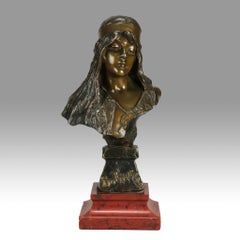
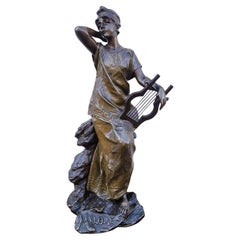
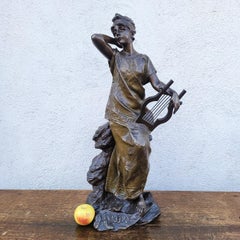
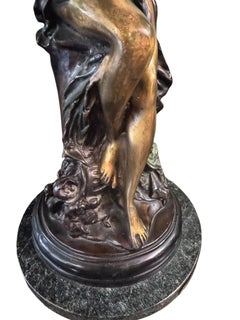
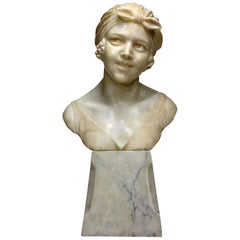
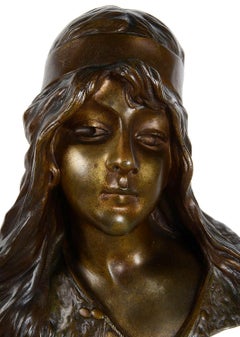
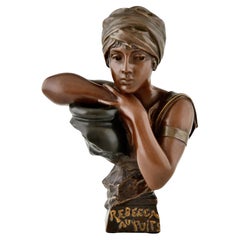
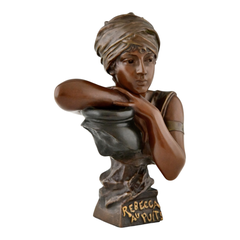
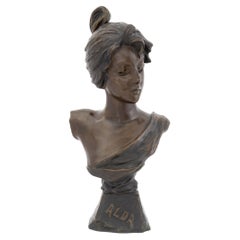
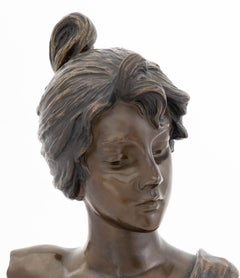
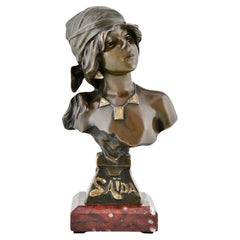
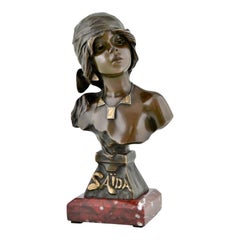
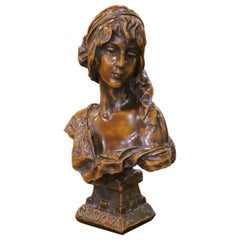
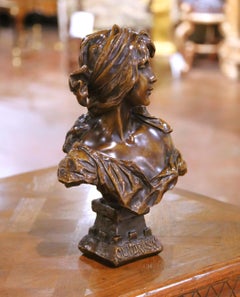
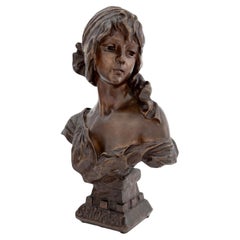
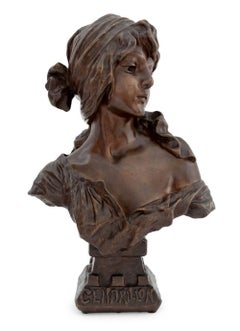
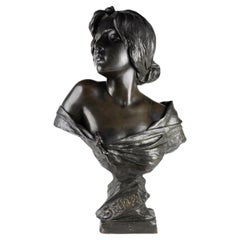
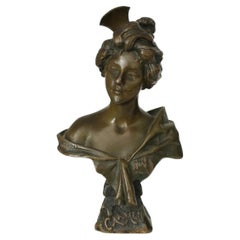
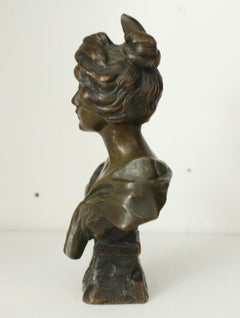
A small French Art Nouveau patinated bronze bust titled "Carmen", after a model by Emmanuel Villanis (1858–1914), circa 1900. The bust is signed "E. Villanis" in the bronze along the draped shoulder and carries the circular "Vrai Bronze Garanti Paris" foundry mark on the reverse of the socle. The sculpture The subject is a young woman with a composed, slightly downcast expression and a richly modelled upswept hairstyle, crowned by a tall decorative comb that gives the silhouette a theatrical, Spanish-inspired character fitting the name Carmen. Her shoulders are wrapped in a loose shawl with softly folded edges and tied drapery at the front. The integral tapered pedestal carries the title "Carmen" in relief. The dark brown patina shows warm bronze highlights on the face, shoulders, hair and raised details, and the contrast between the smooth skin and the textured hair, shawl and socle gives this small bronze real depth. About the artist Emmanuel Villanis was a French sculptor of Italian origin who worked in Paris and became known for his Belle Époque busts of women, often named after heroines from opera, literature and mythology. His models were cast in bronze and spelter in various sizes and remain popular with collectors of French decorative arts. Condition Good antique condition, with age-related wear, rubbing and small areas of patina loss to raised edges and drapery. No obvious restorations visible. Please see the photos for details. Dimensions: height 16 cm, width 9 cm, depth 6 cm. Display At 16 cm high, this is a charming cabinet-scale sculpture. Display it on a mantelpiece, a desk, a console or a bedside chest, on a bookshelf, or in a vitrine together with other French bronzes. It suits a Parisian apartment, a Belle Époque-inspired room, a collected interior or a contemporary setting where a single historic object provides focus. A companion bust by Villanis, "Cendrillon", is available in a separate listing in our storefront. Keywords: Emmanuel Villanis, Villanis bronze...
Early 20th Century French Art Nouveau Emmanuel Villanis Furniture
Bronze