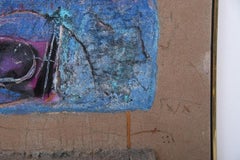
Enrico Donati Art

to
2
2
Overall Width
to
Overall Height
to
4
1
1
1
2
2
2
1
1
1
1
2
2
2
1
1
4
10,138
2,779
1,375
1,366
4
Artist: Enrico Donati
original lithograph
By Enrico Donati
Located in Henderson, NV
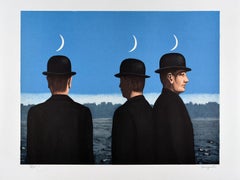
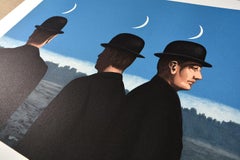
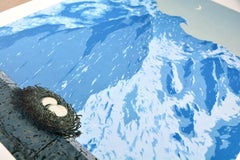
Medium: original lithograph. Printed in Paris by Mourlot and published by Pierre à Feu and Maeght Editeur for the Marcel Duchamp / André Breton project Surréalisme en 1947. Issued in...
Category

1940s Surrealist Enrico Donati Art

Materials

Lithograph

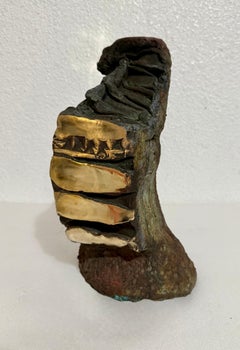
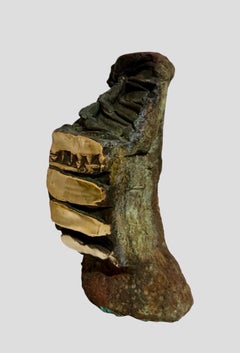
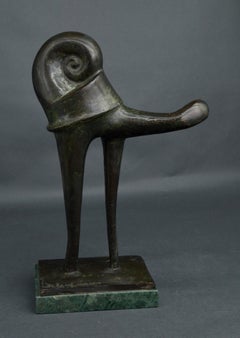
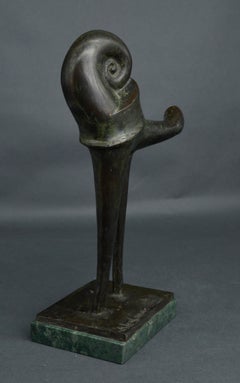
Enrico Donati Abstract Expressionist Brutalist Bronze Sculpture Surrealist Art
By Enrico Donati
Located in Surfside, FL
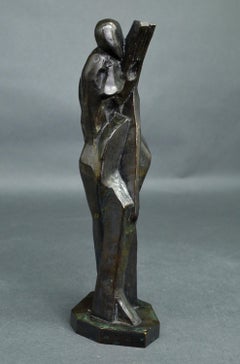
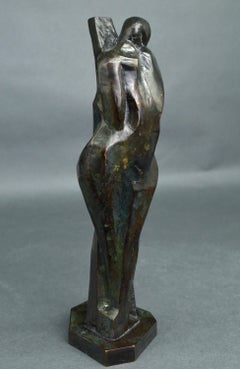
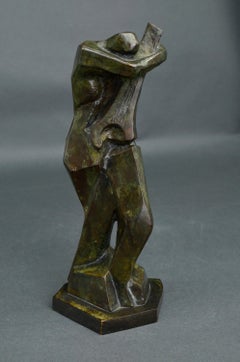
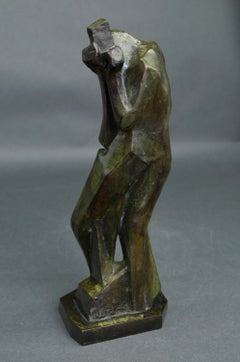
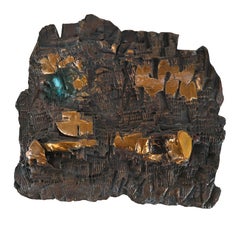
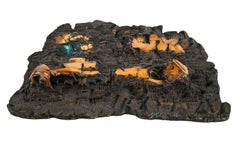
Enrico Donati (1909 – 2008) A Brutalist Bronze Surrealist Sculpture Totem. With a great patina and both rough and high polished textured bronze. Signed on side Dimensions: height ...
Category

20th Century Surrealist Enrico Donati Art

Materials

Bronze

New Year
By Enrico Donati
Located in Saratoga Springs, NY
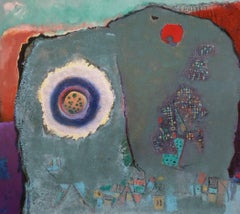
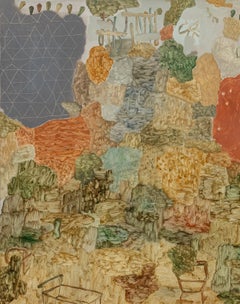
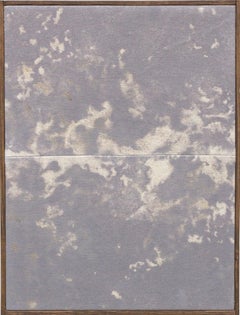
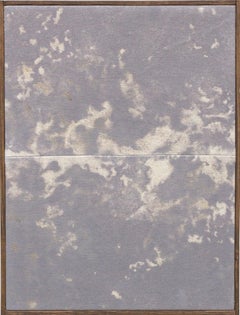
Signed & dated verso, 1992 Enrico Donati, a surrealist and abstract expressionist painter, was born in Milan, Italy in 1909 and died in Manhattan on April 25, 2008. He was known for his association with the surrealist movement of the 1940's, but his artwork continued to transform itself through the many trends that have occurred during his long career. In Italy he attended the Universita degli Studi in Pavia where he studied economics. In 1934, he moved to the United States settling in New York where he studied at the New School for Social Research and the Art Students' League. Considered the surviving dean of the Surrealist Movement and a member of the New York School, Donati painted with Ernst, Matta and Tanguy in the thirties and forties, and in particular with Andre Breton, regarded by many to be the grand master of Surrealism. He helped organize the Exposition Internationale du Surrealisme in Paris in 1947 where he exhibited three of his pieces. The Surrealists were known to avoid presenting or representing reality, and put the emphasis on invention and creativity by uncovering the poetic aspect of life with its kaleidoscopic multidimensional images, using reality only to enhance imagination. Donati survived the decline of Surrealism in the late 1940's by adapting his style to current art trends as he worked with new materials and textures throughout the 1950's. One trend with which he became involved was Abstract Expressionism, which originated in the 1940s, and became popular in the 1950s. It was a movement in which artists typically applied paint, rapidly and with force, to large canvases, in an effort to show feelings and emotions. Paint might be applied with large brushes, sometimes dripping or even throwing it onto canvas. Abstract Expressionist work is characterized by a strong dependence on what appears to be accident and chance, although it is actually highly planned. Donati held a retrospective at the Palais des Beaux-Arts in Brussels in 1961 and went on to exhibit at the Betty Parsons Gallery with other forerunners of American Abstract Expressionism: Mark Rothko, Barnett Newman, and Jackson Pollock. It was at this time that Donati created some of his most inventive and extraordinary work, some of which was featured in a survey exhibition at the Alter & Gil Gallery, Beverly Hills, California, in January 2000. He has held many teaching positions and has been an active lecturer, while continuing to add to his artistic repertoire. From 1960 to 1962 he was a Visiting Lecturer at Yale University, and from 1962 to 1972 a Member of the Yale University Council for the Arts and Architecture. He has had seventy-five one-man shows, among them an exhibit of new paintings at the Maxwell Davidson Gallery (57th St., New York) in the fall of 1997. Donati's work is held in collections throughout the world, and his work has appeared in over 300 articles and publications, two hard cover books...
Category

1990s Abstract Enrico Donati Art

Materials

Cotton Canvas, Mixed Media

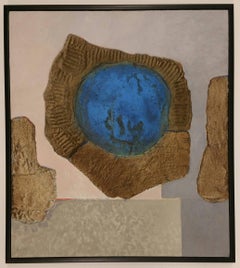
No Exit
By Enrico Donati
Located in Saratoga Springs, NY
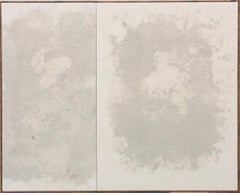
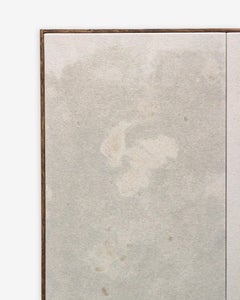
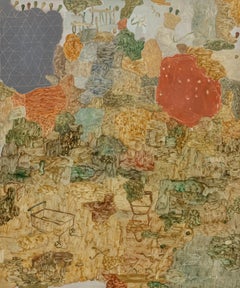
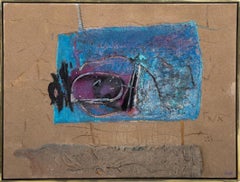
Signed lower right and dated & titled verso. Enrico Donati, a surrealist and abstract expressionist painter, was born in Milan, Italy in 1909 and died in Manhattan on April 25, 2008. He was known for his association with the surrealist movement of the 1940's, but his artwork continued to transform itself through the many trends that have occurred during his long career. In Italy he attended the Universita degli Studi in Pavia where he studied economics. In 1934, he moved to the United States settling in New York where he studied at the New School for Social Research and the Art Students' League. Considered the surviving dean of the Surrealist Movement and a member of the New York School, Donati painted with Ernst, Matta and Tanguy in the thirties and forties, and in particular with Andre Breton, regarded by many to be the grand master of Surrealism. He helped organize the Exposition Internationale du Surrealisme in Paris in 1947 where he exhibited three of his pieces. The Surrealists were known to avoid presenting or representing reality, and put the emphasis on invention and creativity by uncovering the poetic aspect of life with its kaleidoscopic multidimensional images, using reality only to enhance imagination. Donati survived the decline of Surrealism in the late 1940's by adapting his style to current art trends as he worked with new materials and textures throughout the 1950's. One trend with which he became involved was Abstract Expressionism, which originated in the 1940s, and became popular in the 1950s. It was a movement in which artists typically applied paint, rapidly and with force, to large canvases, in an effort to show feelings and emotions. Paint might be applied with large brushes, sometimes dripping or even throwing it onto canvas. Abstract Expressionist work is characterized by a strong dependence on what appears to be accident and chance, although it is actually highly planned. Donati held a retrospective at the Palais des Beaux-Arts in Brussels in 1961 and went on to exhibit at the Betty Parsons Gallery with other forerunners of American Abstract Expressionism: Mark Rothko, Barnett Newman, and Jackson Pollock. It was at this time that Donati created some of his most inventive and extraordinary work, some of which was featured in a survey exhibition at the Alter & Gil Gallery, Beverly Hills, California, in January 2000. He has held many teaching positions and has been an active lecturer, while continuing to add to his artistic repertoire. From 1960 to 1962 he was a Visiting Lecturer at Yale University, and from 1962 to 1972 a Member of the Yale University Council for the Arts and Architecture. He has had seventy-five one-man shows, among them an exhibit of new paintings at the Maxwell Davidson Gallery (57th St., New York) in the fall of 1997. Donati's work is held in collections throughout the world, and his work has appeared in over 300 articles and publications, two hard cover books...
Category

1960s Abstract Expressionist Enrico Donati Art

Materials

Canvas, Mixed Media

Related Items
"Symphony" - Stunning Dynamic Abstract Expressionist Painting in Cool Palette
By Masri Hayssam
Located in Carmel, CA
Masri Hayssam (Lebanese, Italian, born 1965) "Symphony" 2019 Oil Paint, Acrylic Paint, Mixed Media, Canvas, Stretcher Bars The artist signed the bottom left and the back of the paint...
Category

2010s Abstract Expressionist Enrico Donati Art

Materials

Canvas, Mixed Media, Oil, Acrylic, Stretcher Bars

Gymnast (bust), Bronze Sculpture
By Richard MacDonald
Located in Aventura, FL
Bronze sculpture with marble base. Incised artist signature and date. Sculpture size 13.5 x 7 x 6 inches (including base). Sculpture is in excellent condition (marble base has a c...
Category

1980s Surrealist Enrico Donati Art

Materials

Bronze

Gymnast (bust),  Bronze Sculpture
$4,875 Sale Price
25% Off
H 13.5 in W 7 in D 6 in
Obra Inèdita Recent X
By Joan Miró
Located in Toronto, Ontario
Joan Miró is one of the greatest artists of the 20th century. He is renowned internationally as a painter, sculptor, printmaker, and ceramicist. Miró’s works, which were at the int...
Category

1960s Surrealist Enrico Donati Art

Materials

Lithograph

American Surrealist pipes and playing cards spirit of Magritte abstract Montage
By Charles Green Shaw
Located in Norwich, GB
I love this extraordinary American surrealist piece - a collage/montage, an assembly of objects in a velvet-clad box/frame - for a number of reasons reasons. I love the fact that it depicts pipes, among the most iconic images of the surrealist movement, rooted in Magritte’s famous 1929 painting which depicts a pipe accompanied by the caption “Ceci n'est pas une pipe” (This is not a pipe). Marcel Duchamp loved using pipes...
Category

1930s Surrealist Enrico Donati Art

Materials

Clay, Glass, Paper, Found Objects, Wood

Double Personage
By Wifredo Lam
Located in Fairlawn, OH
Double Personage Color lithograph, 1975 (?) Unsigned (as issued) Edition: Large Edition Limited, (estimated to be approximately 2000) Published in: XXe Siecle, No. 52, Juin 1979 Published: G. di San Lazzaro Printer: Mourlot Imprimeur, Paris, France Reference: Lam-Tonneau-Ryckelynck L7513 Condition: Excellent, fresh colors Traces of glue residue along margin edge where it was bound in the book Image/sheet size: 12 1/4 x 9 1/4 inches Wilfredo Lam (1902-1982) Biography Wifredo Lam was born in Sagua la Grande, Cuba, on December 8, 1902. He was the eighth child born to Lam-Yam―born in Canton around 1820, an immigrant to the Americas in 1860―and to Ana Serafina Catilla―born in 1862 in Cuba of mixed African and Spanish ancestry. The luxuriant nature of Sagua la Grande had a strong impact on Lam from early childhood. One night in 1907, he was startled by the strange shadows cast on the wall of his bedroom of a bat in flight. He often recounted the incident as his first magnificent awakening to another dimension to existence. In 1916, Lam and part of his family settled in Havana. He was enrolled in the Escuela Profesional de Pintura y Escultura, Academia de San Alejandro, where he remained a student until 1923. This period, with exhibitions at the Salón de Bellas artes, was determinant in his choice to become a painter. In 1923, the municipality of Sagua la Grande awarded him a grant to study in Europe and by the autumn of that year, at the age of twenty-one, he left the country for Spain. His time in Spain―initially intended as a short stay on his way to Paris―lasted 14 years. In Madrid, he was exposed to the ideas and movements of modern art. He spent long hours at the Archeological Museum and the Prado. He studied the great masters of Spanish painting, Velázquez and Goya, but felt particularly drawn to the works of Bosch and Bruegel the Elder. In 1931, his first wife, Eva (Sébastiana Piriz) and their son Wilfredo Victor died of tuberculosis. The terrible suffering he endured led to numerous paintings of mother and child. Lam found solace in the company of his Spanish friends and made contact with several political organizations. In 1936, with the help of his friend Faustino Cordón, he joined the Republican forces in their fight against Franco. He designed anti-Fascist posters and took part in the struggle by working in a munitions factory. The violence of the struggle inspired his painting La Guerra Civil. In 1938, Lam left Spain for Paris. Shortly before leaving, he met Helena Holzer, who would become his wife in 1944. His meeting Picasso in his studio on the Rue des Grands Augustins proved decisive. Picasso introduced his new “cousin” to his painter, poet and art critic friends, Braque, Matisse, Miró, Léger, Eluard, Leiris, Tzara, Kahnweiler, Zervos. Lam also met Pierre Loeb, the owner of the Galerie Pierre in Paris, which hosted Lam’s first solo exhibition in 1939. Shortly before the Germans arrived, Lam left Paris for Bordeaux and then Marseille, where many of his friends, for the most part surrealists, had gathered around André Breton in the Villa Air Bel: Pierre Mabille, René Char, Max Ernst, Victor Brauner, Oscar Domínguez, André Masson, Benjamin Péret. In the Villa Air Bel, a meeting place for creativity and experimentation, Lam worked and produced, most notably, a series of ink drawings that set the tone for what would become his signature style of hybrid figures, a vocabulary he would develop more fully during his years in Cuba from 1941 to 1947. In January and February 1941, Lam illustrated Breton’s poem Fata Morgana which was censored by the Vichy government. On March 25, Lam and Helena Holzer embarked on the “Capitaine Paul Lemerle” headed for Martinique, in the company of some 300 other artists and intellectuals―André Breton and Claude Lévi-Strauss among them. Upon arrival, the passengers were interred at Trois Îles. It was during this forced passage in Martinique and before leaving for Cuba that Lam and Aimé Césaire met for the first time to become life-long friends. Newly settled in his native land after almost twenty years, Lam delved deeper into his artistic investigations, finding nourishment for his ideas in the surroundings of his childhood and youth. His sister Eloisa, whom he was closest to, explained to him in much detail the workings of Afro-Cuban rituals and he began attending ritual ceremonies with some of his friends. This contact with Afro-Cuban culture brought new impetus to his art. He painted over one hundred canvases, most notably La Jungla, making the year 1942 his most productive of this period. Over the next few years, a number of exhibitions followed in the United States, at the Institute of Modern Art of Boston, at the MoMA of New York, at the Galerie Pierre Matisse, where La Jungla was presented and created a scandal. In 1946, Lam and Helena travel to Haiti and attend voodoo ceremonies in the company of Pierre Mabille and André Breton. Talking about his experience in Haiti, Lam said, “It is often assumed that my work took its final form in Haiti, but my stay there, like the trips I made to Venezuela, Colombia or to the Brazilian Mato Grosso only broadened its scope. I could have been a good painter from the School of Paris, but I felt like a snail out of its shell. What really broadened my painting is the presence of African poetry.” Picasso_Lam_Vallauris_1954_vignette Wifredo Lam et Pablo Picasso, Vallauris, 1954 Lam then went on to New York where he renewed contact with Marcel Duchamp and made new acquaintances: Jeanne Reynal, James Johnson Sweeney, Arshile Gorky, John Cage, Roger Wilcox, Mercedes Matter, Ian Hugo, Jesse Fernández, John Cage, Sonia Sekula and Yves Tanguy. By the end of the 1940s, Lam divided his time between Europe, Havana and New York, where they stayed with Pierre and Teeny Matisse...
Category

1970s Surrealist Enrico Donati Art

Materials

Lithograph

Double Personage
Double Personage
$450
H 12.25 in W 9.25 in
The Judgment of Paris
By Salvador Dalí­
Located in Hollywood, FL
ARTIST: Salvador Dali TITLE: The Judgment of Paris MEDIUM: Lithograph SIGNED: Hand Signed by Salvador Dali EDITION NUMBER: 226/250 MEASUREMENTS: 21.5" x 29.5" YEAR: 1979 FRAM...
Category

1970s Surrealist Enrico Donati Art

Materials

Lithograph

Obra Inèdita Recent I
By Joan Miró
Located in Toronto, Ontario
Joan Miró (1893-1983) is one of the greatest artists of the 20th century. He is renowned internationally as a painter, sculptor, printmaker, and ceramicist. Miró’s works, which wer...
Category

1960s Surrealist Enrico Donati Art

Materials

Lithograph

Ivanhoe The Overseer
By Salvador Dalí­
Located in Hollywood, FL
ARTIST: Salvador Dali TITLE: Ivanhoe The Overseer MEDIUM: Lithograph SIGNED: Hand Signed by Salvador Dali PUBLISHER: Levine & Levine EDITION NUMBER: HC XLIV/LXV MEASUREMENTS: 2...
Category

1970s Surrealist Enrico Donati Art

Materials

Lithograph

Contemporary Abstract Expressionist Painting with Found Object Collage
By Michael Pauker
Located in Soquel, CA
Lively abstract expressionist oil painting/collage of what resembles a corridor as the focal point, with imported cigar cut outs and pops of vibrant color by...
Category

21st Century and Contemporary Abstract Expressionist Enrico Donati Art

Materials

Canvas, Mixed Media, Oil

Series "Ocean of Light #2" yellow, blue, white, colourful Pollock’s style
Located in Vienna, AT
Artist : Natalia Krykun © Size : 50 H x 50 W x 2 D cm Medium: Professional Acrylic Paints on canvas Year: 2025 ________________________________________________ Series "Ocean of Li...
Category

2010s Abstract Enrico Donati Art

Materials

Canvas, Cotton Canvas, Mixed Media, Oil, Spray Paint, Acrylic

Le Séducteur (The Tempter)
By René Magritte
Located in Milwaukee, WI
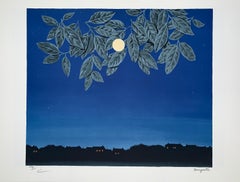
Framed 34.25 x 38.50 in Color lithograph after the 1951 oil on canvas by René Magritte, plate-signed by Magritte and numbered from the edition of 300.
Category

Early 2000s Surrealist Enrico Donati Art

Materials

Lithograph

Le Séducteur (The Tempter)
$6,264 Sale Price
20% Off
H 30.7 in W 22.8 in
Dark & Atmospheric Abstract Expressionist Art by Contemporary British Painter
By Angela Wakefield
Located in Preston, GB
Dark & Atmospheric Abstract Expressionist Painting by Contemporary British Painter Angela Wakefield - a rare early work. Entitled 'Accrington #2',...
Category

1990s Abstract Expressionist Enrico Donati Art

Materials

Gesso, Canvas, Cotton, Paint, Varnish, Cotton Canvas, Mixed Media, Oil, ...

Previously Available Items
Enrico Donati Abstract Expressionist Brutalist Bronze Sculpture Surrealist Art
By Enrico Donati
Located in Surfside, FL
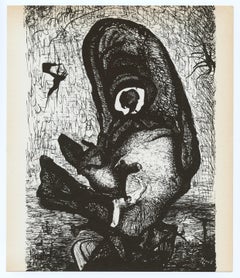
A Brutalist Bronze Sculpture wall hanging. With a great patina and rough and polished textured bronze. From small edition of 6. Signed. Enrico Donati (1909 – 2008) was an Italian-American Surrealist painter and sculptor whose work also bore affinites to Abstract Expressionist art. Enrico Donati studied economics at the Università degli Studi, Pavia, and in 1934 moved to the USA, where he attended the New School for Social Research and the Art Students League of New York. His first one-man shows were in New York in 1942, at the New School for Social Research and the Passedoit Gallery. At this stage he was clearly drawn to Surrealism. Recognition of his abilities by the renowned art historian Lionello Venturi led to a meeting with André Breton in 1942. Impressed by Donati’s paintings, Surrealism’s founder and pontifical grand master pronounced him a Surrealist on the spot and mustered him, as a younger peer, into the august company of such Surrealists as Marcel Duchamp, Max Ernst, and Yves Tanguy. typical work of this period, St Elmo’s Fire (1944; New York, MoMA), contains strange organic formations suggestive of underwater life. Donati was one of the organizers of the Exposition Internationale du Surréalisme held in Paris in the summer of 1947, to which he contributed a painting and two sculptures. In the late 1940s he responded to the crisis in Surrealism by going through a Constructivist phase, from which he developed a calligraphic style and drew onto melted tar, or diluted paint with turpentine. He also became associated with Spatialism, founded by Lucio Fontana. Thus began his long fascination with surface and texture, including mixing paint with dust. He began exploring this approach in 1950 when he discovered that dirt removed from vacuum cleaners and combined with pigment and glue before being applied in thick layers to canvas produced opaque wooly surfaces ideal for the dense blacks, luminous greys, and occasional whites he was now using almost exclusively in his painting, that culminated in the 1950s in his Moonscapes, a series that has similarities with the work of Jean Dubuffet. This work shared some of characteristics of work produced during this period by a number of America’s finest avant-garde painters. (Mark Rothko, in particular, springs to mind, as do Franz Kline and Ad Reinhardt.) Donati, however, had acquired this vision and had developed these characteristics for his art independently, without any concession to the vision or art of others. And so, quietly and on his own terms, Donati entered the mainstream of American art. Donati joined the Betty Parsons Gallery in New York, where he exhibited alongside Jackson Pollock, Mark Rothko, Barnett Newman, Richard Pousette-Dart, and Theodoros Stamos, all members of the New York School. The fossil became a major theme for Donati through the 1960s, and he gave new importance to color in his Fossil works, for example in Red Yellow Fossil (1964; Miami, Hills Col., see Selz, p. 19). He was also associated with the Art Informel and Tachisme and Cobra Painters, Lyrical Abstraction, Outsider Art, Asger Jorn, Pierre Alechinsky, Nicolas de Stael, Karel Appel, Sam Francis, COBRA, Antonio Saura, Antoni Tapies, In 1961, he was given a major retrospective at the Palais des Beaux-Arts in Brussels and frequently exhibited at group shows in the USA and elsewhere. He held a number of important teaching and advisory posts, including Visiting Lecturer at Yale University (1962–1972). Considered by some in the art world to be one of the last of the Surrealists, Enrico Donati died in his home in Manhattan on April 25, 2008, aged 99. Selected museums and collections The Museum of Modern Art, New York Guggenheim Museum, New York Whitney Museum of American Art, New York Museum of Fine Art of Houston, Texas Boca Raton Museum of Art, Florida Musées Royaux des Beaux-Arts de Belgique, Belgium Museum of International Center of Aesthetic Research, Turin, Italy Albright-Knox Art Gallery, New York The Detroit Institute of Art, Michigan University of Michigan Art Gallery, Michigan Baltimore Museum of Art, Maryland· Newark Museum Association, New Jersey Galleria Nazionale d'Arte Moderna, Rome Mitchener Foundation, Pennsylvania Massachusetts Institute of Technology, Massachusetts The Rockefeller Institute, New York Johns Hopkins Hospital, Maryland Yale University Art Gallery, Connecticut Washington Gallery of Modern Art, Washington D.C. Tougaloo College, Mississippi The Israel Museum, Israel University Art Museum, University of California, Berkeley University of Texas, Austin Museum of Fine Arts, Florida Tacoma Art Museum, Washington The Lowe Museum, University of Miami, Florida High Museum of Art, Georgia Seattle Art Museum, Washington Weinstein Gallery, San Francisco, CA Vassar College, New York Swarthmore College, Pennsylvania Minnesota Museum of Art, Minnesota The Hirshhorn Museum and Sculpture Garden, Smithsonian, Washington D.C. Arturo Schwarz Surrealist Foundation, Italy Gallerie di Piazza Scala...
Category

20th Century Surrealist Enrico Donati Art
Materials

Bronze

"Amethyst, " Abstract Sand Mid-Century Modern Painting by Enrico Donati
By Enrico Donati
Located in New York, NY
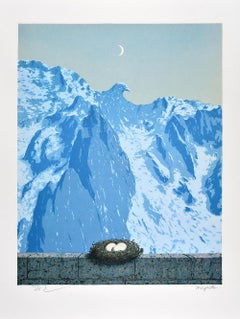
Enrico Donati (1909 - 2008) Amethyst, 1982 Oil and sand (mixed media) on canvas 30 x 40 inches Signed lower right and on the reverse Provenance: Staempfli Gallery, New York Abell Auction, Los Angeles, Abell Quarterly Fine Art & Jewelry Auction, Oct 15, 2017, Lot 432 Private Collection, Berkshires Enrico Donati, a surrealist and abstract expressionist painter, was born in Milan, Italy in 1909 and died in Manhattan on April 25, 2008. He was known for his association with the surrealist movement of the 1940's, but his artwork continued to transform itself through the many trends that have occurred during his long career. In Italy he attended the Universita degli Studi in Pavia where he studied economics. In 1934, he moved to the United States settling in New York where he studied at the New School for Social Research and the Art Students' League. Considered the surviving dean of the Surrealist Movement and a member of the New York School, Donati painted with Max Ernst, Roberto Matta and Alex Tanguy in the thirties and forties, and in particular with Andre Breton, regarded by many to be the grand master of Surrealism. He helped organize the Exposition Internationale du Surrealisme in Paris in 1947 where he exhibited three of his pieces. The Surrealists were known to avoid presenting or representing reality, and put the emphasis on invention and creativity by uncovering the poetic aspect of life with its kaleidoscopic multidimensional images, using reality only to enhance imagination. Donati survived the decline of Surrealism in the late 1940's by adapting his style to current art trends as he worked with new materials and textures throughout the 1950's. One trend with which he became involved was Abstract Expressionism, which originated in the 1940s, and became popular in the 1950s. It was a movement in which artists typically applied paint, rapidly and with force, to large canvases, in an effort to show feelings and emotions. Paint might be applied with large brushes, sometimes dripping or even throwing it onto canvas. Abstract Expressionist work is characterized by a strong dependence on what appears to be accident and chance, although it is actually highly planned. Donati held a retrospective at the Palais des Beaux-Arts in Brussels in 1961 and went on to exhibit at the Betty Parsons Gallery with other forerunners of American Abstract Expressionism: Mark Rothko, Barnett Newman, and Jackson Pollock. It was at this time that Donati created some of his most inventive and extraordinary work, some of which was featured in a survey exhibition at the Alter & Gil Gallery, Beverly Hills, California, in January 2000. He has held many teaching positions and has been an active lecturer, while continuing to add to his artistic repertoire. From 1960 to 1962 he was a Visiting Lecturer at Yale University, and from 1962 to 1972 a Member of the Yale University Council for the Arts and Architecture. He has had seventy-five one-man shows, among them an exhibit of new paintings at the Maxwell Davidson Gallery (57th St., New York) in the fall of 1997. Donati's work is held in collections throughout the world, and his work has appeared in over 300 articles and publications, two hard cover books...
Category

1980s Contemporary Enrico Donati Art
Materials

Canvas, Mixed Media, Oil

Enrico Donati art for sale on 1stDibs.

Find a wide variety of authentic Enrico Donati art available for sale on 1stDibs. You can also browse by medium to find art by Enrico Donati in canvas, fabric, mixed media and more. Much of the original work by this artist or collective was created during the 20th century and is mostly associated with the Surrealist style. Not every interior allows for large Enrico Donati art, so small editions measuring 8 inches across are available. Customers who are interested in this artist might also find the work of Stefan Matty Vladescu, Gerome Kamrowski, and Thom Cooney-Crawford. Enrico Donati art prices can differ depending upon medium, time period and other attributes. On 1stDibs, the price for these items starts at $150 and tops out at $25,000, while the average work can sell for $19,500.

Artists Similar to Enrico Donati

Still Thinking About These?

All Recently Viewed