Charles Green Shaw Art

American, 1892-1974

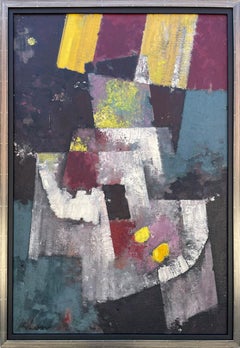
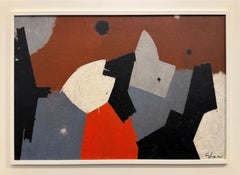
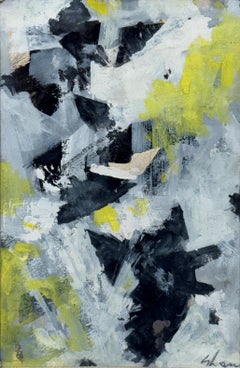
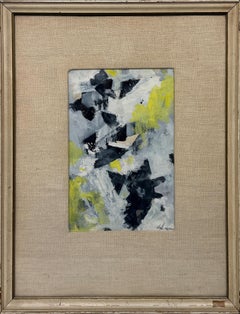
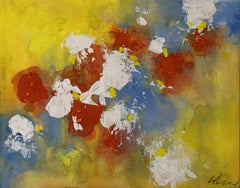
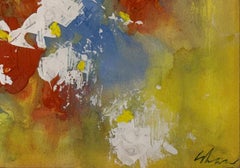
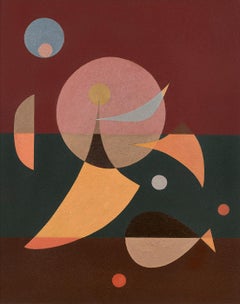
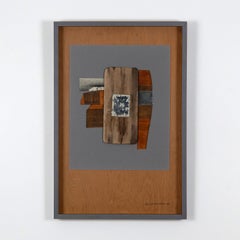
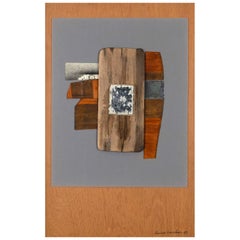
Charles Green Shaw was an American artist, painter and writer, born in 1892, in New York City. He went on to become a significant figure in the history of American abstract art. His work was noted for its clarity of form and architectural construction. In the later part of his life, Charles turned to abstract expressionism. He graduated from Yale University and then studied at the Art Students League of New York, with Thomas Hart Benton. He also took private lessons from George Luks.

Shaw’s work is part of most major collections of American Art, including the Whitney Museum, the Metropolitan Museum of Art, the Museum of Fine Arts, Boston, the Arts Institute of Chicago, the Smithsonian Institution, the Pennsylvania Academy of the Fine Arts and the Corcoran Gallery.

to
1
7
1
2
Overall Width
to
Overall Height
to
10
2
1
3
3
8
2
6
4
1
1
1
1
8
5
4
3
3
10
11,527
2,873
2,492
1,590
8
1
10
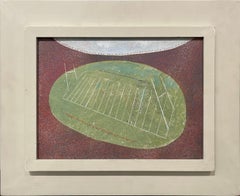
Artist: Charles Green Shaw
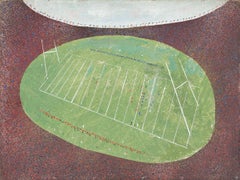
"Harvard vs Yale" Charles Green Shaw, Football, Ivy League Sports, Abstract

"Harvard vs Yale" Charles Green Shaw, Football, Ivy League Sports, Abstract

By Charles Green Shaw

Located in New York, NY

Charles Green Shaw Harvard vs. Yale, 1944 Signed and dated on the reverse Oil on canvasboard 9 x 12 inches Provenance: Harvey and Francois Rambach, New Jersey Private Collection, California Washburn Gallery, New York D. Wigmore Fine Art, New York Private Collection, New York Charles Green Shaw, born into a wealthy New York family, began painting when he was in his mid-thirties. A 1914 graduate of Yale, Shaw also completed a year of architectural studies at Columbia University. During the 1920s Shaw enjoyed a successful career as a freelance writer for The New Yorker, Smart Set and Vanity Fair, chronicling the life of the theater and café society. In addition to penning insightful articles, Shaw was a poet, novelist and journalist. In 1927 he began to take a serious interest in art and attended Thomas Hart Benton's class at the Art Students League briefly in New York. He also studied privately with George Luks, who became a good friend. Once he had dedicated himself to non-traditional painting, Shaw's writing ability made him a potent defender of abstract art. After initial study with Benton and Luks, Shaw continued his artistic education in Paris by visiting numerous museums and galleries. From 1930 to 1932 Shaw's paintings evolved from a style imitative of Cubism to one directly inspired by it, though simplified and more purely geometric. Returning to the United States in 1933, Shaw began a series of abstracted cityscapes of skyscrapers he called Manhattan Motifs which evolved into his most famous works, the shaped canvases he called Plastic Polygons. The 1930s were productive years for Shaw. He showed his paintings in numerous group exhibitions, both in New York and abroad, and was also given several one-man exhibitions. Shaw had his first one-man exhibition at the Valentine Dudensing Gallery in New York in 1934, which included 25 Manhattan Motif paintings and 8 abstract works. In the spring of 1935 Shaw was introduced to Albert Gallatin and George L.K. Morris. Gallatin was so impressed with Shaw's work, he broke a policy against solo exhibitions at his museum, the Gallery of Living Art, and offered Shaw an exhibition there. In the summer of 1935 Shaw traveled to Paris with Gallatin and Morris who provided introductions to many great painters. Shaw regularly spent time with John Ferren and Jean Hélion. The following year Gallatin organized an exhibition called Five Contemporary American Concretionists at the Reinhardt Gallery that included Shaw, Ferren, and Morris, Alexander Calder, and Charles Biederman...

Category

1940s Abstract Geometric Charles Green Shaw Art

Materials

Oil, Board
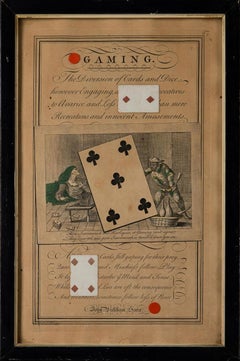
"Montage (Gaming)" Charles Green Shaw, Playing Cards Collage, Games

"Montage (Gaming)" Charles Green Shaw, Playing Cards Collage, Games

By Charles Green Shaw

Located in New York, NY

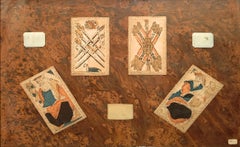
Charles Green Shaw Montage (Gaming), circa 1935 18th Century print, playing cards 15 x 10 inches Charles Green Shaw, born into a wealthy New York family, began painting when he was...

Category

1930s American Modern Charles Green Shaw Art

Materials

Mixed Media

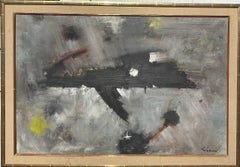
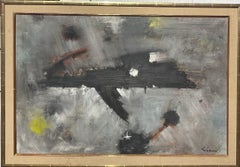
"Painting 44" Charles Green Shaw, Mid-Century, Gray, White, Red, Abstract Work

"Painting 44" Charles Green Shaw, Mid-Century, Gray, White, Red, Abstract Work

By Charles Green Shaw

Located in New York, NY

Charles Green Shaw Painting 44, 1956 Signed lower right; signed on the reverse Oil on board 24 x 36 inches Provenance Private Collection, New York Charles Green Shaw, born into a ...

Category

1950s Abstract Geometric Charles Green Shaw Art

Materials

Oil, Board
"Space Forms" Charles Green Shaw, Mid-Century, Green and White, Abstract Work

"Space Forms" Charles Green Shaw, Mid-Century, Green and White, Abstract Work

By Charles Green Shaw

Located in New York, NY

Charles Green Shaw Space Forms, circa 1952 Signed lower right; signed on the reverse Gouache on paper Provenance The artist Sidney and Abraham Waintrob, New York Estate of the above...

Category

1950s Abstract Charles Green Shaw Art

Materials

Paper, Gouache

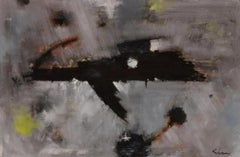
By the Dawn's Early Light, mid-century abstract black, red, yellow oil painting

By the Dawn's Early Light, mid-century abstract black, red, yellow oil painting

By Charles Green Shaw

Located in Beachwood, OH

Charles Green Shaw (American, 1892-1974) By the Dawn's Early Light, 1955 Oil on masonite Signed lower left, dated and titled verso 35.5 x 23.75 inches 38 x 26.25 inches, framed Provenance: The estate of the artist to Charles H. Carpenter Charles Green Shaw, born into a wealthy New York family, began painting when he was in his mid-thirties. A 1914 graduate of Yale, Shaw also completed a year of architectural studies at Columbia University. During the 1920s Shaw enjoyed a successful career as a freelance writer for The New Yorker, Smart Set and Vanity Fair, chronicling the life of the theater and café society. In addition to penning insightful articles, Shaw was a poet, novelist and journalist. In 1927 he began to take a serious interest in art and attended Thomas Hart Benton's class at the Art Students League briefly in New York. He also studied privately with George Luks, who became a good friend. Once he had dedicated himself to non-traditional painting, Shaw's writing ability made him a potent defender of abstract art. After initial study with Benton and Luks, Shaw continued his artistic education in Paris by visiting numerous museums and galleries. From 1930 to 1932 Shaw's paintings evolved from a style imitative of Cubism to one directly inspired by it, though simplified and more purely geometric. Returning to the United States in 1933, Shaw began a series of abstracted cityscapes of skyscrapers he called Manhattan Motifs which evolved into his most famous works, the shaped canvases he called Plastic Polygons. The 1930s were productive years for Shaw. He showed his paintings in numerous group exhibitions, both in New York and abroad, and was also given several one-man exhibitions. Shaw had his first one-man exhibition at the Valentine Dudensing Gallery in New York in 1934, which included 25 Manhattan Motif paintings and 8 abstract works. In the spring of 1935 Shaw was introduced to Albert Gallatin and George L.K. Morris. Gallatin was so impressed with Shaw's work, he broke a policy against solo exhibitions at his museum, the Gallery of Living Art, and offered Shaw an exhibition there. In the summer of 1935 Shaw traveled to Paris with Gallatin and Morris who provided introductions to many great painters. Shaw regularly spent time with John Ferren and Jean Hélion. The following year Gallatin organized an exhibition called Five Contemporary American Concretionists at the Reinhardt Gallery that included Shaw, Ferren, and Morris, Alexander Calder, and Charles Biederman...

Category

1950s Abstract Charles Green Shaw Art

Materials

Oil

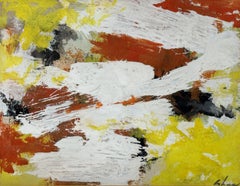
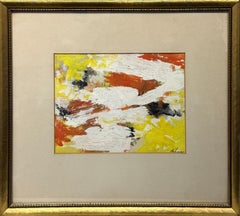
"August Laughter" Charles Green Shaw, Abstract, Patches of Color, Yellow, Blue

"August Laughter" Charles Green Shaw, Abstract, Patches of Color, Yellow, Blue

By Charles Green Shaw

Located in New York, NY

Charles Green Shaw August Laughter, circa 1964 Signed lower right Gouache on paper Sight 5 1/2 x 7 inches Provenance The artist Sidney and Abraham Waintrob, New York Estate of the a...

Category

1960s Abstract Charles Green Shaw Art

Materials

Paper, Gouache

Marine Abstraction, 1941

Marine Abstraction, 1941

By Charles Green Shaw

Located in New York, NY

An early modernist and native New Yorker, Charles G. Shaw spent summers in coastal towns such as Bellport, Long Island, and Nantucket, where the seashore inspired works like Marine A...

Category

20th Century Abstract Charles Green Shaw Art

Materials

Canvas, Oil

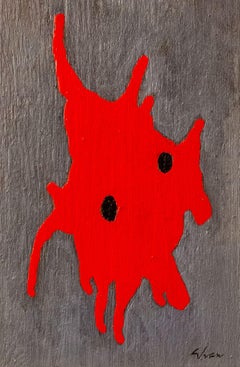
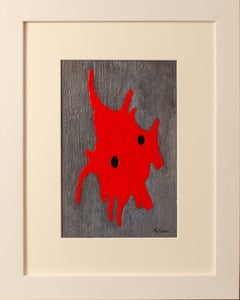
"Happening" Charles Green Shaw, Abstract Red Composition, Mid Century

"Happening" Charles Green Shaw, Abstract Red Composition, Mid Century

By Charles Green Shaw

Located in New York, NY

Charles Green Shaw Happening, 1964 Signed and dated on verso Oil on board 8.75 x 6 inches Charles Green Shaw, born into a wealthy New York family, began painting when he was in his mid-thirties. A 1914 graduate of Yale, Shaw also completed a year of architectural studies at Columbia University. During the 1920s Shaw enjoyed a successful career as a freelance writer for The New Yorker, Smart Set and Vanity Fair, chronicling the life of the theater and café society. In addition to penning insightful articles, Shaw was a poet, novelist and journalist. In 1927 he began to take a serious interest in art and attended Thomas Hart Benton's class at the Art Students League briefly in New York. He also studied privately with George Luks, who became a good friend. Once he had dedicated himself to non-traditional painting, Shaw's writing ability made him a potent defender of abstract art. After initial study with Benton and Luks, Shaw continued his artistic education in Paris by visiting numerous museums and galleries. From 1930 to 1932 Shaw's paintings evolved from a style imitative of Cubism to one directly inspired by it, though simplified and more purely geometric. Returning to the United States in 1933, Shaw began a series of abstracted cityscapes of skyscrapers he called Manhattan Motifs which evolved into his most famous works, the shaped canvases he called Plastic Polygons. The 1930s were productive years for Shaw. He showed his paintings in numerous group exhibitions, both in New York and abroad, and was also given several one-man exhibitions. Shaw had his first one-man exhibition at the Valentine Dudensing Gallery in New York in 1934, which included 25 Manhattan Motif paintings and 8 abstract works. In the spring of 1935 Shaw was introduced to Albert Gallatin...

Category

1960s Abstract Charles Green Shaw Art

Materials

Oil, Board
Related Items
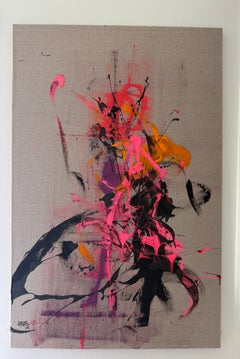
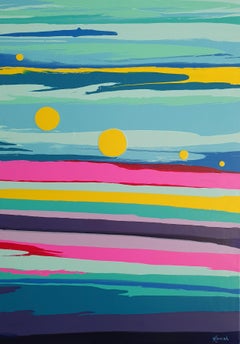
"Dancing with" Abstract Acrylic on Linen Painting 46" x 30" inch by Hossam Dirar

"Dancing with" Abstract Acrylic on Linen Painting 46" x 30" inch by Hossam Dirar

By Hossam Dirar

Located in Culver City, CA

"Dancing with" Abstract Acrylic on Linen Painting 46" x 30" inch by Hossam Dirar "Dancing with" (2016) by Hossam Dirar 46” x 30” Mixed media on linen canvas CHAOS This project i...

Category

21st Century and Contemporary Abstract Charles Green Shaw Art

Materials

Canvas, Oil, Linen

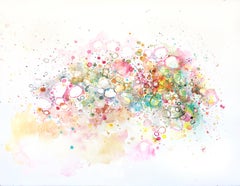
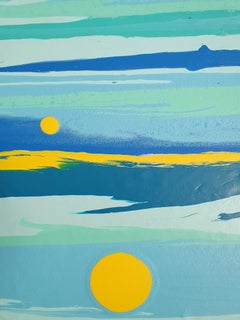
Untitled #267

Clara FialhoUntitled #267, 2019

$4,000

H 27.5 in W 35 in D 1 in

Untitled #267

By Clara Fialho

Located in Westport, CT

Brazilian artist, Clara Fialho, is based in New York. Her abstract work with bright and exuberant colors is inspired by her Latin heritage. She received her BFA from the prestigious...

Category

2010s Abstract Charles Green Shaw Art

Materials

Paper, Watercolor, Gouache, Pencil

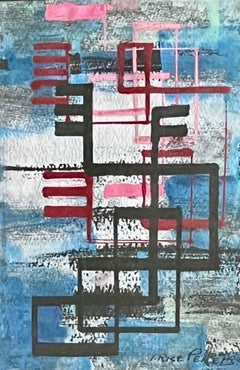
ABSTRACT American Woman Abstract Non-objective Mid 20th Century Modern Drawing

ABSTRACT American Woman Abstract Non-objective Mid 20th Century Modern Drawing

By Irene Rice Pereira

Located in New York, NY

ABSTRACT American Woman Abstract Non-objective Mid 20th Century Modern Drawing Irene Rice Pereira (1902-1971) Abstract 8 1/2 x 5 1/2 inches Watercolor, gouache, and ink on black paper Signed lower right Framed by Bark BIO rene Pereira was born in 1902 in Chelsea, Massachusetts and grew up in Great Barrington. She was strongly influenced by her mother who was an amateur artist. Irene began art lessons at the age of fifteen; she took a secretarial job because her father had died. She took art classes at the Art Students League in New York City. At the age of twenty-one she married the first of three husbands, Humberto Pereira, whose name she kept. She traveled extensively in Europe and North Africa and was much inspired by the expansive vistas of the Sahara Desert. Returning to New York, she began incorporating these visions into her work, increasingly experimental in her styles and methods. At first she painted on canvas, then she devised a means of actually incorporating light into her works by painting on layers of glass and mounting the layers together. In 1942 she married George Brown, an engineer, who helped her experiment with a variety of materials. By the 1950s she became more interested in writing poetry and, divorced from Brown in 1952, she married George Reavey, an Irish Poet...

Category

1950s Abstract Charles Green Shaw Art

Materials

Paper, Watercolor, Gouache

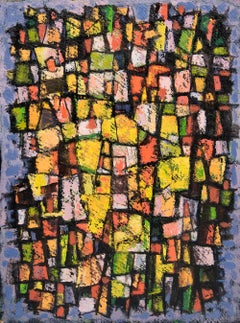
Paul Kauvar Smith 1950s Geometric Abstract Oil Painting, Mid-Century Modern

Paul Kauvar Smith 1950s Geometric Abstract Oil Painting, Mid-Century Modern

By Paul Kauvar Smith

Located in Denver, CO

A striking original 1950s abstract oil painting by American modernist Paul Kauvar Smith (1893–1977), an important figure in Colorado modernism and the Denver art scene. Dating to cir...

Category

1950s Abstract Geometric Charles Green Shaw Art

Materials

Oil, Board
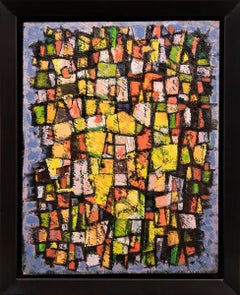
Reversible Composition

Reversible Composition

Located in Los Angeles, CA

Reversible Composition, c. 1937, oil on composition board, signed verso in pencil, 12 x 15 / 15 x 12 inches, “#11” “22” and #104” annotated verso, label verso reads on one side: “Cha...

Category

1930s Abstract Geometric Charles Green Shaw Art

Materials

Oil, Board
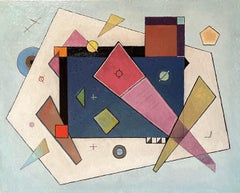
Untitled Abstract Geometric Painting, Oil on Paper, Framed, 1960s

Untitled Abstract Geometric Painting, Oil on Paper, Framed, 1960s

By Ron Stonier

Located in Vancouver, CA

Ron Stonier (1933-2001) was a dedicated Vancouver artist celebrated for his exploration of abstract painting, influenced by his mentors Gordon Smith and Jack Shadbolt, as well as by ...

Category

1960s Abstract Geometric Charles Green Shaw Art

Materials

Paper, Oil, Board
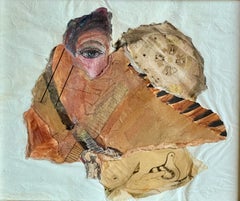
Mid-Century Modern American Oil Painting Abstract Female artist black and white

Mid-Century Modern American Oil Painting Abstract Female artist black and white

By Anita Johnson

Located in Buffalo, NY

Anita Johnson Untitled (Monochrome Construct), c. 1960s Oil on illustration board Framed dimensions: 21 in. H × 16 in. W Presented in a contemporary black frame In this striking bla...

Category

Mid-20th Century Abstract Geometric Charles Green Shaw Art

Materials

Oil, Illustration Board
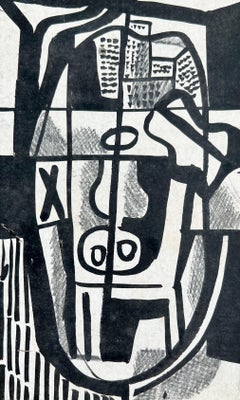
Untitled-019 gouache and pencil by Vaclav Vytlacil

Untitled-019 gouache and pencil by Vaclav Vytlacil

By Vaclav Vytlacil

Located in Hudson, NY

Delightful petite abstract work by American abstract artist Vaclav Vytlacil. About this artist: Born in 1892 to Czechoslovakian parents in New York, Vaclav Vytlacil and his parents ...

Category

1930s Abstract Expressionist Charles Green Shaw Art

Materials

Paper, Gouache, Cardboard, Pencil

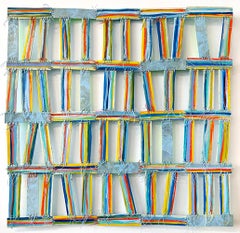
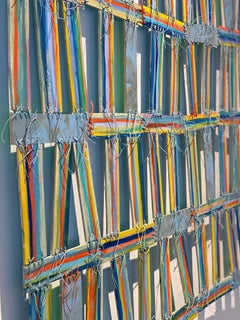
Mnemonic Rhythm (Bright, Multicolored Textile Inspired Abstract Wall Sculpture)

Mnemonic Rhythm (Bright, Multicolored Textile Inspired Abstract Wall Sculpture)

By Susan Stover

Located in Hudson, NY

Mnemonic Rhythm (Bright, Multicolored Textile Inspired Abstract Wall Sculpture), made by Susan Stover in 2025 wood, oil paint, varnish, waxed linen thread 30 x 30 inches Lightweight,...

Category

2010s Abstract Geometric Charles Green Shaw Art

Materials

Thread, Wood, Oil, Acrylic, Cardboard
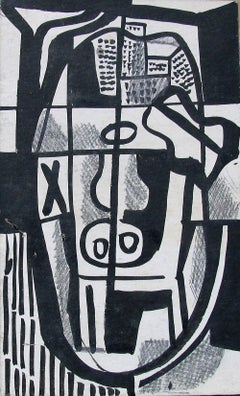
Paul COLIN (1892 – 1986), cubist composition

Paul COLIN (1892 – 1986), cubist composition

By Paul Colin

Located in Paris, FR

Paul Colin (1892–1986), a painter, illustrator, set designer, and major poster artist of the 20th century, is renowned for his influence on Art Deco. He grew up in Nancy, a hub of av...

Category

Early 20th Century Abstract Charles Green Shaw Art

Materials

Paper, Gouache

SINCRONIA ROSA - Angelo Palazzini Abstract Oil on Canvas Painting

SINCRONIA ROSA - Angelo Palazzini Abstract Oil on Canvas Painting

By Angelo Palazzini

Located in Napoli, IT

Sincronia Rosa - Abstract Oil on Canvas Paintng , Angelom Palazzini, Italy Angelo Palazzini was born in Lodi in 1953 where he still resides and has his own studio. His encounter wit...

Category

1980s Abstract Geometric Charles Green Shaw Art

Materials

Canvas, Oil

Michael Jordan Vitruvian Athlete - 48"x48"

Michael Jordan Vitruvian Athlete - 48"x48"

By Klau

Located in New York, NY

Michael Jordan Vitruvian Athlete, Mixed Media, 48 x 48, 2016 Colors: White, Black, Gray Signed, numbered and dated by the artist Sold Framed "Mich...

Category

2010s American Modern Charles Green Shaw Art

Materials

Mixed Media

Previously Available Items
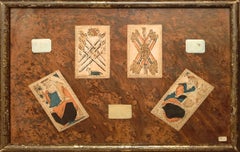
"Montage, Italian Minchiate Cards" Charles Green Shaw, Playing Cards Montage

"Montage, Italian Minchiate Cards" Charles Green Shaw, Playing Cards Montage

By Charles Green Shaw

Located in New York, NY

Charles Green Shaw Montage, Italian Minchiate Cards, circa 1935 Signed on label on verso Antique Playing cards and mixed media 9 1/4 x 13 1/2 inches Provenance Washburn Gallery Priv...

Category

1930s American Modern Charles Green Shaw Art

Materials

Mixed Media

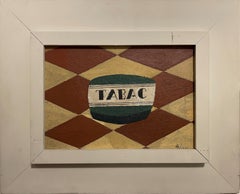
"Tabac" Charles Green Shaw, Tobacco, Smoking, Park Ave Cubist, AAA

"Tabac" Charles Green Shaw, Tobacco, Smoking, Park Ave Cubist, AAA

By Charles Green Shaw

Located in New York, NY

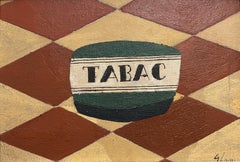
Charles Green Shaw Tabac, circa 1935 Signed on the reverse Oil on canvasboard 5 3/4 x 8 3/4 inches Provenance: Washburn Gallery, New York, 1982 Private Collection (acquired from the above) Christie's, The Collector, October 20, 2021, Lot 307 Private Collection, Scarsdale, New York (acquired directly from the above) Literature: Hilton Kramer, "Charles Shaw: In the Minimal Tradition," New York Times, February 21, 1982, Section 2, p. 25. Charles Green Shaw was born in 1892 to a wealthy New York family. He lost both his parents at a very young age; his mother died when he was just three years old. Despite the early loss of his parents, Shaw lived the whimsical life of a New York socialite. As a beneficiary to an inheritance based in part upon the Woolworth fortune, he was brought up surrounded by the well-bred, well-groomed and well-moneyed citizens of New York’s elite social class. His social status as an adolescent was cultivated while spending summers in Newport and attending Christmas balls at Mrs. W.K. Vanderbilt’s. At age six, Shaw began to take an interest in drawing, and by nine, he was known to have a fondness for sketching historical costumes. After graduating from Yale University in 1914, Shaw spent a year studying at Columbia University’s School of Architecture. Subsequently he served for eighteen months as a Lieutenant in World War I. After his service, Shaw returned to New York and tried his hand as a businessman selling real estate, but his attempt was short lived. In the early 1920s, Shaw began his career as a journalist and novelist. He achieved professional success, writing consistently for magazines such as The New Yorker, Vanity Fair and The Smart Set. Shaw’s writing was a record of his approvals and disapprovals of the social crowd to which he belonged. His profession along with his social pedigree, brought him in contact with a number of the most significant figures of the 1920s such as, F. Scott Fitzgerald, Sinclair Lewis, George Gershwin, George Jean Nathan and the American artist George Luks. Some of his profiles included celebrity caricatures used as illustrations, these were the publics’ first look at Shaw’s artistic ability. In 1928, a collection of Shaw’s articles and interviews were published in one volume titled, The Low Down. Just previous to the stock market crash and the end of the Jazz Age, Shaw left New York and traveled to Paris and London. He arrived in Paris in 1929. In an autobiographical note Shaw suggests it was on this trip when he first began to paint seriously. London also acted as a great source of motivation for the budding artist. He began to sketch everyday in St. James’s Park, making large pastels of its vistas in the style of Cezanne. When he returned to New York in 1932, Shaw considered himself a painter. Success for Shaw came quickly with his first solo exhibition mounted at the Valentine Gallery in 1934. The following year Albert Eugene Gallatin included works by the artist in an unprecedented solo exhibition at his Gallery of Living Art at New York University. Shaw further cemented his reputation as an artist through his association and friendship with fellow abstract artists Morris and Gallatin. The trio soon was regarded as ‘the Park Avenue Cubists’. As a founding member of the American Abstract Artists, Shaw became an impassioned defender of the style. His 1938 essay in the American Abstract Artists yearbook, “A Word to the Objector”, acted as a defense against those who failed to see the illustrative quality of abstract art and scolded those who disregarded American artists as serious Abstractionists. He was also an influential force at the Museum of Modern Art, where he sat on the Advisory Board from 1936 to 1941. In the later years of Shaw’s life he continued to produce abstract paintings, yet in a more private manner. He was known to be a reserved man— a ‘gentleman’; not much is known about his personal life in these later years. During this time he maintained his career as a writer, publishing the well-known children’s book, It Looked Like Spilt Milk in 1940 and two books of poems in 1959 and 1962. In 1974, Shaw died...
Category

1930s Cubist Charles Green Shaw Art

Materials

Oil, Board

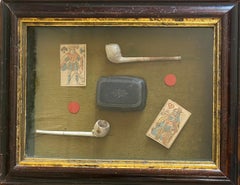
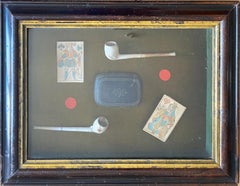
American Surrealist pipes and playing cards spirit of Magritte abstract Montage

American Surrealist pipes and playing cards spirit of Magritte abstract Montage

By Charles Green Shaw

Located in Norwich, GB

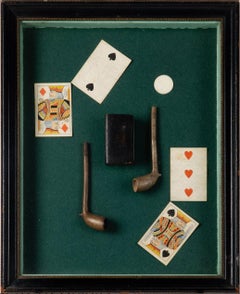
I love this extraordinary American surrealist piece - a collage/montage, an assembly of objects in a velvet-clad box/frame - for a number of reasons reasons. I love the fact that it depicts pipes, among the most iconic images of the surrealist movement, rooted in Magritte’s famous 1929 painting which depicts a pipe accompanied by the caption “Ceci n'est pas une pipe” (This is not a pipe). Marcel Duchamp loved using pipes...

Category

1930s Surrealist Charles Green Shaw Art

Materials

Clay, Glass, Paper, Found Objects, Wood

"Space Flight, " Charles Green Shaw, Abstract Expressionism, Midcentury Astronomy

"Space Flight, " Charles Green Shaw, Abstract Expressionism, Midcentury Astronomy

By Charles Green Shaw

Located in New York, NY

Charles Green Shaw (1892-1974) Space Flight, 1959 Oil on canvas 24 x 36 inches Signed lower right; signed and dated on the reverse Charles Green Shaw, born into a wealthy New York family, began painting when he was in his mid-thirties. A 1914 graduate of Yale, Shaw also completed a year of architectural studies at Columbia University. During the 1920s Shaw enjoyed a successful career as a freelance writer for The New Yorker, Smart Set and Vanity Fair, chronicling the life of the theater and café society. In addition to penning insightful articles, Shaw was a poet, novelist and journalist. In 1927 he began to take a serious interest in art and attended Thomas Hart Benton's class at the Art Students League briefly in New York. He also studied privately with George Luks, who became a good friend. Once he had dedicated himself to non-traditional painting, Shaw's writing ability made him a potent defender of abstract art. After initial study with Benton and Luks, Shaw continued his artistic education in Paris by visiting numerous museums and galleries. From 1930 to 1932 Shaw's paintings evolved from a style imitative of Cubism to one directly inspired by it, though simplified and more purely geometric. Returning to the United States in 1933, Shaw began a series of abstracted cityscapes of skyscrapers he called Manhattan Motifs which evolved into his most famous works, the shaped canvases he called Plastic Polygons. The 1930s were productive years for Shaw. He showed his paintings in numerous group exhibitions, both in New York and abroad, and was also given several one-man exhibitions. Shaw had his first one-man exhibition at the Valentine Dudensing Gallery in New York in 1934, which included 25 Manhattan Motif paintings and 8 abstract works. In the spring of 1935 Shaw was introduced to Albert Gallatin and George L.K. Morris. Gallatin was so impressed with Shaw's work, he broke a policy against solo exhibitions at his museum, the Gallery of Living Art, and offered Shaw an exhibition there. In the summer of 1935 Shaw traveled to Paris with Gallatin and Morris who provided introductions to many great painters. Shaw regularly spent time with John Ferren and Jean Hélion. The following year Gallatin organized an exhibition called Five Contemporary American Concretionists at the Reinhardt Gallery that included Shaw, Ferren, and Morris, Alexander Calder, and Charles Biederman. The exhibition traveled to Paris at the Galerie Pierre and to London at the Mayor Gallery with A.E. Gallatin replacing Calder as the fifth artist. During the mid-1930s Charles Green Shaw became fascinated with wood relief paintings and was one of the first abstract artists to use this technique. Shaw was among an early group of American artists who wished to incorporate three dimensional elements into their abstract painting. Ferren did this by carving into his paintings, Biederman used Constructivist methodology to create geometric reliefs, Morris used juxtaposed colors to create vibrations, Pereira painted on glass, and Calder created abstract sculpture. Charles Green Shaw was the only artist to use a technique that resulted in an exploded view of biomorphic abstract shapes. Shaw created compositions of biomorphic forms cut from wood about ¾ inch thick which he sometimes painted and other times varnished and arranged atop another piece of wood to give the composition added depth. These reliefs were produced alongside Shaw's shaped canvas works, Plastic Polygons, from 1936 to 1938. In 1937 Shaw became a founding member of the American Abstract Artists and exhibited 6 works in the first annual exhibition at the Squibb Building in April. The 1938 American Abstract Artists' annual exhibition catalogue contained eleven essays by members with the opening essay by Shaw. His article, "A Word to the Objector," expressed his profound belief that abstract painting was "an appeal to one's…aesthetic emotion alone…." Shaw was very active within the group in the early years, editing the catalogues, seeking sponsors for exhibitions, and locating exhibition spaces. Shaw had two solo exhibitions at the Museum of Non-Objective Painting in 1940 and 1941 and served on the Advisory Board of the Museum of Modern Art from 1936 to 1941. In the later 1930s, Shaw became interested in photography and children's books. In 1938 Shaw had a series of photographs and trivia on New York published as the book New York- Oddly Enough. Shaw worked on similar photography projects on Paris and London. In 1939 Shaw started working with the publisher W.R. Scott, Inc. and with its editor, Margaret Wise Brown (author of The Runaway Bunny and Good Night Moon), Shaw wrote and illustrated several children's books, including The Giant of Central Park and a series called The Guess Book. Fellow AAA Member. Esphyr Slobodkina...

Category

1950s Abstract Expressionist Charles Green Shaw Art

Materials

Canvas, Oil

"Space Flight, " Charles Green Shaw, Abstract Expressionism, Midcentury Astronomy

"Space Flight, " Charles Green Shaw, Abstract Expressionism, Midcentury Astronomy

By Charles Green Shaw

Located in New York, NY

Charles Green Shaw (1892-1974) Space Flight, 1959 Oil on canvas 24 x 36 inches Signed lower right; signed and dated on the reverse Charles Green Shaw, born into a wealthy New York family, began painting when he was in his mid-thirties. A 1914 graduate of Yale, Shaw also completed a year of architectural studies at Columbia University. During the 1920s Shaw enjoyed a successful career as a freelance writer for The New Yorker, Smart Set and Vanity Fair, chronicling the life of the theater and café society. In addition to penning insightful articles, Shaw was a poet, novelist and journalist. In 1927 he began to take a serious interest in art and attended Thomas Hart Benton's class at the Art Students League briefly in New York. He also studied privately with George Luks, who became a good friend. Once he had dedicated himself to non-traditional painting, Shaw's writing ability made him a potent defender of abstract art. After initial study with Benton and Luks, Shaw continued his artistic education in Paris by visiting numerous museums and galleries. From 1930 to 1932 Shaw's paintings evolved from a style imitative of Cubism to one directly inspired by it, though simplified and more purely geometric. Returning to the United States in 1933, Shaw began a series of abstracted cityscapes of skyscrapers he called Manhattan Motifs which evolved into his most famous works, the shaped canvases he called Plastic Polygons. The 1930s were productive years for Shaw. He showed his paintings in numerous group exhibitions, both in New York and abroad, and was also given several one-man exhibitions. Shaw had his first one-man exhibition at the Valentine Dudensing Gallery in New York in 1934, which included 25 Manhattan Motif paintings and 8 abstract works. In the spring of 1935 Shaw was introduced to Albert Gallatin and George L.K. Morris. Gallatin was so impressed with Shaw's work, he broke a policy against solo exhibitions at his museum, the Gallery of Living Art, and offered Shaw an exhibition there. In the summer of 1935 Shaw traveled to Paris with Gallatin and Morris who provided introductions to many great painters. Shaw regularly spent time with John Ferren and Jean Hélion. The following year Gallatin organized an exhibition called Five Contemporary American Concretionists at the Reinhardt Gallery that included Shaw, Ferren, and Morris, Alexander Calder, and Charles Biederman. The exhibition traveled to Paris at the Galerie Pierre and to London at the Mayor Gallery with A.E. Gallatin replacing Calder as the fifth artist. During the mid-1930s Charles Green Shaw became fascinated with wood relief paintings and was one of the first abstract artists to use this technique. Shaw was among an early group of American artists who wished to incorporate three dimensional elements into their abstract painting. Ferren did this by carving into his paintings, Biederman used Constructivist methodology to create geometric reliefs, Morris used juxtaposed colors to create vibrations, Pereira painted on glass, and Calder created abstract sculpture. Charles Green Shaw was the only artist to use a technique that resulted in an exploded view of biomorphic abstract shapes. Shaw created compositions of biomorphic forms cut from wood about ¾ inch thick which he sometimes painted and other times varnished and arranged atop another piece of wood to give the composition added depth. These reliefs were produced alongside Shaw's shaped canvas works, Plastic Polygons, from 1936 to 1938. In 1937 Shaw became a founding member of the American Abstract Artists and exhibited 6 works in the first annual exhibition at the Squibb Building in April. The 1938 American Abstract Artists' annual exhibition catalogue contained eleven essays by members with the opening essay by Shaw. His article, "A Word to the Objector," expressed his profound belief that abstract painting was "an appeal to one's…aesthetic emotion alone…." Shaw was very active within the group in the early years, editing the catalogues, seeking sponsors for exhibitions, and locating exhibition spaces. Shaw had two solo exhibitions at the Museum of Non-Objective Painting in 1940 and 1941 and served on the Advisory Board of the Museum of Modern Art from 1936 to 1941. In the later 1930s, Shaw became interested in photography and children's books. In 1938 Shaw had a series of photographs and trivia on New York published as the book New York- Oddly Enough. Shaw worked on similar photography projects on Paris and London. In 1939 Shaw started working with the publisher W.R. Scott, Inc. and with its editor, Margaret Wise Brown (author of The Runaway Bunny and Good Night Moon), Shaw wrote and illustrated several children's books, including The Giant of Central Park and a series called The Guess Book. Fellow AAA Member. Esphyr Slobodkina...

Category

1950s Abstract Expressionist Charles Green Shaw Art

Materials

Canvas, Oil

Charles Green Shaw art for sale on 1stDibs.

Find a wide variety of authentic Charles Green Shaw art available for sale on 1stDibs. Customers who are interested in this artist might also find the work of Agnes Hart, Syd Solomon, and Michael Braden.

Artists Similar to Charles Green Shaw