F. Luis Mora Art

to
1
3
2
1
1
1
1
1
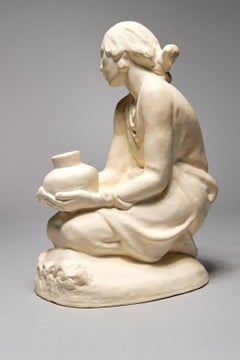
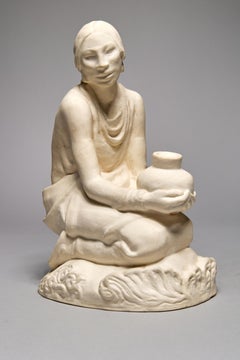
Early 20th Century Cowan Pottery Ceramic Sculpture of a Native American

Early 20th Century Cowan Pottery Ceramic Sculpture of a Native American

By F. Luis Mora

Located in Beachwood, OH

F. Luis Mora (American, 1874-1940) Native American, c. 1930s Ceramic Stamped on bottom, Cowan Pottery 9 x 7 x 5 inches Francis Luis Mora was one of the better-known American artists...

Category

1930s F. Luis Mora Art

Materials

Ceramic

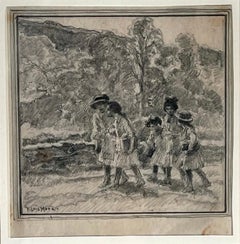
SCHOOLGIRLS
SCHOOLGIRLS

SCHOOLGIRLS

By F. Luis Mora

Located in Portland, ME

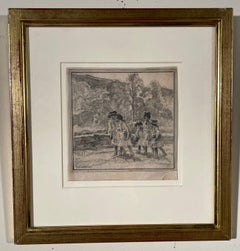
Mora, F. Luis (Amwericn, born Uruguay, 1874-1940). UNTITLED (SCHOOLGIRLS). Drawing, pencil on paper. Not dated, but circa 1890-1910. Signed in pencil. 5 x 4 7/8 inches. Framed to 10 ...

Category

Early 20th Century F. Luis Mora Art

Materials

Pencil

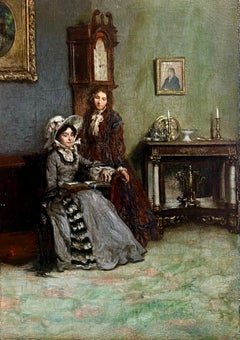
Portrait of Young Colonial Ladies Reading

Portrait of Young Colonial Ladies Reading

By F. Luis Mora

Located in Fredericksburg, VA

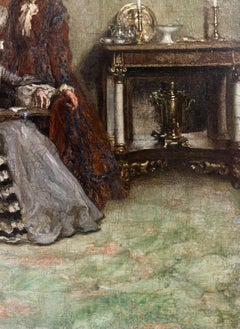
F. Luis Mora's "Colonial Ladies Reading" is a captivating portrait that beautifully encapsulates a moment of shared intellectual pursuit and companionship during the colonial era. Th...

Category

Late 19th Century F. Luis Mora Art

Materials

Canvas, Oil

Related Items
"Beach-Combed Mochaware, " Mixed Media Sculpture

"Beach-Combed Mochaware, " Mixed Media Sculpture

By Michael Thompson

Located in Chicago, IL

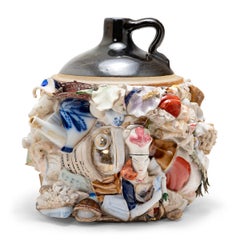
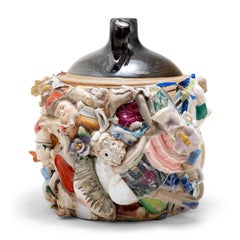
Based in Chicago, IL, contemporary artist Michael Thompson creates unique kites, collages and mixed media works assembled from material fragments of past and present collected in his travels. In his ongoing series of memory jugs, Thompson adorns stoneware vessels with a kaleidoscope of ceramic shards, found objects, and pocket-sized trinkets he collected over the course of his life. Also known as forget-me-not jugs or spirit jars, memory jugs are African American folk art objects that honor a loved one who has recently passed. Small tokens and mementos of the deceased are gathered and affixed to the exterior of a jug or vase, an abundance of memories that celebrates a life lived to the fullest. Michael Thompson applies this tradition to his own practice, creating tactile assemblages of this and that. Formed in the manner of collage, each jug honors the lost memories of generations past and his own memories of personally discovering each item. With varied sources for materials including Kyoto, Turkey, and Mexico, a great number of the found shards are 18th and 19th century ceramics...

Category

21st Century and Contemporary Abstract F. Luis Mora Art

Materials

Stone

Costume drawings for ‘Ambassadeur de Siam’ and ‘La Sultana Reine’

Costume drawings for ‘Ambassadeur de Siam’ and ‘La Sultana Reine’

Located in Amsterdam, NL

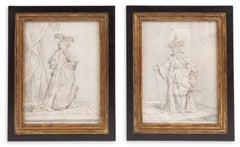
Joseph-Marie Vien (1716-1809) ‘Ambassadeur de Siam’ and ‘La Sultana Reine’ Both titled lower centre, the drawing of the ambassador inscribed with colours intended for the prints, e...

Category

Mid-18th Century Old Masters F. Luis Mora Art

Materials

Paper, Pencil

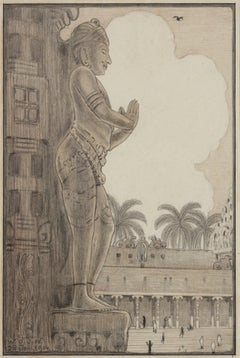
Stone Statue, Madura, India, 1914

Stone Statue, Madura, India, 1914

Located in Amsterdam, NL

Stone statue in the temple at Madura, India, 1914 Signed with initials top right Pencil on paper, 21.2 x 16.7 cm Literature: Ernst Braches en J.F. Heijbroek, W.O.J. Nieuwenkamp,B...

Category

1910s Art Nouveau F. Luis Mora Art

Materials

Paper, Pencil

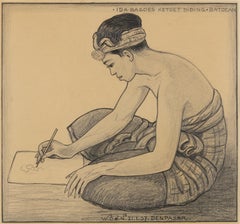
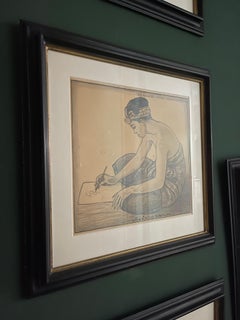
Portrait of artist Ida Bagoes Ketut Diding, Bali, 1937

Portrait of artist Ida Bagoes Ketut Diding, Bali, 1937

Located in Amsterdam, NL

Ida Bagoes Ketut Diding, Artist on bali 1937 Signed with initials, dated and titled, bottom centre Black chalk on paper, 29 x 31 cm Literature: Ernst Braches en J.F. Heijbroek, W....

Category

1930s Art Nouveau F. Luis Mora Art

Materials

Paper, Graphite

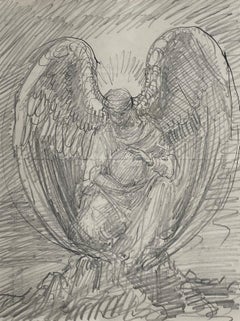
Study of an Angel by British Pre-Raphaelite artist Sir William Blake Richmond

Study of an Angel by British Pre-Raphaelite artist Sir William Blake Richmond

By Sir William Blake Richmond

Located in London, GB

SIR WILLIAM BLAKE RICHMOND, RA (1842-1921) Study of an Angel Pencil on the artist’s writing paper for Beavor Lodge, Hammersmith Unframed 22.5 by 17 cm., 9 by 6 ¾ in. (mount size ...

Category

1890s Pre-Raphaelite F. Luis Mora Art

Materials

Pencil

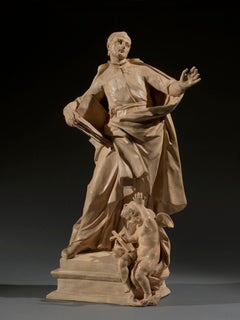
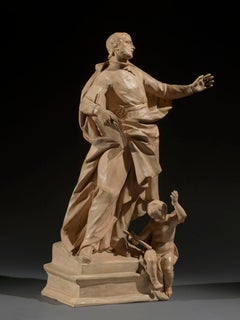
Roman 18th century terracotta model for the sculpture of San Camillo de Lellis

Roman 18th century terracotta model for the sculpture of San Camillo de Lellis

Located in London, GB

This remarkably fluid terracotta bozetto was made in preparation for Pietro Pacilli’s most important public commission, a large-scale marble statue of San Camillo de Lellis for the nave of St Peter’s Basilica in Rome. Expressively modelled, this terracotta sculpture is a rare and significant work made by a major Roman sculptor at a transformative moment of European sculpture. Pacilli began his working life on the great Baroque decorative projects initiated in the seventeenth century, but he found success as a restorer of ancient sculpture working to finish antiquities for a tourist market, becoming an important figure in the emergence of an archaeologically minded Neoclassicism. Pacilli trained Vincenzo Pacetti and provided important decorative work for the Museo Pio-Clementino, at the same time he is recorded restoring some of the most celebrated antiquities excavated and exported during the period. Pacilli was born into a family of Roman craftsmen, his father Carlo was a wood carver, and Pacilli is recorded working with him on the Corsini Chapel in San Giovanni Laternao as early as 1735. In 1738 his terracotta model of Joseph and Potiphar’s Wife won the first prize in the second class of the sculpture concorso at the Accademia di San Luca, this is particularly notable as Bartolomeo Cavaceppi came third. He worked as a carver and stuccoist completing works for the churches of San Marco and SS. Trinita dei Domeniciani Spagnoli. Pacilli operated as a sculptor and restorer of antiquities from his studio at the top of the Spanish Steps, close to Santa Trinita dei Monti, where he is listed as a potential vendor to the Museo Pio-Clementino in 1770. In 1763 Pacilli completed a silver figure of San Venanzio for the treasury of San Venanzio. He is recorded as Pacetti’s first master and it was evidently through Pacilli that he began to acquire his facility as a restorer of ancient sculpture. Pacilli, at his studio ‘poco prima dell’Arco della Regina alla Trinita dei Monti,’ exercised, what the nineteenth-century scholar, Adolf Michaelis called ‘rejuvenating arts’ on several important pieces of classical sculpture, including in 1760 the group of a Satyr with a Flute for the natural brother of George III, General Wallmoden, Hanovarian minister at Vienna. In 1765, Dallaway and Michaelis record that Pacilli was responsible for the restorations, including the addition of a new head, to the Barberini Venus which he had acquired from Gavin Hamilton. The Venus was then sold to Thomas Jenkins, who in turn passed it on to William Weddell at Newby Hall. In 1767 Pacilli exported a series of ancient busts ‘al naturale’ including portraits of Antinous, Julius Ceaser and Marus Aurelius, also a statue of a Muse and a Venus. As early as 1756 Pacilli seems to have been operating as an antiquarian, helping to disperse the collection of the Villa Borrioni. Pacilli supplied sculpture to notable British collectors, including Charles Townley, who on his first trip to Italy purchased the Palazzo Giustiniani statue of Hecate from Pacilli. Pacilli was involved with the Museo Pio Clementino from its conception, supplying busts of Julius Ceaser and a Roman Woman as well as completing stucco putti surmounting the arms of Pope Bendedict XIV to signal the entrance to the new Museo Critiano. In 1750 Il Diario Ordinario del Chracas announced that Pacilli had begun work on a sculpture of San Camillo de Lellis for St Peter’s. Camillo de Lellis founded his congregation, the Camillians, with their distinctive red felt crosses stitched on black habits in 1591. Having served as a soldier in the Venetian army, Camillo de Lellis became a novitiate of the Capuchin friars, he moved to Rome and established a religious community for the purpose of caring for the sick. In 1586 Pope Sixtus V formerly recognised the Camillians and assigned them to the Church of Santa Maria Maddalena in Rome. Camillo de Lellis died in 1614 and was entombed at Santa Maria Maddalena, he was canonised by Benedict XIV on June 26, 1746. It was an occasion that prompted the Camillians to make a number of significant artistic commissions, including two canvases by Pierre Subleyras showing episodes from San Camillo’s life which they presented to Benedict XIV. In 1750 Pacilli was commissioned to fill one of the large niches on the north wall of the nave with a sculpture of San Camillo. The present terracotta bozetto presumably had two important functions, to enable Pacilli to work out his ideas for the finished sculpture and at the same time to show his design to the various commissioning bodies. In this case it would have been Cardinal Alessandro Albani and Monsignor Giovan Francesco Olivieri, the ‘economo’ or treasurer of the fabric of St Peter’s. Previously unrecorded, this terracotta relates to a smaller, less finished model which has recently been identified as being Pacilli’s first idea for his statue of San Camillo. Preserved in Palazzo Venezia, in Rome, the terracotta shows San Camillo with his left hand clutching his vestments to his breast; the pose and action more deliberate and contained than the finished sculpture. In producing the present terracotta Pacilli has expanded and energised the figure. San Camillo is shown with his left hand extended, his head turned to the right, apparently in an attempt to look east down the nave of St Peter’s. The model shows Pacilli experimenting with San Camillo’s costume; prominently on his breast is the red cross of his order, whilst a sense of animation is injected into the figure through the billowing cloak which is pulled across the saint’s projecting right leg. The power of the restrained, axial contrapposto of bent right leg and outstretched left arm, is diminished in the final sculpture where a baroque fussiness is introduced to the drapery. What Pacilli’s terracotta demonstrates, is that he conceived the figure of San Camillo very much in line with the immediate tradition of depicting single figures in St Peter’s; the rhetorical gesture of dynamic saint, arm outstretched, book in hand, head pointed upwards was perhaps borrowed from Camillo Rusconi’s 1733 sculpture of St. Ignatius...

Category

18th Century Baroque F. Luis Mora Art
Materials

Terracotta

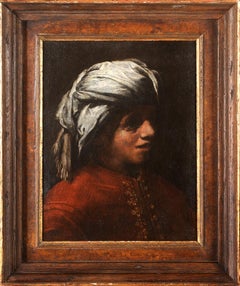
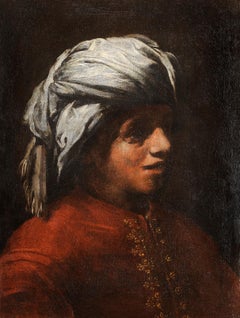
Portrait of a young man with a turban

Portrait of a young man with a turban

Located in BELEYMAS, FR

Circle of Adam de Coster (Mechelen 1586 – Antwerp 1643) Portrait of a Young Man with a Turban, Dressed in Oriental Style Oil on canvas H. 43 cm ; W. 33 cm Unsigned This portrait of ...

Category

1620s Flemish School F. Luis Mora Art
Materials

Oil, Canvas

Portrait of young man - The artist's son

Portrait of young man - The artist's son

Located in BELEYMAS, FR

Auguste-Joseph Delécluse (Roubaix 1855 - Paris 1928) Portrait of the artist's son, Eugène Delécluse Oil on canvas H. 98 cm; W. 116 cm Signed lower right 1903 Exhibition: 1903, Salon...

Category

Early 1900s French School F. Luis Mora Art
Materials

Canvas, Oil

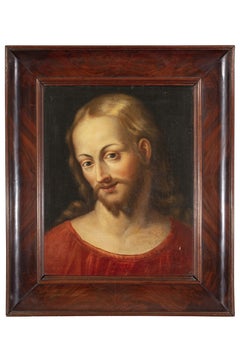
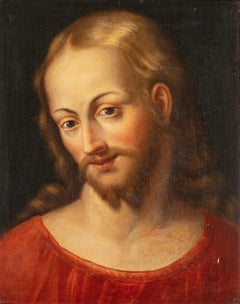
16th Century by Bernardino Detti Face of Christ Oil on Canvas

16th Century by Bernardino Detti Face of Christ Oil on Canvas

Located in Milano, Lombardia

Bernardino Detti (Pistoia, Italy, 1498 - 1572) Title: Face of Christ Medium: Oil on canvas Dimensions: without frame 41 x 32 cm - with frame 47 x 55.5 cm Antique box frame made of solid wood and walnut burl Not signed Publications: unpublished The painting by Bernardino Detti (1498 - 1572) depicts the face of Jesus...

Category

16th Century Old Masters F. Luis Mora Art
Materials

Canvas, Oil

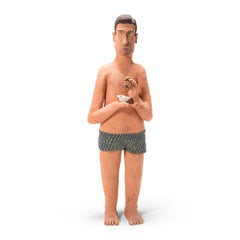
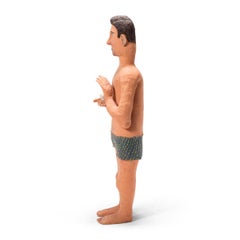
"Man with Cup, " Painted Ceramic Figure

"Man with Cup, " Painted Ceramic Figure

Located in Chicago, IL

Although this whimsical sculpture by Allan Winkler has the look of outsider art, this ceramic work stems from the art school-trained artist’s interest in...

Category

21st Century and Contemporary Surrealist F. Luis Mora Art
Materials

Ceramic, Acrylic

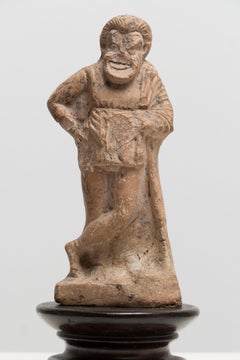
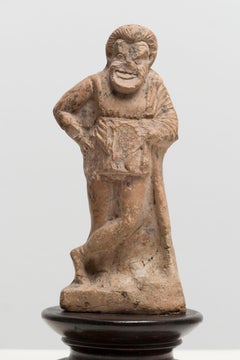
Ancient Greek Terracotta Comic Actor Figurine

Ancient Greek Terracotta Comic Actor Figurine

Located in Milan, IT

TERRACOTTA FIGURINE OF A COMIC ACTOR , Greece, c. 350 B.C. Labeled to the reverse, 'LAWRENCE COLL./LOT 426. SOTHEBY./APR. 1892. P. 816.'; Terracotta height 15.2 cm height 6 in Prove...

Category

15th Century and Earlier F. Luis Mora Art
Materials

Terracotta, ABS

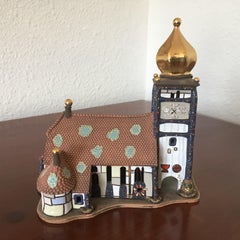
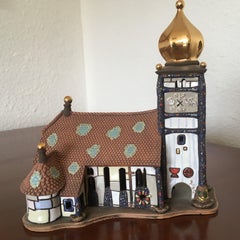
Hundertwasser's St. Barbara Church Ceramic Miniature Including Certificate

Hundertwasser's St. Barbara Church Ceramic Miniature Including Certificate

By Friedensreich Hundertwasser

Located in Palm Desert, CA

St. Barbara Church Baernbach by Friedensreich Hundertwasser Ceramic miniature in the scale 1:140 size 12 x 9 x 12 cm Each ceramic object is individually handmade, hand-painted and b...

Category

Early 2000s Post-Modern F. Luis Mora Art
Materials

Porcelain

Previously Available Items
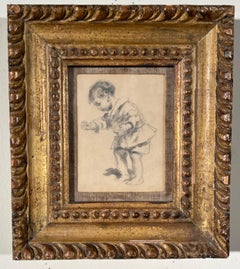
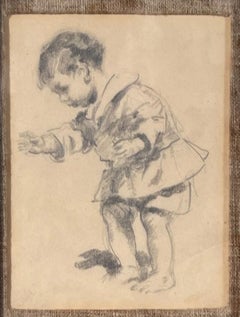
SMALL CHILD
SMALL CHILD

F. Luis MoraSMALL CHILD

Sold

H 10 in W 8.5 in D 1 in

SMALL CHILD

By F. Luis Mora

Located in Portland, ME

Mora, F. Luis (Amwericn, born Uruguay, 1874-1940). UNTITLED (SMALL CHILD). Drawing, pencil on paper. Not dated, but circa 1890-1910. Signed in pencil. 5 x 4 inches. Framed to 10 1/8 ...

Category

Early 1900s F. Luis Mora Art
Materials

Pencil

F. Luis Mora art for sale on 1stDibs.

Find a wide variety of authentic F. Luis Mora art available for sale on 1stDibs. You can also browse by medium to find art by F. Luis Mora in pencil and more. Not every interior allows for large F. Luis Mora art, so small editions measuring 10 inches across are available. F. Luis Mora art prices can differ depending upon medium, time period and other attributes. On 1stDibs, the price for these items starts at $875 and tops out at $875, while the average work can sell for $875.