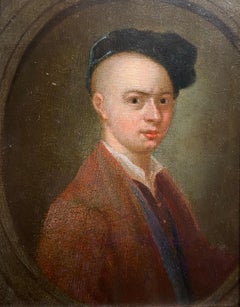
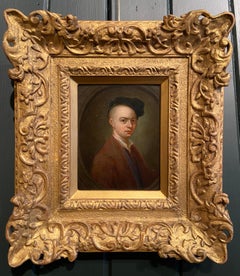
Self-Portrait - Royal Academy Founding Member, 18th Century
By Francis Hayman
Located in London, GB
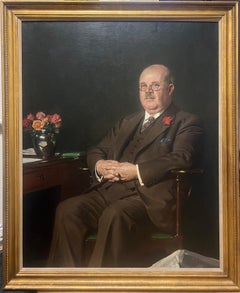
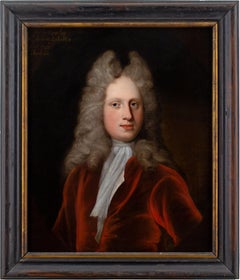
Francis Hayman RA 1708–1776 Self-Portrait Oil on oak panel Image size: 8 x 6¼ inches Contemporary gilt frame This newly discovered work is the earliest known self portrait by Francis Hayman, dated to the mid to late 1720’s. The small scale of the portrait gives it a strong sense of intimacy. Whereas clients would often dress themselves in their best clothes for a sitting, Hayman has portrayed himself in informal attire, with his shirt unbuttoned and a wig cap. Born in 1708 to a respectable Devonshire family, his training began at the tender age of ten under the tutelage of the historical painter Robert Brown, who was probably an uncle. By the 1730’s he is known to have been engaged in painting scenery for the popular theatres on Goodman’s Fields and Drury Lane. He established a studio on St Martin’s Lane, and demonstrated his versatility as one of the most important painters of his time in portraits, illustration and history painting. Indeed, he was one of the first English painters deemed to have the skill and proficiency to rival that of the foreign masters, such as Holbein and Kneller, who were brought in by the court to make up for the perceived shortcomings of the native artists. Led by William Hogarth, Hayman and other artists began to create a new movement in the English art world. Thomas Gainsborough was one of his pupils, whom he is said to have introduced to the more lascivious and debauched underbelly of London life. After mostly making his living as an illustrator, in the 1740’s Hayman was commissioned by the proprietor of the Vauxhall Pleasure Gardens, Jonathan Tyers, to produce a series of four large celebratory canvases depicting British victories from the Seven Years War. His association with Tyers continued, and over the next ten years he produced a number of large decorative paintings...
18th Century Old Masters Francis Hayman Paintings
Oak, Oil Pastel