Frank T. Carter Art

to
1
Overall Width
to
Overall Height
to
1
1
1
1
1
11,209
2,855
2,494
1,437
1
1
Artist: Frank T. Carter
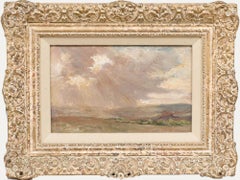
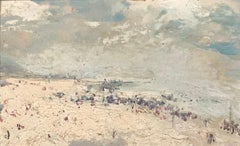
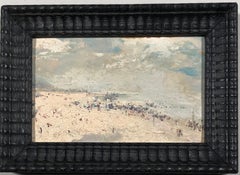
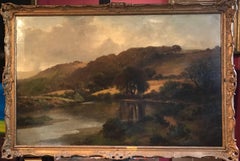
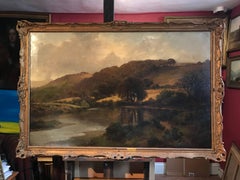
Frank T. Carter (1853-1934) - 20th Century Oil, Windswept Moorland

Frank T. Carter (1853-1934) - 20th Century Oil, Windswept Moorland

By Frank T. Carter

Located in Corsham, GB

This atmospheric landscape painting captures a dramatic sky filled with rolling clouds above an expansive moorland vista. Inscribed with artist name verso. Presented in a swept gesso...

Category

20th Century Frank T. Carter Art

Materials

Oil

Related Items
Pathway to the San Gabrielino Trail; Neglected and Protected

Pathway to the San Gabrielino Trail; Neglected and Protected

By Tim Solliday

Located in Pasadena, CA

Provenance Acquired by the gallery directly from the artist Painted en plein air in the San Gabriel Mountains near the artist's home in the early summer of 2013. Signed "T. Solliday...

Category

2010s American Realist Frank T. Carter Art

Materials

Canvas, Oil

"Grand Manan" Harrison Bird Brown, Maine Landscape, Hudson River School Seascape

"Grand Manan" Harrison Bird Brown, Maine Landscape, Hudson River School Seascape

By Harrison Bird Brown

Located in New York, NY

Harrison Bird Brown (1831 - 1915) Grand Manan Oil on canvas 12 x 20 inches Signed with initials lower left Harrison Bird Brown was born in 1831 in Portland, Maine, and is best known for his White Mountain landscapes and marine paintings of Maine's Casco Bay...

Category

Late 19th Century Hudson River School Frank T. Carter Art

Materials

Canvas, Oil

"Winter Scene, " George Gardner Symons, Snowy Hill Landscape, Pennsylvania

"Winter Scene, " George Gardner Symons, Snowy Hill Landscape, Pennsylvania

By George Gardner Symons

Located in New York, NY

George Gardner Symons (1863 - 1930) Winter Scene Oil on canvas 20 x 25 inches Signed lower right Provenance: Private Collection, St. Louis, Missouri William A. Karges Fine Art Gallery, Carmel, California Private Collection, Washington A landscape and marine artist, George Symons was one of America's more noted plein-air painters who combined styles of impressionism and realism. His works are cited for their energy and simplicity, and he often did panoramic views. He was born in Chicago, Illinois in 1861, with the name of George Gardner Simon, but he changed his last name to Symons when he returned from study in England because of concern about anti-semitism. Not much is known about his early life. He first studied at the Chicago Art Institute where he became a close, life-long friend of William Wendt. They painted together in California and then in Cornwall, England in 1898. He also studied in Paris, and Munich and London, and joining a colony of artists at St. Ives, adopted the plein-air techniques of Julius Olsson, Adrian Stokes, and Rudolph Hellwag. He worked in Chicago as a commercial artist, and about 1903 returned to California with Wendt and built a studio in Laguna Beach and became active in western art societies including the California Art Club. He returned often, but maintained his primary studio...

Category

Early 20th Century American Impressionist Frank T. Carter Art

Materials

Canvas, Oil

"Gwine to Eat it All Myself" William Holbrook Beard, Bears, Animals, Genre Scene

"Gwine to Eat it All Myself" William Holbrook Beard, Bears, Animals, Genre Scene

Located in New York, NY

William Holbrook Beard Gwine to Eat it All Myself, 1894 Signed and dated lower left Oil on canvas 16 x 24 inches Provenance: Childs Gallery, Boston Cynthia Bowers, New York Estate of the above Exhibited: New York, National Academy of Design, 1895, no. 405 ($500). Literature: American Art Review, January - February, 1975, p. 36, illustrated. Abraham A. Davidson, The Eccentrics and Other American Visionary Painters, Boston, 1978, p. xvii. Born in Painesville, Ohio, William Beard...

Category

1890s Frank T. Carter Art

Materials

Canvas, Oil

K. Dossi Oil Painting Sailing Ship Seascape Signed Maritime Art Ocean Nautical

K. Dossi Oil Painting Sailing Ship Seascape Signed Maritime Art Ocean Nautical

Located in Palm Coast, FL

Striking vintage oil on canvas depicting a majestic sailing ship cutting through lively ocean waves beneath a bright blue sky. The composition is full of movement and light, with bil...

Category

2010s Impressionist Frank T. Carter Art

Materials

Oil

Oil Painting by Edmund Aubrey Hunt "A Dutch Estuary, Evening"

Oil Painting by Edmund Aubrey Hunt "A Dutch Estuary, Evening"

Located in Mere, GB

Oil Painting by Edmund Aubrey Hunt "A Dutch Estuary, Evening" 1855- 1922 Massachusetts painter who studied under Gerome in Paris who then settled in London. Exhibited at the Royal Ac...

Category

19th Century Frank T. Carter Art

Materials

Oil

"Locomotive Train in Snowstorm, " Guy Wiggins, American Impressionist, Winter

"Locomotive Train in Snowstorm, " Guy Wiggins, American Impressionist, Winter

By Guy Wiggins

Located in New York, NY

Guy C. Wiggins (1883 - 1962) Locomotive Train in Snowstorm, 1957 Oil on paperboard 8 x 10 inches Signed lower left; signed and dated on the reverse Guy Carleton Wiggins is best known for his impressionistic snow scenes of New York in 1920's. Wiggins lived in Old Lyme and Essex where he operated an art school. The Connecticut country-side was conducive to his impressionist technique of plein-air painting and broken brushwork.  Ironically, although his work includes many fine Connecticut landscapes, he is best remembered for some snow scenes of New York City. Like many other American Impressionists, Wiggins had one foot in the city and the other in the country (Vermont Hillside, South Londonderry).  Wiggins was born in Brooklyn, New York, went to England with his family as a boy, received an English grammar school education, and traveled widely abroad. He was the son of a prominent artist, Carleton Wiggins, a painter in the Barbizon style who studied with George Inness and admired Anton Mauve and Dwight Tryon...

Category

1950s American Impressionist Frank T. Carter Art

Materials

Oil, Cardboard

"Canal Pinelli, Venise" Paul Désiré Trouillebert, Venetian Scene in Italy

"Canal Pinelli, Venise" Paul Désiré Trouillebert, Venetian Scene in Italy

By Paul Desire Trouillebert

Located in New York, NY

Paul Désiré Trouillebert Canal Pinelli, Venise Signed lower left Oil on canvas 18 3/4 x 12 3/8 inches Provenance: Artist's studio sale, 1887, no. 4 With M. Newmann London Sale, Christie's, London, Save the Children Fund, May 16, 1961 (according to an inscription on the reverse) Private Collection, United Kingdom Literature: Marumo et al, Paul Désiré Trouillebert: Catalogue Raisonné de l'œuvre peint, Stuttgart, 2004, cat. no. 0362 p. 336, illustrated. Paul Désiré Trouillebert was born in Paris in 1829 and died in the city June 28, 1900. He is considered a portrait, genre and landscape painter from the French Barbizon School. He was a student of Ernest Hébert [1817-1908] and Charles-François Jalabert [1819-1901], and made his debut at the Salon of 1865, exhibiting a portrait. At the Paris Salon of 1869, Trouillebert exhibited “Au bois Rossignolet”, which was a lyrical Fontainebleau landscape that received great critical acclaim. Trouillebert concentrated on portraits until about 1881, when he began to focus on atmospheric silvery landscapes steeping in cool damp color. In 1882, he exhibited a large landscape titled “Baignneuses” which was well received and helped him gain a reputation as a landscape painter. Another noted work was commissioned by Edmé Piot, a public works contractor. The painting, “Travaux de relèvement du chemin de fer de ceinture: le pont du Cours de Vincennes” (Cleveland Museum) was of a railway project initiated in 1851, after Napoleon III came to power. The commission included four related views of the Paris railway construction, which was completed in February 1889. After the 1860’s, the misty Barbizon landscapes by Jean-Baptist- Camille Corot’s [1796-1875] had become astonishingly vogue, which brought about a trove of imitators. His followers and students; Henri Joseph Constant Dutilleux [1807-1865], George Devillers, Achille François Oudinot [1820-1901], Edouard Brandon [1831-1887] and Trouillebert were not trying to mislead the public, he was their idol. However, the greatest confusion has always been over works by Corot and Trouillebert because both artists painted river landscapes at dawn or dusk with a very similar approach, palette and style. Like Corot, Trouillebert painted a wide variety of subjects, including genre scenes, portraits and nudes. Trouillebert would receive the most attention as a result of an 1883 court case involving one of his paintings. The painting “La Fontaine des Gabourets” had been sold by one of Paris’ more prominent dealers George Petit to writer Alexandre Dumas fils. Trouillebert’s signature and been removed and resigned Corot. The fake was discovered by Robaut and Bernheim-Jeune and returned to the original seller, Tedesco. Trouillebert, who had nothing to do with the fraud, brought legal action against the guilty parties to regain his reputation and clear his name. The trial made all of the papers and Trouillebert won his case. George Pettit...

Category

19th Century Frank T. Carter Art

Materials

Canvas, Oil

Walking the Dogs, Post-Impressionist Oil Painting by Louis Eilshemius

Walking the Dogs, Post-Impressionist Oil Painting by Louis Eilshemius

By Louis Eilshemius

Located in Long Island City, NY

Louis Eilshemius', American (1864 -1941), early works were influenced by the Barbizon School and Corot among others. This oil on canvas painting from 1890-1910 is from the era when h...

Category

Early 20th Century Post-Impressionist Frank T. Carter Art

Materials

Canvas, Oil

Sunflowers and Stories - original surreal realism seascape floral oil painting

Sunflowers and Stories - original surreal realism seascape floral oil painting

By Luis Fuentes

Located in London, Chelsea

In "Sunflowers and Stories by the Sea," Luis Fuentes captures a serene moment by the coast, inviting viewers to experience the tranquil beauty of the seaside. This original floral an...

Category

21st Century and Contemporary Realist Frank T. Carter Art

Materials

Canvas, Oil

"Into the Woods" Henry Prellwitz, Lyrical Woman In Wooded Landscape Painting

"Into the Woods" Henry Prellwitz, Lyrical Woman In Wooded Landscape Painting

By Henry Prellwitz

Located in New York, NY

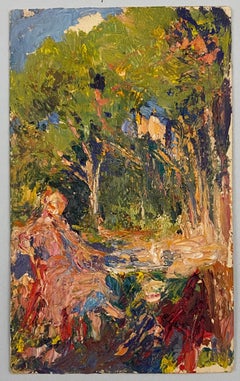
Henry Prellwitz Into the Woods Oil on board 11 1/2 x 8 3/4 inches Henry Prellwitz studied art at the Art Students League of New York, where his chief mentor was Thomas Wilmer Dewing; he later became its director.[3] He also studied at the Académie Julian in Paris. In 1892, he set up his studio in the Holbein Studios building on West 55th Street in Manhattan, where his future wife, the artist Edith Mitchill, also had a studio. They married in 1894 and had a son, Edwin. By the mid 1890s, he was teaching portrait painting at the Pratt Institute, where one of his students was the Cubist artist Max Weber. In 1899, Henry and Edith moved to the north shore of Peconic Bay on Long Island, where their artist friends Irving Ramsay Wiles and Edward August Bell were already established. They painted plein air paintings and also worked in adjoining studios at High House, their Peconic Bay home. Prellwitz painted Impressionist and Tonalist waterscapes of Peconic Bay and allegorical figure paintings such as the 1904 Lotus and Laurel. He exhibited mainly on the east coast and at expositions like the St. Louis World's Fair, where he won a silver medal. He won the Third Hallgarten Prize from the National Academy of Design (NAD) in 1893 for The Prodigal Son, and his Venus won the Thomas B. Clarke Prize at the 1907 NAD exhibition for the best figure composition by an American citizen painted in the United States. Both Prellwitzes disappeared into obscurity for several decades after their deaths in the early 1940s. Rediscovered in the 1980s, they have been called one of the best-kept secrets in art...

Category

Early 20th Century Modern Frank T. Carter Art

Materials

Oil, Board

Previously Available Items
Autumn, Huge River Landscape Oil Painting British Artist

Autumn, Huge River Landscape Oil Painting British Artist

By Frank T. Carter

Located in Cirencester, Gloucestershire

Autumn by Frank T, Carter (British, 1853-1934) signed lower right, titled verso oil painting on canvas, framed framed measurements: 37 x 55 inches Wonderful late Victorian oil painting on canvas, measuring this huge size and making a staggering impact on the wall. The artist, Frank T. Carter (1853-1934) has captured the shimmering light falling upon the warm landscape and superb reflection over the tranquil river as it meanders through the landscape. Frank Carter - Francis Thomas Carter (1853 - 1934). A landscape painter in oil born at Warkworth. Son of the station master. He moved to Newcastle to work as a newsagent before joining his father as lessee of the Pineapple Grill in the citys Nun street. The family later took over the Nags Head...

Category

Late 19th Century Victorian Frank T. Carter Art

Materials

Canvas, Oil

Frank T Carter art for sale on 1stDibs.

Find a wide variety of authentic Frank T Carter available for sale on 1stDibs. Customers who are interested in this artist might also find the work of William Shayer Senior, George Weissbort, and Michael Craig-Martin.

Artists Similar to Frank T. Carter

Questions About Frank T. Carter Art
  • 1stDibs ExpertApril 5, 2024
    In the world of art, design and fashion, there are two answers to the question "Who is Frank Mariani?" because two people share that name in these fields. One is furniture designer Frank Mariani, who designed pieces for the Pace Collection, a manufacturer of high-end furniture. There is also the Beverly Hills-based tailor Frank Mariani, who designed suits for Ronald Reagan and a host of celebrities, including Bob Hope, Jimmy Stewart and Henry Fonda. Shop a collection of Frank Mariani furniture on 1stDibs.
  • 1stDibs ExpertNovember 20, 2024
    Frank Stella is important because he was one of the central figures in postwar American art and influenced later artists as a proponent of minimalism and non-representational abstraction. Stella felt that paintings on canvas were objects in their own right, like sculptures. This led him to reject certain formal conventions, eschewing sketches and often using nontraditional materials, like house paint. His approach to art impacted the work of Clement Greenberg, Carl Andre, Kenneth Noland and many others. Find a collection of Frank Stella art on 1stDibs.
  • 1stDibs ExpertAugust 29, 2024
    Frank Stella was famous for his work as an artist. He was one of the central figures in postwar American art. A proponent of Minimalism and non-representational abstraction, Stella was a painter, printmaker and sculptor. Some of his best-known works include Shoubeegi, Harran II and The Marriage of Reason and Squalor II. Find an assortment of Frank Stella art on 1stDibs.
  • 1stDibs ExpertOctober 24, 2024
    Frank Stella is famous for his work as an artist. He was one of the central figures in postwar American art. A proponent of Minimalism and non-representational abstraction, Stella was a painter, printmaker and sculptor. His work is in the collections of numerous major museums around the world, including New York’s Museum of Modern Art and Metropolitan Museum of Art; the Menil Collection in Houston; the Hirshhorn Museum and Sculpture Garden in Washington, D.C. and the San Francisco Museum of Modern Art. He was awarded the National Medal of Arts by President Obama in 2009 and was given the Lifetime Achievement Award in Contemporary Sculpture by the International Sculpture Center in 2011. He died on May 4, 2024. Some of his best-known works include Harran II, Shoubeegi and “The Marriage of Reason and Squalor” series. On 1stDibs, shop a selection of Frank Stella art.
  • 1stDibs ExpertApril 5, 2022
    Frank Auerbach is a figure painter whose work has been described as expressionist, however, he more accurately fits into the neo-expressionist classification. He’s also been known for creating semi-abstract portraits, which puts him more accurately in the modern art movement. On 1stDibs, find a variety of original artwork from top artists.
  • 1stDibs ExpertAugust 29, 2024
    Frank Stella's philosophy, self-described as "what you see is what you see," reflects his belief that art shouldn't be representational and that its merit was in its actual form and not in any meaning that was assigned to it. He considered paintings on canvas to be objects in their own right, like sculptures, rather than representations. This led him to reject certain formal conventions, eschewing sketches and often using nontraditional materials, like house paint. Shop a range of Frank Stella art on 1stDibs.
  • 1stDibs ExpertOctober 24, 2024
    Frank Stella's father was also named Frank. Although he worked as a gynecologist, the elder Frank Stella was an art lover and fostered his son's love of painting. Stella's mother, Constance, attended art school and was a landscape painter. On 1stDibs, explore a variety of Frank Stella art from some of the world's top galleries and dealers.
  • 1stDibs ExpertOctober 24, 2024
    Frank Stella's nationality was American. He was born in Malden, Massachusetts, in 1936. Although his parents were also born in the U.S., all four of his grandparents were natives of Italy who immigrated to the country. Stella attended Phillips Academy in Andover, earned a BA from Princeton University and, in 1958, relocated to New York City. He remained there for much of his life and died there in 2024. On 1stDibs, shop a collection of Frank Stella art.
  • 1stDibs ExpertApril 5, 2022
    Frank Lloyd Wright broke away from Victorian-era architecture and created “Prairie-Style” out of the belief that there should be fewer, larger rooms that flowed easily. He was also a key player in the Art Deco movement. Shop a collection of expertly vetted Frank Lloyd Wright pieces from some of the world’s top sellers on 1stDibs.
  • 1stDibs ExpertFebruary 27, 2024
    The name of Frank Gehry's chair depends on which piece you're referring to, as the designer has produced quite a few chairs over the course of his career. Arguably, his most famous chair is the S-shaped Wiggle chair, crafted out of corrugated cardboard. He also designed several chairs out of ribbon-like pieces of bent wood, such as the armless, low-backed Hat Trick chair, the curvy Cross Check chair and the tall High Sticking chair. On 1stDibs, find a collection of vintage Frank Gehry chairs.
  • 1stDibs ExpertMarch 15, 2024
    A painter is the type of artist that Frank Bowling is. He is generally considered to be an Abstract Expressionist, and he tends to incorporate themes and symbols inspired by his Guyanese heritage. Some of his best-known works include Who's Afraid of Barney Newman, Spreadout Ron Kitaj, Middle Passage, Sacha Jason Guyana Dreams, Pondlife, Late Blue and Blue Trane. On 1stDibs, shop a range of Frank Bowling art.
  • 1stDibs ExpertOctober 15, 2024
    You can see Frank Stella art at a number of museums. Some institutions in the U.S. that have Stella pieces in their permanent collections include the San Francisco Museum of Modern Art in San Francisco, California; the Museum of Modern Art (MoMA) in New York City, New York and the Chrysler Museum of Art in Norfolk, Virginia. In addition, museums may host temporary exhibitions of the artist's work. On 1stDibs, find a selection of Frank Stella art.
  • 1stDibs ExpertOctober 24, 2024
    Frank Stella went to college at Princeton University, earning a bachelor of arts from the institution. While there, he studied art and color theory with Josef Albers and Hans Hofmann. Stella frequented New York galleries as a student and was intrigued by the work of Jackson Pollock and Franz Kline, both of whom were at the height of their creative powers in the late 1950s. After moving to New York in 1958, Stella gravitated toward the geometric abstraction and restrained painting style of Barnett Newman and Jasper Johns. On 1stDibs, shop a collection of Frank Stella art.
  • 1stDibs ExpertOctober 24, 2024
    Frank Stella used a variety of techniques. The American artist eschewed sketches for his paintings and often used nontraditional materials, like house paint. In 1960, he began introducing color into his work and using unconventionally shaped canvases to complement his compositions. Following a solo show at the Museum of Modern Art in New York in 1970, Stella began working in three dimensions, adding relief elements to paintings, which could be considered wall-mounted sculptures. Stella’s 1970–73 “Polish Village” series was inspired by documentary photographs and architectural drawings of Polish synagogues that had been destroyed by the Nazis during World War II. The resulting works — composed primarily of paint and cloth on plywood — are more rugged and less polished than his previous series. Herman Melville's Moby-Dick was Stella's muse for a series of three-dimensional works he created in the 1980s in which waveforms, architectural elements and Platonic solids played a prominent role. During this period, Stella embraced a new, exuberant style exemplified in his piece La Scienza della Fiacca. In addition to paintings and sculptural works, the artist also produced prints using lithography, serigraphy, etching and offset lithography techniques. Explore an assortment of Frank Stella art on 1stDibs.
  • 1stDibs ExpertFebruary 1, 2024
    The style of Frank Lloyd Wright’s work is Prairie style. The architect pioneered the style, which draws inspiration from the natural beauty of the landscapes of the Midwest region of the U.S. Wright's design philosophy emphasized organic architecture, with buildings existing in harmony with their natural surroundings. His approach to architectural design had a profound influence on the shape of modern life, both while he was actively designing buildings and during the decades that followed. Shop a diverse assortment of Frank Lloyd Wright furniture on 1stDibs.
  • 1stDibs ExpertAugust 29, 2024
    Frank Stella influenced art by encouraging the spread of Minimalism, an extreme form of abstraction that focuses on forms rather than meaning. Through his work, Stella challenged the notion that art must be a representation of something else. He believed that the art itself was the only true meaning of a piece. His philosophy influenced other artists and architects, such as Frank Gehry, Timothy App and Carl Andre. On 1stDibs, shop a range of Frank Stella art.
  • 1stDibs ExpertSeptember 9, 2024
    How much Frank Bowling paintings are worth depends on a number of factors, including size, historical significance and condition. At a London-based auction in 2023, his painting Moby Dick sold for more than $930,000. The British painter is best known for its colorful abstract works known as “map” paintings. Many critics have compared his work to the color field paintings of Mark Rothko. To get a valuation on a particular Bowling piece, consult a certified appraiser or knowledgeable art dealer. On 1stDibs, explore a wide range of abstract art.
  • 1stDibs ExpertMarch 22, 2022
    Yes, Frank Lloyd Wright designed furniture. He believed that the interior of a home should complement its exterior. As a result, he created unique pieces for many of the buildings he designed. Some of his most notable pieces include the Taliesin Group cabinet and the Allen table. Find a range of Frank Lloyd Wright furniture on 1stDibs.
  • 1stDibs ExpertApril 5, 2022
    Yes, Frank Lloyd Wright made lamps. A stained-glass lamp he designed in the early 1900s was found at an antique shop in Chicago, abandoned during World War II. The lamp went on to break records at Christie’s auction, selling for over $700,000 in 1998. Shop a collection of expertly vetted Frank Lloyd Wright pieces from some of the world’s top sellers on 1stDibs.
  • 1stDibs ExpertMay 7, 2024
    Frank Stella (1936–2024) made paintings, prints and sculptures. One of the central figures in postwar American art, Stella was a proponent of minimalism and non-representational abstraction. His famous works include Sinjerli Variation IV, Harran II and his “Eccentric Polygon” series.

    Stella burst onto the scene barely out of college with his “Black Paintings,” sober geometric studies composed of wide black stripes separated by chalky white lines. These won him inclusion in “16 Americans,” the famed 1959–60 group show at New York’s Museum of Modern Art. He stayed at the forefront of art, working with famed gallerist Leo Castelli, relentlessly pursuing geometric form and never repeating himself. 

    Find a collection of Frank Stella art for sale on 1stDibs.