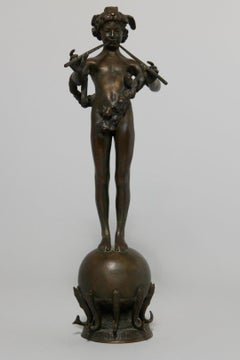
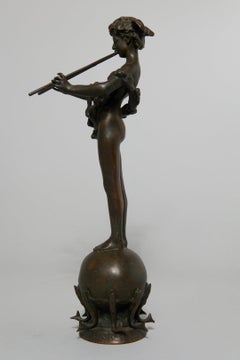
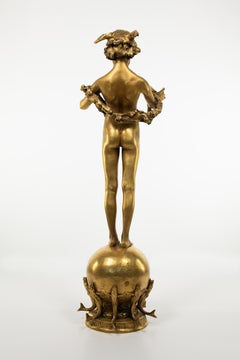
Frederick William MacMonnies Sculptures

American, 1863-1937
A sculptor of classical figures, American-born Frederick MacMonnies had fame in the United States and Europe in the later half of the 19th century and early 20th century. He occasionally returned to America but lived most of his life as in expatriate in France. He was especially known for his lithe bronze figures, especially ones titled Diana. The classical names of these figures allowed him the appearance of propriety but gave him the opportunity to model svelte nudes. Frederick MacMonnies was one of the first American sculptors to recognize the potential market of the middle class. He copyrighted his works and then contracted with foundries to mass produce some of his figures such as Diana in smaller sizes. MacMonnies was born in Brooklyn, New York, and was a child prodigy at carving stone. At age 18, he worked in the studio of Augustus Saint-Gaudens, and then persuaded him to become his assistant, keeping models damp and covered, running errands, and cleaning the studio. Evenings he studied at the Art Students League, Cooper Union, and the National Academy of Design. In Saint-Gaudens' studio, he met many of the wealthy people who shared Saint-Gaudens Beaux-Arts based ideas that art and architecture should be unified in order to create public art in America equal to that of classical antiquity or Renaissance Europe. Among the men that MacMonnies met through Saint-Gaudens who later furthered his career were architects Stanford White and Charles McKim and John LaFarge, decorator of mansions of the wealthy including the Vanderbilts. After four years of study and work in New York, MacMonnies left for Paris, opting for the more modernist techniques he could learn there over the more traditional sculpture teaching in Rome. One of his first teachers was Alexandre Falguiere, who had been an instructor of Saint-Gaudens and who injected a degree of contemporary realism into his classical figures. MacMonnies mingled with many upper class American expatriates and met his future wife, Mary Fairchild, a painter. MacMonnies came home briefly to help Saint-Gaudens with a project and then gained admittance in Paris to the Ecole des Beaux Arts, where he did numerous classical figures inspired by the style of small bronzes of Renaissance Florence, Italy. In 1889, he established his reputation with his sculpture of "Diana" at the Paris Salon. The execution of his nude sculpture was a challenge for a sculptor such as himself who strove for slim, well proportioned figures---the "aestheticizing of the nude". (Katz 12) In those days, most of the female models were poor peasants who were stocky with poor figures, distorted feet and often unbathed. However, MacMonnies found Marie Caira as the model for his Diana figures, and she, from a professional family of models, had the figure and social stature that met his criteria. Although he chose to live in Paris, many of his public and private sculpture commissions in future years, with the help of Saint-Gaudens and also architect, Stanford White, were in the United States.
to
1
1
1
Overall Width
to
Overall Height
to
1
1
1
2
2
2
1
1
1
1
1
1
3
216
214
144
128
2
Artist: Frederick William MacMonnies
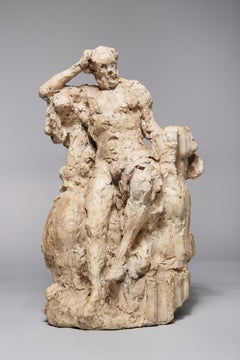
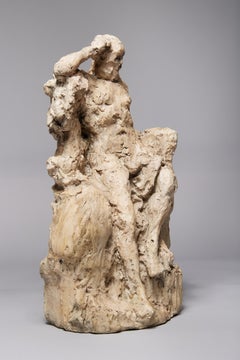
Model Study for Truth Sculpture at NY Public Library of Seated Man

Model Study for Truth Sculpture at NY Public Library of Seated Man

By Frederick William MacMonnies

Located in Beachwood, OH

Frederick William MacMonnies (American, 1863-1937) Model Study for Truth, c. 1910-14 Painted plaster 16.5 x 9.25 x 7.5 inches For the 1920 sculpture for the New York Public Library ...

Category

1910s Frederick William MacMonnies Sculptures

Materials

Plaster

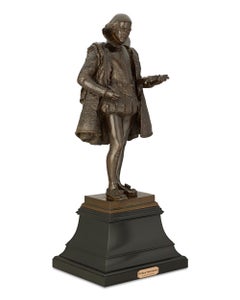
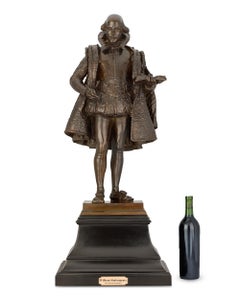
Patinated Bronze Statuette of William Shakespeare

Patinated Bronze Statuette of William Shakespeare

By Frederick William MacMonnies

Located in New Orleans, LA

Frederick William MacMonnies 1863–1937 American William Shakespeare Signed "F. MacMonnies" and foundry-marked "E. Gruet Jeune, Fondeur, Paris" Bronze Frederick William MacMonnies...

Category

19th Century Academic Frederick William MacMonnies Sculptures

Materials

Bronze

Related Items
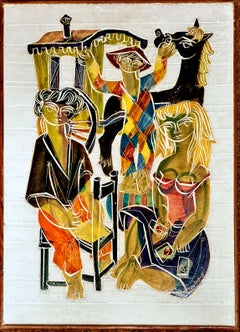
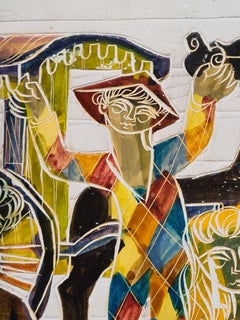
Mid Century Sgraffito, Saltimbanque and the Card Player, Circle of Picasso.

Mid Century Sgraffito, Saltimbanque and the Card Player, Circle of Picasso.

Located in Cotignac, FR

Mid 20th Century sgraffito work on plaster by Jean Pierre de Cayeux. The work is signed and dated on the skirt of the card player, bottom right, and on the stretcher of the chair, bo...

Category

Mid-20th Century Modern Frederick William MacMonnies Sculptures

Materials

Enamel

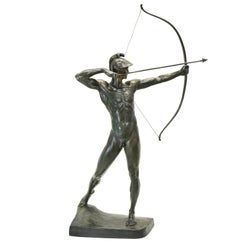
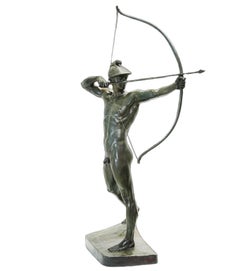
The Archer Large Classical Male Nude Bronze Sculpture by Ernst Moritz Geyger

The Archer Large Classical Male Nude Bronze Sculpture by Ernst Moritz Geyger

Located in Palm Beach, FL

The Archer (Der Bogenschütze) — Large Bronze, 42” tall male nude academic bronze sculpture by Ernst Moritz Geyger. Cast by Gladenbeck Foundry, Berlin This 42-inch bronze of The Arche...

Category

Early 20th Century Academic Frederick William MacMonnies Sculptures

Materials

Bronze

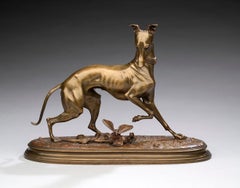
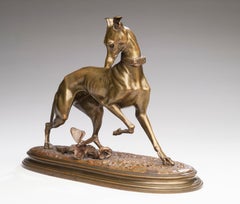
Antique Bronze Dog "Whippet with a Butterfly" Arthur Waagen (1833-1898) 1 of 2

Antique Bronze Dog "Whippet with a Butterfly" Arthur Waagen (1833-1898) 1 of 2

By Arthur Waagen

Located in SANTA FE, NM

Antique Bronze Dog Portrait “La Levrette au Papillon” or “Whippet (Greyhound) with a Butterfly”   Arthur Waagen (Germany, France 1833-1898) Circa 1860’s 11 x 8 x 4  inches (1 of 2. ...

Category

1860s Academic Frederick William MacMonnies Sculptures

Materials

Bronze

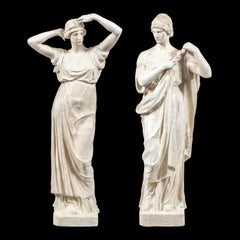
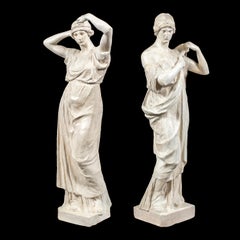
Pair of 19th century scagliola sculptures (Italian Neoclassicism) - Roman figure

Pair of 19th century scagliola sculptures (Italian Neoclassicism) - Roman figure

Located in Varmo, IT

Pair of scagliola sculptures - Roman figures. Italian manufacture, 19th century. 51 x 26 x h 118 cm (left) - 41 x 28 x h 118 cm (right). Made entirely of scagliola. Depicting two f...

Category

Early 19th Century Old Masters Frederick William MacMonnies Sculptures

Materials

Plaster

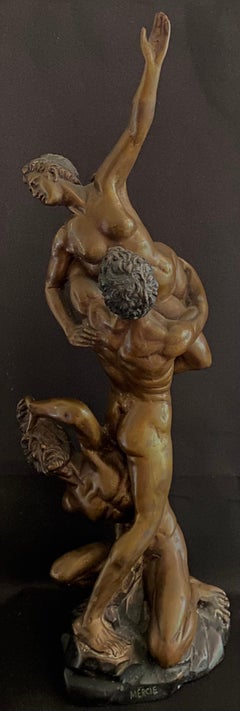
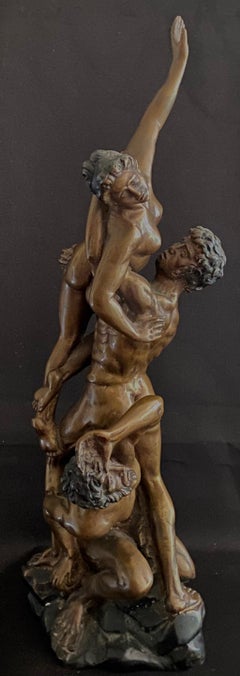
“Enlevement des Sabines”

Marius Jean Antonin Mercié“Enlevement des Sabines”, Circa 1885

$3,040Sale Price|20% Off

H 18 in W 6.25 in D 6.25 in

“Enlevement des Sabines”

By Marius Jean Antonin Mercié

Located in Southampton, NY

Here for your consideration is a beautiful highly detailed bronze done in the forth quarter of the nineteen century after the work of Jean Boulogne, known as Giambologna. Boulogne’s sculpture was done in marble and was completed between 1579 and 1583. The sculptor of this bronze is Antonin Mercie, a well known French sculptor born in 1845. The bronze represents the Rape of the Sabine Women (Latin: Sabinae raptae), also known as the Abduction of the Sabine Women or the Kidnapping of the Sabine Women, was an incident in Roman mythology in which the men of Rome committed a mass abduction of young women from the other cities in the region. It has been a frequent subject of artists and sculptors, particularly during the Renaissance and post-Renaissance eras. Signed on base “Mercie” for Antonin Mercie.. In very good condition wirh original brown patina. The base which depicts rocks is bronze and has been painted a matt black. Provenance:: A Sarasota estate. Mercié, (Marius Jean Antonin Mercie...

Category

1880s Academic Frederick William MacMonnies Sculptures

Materials

Bronze

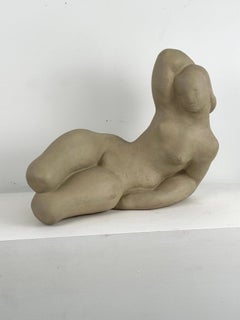
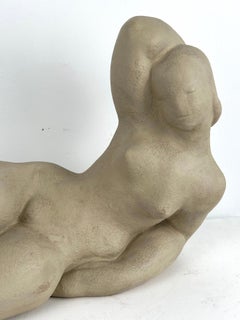
Relining Nude (WG6)
Relining Nude (WG6)

Waylande GregoryRelining Nude (WG6), 1950's

$2,000

H 12 in W 14 in D 8.5 in

Relining Nude (WG6)

By Waylande Gregory

Located in Wilton Manors, FL

Waylande Gregory (1905-1971). Nude Reclining, ca. 1950's. Painted composite cast from original sculpted in 1930's. Casting sanctioned and approved by the artist during his lifetime in partnership with MPI, Museum Pieces Incorporated. Very few examples were produced and even fewer survive. Waylande Gregory was considered a major American sculptor during the 1930's, although he worked in ceramics, rather than in the more traditional bronze or marble. Exhibiting his ceramic works at such significant American venues for sculpture as the Whitney Museum of American Art in New York City and at the venerable Pennsylvania Academy of the Fine Arts in Philadelphia, he also showed his ceramic sculptures at leading New York City galleries. Gregory was the first modern ceramist to create large scale ceramic sculptures, some measuring more than 70 inches in height. Similar to the technique developed by the ancient Etruscans, he fired his monumental ceramic sculptures only once. Gregory was born in 1905 in Baxter Springs, Kansas and was something of a prodigy. Growing up on a ranch near a Cherokee reservation, Gregory first became interested in ceramics as a child during a native American burial that he had witnessed. He was also musically inclined. In fact, his mother had been a concert pianist and had given her son lessons. At eleven, he was enrolled as a student at the Kansas State Teacher's College, where he studied carpentry and crafts, including ceramics. Gregory's early development as a sculptor was shaped by the encouragement and instruction of Lorado Taft, who was considered both a major American sculptor as well as a leading American sculpture instructor. In fact, Taft's earlier students included such significant sculptors as Bessie Potter Vonnoh and Janet Scudder. But, Taft and his students had primarily worked in bronze or stone, not in clay; and, Gregory's earliest sculptural works were also not in ceramics. In 1924, Gregory moved to Chicago where he caught the attention of Taft. Gregory was invited by Taft to study with him privately for 18 months and to live and work with him at his famed "Midway Studios." The elegant studio was a complex of 13 rooms that overlooked a courtyard. Taft may have been responsible for getting the young man interested in creating large scale sculpture. However, by the 1920's, Taft's brand of academic sculpture was no longer considered progressive. Instead, Gregory was attracted to the latest trends appearing in the United States and Europe. In 1928 he visited Europe with Taft and other students. "Kid Gregory," as he was called, was soon hired by Guy Cowan, the founder of the Cowan Pottery in Cleveland, Ohio, to become the company's only full time employee. From 1928 to 1932, Gregory served as the chief designer and sculptor at the Cowan Pottery. Just as Gregory learned about the process of creating sculpture from Taft, he literally learned about ceramics from Cowan. Cowan was one of the first graduates of Alfred, the New York School of Clayworking and Ceramics. Alfred had one of the first programs in production pottery. Cowan may have known about pottery production, but he had limited sculptural skills, as he was lacking training in sculpture. The focus of the Cowan Pottery would be on limited edition, table top or mantle sculptures. Two of the most successful of these were Gregory's Nautch Dancer, and his Burlesque Dancer. He based both sculptures on the dancing of Gilda Gray, a Ziegfield Follies girl. Gilda Gray was of Polish origin and came to the United States as a child. By 1922, she would become one of the most popular stars in the Follies. After losing her assets in the stock market crash of 1929, she accepted other bookings outside of New York, including Cleveland, which was where Gregory first saw her onstage. She allowed Gregory to make sketches of her performances from the wings of the theatre. She explained to Gregory, "I'm too restless to pose." Gray became noted for her nautch dance, an East Indian folk dance. A nautch is a tight, fitted dress that would curl at the bottom and act like a hoop. This sculpture does not focus on Gray's face at all, but is more of a portrait of her nautch dance. It is very curvilinear, really made of a series of arches that connect in a most feminine way. Gregory created his Burlesque Dancer at about the same time as Nautch Dancer. As with the Nautch Dancer, he focused on the movements of the body rather than on a facial portrait of Gray. Although Gregory never revealed the identity of his model for Burlesque Dancer, a clue to her identity is revealed in the sculpture's earlier title, Shimmy Dance. The dancer who was credited for creating the shimmy dance was also Gilda Gray. According to dance legend, Gray introduced the shimmy when she sang the Star Spangled Banner and forgot some of the lyrics, so, in her embarrassment, started shaking her shoulders and hips but she did not move her legs. Such movement seems to relate to the Burlesque Dancer sculpture, where repeated triangular forms extend from the upper torso and hips. This rapid movement suggests the influence of Italian Futurism, as well as the planar motion of Alexander Archipenko, a sculptor whom Gregory much admired. The Cowan Pottery was a victim of the great depression, and in 1932, Gregory changed careers as a sculptor in the ceramics industry to that of an instructor at the Cranbrook Academy in Bloomfield Hills, Michigan. Cranbrook was perhaps the most prestigious place to study modern design in America. Its faculty included the architect Eliel Saarinen and sculptor Carl Milles. Although Gregory was only at Cranbrook for one and one half years, he created some of his finest works there, including his Kansas Madonna. But, after arriving at Cranbrook, the Gregory's had to face emerging financial pressures. Although Gregory and his wife were provided with complimentary lodgings, all other income had to stem from the sale of artworks and tuition from students that he, himself, had to solicit. Gregory had many people assisting him with production methods at the Cowan Pottery, but now worked largely by himself. And although he still used molds, especially in creating porcelain works, many of his major new sculptures would be unique and sculpted by hand, as is true of Kansas Madonna. The scale of Gregory's works were getting notably larger at Cranbrook than at Cowan. Gregory left the surface of Kansas Madonna totally unglazed. Although some might object to using a religious title to depict a horse nursing its colt, it was considered one of Gregory's most successful works. In fact, it had a whole color page illustration in an article about ceramic sculpture titled, "The Art with the Inferiority Complex," Fortune Magazine, December, 1937. The article notes the sculpture was romantic and expressive and the sculpture was priced at $1,500.00; the most expensive sculpture...

Category

1950s Art Deco Frederick William MacMonnies Sculptures
Materials

Plaster

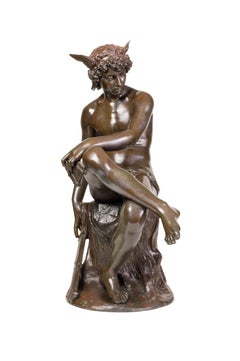
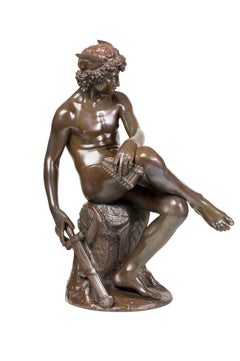
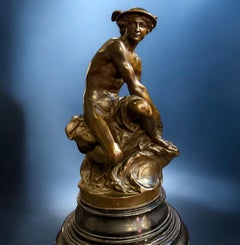
Seated Mercury, or Hermes - God of Speed

Marius Pierre MontagneSeated Mercury, or Hermes - God of Speed, 1867

$9,600Sale Price|20% Off

H 24.63 in W 10.75 in D 15.75 in

Seated Mercury, or Hermes - God of Speed

Located in New York, NY

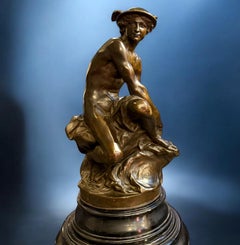
This Mercury by Montagne has lovely patina and surface and is a pleasingly different depiction of Winged speed as he is seated! It is an arresting pose and elegant and covers all fa...

Category

1860s Academic Frederick William MacMonnies Sculptures
Materials

Bronze

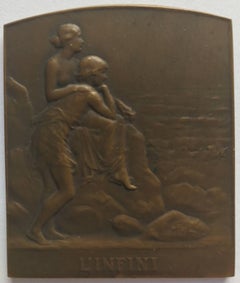
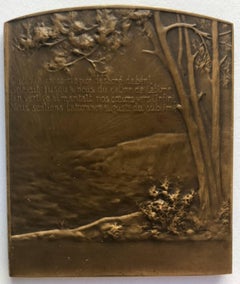
"L'Infini"
"L'Infini"

Pierre Charles Lenoir"L'Infini", Circa 1910

$450

H 2.5 in W 2 in D 0.125 in

"L'Infini"

By Pierre Charles Lenoir

Located in Southampton, NY

Circa 1910 bronze cast medal by the French sculptor, Pierre Charles Lenoir. Edge mark, cornucopia. Pierre Lenoir was a French sculptor and medallist and was one of the Breton sculp...

Category

1910s Academic Frederick William MacMonnies Sculptures
Materials

Bronze

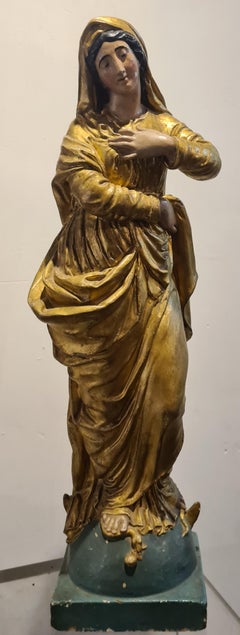
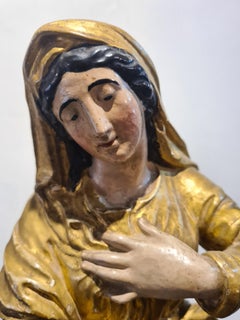
French Polychrome and Gilded Statue of The Virgin Mary

French Polychrome and Gilded Statue of The Virgin Mary

Located in Cotignac, FR

A polychrome and gilt plaster statue of the Blessed Virgin Mary. The quality of the original gilding and the handling of the folds in the clothing are exceptional. A wonderful statu...

Category

Late 19th Century Renaissance Frederick William MacMonnies Sculptures
Materials

Gold Leaf

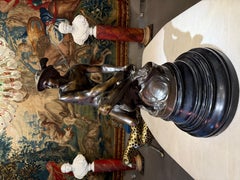
Fabulous Italian Neoclassical Marble Sculpture of Hermes

Fabulous Italian Neoclassical Marble Sculpture of Hermes, 1890

$6,593Sale Price|20% Off

H 33.47 in Dm 17.72 in

Fabulous Italian Neoclassical Marble Sculpture of Hermes

Located in Rome, IT

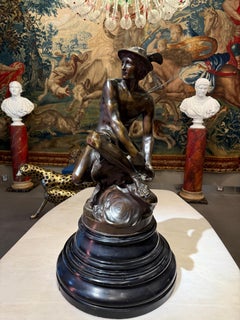
19th century French finely chiseled bronze figure of Hermes . Signed Pigalle G . Cuspinera Hermes , the messenger of the gods, is sitting on a rock, ready to leap up. He is att...

Category

19th Century Academic Frederick William MacMonnies Sculptures
Materials

Bronze

Swimming in Black and White: painted abstract relief sculpture for wall or shelf

Swimming in Black and White: painted abstract relief sculpture for wall or shelf

By Ava Blitz

Located in Bryn Mawr, PA

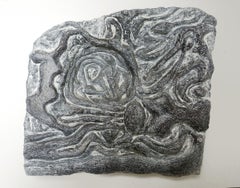
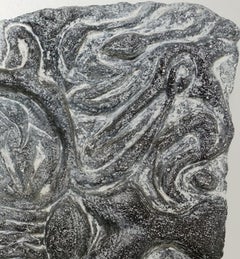
This is a plaster cast relief sculpture painted with black and white designed to be mounted directly to the wall or installed on a shelf. It is an abstract image evoking flowing water and sea life. It is reminiscent of a fossil or natural or scientific curiosity in a "Wunderkammer," or historical cabinet of curiosities. It is signed on the back. Ava Blitz...

Category

2010s Abstract Frederick William MacMonnies Sculptures
Materials

Plaster, Acrylic

Fabulous Italian Neoclassical Marble Sculpture of Hermes

Fabulous Italian Neoclassical Marble Sculpture of Hermes

Located in Rome, IT

19th century French finely chiseled bronze figure of Hermes . Signed Pigalle G . Cuspinera Hermes , the messenger of the gods, is sitting on a rock, ready to leap up. He is att...

Category

19th Century Academic Frederick William MacMonnies Sculptures
Materials

Bronze

Previously Available Items
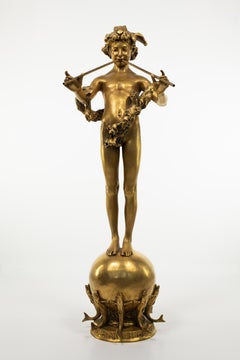
Pan of Rohallion, 1889-90 classical bronze sculpture

Pan of Rohallion, 1889-90 classical bronze sculpture

By Frederick William MacMonnies

Located in Beachwood, OH

Frederick W. MacMonnies (American, 1863-1937) Pan of Rohallion, 1889-90 (Garden 22) Bronze Signed on base, 'ROMAN BRONZE WORKS NY' at base 14.25 x 4 x 6 inches A sculptor of classical figures, American-born Frederick MacMonnies...

Category

1880s Frederick William MacMonnies Sculptures
Materials

Bronze

Frederick William Macmonnies sculptures for sale on 1stDibs.
Find a wide variety of authentic Frederick William Macmonnies sculptures available for sale on 1stDibs.