Located in Studio City, CA
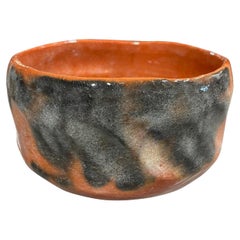
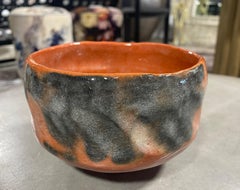
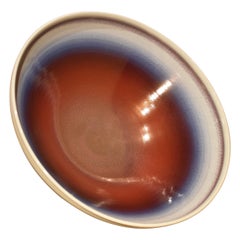
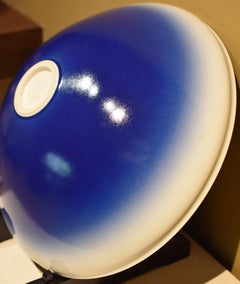
A wonderfully glazed, impeccably made Chawan tea bowl by famed Japanese master potter the 13th Kichizaemon Raku, Seinyu (1887-1944) who was the eldest son of Konyu - the 12th Kichizaemon of the Raku family line of potters - known as the most noted and celebrated tradition of pottery within the world of Japanese tea. Kichizaemon Raku was the 13th master to carry on the family's esteemed name and tradition. The bowl features shifting textures and deep, rich colours which radiate in the light.
The term "Raku" was derived from the site where clay was dug in Kyoto in the late 16th century. The Kanji character for Raku translates to "enjoyment" or "fun/delightful" For 15 generations it has been the title and seal used by a lineage of potters whose work formed the central tradition in Japan. This lineage believes that 'Raku' refers to the potters who use the technique, not the technique itself. In the 16th century, the first of these potters, Chojiro is said to have come under the patronage of the Japanese tea master, Sen-No-Rikyu. According to legend, in 1598 a few years after Chojiro's death, ruler, Hideyoshi Toyotomi bestowed upon his adopted son, Jokei, a golden seal with the written symbol "Raku." Both the name and the ceramic style have been passed down through the family to the present ever since. The name and the style of ware have become influential in both Japanese culture and literature. Raku ware marked an important point in the historical development of Japanese ceramics, as it was the first ware to use a seal mark and the first to focus on close collaboration between potter and patron. Other famous Japanese clay artists...
Category
Early 20th Century Japanese Meiji Hichozan Bowls and Baskets