By Rudolph Weisenborn
Located in Chicago, IL
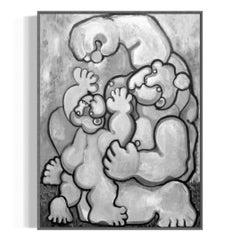
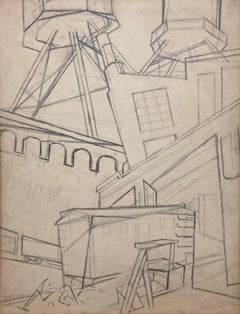
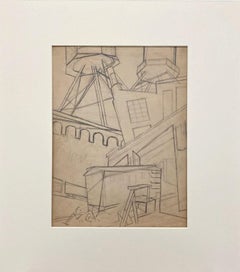
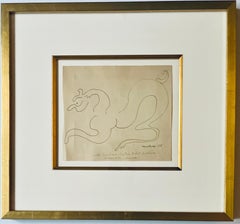
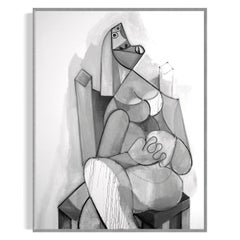
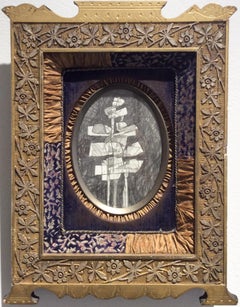
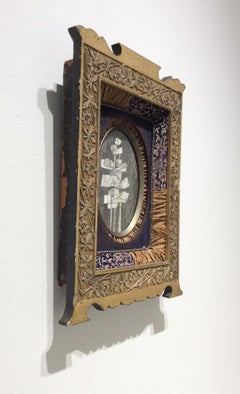
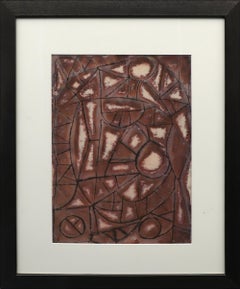
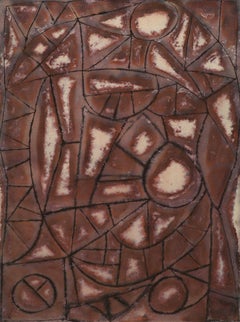
A bold 1940s graphite on paper WPA era mural study of a Chicago city scene by Rudolph Weisenborn. Artwork size: 12 1/2 x 9 1/4 inches. Archivally matted to 18 x 16 inches, Provenance: Estate of the artist.
Rudolph Weisenborn was born in Strassburg, Germany in 1881, but was orphaned at the age of nine. He was taken-in by Mid-Western farmer Thomas Westaby and spent his early years in Wisconsin, Iowa and North Dakota. Weisenborn first attended the University of North Dakota in 1898, then the Students School of Art in Denver. Various accounts have him working out west as a gold miner and cowboy.
Around 1912, he settled in Chicago and worked as a window designer for Marshall Field’s. Weisenborn is best known as the founder of the Chicago No-Jury Society of Artists. The group was founded because many artists could not get their work accepted into the mainstream Art Institute shows. Weisenborn is quoted as saying that he harbored feelings of disdain for any jury and that his own paintings were frequently rejected by conservative jurors. He was also involved and helped found other radical artist’s groups such as the Salon des Refuses, Cor Ardens and Neo-Arlimusic. In 1936, he helped found the New York-based American Abstract Artist’s Group. He created the only abstract mural for the 1933 Century of Progress Exhibition in Chicago and also worked for the Federal Arts Project in the Easel Division. His WPA murals can be found in Crane Technical High School and Nettlehorst Elementary School in Chicago, IL. In 1945, Chicago businessman Herman Spertus...
Category
1940s American Modern Humberto Ramirez Art