By Eileen Soper
Located in Saint Augustine, FL
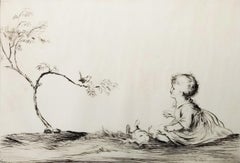
Artist: Eileen Alice Soper (English, 1905-1990)
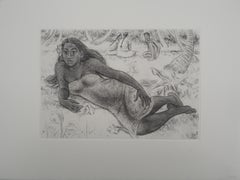
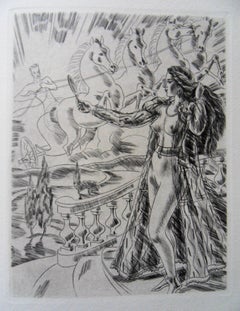
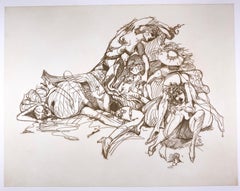
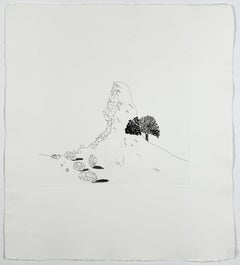
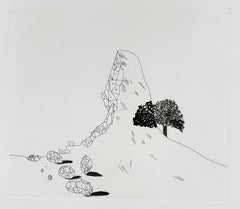
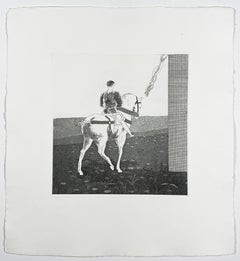
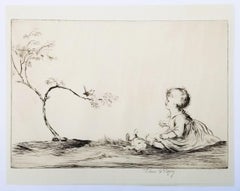
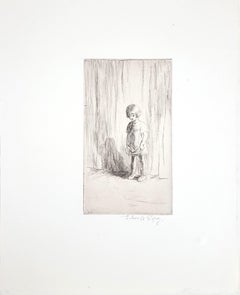
Title: "Spring Song"
*Signed by Soper in pencil lower right
Year: 1924
Medium: Original Etching on cream laid paper
Limited edition: 178
Printer: Likely printed by Eva Soper, London, UK
Publisher: H C Dickens, London, UK
Sheet size: 8.13" x 10.13"
Image size: 6.63" x 9.63"
Reference: "The Catalogue Raisonne of Prints and Etchings of George and Eileen Soper" - Beetles No. 83, page 119, 141, 157
Condition: Paper trimmed in the margins. A few faint areas of discoloration. It is otherwise a strong impression in very good condition
Notes:
Provenance: private collection - Boulder, CO.
Biography:
Eileen Soper was born in 1905 in the Municipal Borough of Enfield and moved to the house where she was to spend the rest of her life in Harmer Green, Welwyn in the Hertfordshire countryside in 1908. The house she later named "Wildings" was built by her father, the artist George Soper...
Category
1920s Modern Jacques Boullaire Art
MaterialsLaid Paper, Drypoint, Etching, Intaglio