By John Charles Maggs
Located in Nr Broadway, Worcestershire
John Charles Maggs
British, (1819-1896)
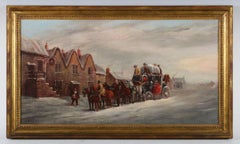
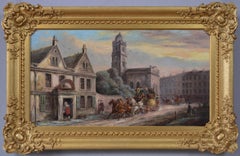
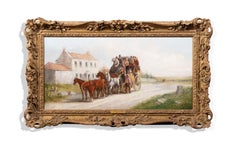
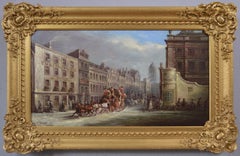
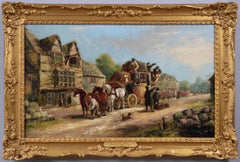
The Christopher Hotel
Oil on canvas, signed & titled ‘Bath’
Image size: 13.5 inches x 25.5 inches
Size including frame: 21 inches x 33 inches
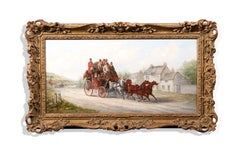
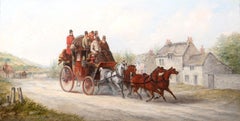
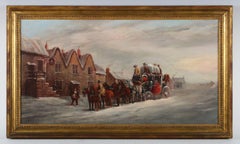
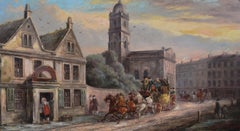
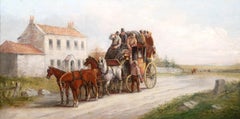
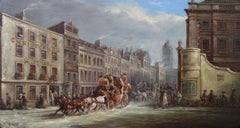
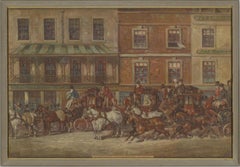
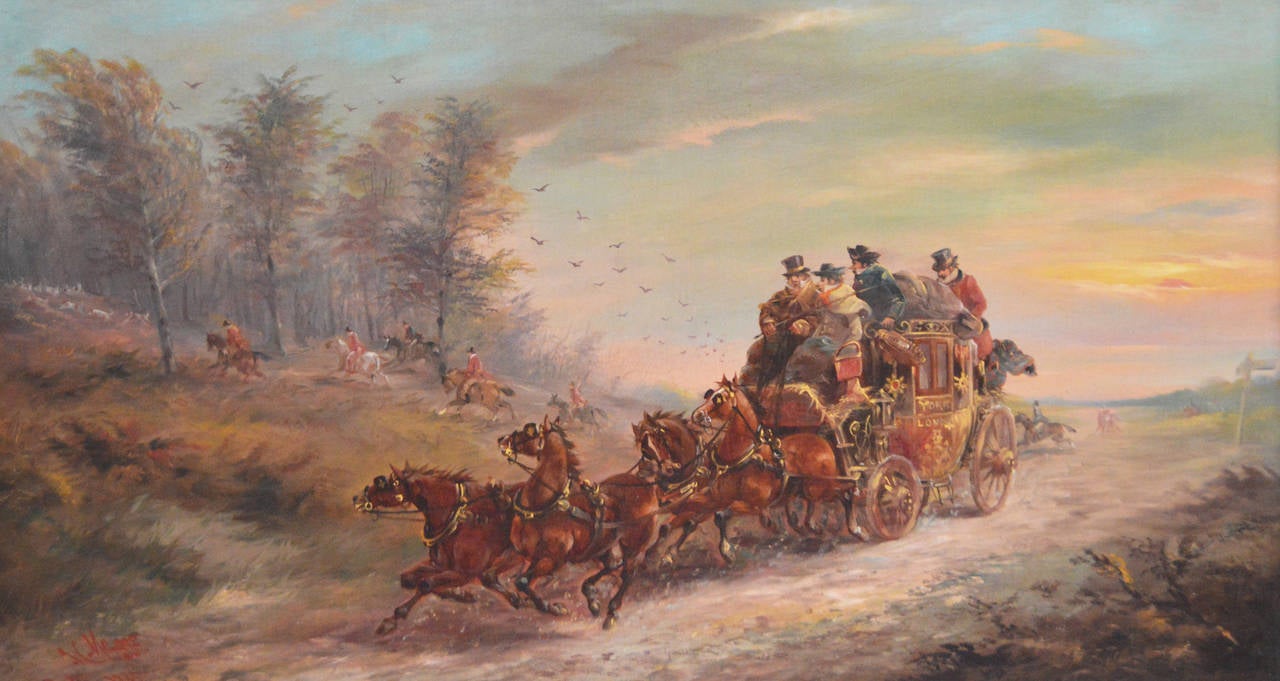
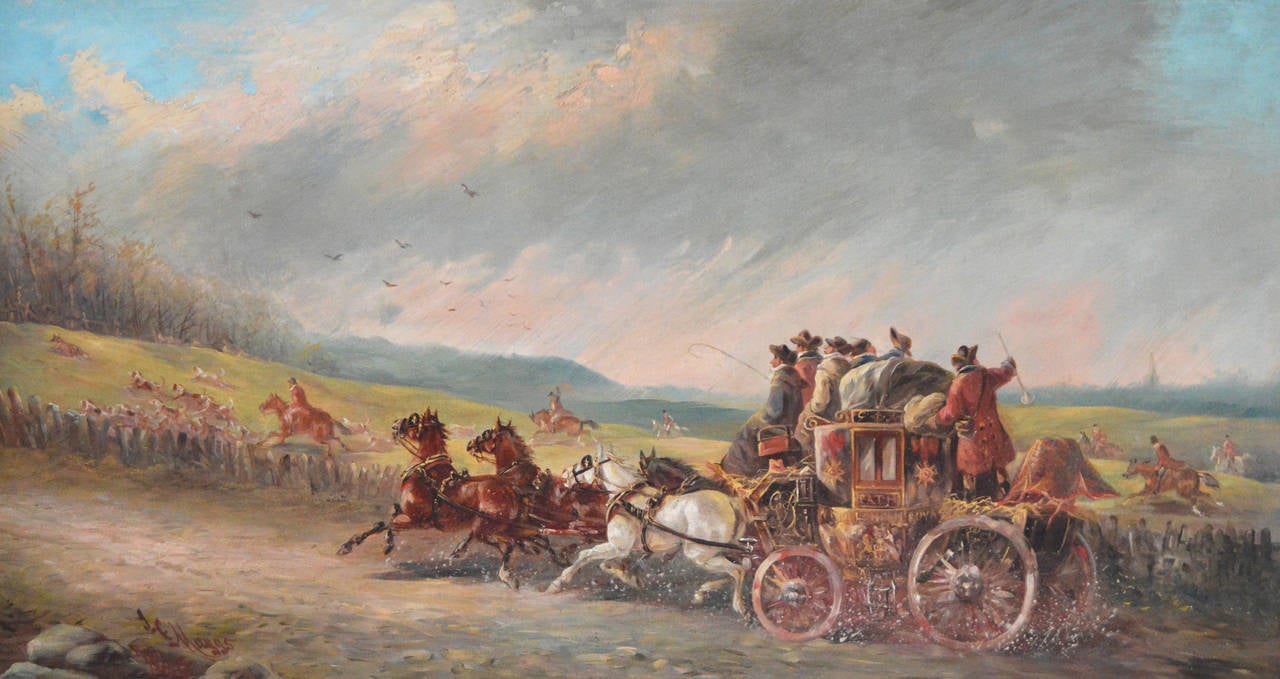
A busy coaching scene set outside the Christopher Hotel on Bath High Street by John Charles Maggs. As the stage coach pulls up, a mail guard sounds the coaching horn to signal the arrival of the mail coach. Maggs painted a number of coaching scenes based in Bath including this fine example. The Christopher Hotel was one of many inns that sprang up after the London-Bath stage coach route was opened. The first regular stage coach from London to Bath started in 1667 running 3 times a week, with a daily service beginning in 1711. On Monday 2 August, 1784, the first mail-coach in England set out between London and Bristol, stopping at Bath and provided a quicker and safer way of transporting mail as well as passengers. The Bath Road, (A4) was the main road linking Bristol and London and it took 2 days for passengers to travel between Bath and London.
The Christopher Hotel dates from the Georgian period around 1730 and possibly earlier and was situated near to the Roman Baths and the Victoria Art Gallery. During the late 1800’s, Bath Rugby Club...
Category
19th Century Victorian John Charles Maggs Art