By Ken Matsuzaki
Located in Atlanta, GA
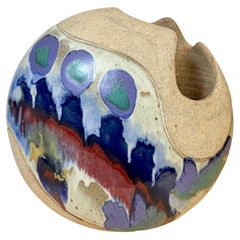
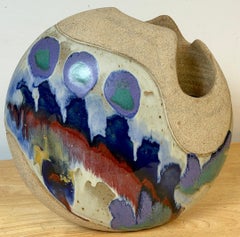
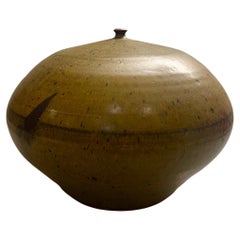
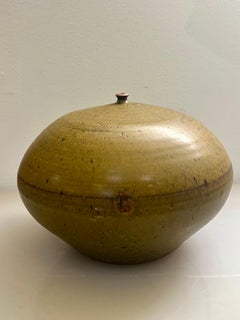
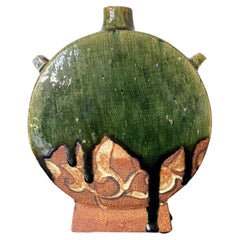
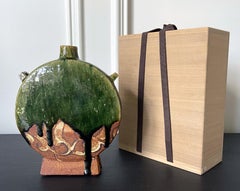
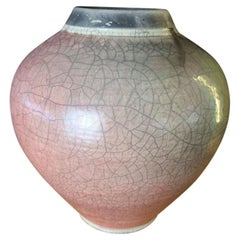
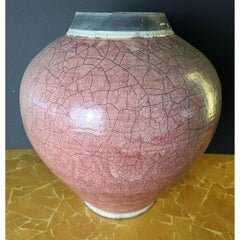
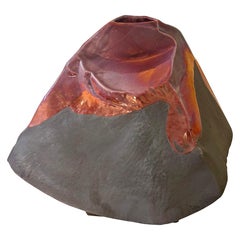
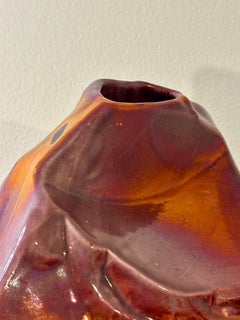
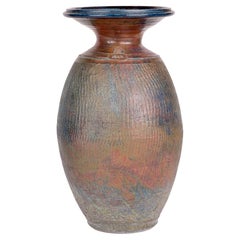
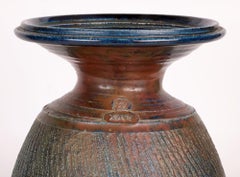
A contemporary studio ceramic vase made by Japanese potter Ken Matsuzaki (1950-). The vase showcases distinguished "moon flask" form with shoulder loops. The moon flask form was widely recorded first in Tang Dynasty China, most likely arrived from the Mideast countries via the silk road. It was originally used as drink vessel for the nomads and the loops were used to tie it to the horse-centered owner. The exotic form persisted in Chinese ceramic production through Ming to Qing dynasty. The form is unusual in Ken Matsuzaki's work. The artist covered the vase with a thick dripping Oribe green glaze partially revealing the unglazed part of the body, which is decorated with scrolling pattern in left by ash glaze. The work is rooted in both Yohen Shino glaze technique and Oribe tradition, but interestingly it also paid homage to Sancai pottery in Tang Dynasty when green glaze was prominently used to drip and splash onto the pottery. Viewing the vase, one can see in this harmonious piece, the innovative reinterpretation of ancient aesthetics that cross the cultures, geology and time. The base is marked with the artist's signature. The vase comes with an inscribed tomobako storage box with the artist's bio and wrapping cloth with seal. The vase measures 8.6"h x 7"w x 2"d.
Ken Matsuzaki’s haptic ceramics bring a contemporary approach to traditional Japanese ceramicware, most notably 16th-century Oribe pottery...
Category
Early 2000s Japanese Modern Ken Pick Decorative Objects