Kevin A. Moore More Art
to
1
5
Overall Width
to
Overall Height
to
5
4
1
5
5
5
6
318
230
122
117
5
Artist: Kevin A. Moore
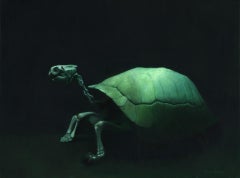
Lonesome George
By Kevin A. Moore
Located in Denver, CO
Lonesome George
Category
21st Century and Contemporary Kevin A. Moore More Art
Materials
Oil, Panel
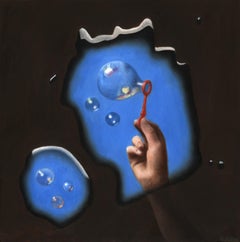
Summertime
By Kevin A. Moore
Located in Denver, CO
Summertime, 2021
Category
21st Century and Contemporary Kevin A. Moore More Art
Materials
Oil, Panel
$480 Sale Price
20% Off
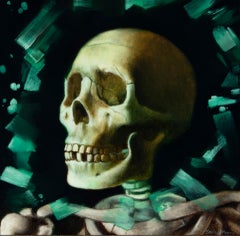
Emerald Shadow #1
By Kevin A. Moore
Located in Denver, CO
Emerald Shadow #1
Category
21st Century and Contemporary Kevin A. Moore More Art
Materials
Oil, Panel
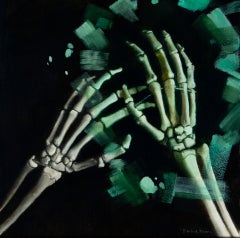
Emerald Shadow #2
By Kevin A. Moore
Located in Denver, CO
Emerald Shadow #2
Category
21st Century and Contemporary Kevin A. Moore More Art
Materials
Oil, Panel
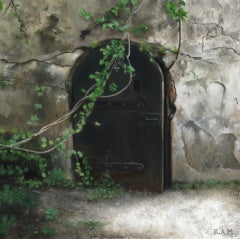
Forgotten Passage
By Kevin A. Moore
Located in Denver, CO
Forgotten Passage
Category
21st Century and Contemporary Kevin A. Moore More Art
Materials
Oil, Panel
Related Items
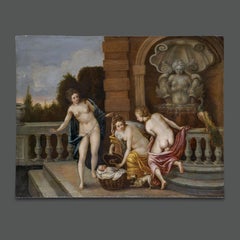
Francesco Albani Circle Italian Mythological Painting
Located in Roma, IT
Francesco Albani Circle Italian Mythological Painting
This important oil painting on wood depicts a subject that is very rare in the iconography of ancient mythological paintings: the birth of Erittonio. Erichthonius who succeeded Amphictyon becoming the fourth mythological king of Athens and married the naiad Praxithea who made him the father of Pandion.
The extremely high quality of this very rare painting suggests that it was painted by an artist who frequented Francesco Albani's studio.
The period, the mythological subject, the harmony of the colours and, above all, the sublime quality of the flesh tones all point in this direction.
This artwork, never before on the market, comes from an important Italian private collection
Every item of our Gallery, upon request, is accompanied by a certificate of authenticity issued by Sabrina Egidi official Expert in Italian furniture for the Chamber of Commerce of Rome and for the Rome Civil Courts.
ERYTHTONIOS (᾿Ερυχϑόνιος, Erychthonios)
Born of Hephaestus' love for Athena, from the breast of Ghe, who was impregnated by the god; welcomed by Athena, who placed him in a basket together with one or two snakes, entrusting him to the care of Cecrops' three daughters.
Against the goddess's wishes, they opened the chest, from which emerged, according to different versions of the myth, either the child wrapped in snakes or a snake, which, in some versions, killed the girls, while in others, they threw themselves from the Acropolis in fear. Erittonio, in the form of a snake, is welcomed by Athena into her temple and curls up under the goddess's shield. Alongside this myth, of Ionian origin, are others due to the doubling of the figures of E. and Erechtheus
The scene of the birth appears in figurative tradition: in a Melian terracotta relief from the early 5th century, Ghe, half-emerging, holds out the baby Erittonio. to Athena, who welcomes him in the presence of Cecrops; the same scene appears on various painted vases, such as a red-figure kölix by the Painter of Kodros, from Tarquinia, in the Berlin Museums, dating from around 440 BC, where Hephaestus also appears alongside Cecrops.
A modest red-figure vase from Camiro, in the British Museum, depicts the moment when the fleeing Cecropids discover the cista, from which the infant Erittonio. emerges between two snakes, greeting Athena.
The moment when the chest was opened was depicted by Phidias on the xiii and xiv S metopes of the Parthenon, where Cecrops and Pandrosus appear in the first and Erisichthon and Aglaurus with the chest uncovered in the second.
A kölix in the style of the Brygos Painter in Frankfurt, on the other hand, depicts the large snake E. chasing the fleeing Cecropids towards their father's palace.
Luciano (De dom., 27) recalls a painting depicting the scene of the birth and the representation of the myth in pantomime on the theatre (De salt., 39).
Bibliography: Engelmann, in Roscher, cc. 1303-1308, s. v. Erichthonios; P. Jacobstahl, Die Melischen Reliefs, Berlin 1931, pp. 96-98, plate 75 a; W. Züchner, in Jahrbuch, LXV-LXVI, 1950-51, p. 200 ff., figs. 34-35; J. D. Beazley, Red-fig., p. 720; G. Becatti, Problemi fidiaci, Florence 1951, p. 22.
Questo
Francesco Albani (Bologna, August 17, 1578 – Bologna, October 4, 1660) was an Italian painter.
Albani was born in Bologna, Papal States, in 1578.
His father was a silk merchant who intended his son to go into his own trade. By the age of twelve, however, he had become an apprentice to the competent mannerist painter Denis Calvaert, in whose studio he met Guido Reni. He soon followed Reni to the so-called "Academy" run by Annibale, Agostino, and Ludovico Carracci.
This studio fostered the careers of many painters of the Bolognese school, including Domenichino, Massari, Viola, Lanfranco, Giovanni Francesco Grimaldi...
Category
Late 17th Century Old Masters Kevin A. Moore More Art
Materials
Oil, Wood Panel

$19,304
H 19.3 in W 24.81 in D 0.79 in
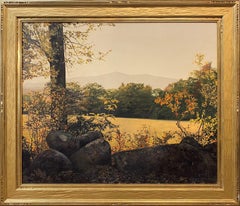
Golden Afternoon, Mount Monadnock, NH
By Erick Ingraham
Located in Milford, NH
This finely detailed landscape of a stone wall and field beneath Mount Monadnock in New Hampshire on a warm summer afternoon was painted by contemporar...
Category
2010s Realist Kevin A. Moore More Art
Materials
Oil, Panel
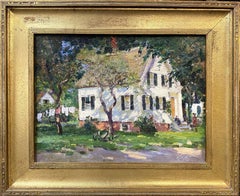
Home and Sunshine
By Anthony Thieme
Located in Milford, NH
A pleasant New England townscape scene by Dutch American artist Anthony Thieme (1888-1954). Thieme was born in Rotterdam, Holland and, after traveling in Europe, England, & South Ame...
Category
Early 20th Century American Impressionist Kevin A. Moore More Art
Materials
Oil, Panel
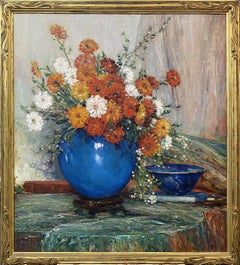
Still Life with Flowers in a Blue Vase
Located in Milford, NH
A large beautiful still life with flowers in a blue vase by American artist Owen Cullen Yates (1866-1945). Yates was born in Bryan, Ohio and studied in New York City with William Mer...
Category
Early 20th Century American Impressionist Kevin A. Moore More Art
Materials
Canvas, Oil, Panel
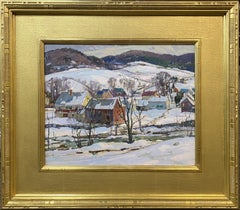
Winter Landscape with Houses, Jamaica, VT
By Aldro Thompson Hibbard
Located in Milford, NH
A fine impressionist winter landscape with houses in Jamaica, Vermont by well known American artist Aldro Thompson Hibbard (1886-1972). Hibbard was born in Falmouth, MA, studied at ...
Category
Mid-20th Century American Impressionist Kevin A. Moore More Art
Materials
Oil, Panel
$16,000
H 28.5 in W 32.38 in D 2.5 in
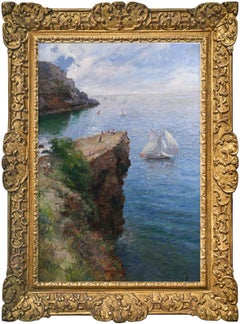
Oil painting On Canvas On Panel, Mediterranean View With Sailboat And Cliffs
Located in Gavere, BE
Oil On Canvas On Panel, Mediterranean View With Sailboat And Cliffs ** SOLD WITHOUT FRAME **
Additional information about the work:
Title: Mediterranean View
Medium: oil on canvas...
Category
Late 20th Century Impressionist Kevin A. Moore More Art
Materials
Canvas, Oil, Wood Panel
$5,912
H 30.32 in W 20.08 in
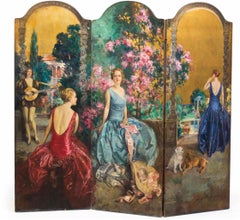
Four Women in a Fanciful Garden Setting, Decorative Screen
By Howard Chandler Christy
Located in Fort Washington, PA
A beautiful decorative screen featuring elegant women in a garden setting painted by the renowned American illustrator Howard Chandler Christy.
Medium: Oil on Panel in Three Parts
D...
Category
1920s Kevin A. Moore More Art
Materials
Oil, Panel
$89,000
H 66.25 in W 71.75 in
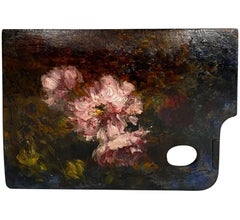
Peonies on a Palette
By Félix Ziem
Located in Milford, NH
A fine impressionist painting of peonies on a palette by French artist Felix François Georges Philibert Ziem (1821-1911). Ziem was born in Beaune,...
Category
1890s Impressionist Kevin A. Moore More Art
Materials
Oil, Panel
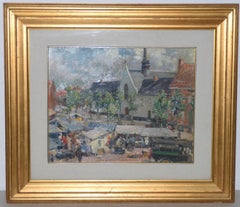
Cipriano Mannucci "Italian Village Landscape" Original Oil Painting c.1927
By Cipriano Mannucci
Located in San Francisco, CA
Cipriano Mannucci (1882-1970) Village Landscape Oil Painting c.1927
Original oil on panel by listed artist.
The painting shows an outdoor market in a small village.
Oil on panel. ...
Category
Early 20th Century Impressionist Kevin A. Moore More Art
Materials
Oil, Panel
$985
H 22 in W 25 in D 3 in
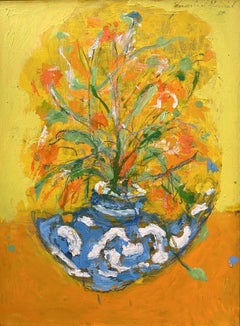
Flowers with a Yellow Background
By Humbert Howard
Located in Milford, NH
A fine impressionist floral still life by American artist Humbert Howard (1905-1990). Howard was born in Philadelphia and considered an important figure among contemporary African-American artists. He was educated at Howard University in Washington, D.C., the University of Pennsylvania in Philadelphia, and the Barnes Foundation in Merion, Pennsylvania. Howard was also art director of the Pyramid Club, a respected black cultural center in Philadelphia. As director of the club’s art exhibitions, he selected works by both black and white artists for display.
By the time he retired in 1971, he had developed a loyal following of collectors and dealers in the Philadelphia area. In the eighties, he became increasingly involved with younger members of the local art scene and became a mentor to emerging black artists...
Category
1980s American Impressionist Kevin A. Moore More Art
Materials
Oil, Panel
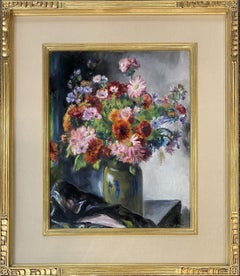
Still Life with Flowers in a Stoneware Vase
By Martha Walter
Located in Milford, NH
A nicely detailed still life painting with flowers in a stoneware or ceramic painted vase by American artist Martha Walter (1875-1976). Walter was born in Phildelphia, PA, studied at...
Category
Early 20th Century American Impressionist Kevin A. Moore More Art
Materials
Oil, Panel
Orioles and Grapes
Located in Pasadena, CA
Acquired by the gallery directly from the artist
UNRAMED: 16.5" x 11.5" FRAMED: 11.5" x 16.5" x 1"
Exhibited
Spring into Art 2024, presented by the San Marino League at The Huntin...
Category
2010s Realist Kevin A. Moore More Art
Materials
Oil, Panel

Previously Available Items
Knockamany Bends
By Kevin A. Moore
Located in Denver, CO
Knockamany Bends, 2020
Category
21st Century and Contemporary Kevin A. Moore More Art
Materials
Oil, Panel
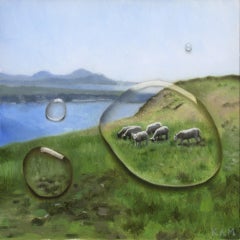
Kevin A. Moore more art for sale on 1stDibs.
Find a wide variety of authentic Kevin A. Moore more art available for sale on 1stDibs. You can also browse by medium to find art by Kevin A. Moore in oil paint, paint, panel and more. Not every interior allows for large Kevin A. Moore more art, so small editions measuring 5 inches across are available. Customers who are interested in this artist might also find the work of Steven Guy Bilodeau, George Simmons, and Dolores Tema. Kevin A. Moore more art prices can differ depending upon medium, time period and other attributes. On 1stDibs, the price for these items starts at $400 and tops out at $950, while the average work can sell for $480.
Artists Similar to Kevin A. Moore
Questions About Kevin A. Moore More Art
- What are Sicilian Moor heads?1 Answer1stDibs ExpertApril 5, 2022Sicilian Moor heads, also known as “teste di moro,” are ceramic vases that originated in Sicily. Moor heads come in pairs — one is the head of a man and the other is the head of a woman. On 1stDibs, you’ll find a collection of antique and contemporary Sicilian Moor heads from some of the world’s top sellers.
- Why is Kevin Red Star famous?1 Answer1stDibs ExpertJanuary 27, 2025Kevin Red Star is famous because of his role in the contemporary Native American art movement. He is known for producing paintings that depict Indigenous people in realistic detail. When planning and executing his work, he refers to historical sources and living people to show his subjects in the most authentic way possible. On 1stDibs, shop a variety of Kevin Red Star art.
- 1stDibs ExpertApril 5, 2022Henry Moore’s sculptures often represented the connection between the human body and landscapes. The underlying meaning is that humanity is shared with the natural world, and many of his large-scale sculptures were created to compliment the outdoor landscape where they were placed. You’ll find a selection of Henry Moore sculptures and sketches on 1stDibs.
- Why did Henry Moore draw hands?1 Answer1stDibs ExpertMay 30, 2024Henry Moore drew hands to symbolize the passage of time. His series of drawings depicting his own hands in old age and other elderly people's hands were meant to represent the effects of work and living on the human body. Much of Moore's work reflected on the human form, including his large bronze sculptures. Explore a diverse assortment of Henry Moore art on 1stDibs.
- 1stDibs ExpertJune 6, 2024Henry Moore's style of art was modern. He is best known for his monumental bronze sculptures, which are installed around the world, often as public art. He used abstract forms of the human body, typically depicting mother-and-child or reclining figures. His more abstract forms are generally pierced or contain hollow spaces. Many critics have likened the undulating shapes of his reclining figures to the landscape and hills of his Yorkshire birthplace. On 1stDibs, find an assortment of Henry Moore art.
- 1stDibs ExpertJanuary 10, 2025Hancock and Moore furniture is made in North Carolina. Best known for producing luxury leather furniture, the company operates factories in the towns of Bethlehem, Taylorsville and High Point. Jack Glasheen and Jimmy Moore established the furniture maker in Hickory, North Carolina, in 1981. Find a wide range of Hancock and Moore furniture on 1stDibs.
- 1stDibs ExpertMay 3, 2024Opinions vary as to what Henry Moore's most famous piece is. Since the British artist's semi-abstract monumental bronze sculptures are often public works of art, many have become well known. Among them are Reclining Figure: Festival (1951), Harlow Family Group (1954-5), Helmet Head No. 4: Interior/Exterior (1963), The Arch (1963-69) and Mother and Child (1983). On 1stDibs, find a variety of Henry Moore art.
- 1stDibs ExpertApril 5, 2022Henry Moore frequently used the wax resist process in his drawings, which involved sketching the forms in wax crayon and coating the drawing with a wash of gray watercolor. He then went in with black ink, gray and black crayons and white watercolor. Find a selection of Henry Moore artwork from top art dealers around the world on 1stDibs.
- 1stDibs ExpertApril 26, 2024Henry Moore created sculptures for a few reasons. Born in Castleford, Yorkshire, in 1898, he had an early interest in being a sculptor, and in 1921, he was awarded a scholarship to study at the Royal Academy of Art in London. As he would explain, this is where he was particularly inspired to pursue his sculpting practice: “Even when I was a student I was totally preoccupied by sculpture in its full spatial richness, and if I spent a lot of time at the British Museum in those days, it was because so much of the primitive sculpture there was distinguished by complete cylindrical realization.” He also had an interest in exploring how the human body connected to landscapes. He often produced works with specific locations in mind, considering how his figures would relate to the space around them. His forms are usually abstractions of the human body, typically depicting mother-and-child or reclining figures, and are often pierced or contain hollow spaces. Many interpreters liken the undulating form of his reclining figures to the landscape and hills of his Yorkshire birthplace. On 1stDibs, shop a variety of Henry Moore art.
- Why did Henry Moore draw sheep?1 Answer1stDibs ExpertMarch 13, 2024Henry Moore drew sheep for a few reasons. The British artist thought sheep were peaceful and found watching them graze to be relaxing. He also liked how they stood out against the landscape due to their coloring, likening it to the way a statue draws the eye away from the rest of its surroundings. On 1stDibs, find a diverse assortment of Henry Moore art.
- 1stDibs ExpertAugust 20, 2024How much a Henry Moore statue is worth depends on its history, condition and other factors. In 2022, his Reclining Figure: Festival, created for the 1951 Festival of Britain, set an auction record for the artist when it sold for $31 million. The piece is a good example of the artist's forms, which are usually abstractions of the human figure, typically depicting a mother and child or reclining figure. Moore's works are often suggestive of the female body, apart from a period in the 1950s when he sculpted family groups. If you own a Henry Moore statue, a certified appraiser or experienced art dealer can help you determine its estimated value. Shop an assortment of Henry Moore art on 1stDibs.
- 1stDibs ExpertApril 5, 2022Henry Moore used holes in his sculptures to create the illusion that his work was growing from an empty center. His sculptures Oval with Points and Double Oval are two examples of the technique. You'll find a selection of Henry Moore art on 1stDibs.
- 1stDibs ExpertApril 5, 2022Henry Moore moved to London to study art and often visited the British Museum where he was inspired by ancient sculptures from Egypt, Africa and Mexico. His sculptures have a semi-abstract nature, but he often dabbled in other styles of art. Moore even created his own form of modernism with an eye toward the abstract. On 1stDibs, find a variety of original artwork from top artists.
- 1stDibs ExpertOctober 30, 2024Yes, Barbara Hepworth knew Henry Moore. They met while she was attending the Leeds School of Art in the 1920s. Moore and Hepworth maintained a friendly rivalry throughout their careers. Along with Paul Nash and Ben Nicholson, the two founded the Unit One art movement in 1933. The movement's purpose was to promote avant-garde art in the UK. Explore a wide variety of Barbara Hepworth art.
- 1stDibs ExpertJanuary 10, 2025Moore is considered Britain's greatest sculptor due to the impact his art had on his contemporaries and successors and because of the fame and success he enjoyed during his life. Henry Moore’s forms are usually abstractions with pierced or hollow spaces responding to the human figure, typically depicting mother-and-child or reclining figures. Many interpreters liken the undulating forms of his reclining figures to the landscape and hills of his Yorkshire birthplace. Moore became well known through his carved marble and larger-scale abstract cast bronze sculptures and was instrumental in introducing a particular form of modernism to the United Kingdom. Most of the money he earned went toward endowing the Henry Moore Foundation, which continues supporting education and promoting the arts. Shop a diverse assortment of Henry Moore art on 1stDibs.
- 1stDibs ExpertNovember 20, 2024Yes, Henry Moore and Barbara Hepworth were friends. The two met at the Leeds School of Art in the UK and maintained a friendly rivalry throughout their careers. Both Hepworth and Moore were members of Unit One, a group of British artists who sought to educate the public about avant-garde art during the 1930s. Shop a selection of Henry Moore and Barbara Hepworth art on 1stDibs.
- 1stDibs ExpertApril 5, 2022Henry Moore was a prolific artist and it’s difficult to pinpoint exactly how many pieces of art he created. The Henry Moore Foundation lists that their online catalogue of his works currently features more than 11,000 sculptures, drawings, tapestries, textiles and graphics. That’s a significant number indeed and does not represent all of his contributions to the art world. On 1stDibs, find a variety of original artwork from top artists.