By Kikuo Saito
Located in New York, NY
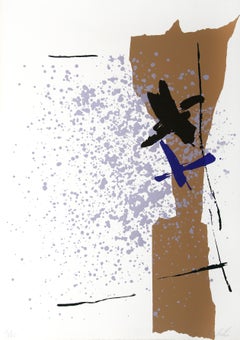
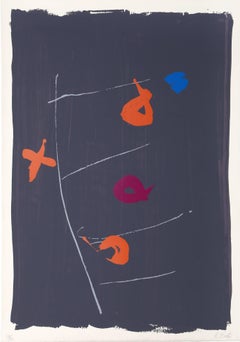
Kikuo Saito
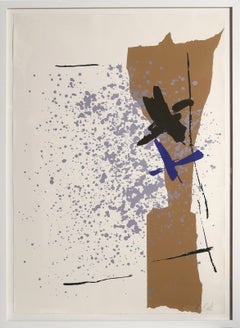
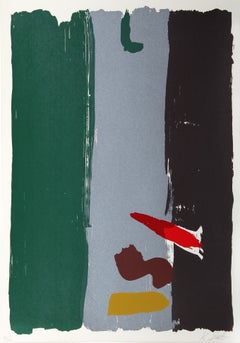
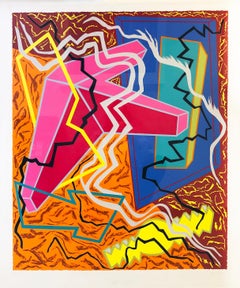
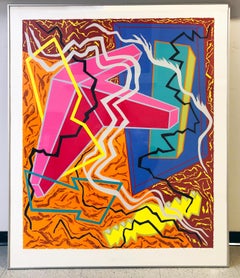
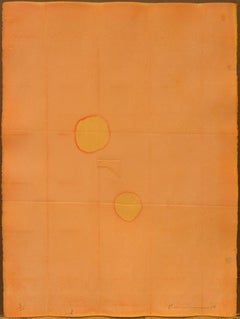
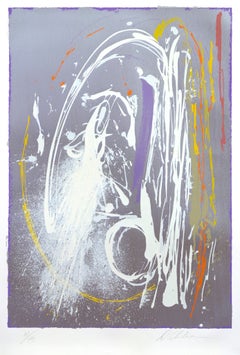
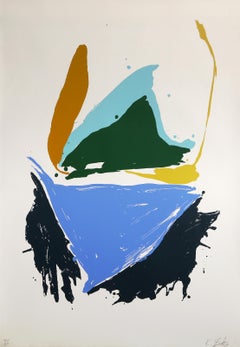
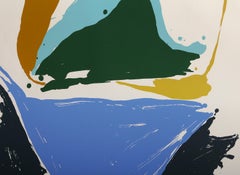
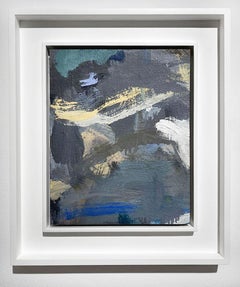
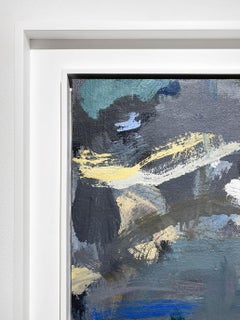
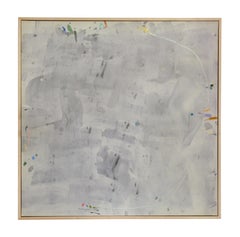
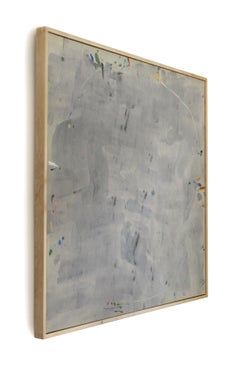
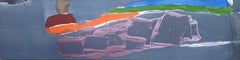
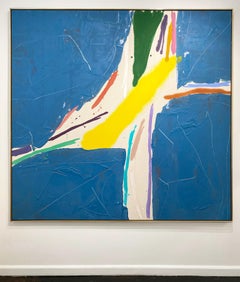
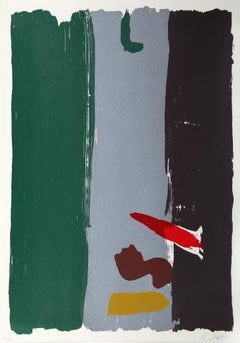
Orange Tent, 1987
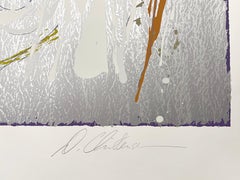
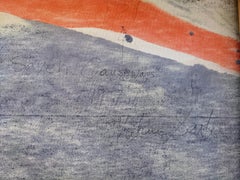
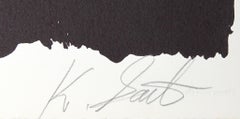
Signed, titled and dated on the reverse
Acrylic on canvas
49 x 52 inches
Provenance:
Southam Family, Montreal (acquired directly from the artist in the late 1980s)
Private Collection, by descent
Oeno Gallery, Ontario, Canada
Kikuo Saito (1939 – 2016) was a Japanese-born American abstract painter with ties to the Color Field movement and Lyrical abstraction. A former assistant to Helen Frankenthaler, Kenneth Noland, and Larry Poons, Saito's work infuses richly saturated colorscapes with delicately drawn lines. Saito was the creator of sui generis theatre and dance events, collaborating with innovative directors and choreographers Robert Wilson, Peter Brook, Jerome Robbins, and dancer and choreographer Eva Maier, to whom he was married for several decades. His productions combined wordless drama in the poetic frameworks of light, costumes, music, and dance, most of which he devised and directed himself.
Kikuo Saito was born in Tokyo in 1939. He began painting when he was 17 years old, and worked for 3 years as a proctor and studio technician at the workshop of Sensei Itoh, an established Japanese painter. During this time, Saito gained an understanding of both the traditional arts of Japan as well as contemporary movements such as the Gutai Group. He also had an interest in the burgeoning New York City art world and movements such as Abstract Expressionism, Minimalism, Color Field, and Pop Art.
Saito moved to New York in 1966 at the age of 27. The journey across the United States to New York provided him a chance meeting with Ellen Stewart, founder of La MaMa Experimental Theatre Club, whom he would later describe as his American mother. Once in New York, Saito worked with Stewart at La MaMa and was instrumental in bringing Japanese avant-garde dramatist Shuji Terayama to La MaMa in 1980. In his early years in New York, Saito balanced painting with theatre, supporting himself with carpentry and working on loft build-outs in Soho.
The composition of many of Saito's paintings was significantly influenced by and in dialogue with the geography of his theatre productions. Saito's dualistic nature took material form in the interplay between the collaborative theatre and the private realm of the painting studio. Art critic Karen Wilkin wrote that "if we are attentive, we discover that characters from his stage pieces have been reincarnated as abstract configurations within his paintings, reborn as the records of animated gestures that retain the individuality of their sources."
A commonality in the entire body of Saito's work, both on stage or on canvas, focuses on written signs...
Category
1980s Abstract Kikuo Saito Art