Léopold Flameng Art

French, 1831-1911

Leopold Flameng was a French artist, well-known for his etchings reproducing works by Jan van Eyck, Leonardo da Vinci, Rembrandt, Ingres and Delacroix, Boccaccio, Paul Scarron, Victor Hugo and François Coppée, producing one-hundred beautiful illustrations. Flameng at first studied with Luigi Calamatta and Jean Gigoux. His talent as an engraver was noticed by Charles Blanc, and his collaboration on the Gazette des Beaux-Arts with his fellow engraver Léon Gaucherel helped to improve the reputation of the publication. Flameng was a medallist at the Universal Exhibition (1878) and was elected member of the Academy of Fine Arts in 1898.

to
8
5
3
2
2
2
2
1
8
2

Use search to find more

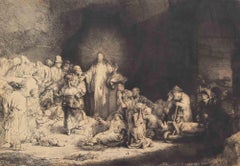
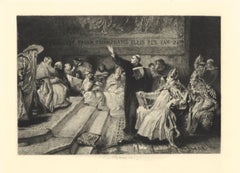
"A Convocation" etching

"A Convocation" etching

By Léopold Flameng

Located in Henderson, NV

Medium: etching (etched by Leopold Flameng after the Sir John Gilbert painting). This impression on laid paper was printed in 1882 for the "A Group of ...

Category

1880s Léopold Flameng Art

Materials

Etching

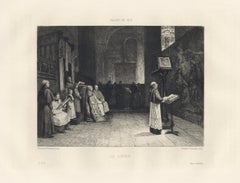
"Le Lutrin" etching

"Le Lutrin" etching

By Léopold Flameng

Located in Henderson, NV

Medium: etching (etched by Leopold Flameng after the Francois Fleming painting). This impression on laid paper was printed in 1875 and published in Paris by L'Art. Plate size: 7 1/2 ...

Category

1870s Léopold Flameng Art

Materials

Etching

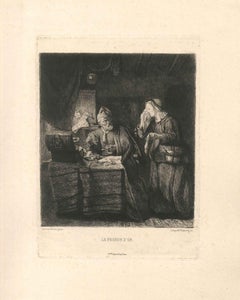
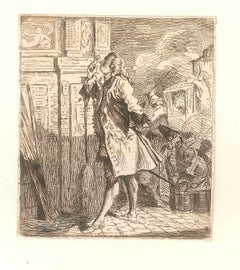
Lafont de St. Yenne - Original Etching by Léopold Flameng - 1859

Lafont de St. Yenne - Original Etching by Léopold Flameng - 1859

By Léopold Flameng

Located in Roma, IT

Lafont de Saint-Yenne is an original black and white etching realized by Léopold Flameng. This curious artwork, representing a French gentleman, art connesseur, admiring some architectural decoration; was published in "Gazette des Beaux Arts in 1859". A wonderful print, after a satirical drawing by Caylus. In excellent conditions, including a cream cardboard passepartout, cm 38.5 x 28.5. Léopold Flameng (1831, Brussels –1911, Courgent) The French engraver, illustrator and painter is known for his etchings of works by Jan van Eyck, Leonardo da Vinci, Rembrandt, Ingres and Delacroix. Flameng also illustrated several books on Paris and numerous literary works of classical and contemporary authors, including Boccaccio, Paul Scarron, Victor Hugo and François Coppée. His first artistic studies were with Luigi Calamatta and Jean Gigoux. His skill as engraver was noticed by Charles Blanc and his collaboration in the Gazette des Beaux-Arts with fellow engraver Léon Gaucherel...

Category

1850s Modern Léopold Flameng Art

Materials

Etching

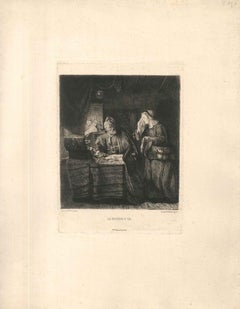
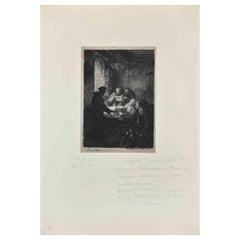
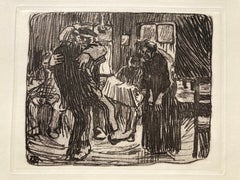
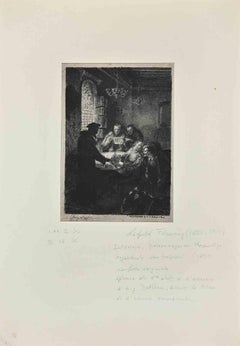
The Poet - Original Etching by Léopold Flameng - 1853

The Poet - Original Etching by Léopold Flameng - 1853

By Léopold Flameng

Located in Roma, IT

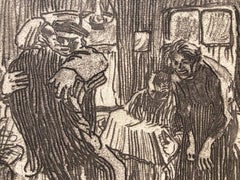
"The Poet" is an original etching on paper, realized by Léopold Flameng. The state of preservation of the artwork is very good. Signed on the plate. The artwork represents beautiful poets in a tavern, the etching technique is used. Léopold Flameng (1831 - 1911): Léopold F. was a French engraver, illustrator and painter. He was born of French parents. He was a medallist at the Exposition Universelle (1878) and was elected a member of the Académie des Beaux-Arts in 1898 . Known for his etchings of works by Jan van Eyck , Leonardo da Vinci , Rembrandt , Ingres and Delacroix , he illustrated several books on Paris and numerous literary works of classical and contemporary authors, including Boccaccio , Paul Scarron , Victor Hugo and François Coppée . He had numerous students, including his son, François Flameng...

Category

1850s Modern Léopold Flameng Art

Materials

Etching

Related Items
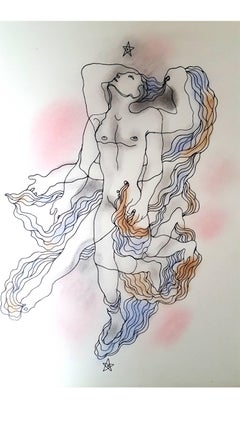
Jean Cocteau - White Book - Original Handcolored Lithograph

Jean Cocteau - White Book - Original Handcolored Lithograph

By Jean Cocteau

Located in Collonge Bellerive, Geneve, CH

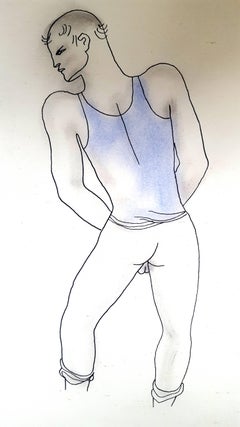
Jean Cocteau White Book - Autobiography about Cocteau's discovery of his homosexuality. The book was first published anonymously and created a scandal. Original Handcolored Lithograp...

Category

1930s Modern Léopold Flameng Art

Materials

Lithograph

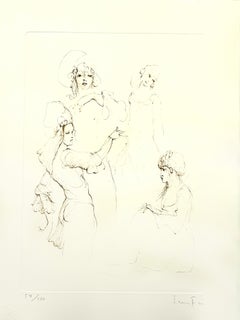
Leonor Fini - Servants - Original Handsigned Lithograph

Leonor Fini - Servants - Original Handsigned Lithograph

By Leonor Fini

Located in Collonge Bellerive, Geneve, CH

Leonor Fini - Servants - Original Handsigned Lithograph Les Elus de la Nuit 1986 Conditions: excellent Handsigned and Numbered Edition: 230 Dimensions: 38 x 28 cm Editions: Trinckve...

Category

1980s Modern Léopold Flameng Art

Materials

Lithograph

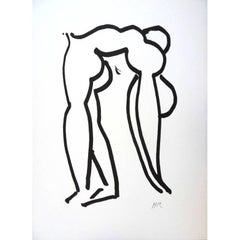
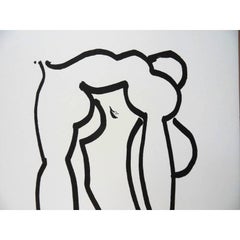
after Henri Matisse - Acrobat

Henri Matisseafter Henri Matisse - Acrobat

$1,451

H 29.93 in W 22.05 in D 0.04 in

after Henri Matisse - Acrobat

By Henri Matisse

Located in Collonge Bellerive, Geneve, CH

after Henri Matisse - Acrobat Edition of 200 with the printed signature, as issued 76 x 56 With stamp of the Succession Matisse References : Artvalue - Succession Matisse

Category

1950s Modern Léopold Flameng Art

Materials

Lithograph

ENDE
ENDE

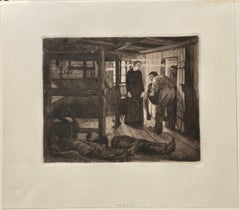
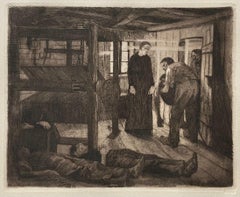
Käthe KollwitzENDE, 1895 (1945)

$750

H 9.625 in W 12 in

ENDE

By Käthe Kollwitz

Located in Santa Monica, CA

KATHE KOLLWITZ (German 1867 -1945) ENDE, (Klipstein 37 ) Etching and aquatint with the von de Becke blind stamp in the lower right. Printed around 1945. Unsigned posthumous impres...

Category

1890s Modern Léopold Flameng Art

Materials

Etching

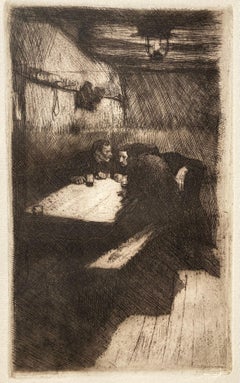
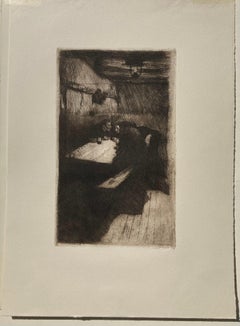
BERATUNG
BERATUNG

BERATUNG

By Käthe Kollwitz

Located in Santa Monica, CA

KATHE KOLLWITZ (German 1867 -1945) BERATUNG, 1895 (1945) (Klipstein vii/vii) Etching and aquatint, 1895 (Later Imp), Image 11 ½” x 7", sheet 19 x 13 ¾”. Unsigned, with the von de B...

Category

1890s Expressionist Léopold Flameng Art

Materials

Etching, Aquatint

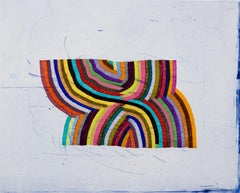
Untitled (3)

Untitled (3)

By Alicia McCarthy

Located in Berkeley, CA

Color softground etching with drypoint. Edition of 35

Category

2010s Contemporary Léopold Flameng Art

Materials

Etching, Intaglio

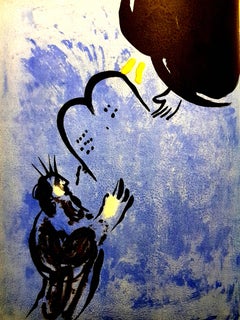
Marc Chagall - Moses - Original Lithograph

Marc Chagall - Moses - Original Lithograph

By Marc Chagall

Located in Collonge Bellerive, Geneve, CH

Marc Chagall, Original Lithograph depicting an instant of the Bible. Technique: Original lithograph in colours Year: 1956 Sizes: 35,5 x 26 cm / 14" x 10.2" (sheet) Published by: Éditions de la Revue Verve, Tériade, Paris Printed by: Atelier Mourlot, Paris Documentation / References: Mourlot, F., Chagall Lithograph [II] 1957-1962, A. Sauret, Monte Carlo 1963, nos. 234 and 257 Marc Chagall (born in 1887) Marc Chagall was born in Belarus in 1887 and developed an early interest in art. After studying painting, in 1907 he left Russia for Paris, where he lived in an artist colony on the city’s outskirts. Fusing his own personal, dreamlike imagery with hints of the fauvism and cubism popular in France at the time, Chagall created his most lasting work—including I and the Village (1911)—some of which would be featured in the Salon des Indépendants exhibitions. After returning to Vitebsk for a visit in 1914, the outbreak of WWI trapped Chagall in Russia. He returned to France in 1923 but was forced to flee the country and Nazi persecution during WWII. Finding asylum in the U.S., Chagall became involved in set and costume design before returning to France in 1948. In his later years, he experimented with new art forms and was commissioned to produce numerous large-scale works. Chagall died in St.-Paul-de-Vence in 1985. The Village Marc Chagall was born in a small Hassidic community on the outskirts of Vitebsk, Belarus, on July 7, 1887. His father was a fishmonger, and his mother ran a small sundries shop in the village. As a child, Chagall attended the Jewish elementary school, where he studied Hebrew and the Bible, before later attending the Russian public school. He began to learn the fundamentals of drawing during this time, but perhaps more importantly, he absorbed the world around him, storing away the imagery and themes that would feature largely in most of his later work. At age 19 Chagall enrolled at a private, all-Jewish art school and began his formal education in painting, studying briefly with portrait artist Yehuda Pen. However, he left the school after several months, moving to St. Petersburg in 1907 to study at the Imperial Society for the Protection of Fine Arts. The following year, he enrolled at the Svanseva School, studying with set designer Léon Bakst, whose work had been featured in Sergei Diaghilev's Ballets Russes. This early experience would prove important to Chagall’s later career as well. Despite this formal instruction, and the widespread popularity of realism in Russia at the time, Chagall was already establishing his own personal style, which featured a more dreamlike unreality and the people, places and imagery that were close to his heart. Some examples from this period are his Window Vitebsk (1908) and My Fianceé with Black Gloves (1909), which pictured Bella Rosenfeld, to whom he had recently become engaged. The Beehive Despite his romance with Bella, in 1911 an allowance from Russian parliament member and art patron Maxim Binaver enabled Chagall to move to Paris, France. After settling briefly in the Montparnasse neighborhood, Chagall moved further afield to an artist colony known as La Ruche (“The Beehive”), where he began to work side by side with abstract painters such as Amedeo Modigliani and Fernand Léger as well as the avant-garde poet Guillaume Apollinaire. At their urging, and under the influence of the wildly popular fauvism and cubism, Chagall lightened his palette and pushed his style ever further from reality. I and the Village (1911) and Homage to Apollinaire (1912) are among his early Parisian works, widely considered to be his most successful and representative period. Though his work stood stylistically apart from his cubist contemporaries, from 1912 to 1914 Chagall exhibited several paintings at the annual Salon des Indépendants exhibition, where works by the likes of Juan Gris, Marcel Duchamp and Robert Delaunay were causing a stir in the Paris art world. Chagall’s popularity began to spread beyond La Ruche, and in May 1914 he traveled to Berlin to help organize his first solo exhibition, at Der Sturm Gallery. Chagall remained in the city until the highly acclaimed show opened that June. He then returned to Vitebsk, unaware of the fateful events to come. War, Peace and Revolution In August 1914 the outbreak of World War I precluded Chagall’s plans to return to Paris. The conflict did little to stem the flow of his creative output, however, instead merely giving him direct access to the childhood scenes so essential to his work, as seen in paintings such as Jew in Green (1914) and Over Vitebsk (1914). His paintings from this period also occasionally featured images of the war’s impact on the region, as with Wounded Soldier (1914) and Marching (1915). But despite the hardships of life during wartime, this would also prove to be a joyful period for Chagall. In July 1915 he married Bella, and she gave birth to a daughter, Ida, the following year. Their appearance in works such as Birthday (1915), Bella and Ida by the Window (1917) and several of his “Lovers” paintings give a glimpse of the island of domestic bliss that was Chagall’s amidst the chaos. To avoid military service and stay with his new family, Chagall took a position as a clerk in the Ministry of War Economy in St. Petersburg. While there he began work on his autobiography and also immersed himself in the local art scene, befriending novelist Boris Pasternak, among others. He also exhibited his work in the city and soon gained considerable recognition. That notoriety would prove important in the aftermath of the 1917 Russian Revolution when he was appointed as the Commissar of Fine Arts in Vitebsk. In his new post, Chagall undertook various projects in the region, including the 1919 founding of the Academy of the Arts. Despite these endeavors, differences among his colleagues eventually disillusioned Chagall. In 1920 he relinquished his position and moved his family to Moscow, the post-revolution capital of Russia. In Moscow, Chagall was soon commissioned to create sets and costumes for various productions at the Moscow State Yiddish...

Category

1950s Modern Léopold Flameng Art
Materials

Lithograph

HAMBURGER KNIEPPE
HAMBURGER KNIEPPE

HAMBURGER KNIEPPE

By Käthe Kollwitz

Located in Santa Monica, CA

KATHE KOLLWITZ (1867-1945) HAMBURGER KNIEPPE, 1901) (K.58 IIIb) Soft Ground Etching, Plate 9 ¾ x 8 ¼ sheet 10 ½ x 13 ¾. With the von de Becke blind stamp in the lower right. Prin...

Category

Early 1900s Expressionist Léopold Flameng Art

Materials

Etching

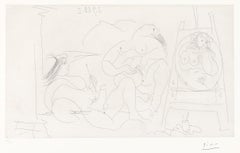
Series 347:301 (Raphael et Fornarina VI: Enfin seuls)

Series 347:301 (Raphael et Fornarina VI: Enfin seuls)

By Pablo Picasso

Located in New York, NY

A very good impression of this etching. Signed and numbered 35/50 in pencil by Picasso. Printed by Crommelynck, Mougins. Published by Galerie Louise Leiris, Paris. From "347 Gravures...

Category

1960s Modern Léopold Flameng Art

Materials

Etching

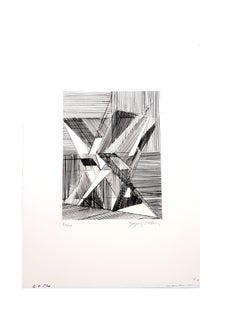
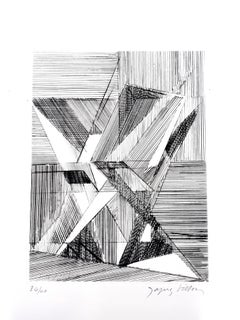
Jacques Villon - Two Cubist Vases - Original Etching

Jacques Villon - Two Cubist Vases - Original Etching

By Jacques Villon

Located in Collonge Bellerive, Geneve, CH

Jacques Villon - Two Cubist Vases - Original Etching 1950 Signed in pencil Edition of 40 Jacques Villon (1875 - 1963) Jacques Villon was born Gaston Duchamp on July 31, 1875, in Da...

Category

1950s Modern Léopold Flameng Art
Materials

Etching

Jean Cocteau - White Book - Original Handcolored Lithograph

Jean Cocteau - White Book - Original Handcolored Lithograph

By Jean Cocteau

Located in Collonge Bellerive, Geneve, CH

Jean Cocteau White Book - Autobiography about Cocteau's discovery of his homosexuality. The book was first published anonymously and created a scandal. Original Handcolored Lithograp...

Category

1930s Modern Léopold Flameng Art
Materials

Lithograph

Rufino Tamayo, "Personaje con Sombrero" 1979

Rufino Tamayo, "Personaje con Sombrero" 1979

By Rufino Tamayo

Located in Los Angeles, CA

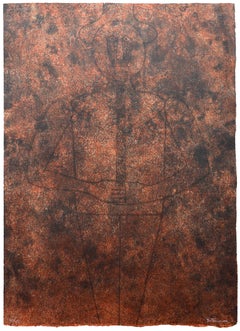
"Personaje con Sombrero" is a superb figurative abstraction by the renown Mexican artist Rufino Tamayo. An aquatint and etching in colors printed on a full sheet of watermarked woven handmade paper. The full sheet measures 29 5/8 inches H. x 22 inches W. Framed dimensions are 40 3/4 inches H. x 33 inches W. Signed "R Tamayo" and numbered "40/99" in white crayon by the artist. Printed and published by Poligrafa, Barcelona in 1979. Rufino Tamayo (1899-1991) is a modern master whose legacy is rooted in his contributions across a variety of media, including mural and easel painting, drawing, and the graphic arts. Produced between 1925 and 1991, his graphic work includes woodcuts, lithographs, etchings, and Mixografia prints — a new technique that was developed in the early 1970s to allow him to produce his prints in relief. Tamayo is one of the most celebrated Mexican Artists of the 20th Century. Heavily influenced by pre-Columbian art...

Category

1970s Modern Léopold Flameng Art
Materials

Etching, Aquatint

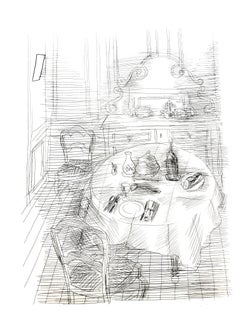
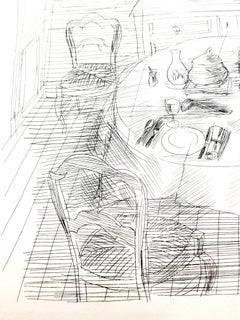
Raoul Dufy - French Dinner - Original Etching

Raoul Dufy - French Dinner - Original Etching

By Raoul Dufy

Located in Collonge Bellerive, Geneve, CH

Raoul Dufy - French Dinner - Original Etching Dimensions: 13 x 10". Edition of 200 1940 Edition Les Bibliophiles du Palais, Paris Unsigned and unumbered as issued

Category

1940s Modern Léopold Flameng Art
Materials

Etching

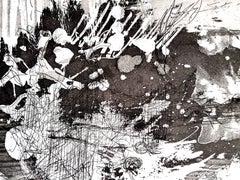
Jean Jansem - Original Etching

Jean JansemJean Jansem - Original Etching, 1974

$558

H 15.75 in W 11.82 in D 0.04 in

Jean Jansem - Original Etching

By Jean Jansem

Located in Collonge Bellerive, Geneve, CH

Jean Jansem - Original Etching Title: Loneliness Dimensions: 40 x 30 cm Edition of 175 Paper: vélin de Rives 1974 Jean Jansem was born in 1920 at Seuleuze in Asia Minor and spent h...

Category

1970s Modern Léopold Flameng Art
Materials

Etching

Previously Available Items
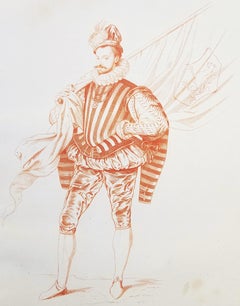
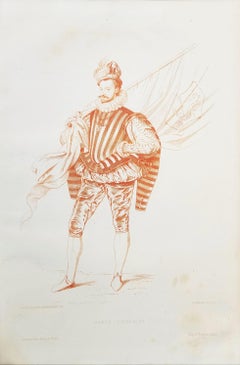
Porte-Enseigne (Sign Holder) /// Old Masters Antique Etching Figurative Soldier

Porte-Enseigne (Sign Holder) /// Old Masters Antique Etching Figurative Soldier

By Léopold Flameng

Located in Saint Augustine, FL

Artist: Léopold Flameng (French, 1831-1911) Title: "Porte-Enseigne (Sign Holder)" Portfolio: Gazette des Beaux-Arts Year: 1866 Medium: Original Etching on cream laid paper Limited edition: approx. 1,500 Printer: Alfred Salmon, Paris, France Publisher: Gazette des Beaux-Arts, Paris, France Reference: Sanchez/Seydoux 1866-19 Sheet size: 10.63" x 7.13" Image size: 7.75" x 5.75" Condition: Light toning to sheet. Some surface marks and small areas of discoloration. In good condition Notes: This etching is after a painting by French artist Edmond Lechevallier-Chevignard (1825-1902). Printed in sanguine. Partial unidentified watermark right center edge. This etching was published by Gazette des Beaux-Arts. The Gazette des Beaux-Arts was a French art review, found in 1859 by Édouard Houssaye, with Charles Blanc as its first chief editor. Assia Visson Rubinstein was chief editor under the direction of George Wildenstein from 1928 until 1960. Her papers, which include all editions of the Gazette from this period, are intact at the Cantonal and University Library of Lausanne in Dorigny. The Gazette was a world reference work on art history for nearly 100 years - one other editor in chief, from 1955 to 1987, was Jean Adhémar. It was bought in 1928 by the Wildenstein family, whose last representative was Daniel Wildenstein, its director from 1963 until his death in 2001. The review closed in 2002. Biography: Léopold Flameng (22 November 1831, Brussels – 5 September 1911, Courgent) was a French engraver, illustrator and painter. He was born of French parents. His first artistic studies were with Luigi Calamatta and Jean Gigoux. His skill as engraver was noticed by Charles Blanc and his collaboration in the Gazette des Beaux-Arts with fellow engraver Léon Gaucherel helped ensure the publication's reputation. He eventually provided one hundred illustrations. He was a medallist at the Exposition Universelle (1878) and was elected a member of the Académie des Beaux-Arts in 1898 . Known for his etchings of works by Jan van Eyck, Leonardo da Vinci, Rembrandt, Ingres and Delacroix, he illustrated several books on Paris and numerous literary works of classical and contemporary authors, including Boccaccio, Paul Scarron, Victor Hugo and François Coppée. He had numerous students, including his son, François Flameng...

Category

1860s Old Masters Léopold Flameng Art
Materials

Laid Paper, Etching, Intaglio

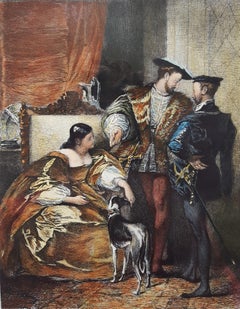
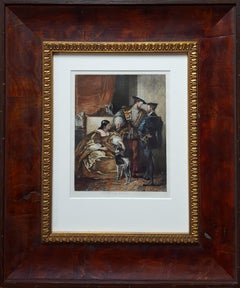
Francis the First and the Duchess of Étampes

Francis the First and the Duchess of Étampes

By Léopold Flameng

Located in Saint Augustine, FL

An original hand-colored etching by French artist Leopold Flameng (1831-1911) titled "Francis the First and the Duchess of Étampes", 1876. Signed in ...

Category

1870s Romantic Léopold Flameng Art
Materials

Watercolor, Etching

Léopold Flameng art for sale on 1stDibs.
Find a wide variety of authentic Léopold Flameng art available for sale on 1stDibs. You can also browse by medium to find art by Léopold Flameng in etching, laid paper, lithograph and more. Much of the original work by this artist or collective was created during the 19th century and is mostly associated with the modern style. Not every interior allows for large Léopold Flameng art, so small editions measuring 4 inches across are available. Customers who are interested in this artist might also find the work of George Ferdinand Bigot, Charles Courtry, and Pierre Puvis de Chavannes. Léopold Flameng art prices can differ depending upon medium, time period and other attributes. On 1stDibs, the price for these items starts at $100 and tops out at $446, while the average work can sell for $213.

Artists Similar to Léopold Flameng

Theophile Narcisse Chauvel
Jules Jacques Veyrassat
George Ferdinand Bigot
Paul Gavarni (Guillaume Sulpice Chevalier)
Hippolyte Bellangé