By Ludwig Mies van der Rohe, Lilly Reich
Located in Topeka, KS
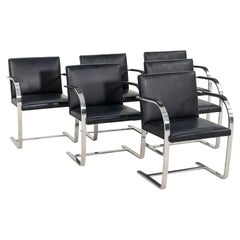
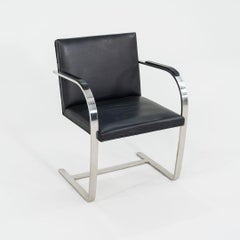
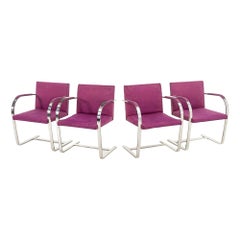
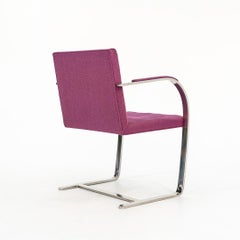
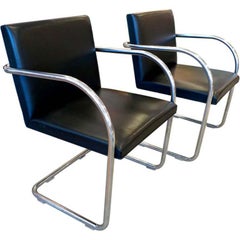
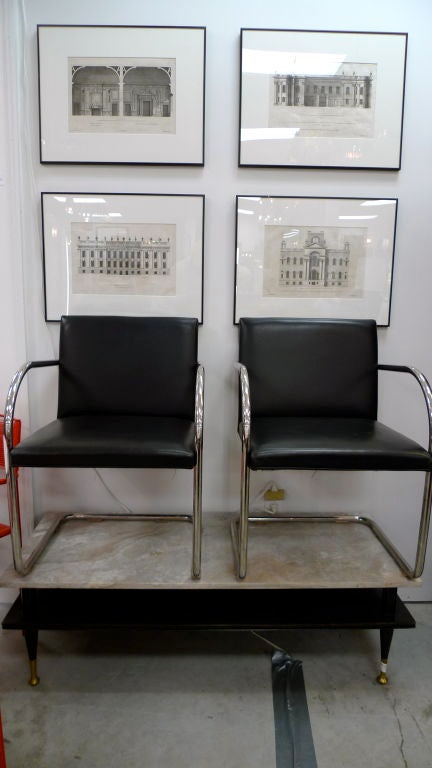
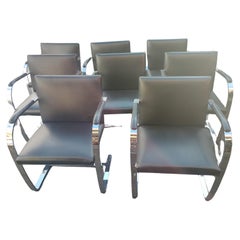
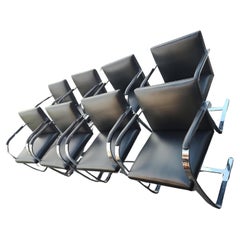
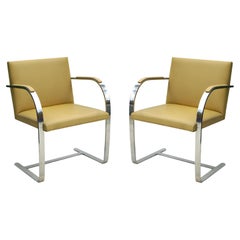
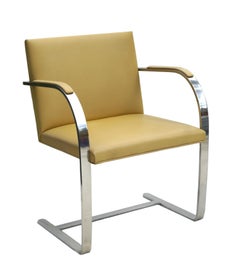
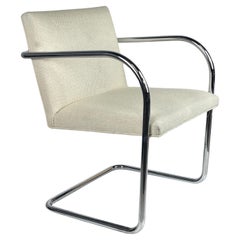
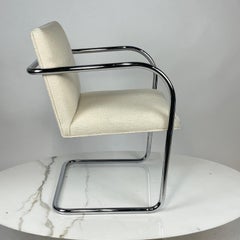
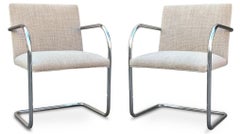
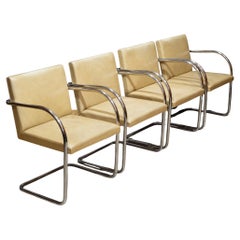
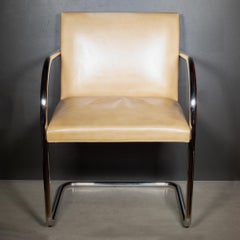
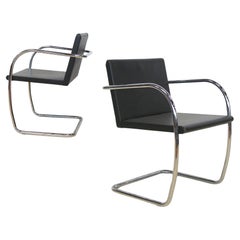
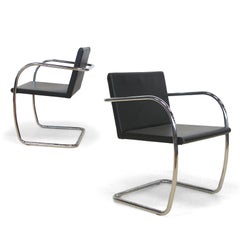
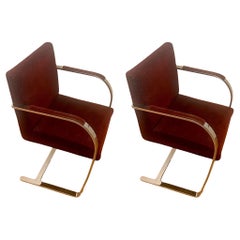
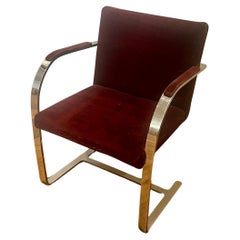
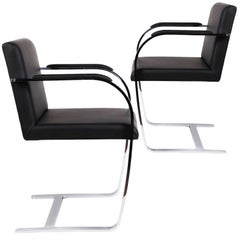
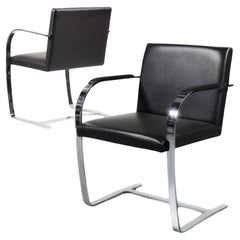
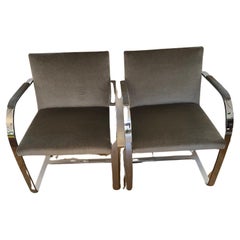
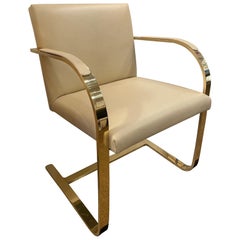
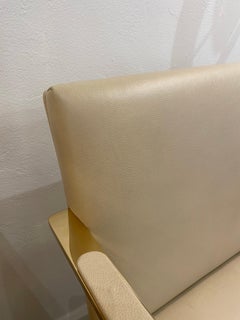
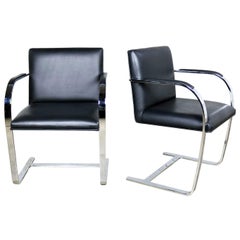
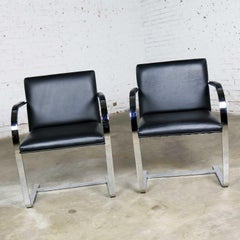
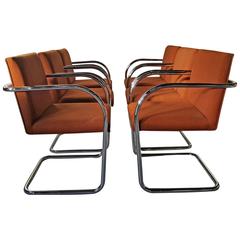
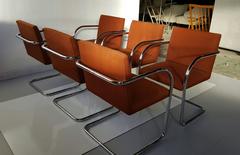
Handsome pair of black leather and chrome flat bar Brno chairs designed by Mies Van Der Rohe and Lilly Reich produced by Gordon International. One is in wonderful vintage condition. The other is in almost wonderful condition. The leather on both is perfect and the chrome on one is as well. But, the chrome on the other has some pitting on the flat part of the legs. We have cleaned it with lemon juice and 000 steel wool, circa 1980s-1990s. Please see photos
The Brno MR50 cantilever chair is one of my very favorite iconic chairs. And these two, which are circa late 20th century, are outstanding and in my favorite color….black. The “official” holder of the license to produce the Brno chair is Knoll; however, many claim the design is in the public domain and able to be produced by anyone. And, they do. One of the best companies making them and, in my opinion, closest in quality to Knoll, is the maker of this pair, Gordon International. The chair was designed in 1930 by Ludwig Mies van der Rohe with much assistance, albeit unrewarded in her lifetime, from Lilly Reich for the renowned Tugendhat House in Brno, Czech Republic. The form is influenced by and roughly based on the earlier cantilevered chair designs by Marcel Breuer and Mart Stam. Interestingly, although there were 24 tubular Brno chairs in the Tugendhat House, there was only one flat bar example which was in the master bedroom. Due to this fact the flat bar chair was not put into mass production until after 1958 when Phillip Johnson requested of Knoll to produce them for his design of the Four Seasons restaurant. The original design was tweaked somewhat, in particular adding padding to the seat and back for more comfort, with approval from Mies.
Ludwig Mies van der Rohe was born Maria Ludwig Michael Mies on March 27, 1886 in Germany. He was commonly referred to as Mies. He changed his name to reflect a higher societal standing. He is considered one of the pioneers of modernist design in both architecture and furnishings. Early in his career he worked in his father’s stone carving shop and several design firms. Then, moving to Berlin, he worked alongside Le Corbusier and Walter Gropius. He was director of the famed Bauhaus, an influential school of modern design. But in 1932 fled Germany and the Nazi regime, along with their opposition to modernism, by moving to the United States and Chicago specifically where he headed the architecture school at the Armour Institute of Technology now the Illinois Institute of Technology. Some of his famed architectural designs are the Barcelona Pavilion, 1929; Villa Tugendhat, 1930; Crown Hall...
Category
20th Century Bauhaus Lilly Reich Armchairs