By Lucien Pissarro
Located in London, GB
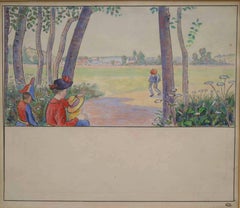
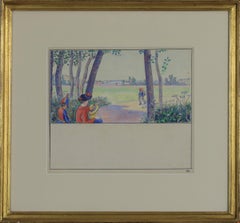
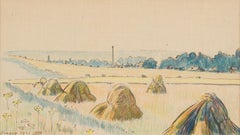
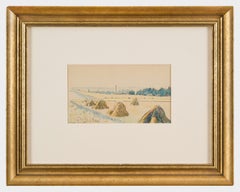
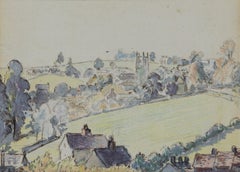
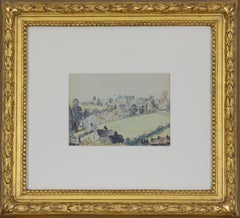
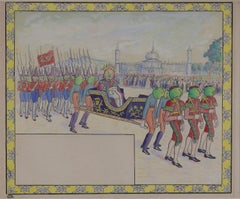
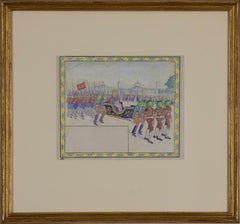
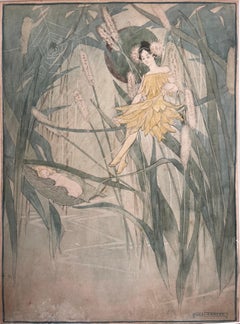
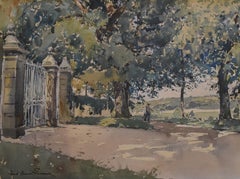
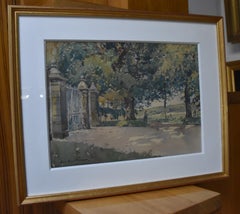
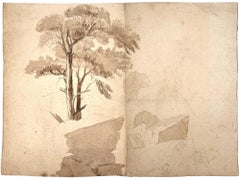
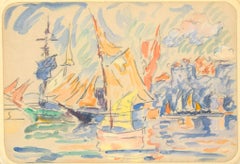
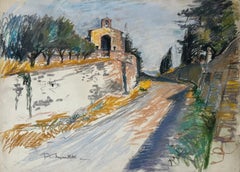
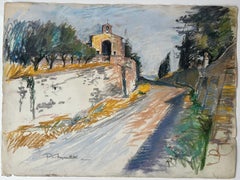
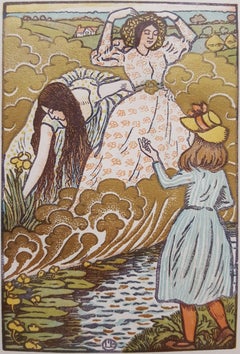
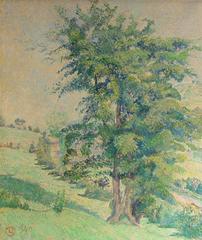
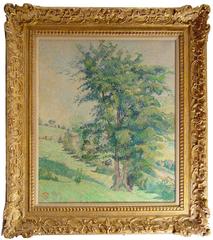
Le Défilé Royal (Illustration for Voyage au Pays des Pommes) by Lucien Pissarro (1863-1944)
Watercolour on paper
22.5 x 26 cm (8 ⅞ x 10 ¼ inches)
Signed lower left with monogram
This work is accompanied by a letter of authenticity from Colin Harrison, Senior Curator of European Art at the Ashmolean Museum, Oxford.
Provenance
Mr Ian Robertson
Exhibition
London, Leicester Galleries, Memorial Exhibition of Lucien Pissarro's Work, Part II, 1947, No. 60 (catalogued as La Procession)
Artist biography
Born on the 20th February 1863, Lucien Pissarro was the eldest son of the Impressionist painter Camille Pissarro. Coached from a young age by his father and in the frequent company of figures such as Cézanne, Gauguin and Monet, it is no surprise that Lucien chose to pursue an artistic career. While he is best known as a landscape painter, Lucien was also a printmaker, wood engraver and printer of fine books, occasionally painting still lifes and portraits of his family.
Lucien first visited England in 1870 with his family when fleeing the Franco-Prussian war. It was the beginning of a great love affair with the country. He decided to move permanently to England in 1890, becoming an English citizen in 1916. Until then he had worked as a landscape painter and book illustrator in France. During this period he met and worked with painters such as Paul Signac, Georges Seurat and Vincent van Gogh. Moving simultaneously in Impressionist and Neo-Impressionist circles, Lucien exhibited Pointillist paintings with his father in the last Impressionist exhibition in 1886. In the same year he was one of the first artists to exhibit in the “Salon des Indépendants” as a Neo-Impressionist.
Despite his close relationship with his father, as revealed in their correspondence, Lucien showed remarkable independence of mind in his approach to his art. While Lucien was trained by his father, the influence the artists had on one another was reciprocal. Thanks to his relationship with Seurat and Signac, Lucien encouraged Camille to experiment with Pointillism, a characteristic of the Neo-Impressionist group.
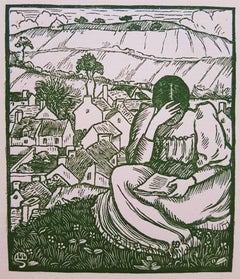
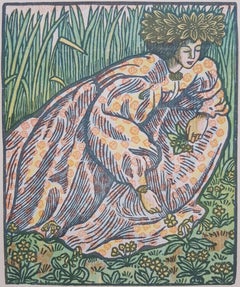
Lucien’s move to England in 1890 allowed him greater freedom to pursue his interest in book illustration and printing. There Lucien and his wife Esther established the Éragny Press, named after the Normandy village where his family lived since 1884. The Éragny Press was principally notable for creating aesthetically pleasing books and paved the way for the development of European book art. Lucien’s illustrations for these books demonstrate his talent and command of colour.
Nevertheless, Lucien always considered painting his primary concern, particularly landscape painting. Continuing the tradition of the Impressionists, Lucien was a plein-air painter who liked to work outdoors and study the subject directly from nature. His landscapes reveal his fascination for the effects of weather and light. The contemporary art critic Frank Rutter described Lucien as a master of colour, writing in 1922: “there is no man living who has a more profound knowledge of the science of colour, or a more discriminating eye for its observation in nature.” Rutter was also struck by Lucien’s respect for his subject, nature itself: “Each canvas is wrought with a quiet perfection that conceals its art and is eloquent of the tender emotion which the loveliness of nature inspires in the artist.”
It is clear from Rutter’s praise that Lucien’s contemporaries were impressed by his combination of English and French artistic traditions. Unsurprisingly, he became associated with artistic groups that drew inspiration from the Impressionists, including the New English Art Club, with whom he exhibited in 1904, the Fitzroy Street Group in 1907 and the Camden Town Group in 1911. To his English contemporaries Lucien represented a direct link to the Impressionist Masters. His influence can be recognised in the work of British artists such as Spencer Gore, Harold Gilman...
Category
19th Century Post-Impressionist Lucien Pissarro Art
MaterialsPaper, Watercolor