M. Peter Piening Prints and Multiples

to
3
Overall Width
to
Overall Height
to
3
3
1,245
945
921
853
3
3
3
3
3
Artist: M. Peter Piening
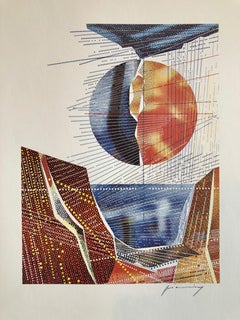
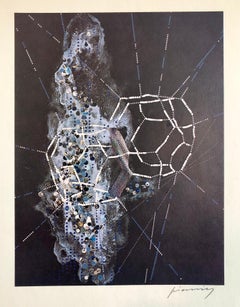
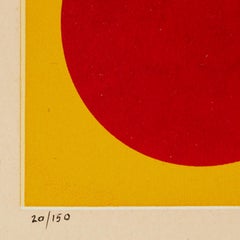
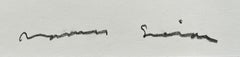
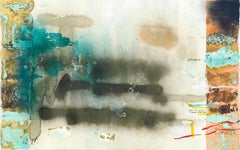
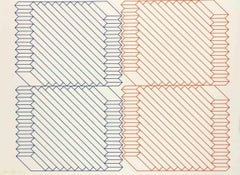
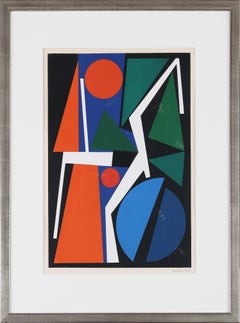
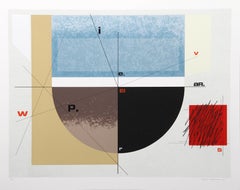
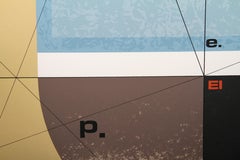
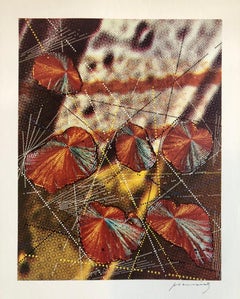
Pencil Signed Abstract Geometric Graphic Design Lithograph Print, Bauhaus Artist

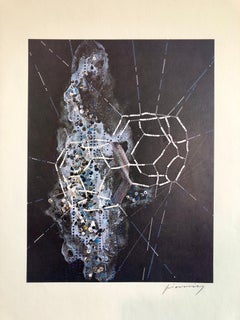
Pencil Signed Abstract Geometric Graphic Design Lithograph Print, Bauhaus Artist

By M. Peter Piening

Located in Surfside, FL

M. Peter Piening was born on March 14, 1908 in Grabow, Germany. He began his education at a private school in Italy, studied at the Jesuit school of Kloster Ettal in Bavaria, and attended the German Stettin Gymnasium, where he graduated in 1926. Between 1926 and 1928 Piening studied design at the Bauhaus in Dessau, Germany. There he was taught by multiple famous twentieth-century artists, including Joseph Albers, Paul Klee and Mies van der Rohe. After receiving his master’s degree from the Bauhaus in 1929, Piening enrolled at the University of Berlin and obtained his PhD in philosophy in 1931. Piening spent his early career free-lancing as an illustrator and artist for various publishing companies, eventually settling in Paris to work for Condé-Nast’s French publication of Vogue. In 1934 he moved to the United States to work in Condé-Nast’s New York City office. For the next two decades, Piening worked for many important advertising agencies and magazine publishers, including the N. W. Ayer and J. Walker Thompson agencies and Life and Fortune magazines. As art director for Life in the 1930s and for Fortune in the 1940s, Piening completely redesigned the layout of each magazine. He also redesigned the layouts for thirty-four other major American magazines, including Town & Country and Cosmopolitan. Through his design work, Piening had a great impact on the American public, although the millions who encountered his work most likely never knew his name. Between 1934 and 1964, Piening designed over sixty logos and trademarks for internationally-known products and companies. His most widely-recognized logo may have been the three interlocking rings of Ballantine beer. Piening’s other trademark designs include the Lincoln Zephyr...

Category

1960s Abstract Geometric M. Peter Piening Prints and Multiples

Materials

Lithograph

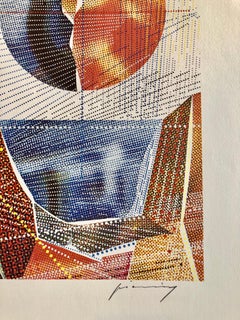
Pencil Signed Abstract Geometric Graphic Design Lithograph Print, Bauhaus Artist

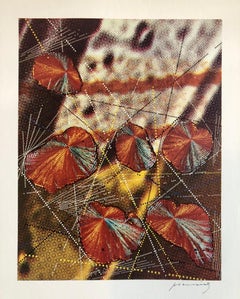
Pencil Signed Abstract Geometric Graphic Design Lithograph Print, Bauhaus Artist

By M. Peter Piening

Located in Surfside, FL

M. Peter Piening was born on March 14, 1908 in Grabow, Germany. He began his education at a private school in Italy, studied at the Jesuit school of Kloster Ettal in Bavaria, and attended the German Stettin Gymnasium, where he graduated in 1926. Between 1926 and 1928 Piening studied design at the Bauhaus in Dessau, Germany. There he was taught by multiple famous twentieth-century artists, including Joseph Albers, Paul Klee and Mies van der Rohe. After receiving his master’s degree from the Bauhaus in 1929, Piening enrolled at the University of Berlin and obtained his PhD in philosophy in 1931. Piening spent his early career free-lancing as an illustrator and artist for various publishing companies, eventually settling in Paris to work for Condé-Nast’s French publication of Vogue. In 1934 he moved to the United States to work in Condé-Nast’s New York City office. For the next two decades, Piening worked for many important advertising agencies and magazine publishers, including the N. W. Ayer and J. Walker Thompson agencies and Life and Fortune magazines. As art director for Life in the 1930s and for Fortune in the 1940s, Piening completely redesigned the layout of each magazine. He also redesigned the layouts for thirty-four other major American magazines, including Town & Country and Cosmopolitan. Through his design work, Piening had a great impact on the American public, although the millions who encountered his work most likely never knew his name. Between 1934 and 1964, Piening designed over sixty logos and trademarks for internationally-known products and companies. His most widely-recognized logo may have been the three interlocking rings of Ballantine beer. Piening’s other trademark designs include the Lincoln Zephyr...

Category

1960s Abstract Geometric M. Peter Piening Prints and Multiples

Materials

Lithograph

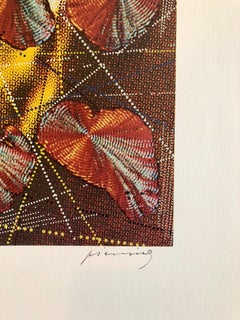
Pencil Signed Abstract Geometric Graphic Design Lithograph Print, Bauhaus Artist

Pencil Signed Abstract Geometric Graphic Design Lithograph Print, Bauhaus Artist

By M. Peter Piening

Located in Surfside, FL

M. Peter Piening was born on March 14, 1908 in Grabow, Germany. He began his education at a private school in Italy, studied at the Jesuit school of Kloster Ettal in Bavaria, and attended the German Stettin Gymnasium, where he graduated in 1926. Between 1926 and 1928 Piening studied design at the Bauhaus in Dessau, Germany. There he was taught by multiple famous twentieth-century artists, including Joseph Albers, Paul Klee and Mies van der Rohe. After receiving his master’s degree from the Bauhaus in 1929, Piening enrolled at the University of Berlin and obtained his PhD in philosophy in 1931. Piening spent his early career free-lancing as an illustrator and artist for various publishing companies, eventually settling in Paris to work for Condé-Nast’s French publication of Vogue. In 1934 he moved to the United States to work in Condé-Nast’s New York City office. For the next two decades, Piening worked for many important advertising agencies and magazine publishers, including the N. W. Ayer and J. Walker Thompson agencies and Life and Fortune magazines. As art director for Life in the 1930s and for Fortune in the 1940s, Piening completely redesigned the layout of each magazine. He also redesigned the layouts for thirty-four other major American magazines, including Town & Country and Cosmopolitan. Through his design work, Piening had a great impact on the American public, although the millions who encountered his work most likely never knew his name. Between 1934 and 1964, Piening designed over sixty logos and trademarks for internationally-known products and companies. His most widely-recognized logo may have been the three interlocking rings of Ballantine beer. Piening’s other trademark designs include the Lincoln Zephyr...

Category

1960s Abstract Geometric M. Peter Piening Prints and Multiples

Materials

Lithograph

Related Items
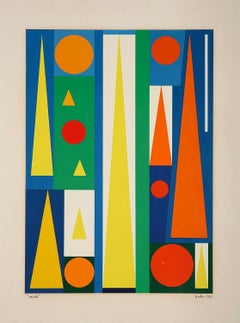
Minuit

Auguste HerbinMinuit, 1959

$4,500Sale Price|25% Off

H 26 in W 20 in

Minuit

By Auguste Herbin

Located in Miami, FL

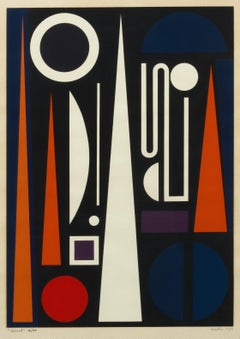
Minuit - From the 12 plate Portfolio, 1959 Published by Denise Rene, Paris Lithograph in colors on heavy paper 20 x 26 inches Signed, dated and numbered in ink, edition of 150 copies...

Category

1950s Abstract Geometric M. Peter Piening Prints and Multiples

Materials

Lithograph

Vendredi
Vendredi

Auguste HerbinVendredi, 1959

$5,200Sale Price|20% Off

H 20 in W 26 in

Vendredi

By Auguste Herbin

Located in Miami, FL

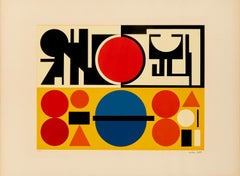
Vendredi - Plate 10 from the 12 plate Portfolio, 1959 Published by Denise Rene, Paris Lithograph in colors on heavy paper 20 x 26 inches Signed, dated and numbered in ink, edition 20...

Category

1950s Abstract Geometric M. Peter Piening Prints and Multiples

Materials

Lithograph

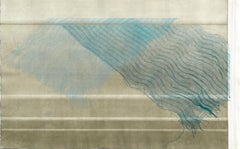
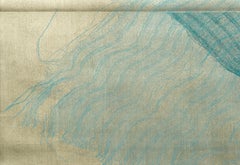
Teal Lace Collotype Lithograph

Teal Lace Collotype Lithograph

By Patricia A. Pearce

Located in Soquel, CA

Delicate layered collotype on heavy bond paper by Patricia A. Pearce (American, b. 1948). This piece is unsigned, but was acquired with a collection of other Pearce work. No frame. I...

Category

Late 20th Century Abstract Geometric M. Peter Piening Prints and Multiples

Materials

Paper, Ink, Lithograph

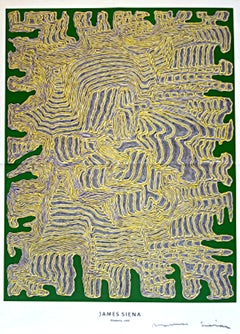
James Siena at PACE poster Hand signed by James Siena complex linear abstraction

James Siena at PACE poster Hand signed by James Siena complex linear abstraction

By James Siena

Located in New York, NY

James Siena at PACE Gallery, 2019 Offset lithograph exhibition invitation (Hand signed by James Siena) 19 1/2 × 14 1/2 inches Unframed This exquisite fold...

Category

2010s Abstract Geometric M. Peter Piening Prints and Multiples

Materials

Offset, Graphite, Pencil, Lithograph

Mixed Media Abstract Geometric: 2-Sided Collotype

Mixed Media Abstract Geometric: 2-Sided Collotype

By Patricia A. Pearce

Located in Soquel, CA

Delicate and layered collotype on both sides of heavy bond paper by Patricia A. Pearce (American, b. 1948). The background of this piece is a collotype. Gold leaf, treated in a varie...

Category

Late 20th Century Abstract Geometric M. Peter Piening Prints and Multiples

Materials

Gold Leaf

Original Cinquantenaire Aeronautique  Bourget,  vintage air show poster

Original Cinquantenaire Aeronautique Bourget, vintage air show poster

Located in Spokane, WA

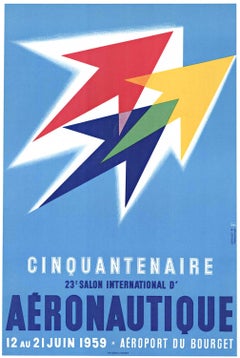
Original Cinquantenaire Aeronautique vintage poster. Archival linen backed and ready to frame. Printer: Bedos & Co, Paris. A- condition. (50TH ANNIVERSARY 23E SALON INTERNATIONAL D' AERONAUTICS, JUNE 12 TO 21, 1959 * LE BOURGET AIRPORT.) This mid-century modern original French poster is for an air show...

Category

1950s Abstract Geometric M. Peter Piening Prints and Multiples

Materials

Lithograph

Composition 1969

Nedo Mion FerrarioComposition 1969, 1969

$3,400Sale Price|60% Off

H 18.9 in W 25.99 in

Composition 1969

Located in Miami, FL

Nedo (1926-2001) Composition 1969. Serigraph on paper, signed, dated 1969 and numbered 12/25 lower left, sheet size 48 x 66 cm. After attending the Commercial and Technical Instit...

Category

1960s Abstract Geometric M. Peter Piening Prints and Multiples

Materials

Lithograph

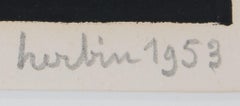
Madam (Fou), 1953
Madam (Fou), 1953

Auguste HerbinMadam (Fou), 1953, 1953

$4,000

H 25.2 in W 19.2 in

Madam (Fou), 1953

By Auguste Herbin

Located in Miami, FL

Madman (Fou) from Art of Today, Masters of Abstract Art, Album I, 1953 - Édition Art d'Aujourd'hui, Boulogne Screenprint in colors, 25.2" H x 19.2” W (64 x 49 cm), signed and dated ...

Category

1950s Abstract Geometric M. Peter Piening Prints and Multiples

Materials

Lithograph

Midi

Auguste HerbinMidi, 1959

$3,900Sale Price|40% Off

H 26 in W 20 in

Midi

By Auguste Herbin

Located in Miami, FL

Midi - Plate 3 from the 12 plate Portfolio, 1959 Published by Denise Rene, Paris Lithograph in colors on heavy paper 26 x 20 inches Signed, dated and numbered in ink, edition of 150 ...

Category

1950s Abstract Geometric M. Peter Piening Prints and Multiples

Materials

Lithograph

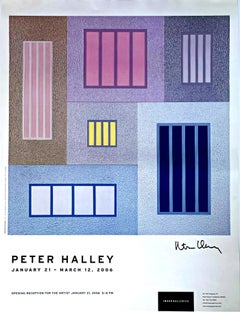
Imago Galleries exhibition poster, Palm Desert, CA (Hand Signed by Peter Halley)

Imago Galleries exhibition poster, Palm Desert, CA (Hand Signed by Peter Halley)

By Peter Halley

Located in New York, NY

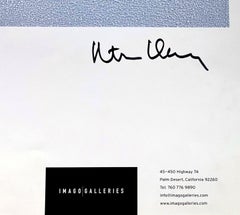
Peter Halley Peter Halley, Imago Galleries, Palm Desert, CA (Hand Signed), 2006 Offset lithograph poster (hand signed by Peter Halley) 25 1/2 × 18 1/4 inches Provenance; Acquired directly from the artist Unframed Alpha 137 Gallery is honored to offer this offset lithograph, published on the occasion of legendary American artist Peter Halley's 2006 one-man exhibition at Imago Galleries, Palm Desert, California which the artist hand signed in black marker. Scroll images for a photograph of our director Nadine Witkin with the artist. Below is Peter Halley's official biography. What it doesn't mention is that Andy Warhol famously painted his portrait in 1986! Peter Halley is that legendary. According to Halley, he didn't realize until after Warhol's death that the polaroids Warhol took of him with his famous "big shot" camera were made into an original painting. Warhol's painting of Peter Halley was included in the recent Andy Warhol retrospective "Andy Warhol - from A to B and Back Again" at the Whitney. PETER HALLEY BIOGRAPHY Peter Halley, born 1953, New York City, is an American artist who came to prominence as a central figure of the Neo-Conceptualist movement of the 1980s. His paintings redeploy the language of geometric abstraction to explore the organization of social space in the digital era. Since the 1980s, Halley’s lexicon has included three elements: “prisons” and “cells,” connected by “conduits,” which are used in his paintings to explore the technologically determined space and pathways that regulate daily life. Using fluorescent color and Roll-a-Tex, a commercial paint additive that provides readymade texture, Halley embraces materials that are anti-naturalistic and commercially manufactured. In the mid 1990s Halley pioneered the use of wall-sized digital prints in his site-specific installations. He has executed installations at Museo Nivola, Orani, Sardinia (2021); Greene Naftali, New York (2019); Venice Biennale (2019); Lever House, New York (2018); Schirn Kunsthalle, Frankfurt (2016); Disjecta, Portland (2012); the Gallatin School, New York University, (2008, 2017); the Museum of Modern Art, New York (1997); and the Dallas Museum of Art (1995). In 2005, Halley was also commissioned to create a monumental painting for Terminal D at the Dallas/Fort Worth International Airport, Texas. Halley served as professor and director of the MFA painting program at the Yale School of Art from 2002 to 2011. From 1996 to 2005, Halley published INDEX Magazine, which featured interviews with figures working in a variety of creative fields. Halley is also known for his essays on art and culture, written in the 1980s and 1990s, in which he explores themes from French critical theory and the impact of burgeoning digital technology. His Selected Essays, 1981 – 2001, was published by Edgewise Press, New York, in 2013.Halley’s writings have been translated into Spanish, French, and Italian. A catalogue raisonné, PETER HALLEY: Paintings of the 1980s, was published in 2018 by JRP Ringier. Halley’s work can be found in the collections of the Museum of Modern Art, New York; Whitney Museum of American Art, New York; Solomon R. Guggenheim Museum, New York; Broad Art Foundation, Los Angeles; Museum of Contemporary Art, Los Angeles; San Francisco Museum of Modern Art; Boston Museum of Fine Arts; Dallas Museum of Art; Albright-Knox Art Gallery, Buffalo; Tate Modern, London; Stedelijk Museum, Amsterdam; Sammlung Marx, Berlin; Museo Nacional Centro de Arte Reina Sofia, Madrid; Museum of Contemporary Art, Tokyo; Seoul Museum of Art, among others. More about Peter Halley Peter Halley was born in 1953 in New York. He began his formal training at Phillips Academy in Andover, Massachusetts, from which he graduated in 1971. During that time, Halley read Josef Albers’s Interaction of Color (1981), which would influence him throughout his career. From 1973 to 1974 Halley lived in New Orleans, where he absorbed the vibrant cultural influences of the city, began using commercial materials in his art, and first became acquainted with the writings of earthwork artist Robert Smithson. In 1975 the artist graduated from Yale University, New Haven, with a degree in art history. After Yale, Halley returned to New Orleans, where he received an MFA in painting from the University of New Orleans in 1978. He had his first solo exhibition at the Contemporary Art Center, New Orleans, that same year. In 1978 Halley spent a semester teaching art at the University of Louisiana, Lafayette. He has continued to teach throughout his career. In 1980, Halley moved back to New York and had his first solo exhibition in the city at PS122 Gallery. At this time, Halley was drawn to the pop themes and social issues addressed in New Wave music. Inspired by New York’s intense urban environment, Halley set out to use the language of geometric abstraction to describe the actual geometricized space around him. He also began his iconic use of fluorescent Day-Glo paint. In 1984, Halley started to exhibit with the International With Monument gallery, becoming closely associated with the organization and its artists, who exhibited conceptually rigorous work in a market-savvy, coolly presented space that stood in stark contrast to the bohemian, Neo-Expressionist flair of the East Village art scene at the time. In 1986, an exhibition of four artists from International With Monument at the Sonnabend Gallery in New York heralded the group’s growing success. By the late 1980s, Halley was exhibiting with prominent galleries in the United States and Europe. In 1989, an exhibition of his paintings traveled to the Museum Haus Esters, Krefeld, Germany; Maison de la culture et de la communication de Saint-Étienne, France; and Institute of Contemporary Arts, London. From 1991 to 1992, a retrospective toured Europe, with presentations at the CAPC Musée d’art contemporain de Bordeaux, France; Musée d’art contemporain, Lausanne, Switzerland; Museo nacional centro de arte Reina Sofía, Madrid; and Stedelijk Museum, Amsterdam. In 1992, the Des Moines Art Center hosted his first solo exhibition at a U.S. museum. While developing his visual language, Halley became interested in French post-structuralist writers, including Jean Baudrillard, Guy Debord, Michel Foucault, and Paul Virillio, all of whom shared his concern with the character of social spaces in a post-industrial society. In 1981, he published his first essay “Beat, Minimalism, New Wave, and Robert Smithson” in Arts, a New York–based magazine that would publish eight of his essays before the decade’s end. Halley’s writings became the basis for Neo-Geometric Conceptualism (also known as Neo-Geo), the offshoot of Neo-Conceptualism associated with the work of Ashley Bickerton, Halley, and Jeff Koons. In 1988, the artist’s writings were anthologized in Collected Essays, 1981–1987, and again in 1997 in a second anthology, Recent Essays, 1990–1996. In the mid-1990s, Halley began to produce site-specific installations for museums, galleries, and public spaces. These characteristically brought together a range of imagery and mediums, including paintings, wall-size flowcharts, and digitally generated wallpaper prints. Halley has executed permanent installations at the Dallas/Fort Worth International Airport, Texas, and the Gallatin School of Individualized Study at New York University. In 2011, his installation of digital prints Judgment Day...

Category

Early 2000s Abstract Geometric M. Peter Piening Prints and Multiples

Materials

Offset, Lithograph
Previously Available Items
Pencil Signed Abstract Geometric Graphic Design Lithograph Print, Bauhaus Artist
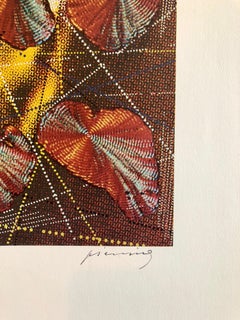
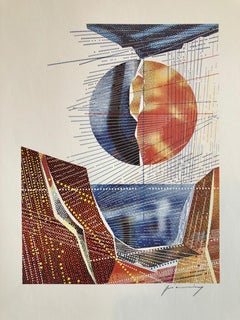
Pencil Signed Abstract Geometric Graphic Design Lithograph Print, Bauhaus Artist
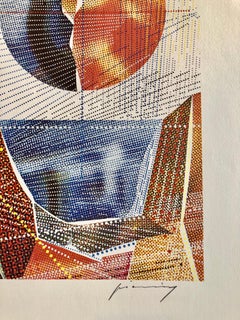
By M. Peter Piening

Located in Surfside, FL

M. Peter Piening was born on March 14, 1908 in Grabow, Germany. He began his education at a private school in Italy, studied at the Jesuit school of Kloster Ettal in Bavaria, and attended the German Stettin Gymnasium, where he graduated in 1926. Between 1926 and 1928 Piening studied design at the Bauhaus in Dessau, Germany. There he was taught by multiple famous twentieth-century artists, including Joseph Albers, Paul Klee and Mies van der Rohe. After receiving his master’s degree from the Bauhaus in 1929, Piening enrolled at the University of Berlin and obtained his PhD in philosophy in 1931. Piening spent his early career free-lancing as an illustrator and artist for various publishing companies, eventually settling in Paris to work for Condé-Nast’s French publication of Vogue. In 1934 he moved to the United States to work in Condé-Nast’s New York City office. For the next two decades, Piening worked for many important advertising agencies and magazine publishers, including the N. W. Ayer and J. Walker Thompson agencies and Life and Fortune magazines. As art director for Life in the 1930s and for Fortune in the 1940s, Piening completely redesigned the layout of each magazine. He also redesigned the layouts for thirty-four other major American magazines, including Town & Country and Cosmopolitan. Through his design work, Piening had a great impact on the American public, although the millions who encountered his work most likely never knew his name. Between 1934 and 1964, Piening designed over sixty logos and trademarks for internationally-known products and companies. His most widely-recognized logo may have been the three interlocking rings of Ballantine beer. Piening’s other trademark designs include the Lincoln Zephyr, Syracuse China...

Category

1960s Abstract Geometric M. Peter Piening Prints and Multiples

Materials

Lithograph
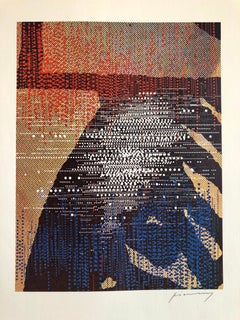
Pencil Signed Abstract Geometric Graphic Design Lithograph Print, Bauhaus Artist
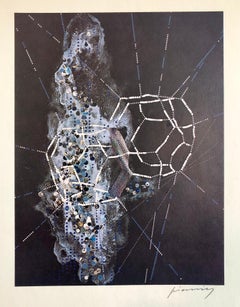
Pencil Signed Abstract Geometric Graphic Design Lithograph Print, Bauhaus Artist

By M. Peter Piening

Located in Surfside, FL

M. Peter Piening was born on March 14, 1908 in Grabow, Germany. He began his education at a private school in Italy, studied at the Jesuit school of Kloster Ettal in Bavaria, and attended the German Stettin Gymnasium, where he graduated in 1926. Between 1926 and 1928 Piening studied design at the Bauhaus in Dessau, Germany. There he was taught by multiple famous twentieth-century artists, including Joseph Albers, Paul Klee and Mies van der Rohe. After receiving his master’s degree from the Bauhaus in 1929, Piening enrolled at the University of Berlin and obtained his PhD in philosophy in 1931. Piening spent his early career free-lancing as an illustrator and artist for various publishing companies, eventually settling in Paris to work for Condé-Nast’s French publication of Vogue. In 1934 he moved to the United States to work in Condé-Nast’s New York City office. For the next two decades, Piening worked for many important advertising agencies and magazine publishers, including the N. W. Ayer and J. Walker Thompson agencies and Life and Fortune magazines. As art director for Life in the 1930s and for Fortune in the 1940s, Piening completely redesigned the layout of each magazine. He also redesigned the layouts for thirty-four other major American magazines, including Town & Country and Cosmopolitan. Through his design work, Piening had a great impact on the American public, although the millions who encountered his work most likely never knew his name. Between 1934 and 1964, Piening designed over sixty logos and trademarks for internationally-known products and companies. His most widely-recognized logo may have been the three interlocking rings of Ballantine beer. Piening’s other trademark designs include the Lincoln Zephyr, Syracuse China...

Category

1960s Abstract Geometric M. Peter Piening Prints and Multiples

Materials

Lithograph

Pencil Signed Abstract Geometric Graphic Design Lithograph Print, Bauhaus Artist

Pencil Signed Abstract Geometric Graphic Design Lithograph Print, Bauhaus Artist

By M. Peter Piening

Located in Surfside, FL

M. Peter Piening was born on March 14, 1908 in Grabow, Germany. He began his education at a private school in Italy, studied at the Jesuit school of Kloster Ettal in Bavaria, and attended the German Stettin Gymnasium, where he graduated in 1926. Between 1926 and 1928 Piening studied design at the Bauhaus in Dessau, Germany. There he was taught by multiple famous twentieth-century artists, including Joseph Albers, Paul Klee and Mies van der Rohe. After receiving his master’s degree from the Bauhaus in 1929, Piening enrolled at the University of Berlin and obtained his PhD in philosophy in 1931. Piening spent his early career free-lancing as an illustrator and artist for various publishing companies, eventually settling in Paris to work for Condé-Nast’s French publication of Vogue. In 1934 he moved to the United States to work in Condé-Nast’s New York City office. For the next two decades, Piening worked for many important advertising agencies and magazine publishers, including the N. W. Ayer and J. Walker Thompson agencies and Life and Fortune magazines. As art director for Life in the 1930s and for Fortune in the 1940s, Piening completely redesigned the layout of each magazine. He also redesigned the layouts for thirty-four other major American magazines, including Town & Country and Cosmopolitan. Through his design work, Piening had a great impact on the American public, although the millions who encountered his work most likely never knew his name. Between 1934 and 1964, Piening designed over sixty logos and trademarks for internationally-known products and companies. His most widely-recognized logo may have been the three interlocking rings of Ballantine beer. Piening’s other trademark designs include the Lincoln Zephyr, Syracuse China...

Category

1960s Abstract Geometric M. Peter Piening Prints and Multiples

Materials

Lithograph

Pencil Signed Abstract Geometric Graphic Design Lithograph Print, Bauhaus Artist

Pencil Signed Abstract Geometric Graphic Design Lithograph Print, Bauhaus Artist

By M. Peter Piening

Located in Surfside, FL

M. Peter Piening was born on March 14, 1908 in Grabow, Germany. He began his education at a private school in Italy, studied at the Jesuit school of Kloster Ettal in Bavaria, and attended the German Stettin Gymnasium, where he graduated in 1926. Between 1926 and 1928 Piening studied design at the Bauhaus in Dessau, Germany. There he was taught by multiple famous twentieth-century artists, including Joseph Albers, Paul Klee and Mies van der Rohe. After receiving his master’s degree from the Bauhaus in 1929, Piening enrolled at the University of Berlin and obtained his PhD in philosophy in 1931. Piening spent his early career free-lancing as an illustrator and artist for various publishing companies, eventually settling in Paris to work for Condé-Nast’s French publication of Vogue. In 1934 he moved to the United States to work in Condé-Nast’s New York City office. For the next two decades, Piening worked for many important advertising agencies and magazine publishers, including the N. W. Ayer and J. Walker Thompson agencies and Life and Fortune magazines. As art director for Life in the 1930s and for Fortune in the 1940s, Piening completely redesigned the layout of each magazine. He also redesigned the layouts for thirty-four other major American magazines, including Town & Country and Cosmopolitan. Through his design work, Piening had a great impact on the American public, although the millions who encountered his work most likely never knew his name. Between 1934 and 1964, Piening designed over sixty logos and trademarks for internationally-known products and companies. His most widely-recognized logo may have been the three interlocking rings of Ballantine beer. Piening’s other trademark designs include the Lincoln Zephyr, Syracuse China...

Category

1960s Abstract Geometric M. Peter Piening Prints and Multiples

Materials

Lithograph

M. Peter Piening prints and multiples for sale on 1stDibs.

Find a wide variety of authentic M. Peter Piening prints and multiples available for sale on 1stDibs. You can also browse by medium to find art by M. Peter Piening in lithograph and more. Much of the original work by this artist or collective was created during the 1960s and is mostly associated with the abstract style. Not every interior allows for large M. Peter Piening prints and multiples, so small editions measuring 12 inches across are available. Customers who are interested in this artist might also find the work of Jozsef Jakovits, Arnold Hoffmann, and Josef Albers. M. Peter Piening prints and multiples prices can differ depending upon medium, time period and other attributes. On 1stDibs, the price for these items starts at $500 and tops out at $500, while the average work can sell for $500.