By Mane Katz
Located in Surfside, FL
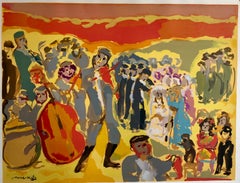
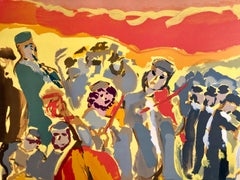
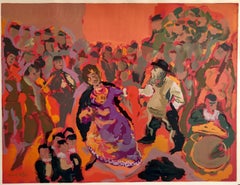
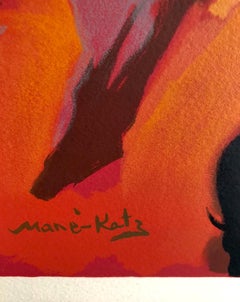
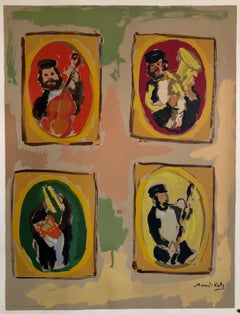
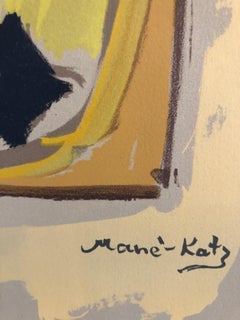
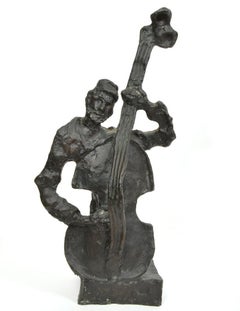
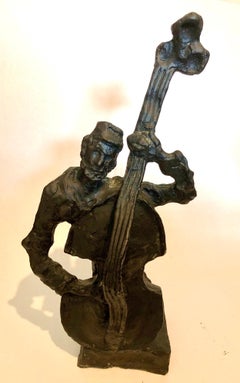
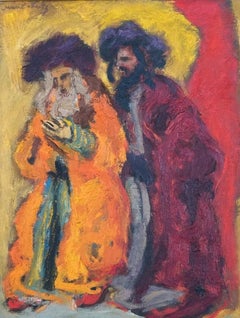
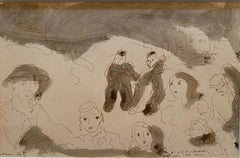
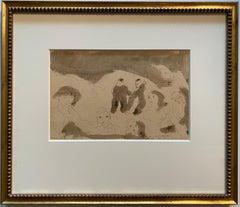
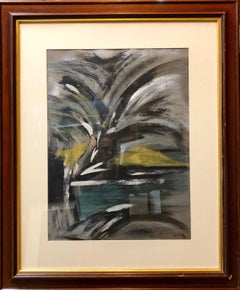
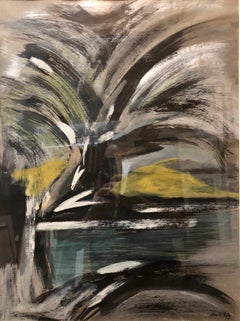
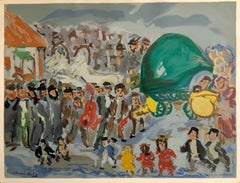
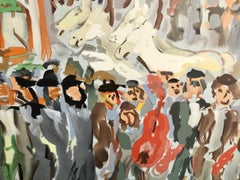
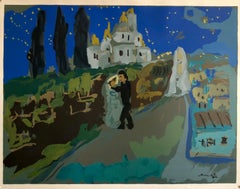
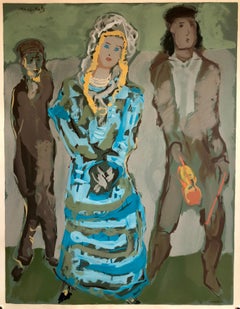
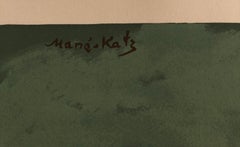
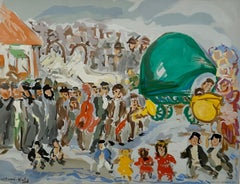
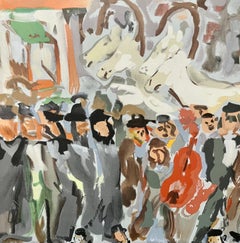
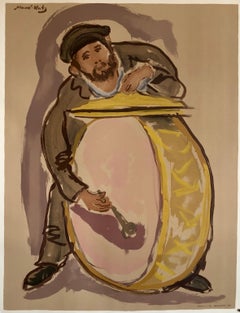
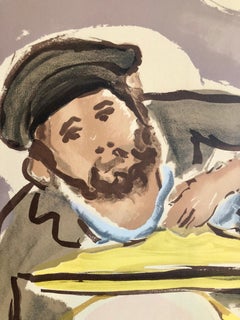
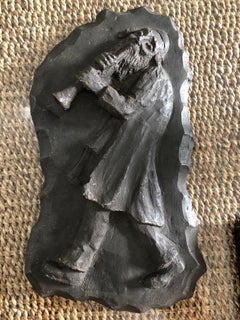
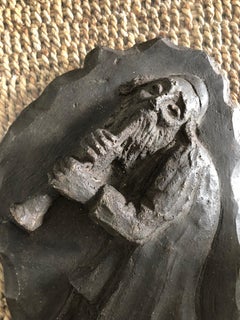
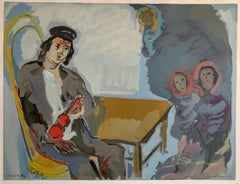
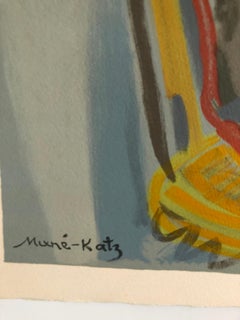
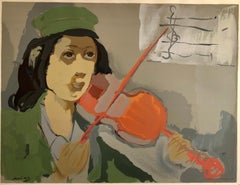
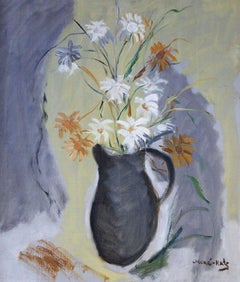
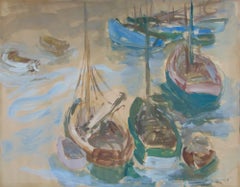
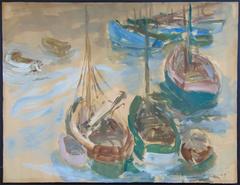
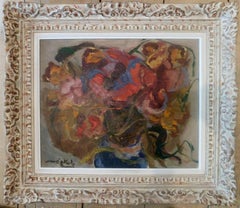
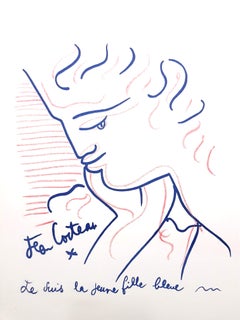
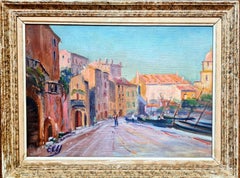
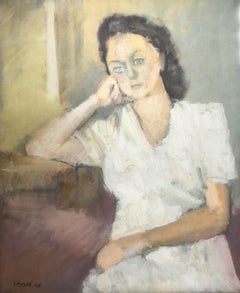
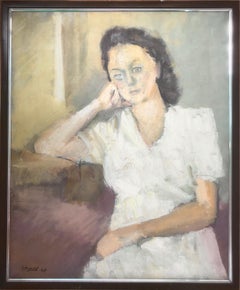
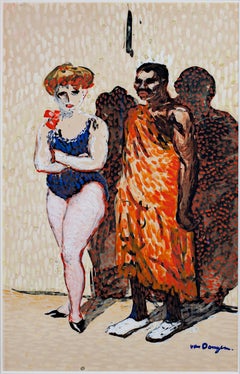
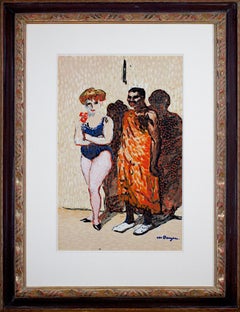
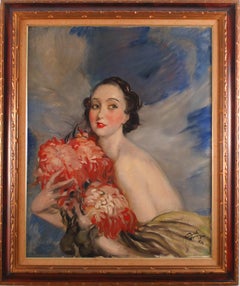
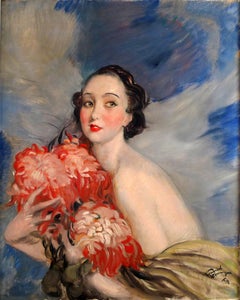
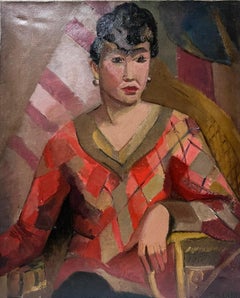
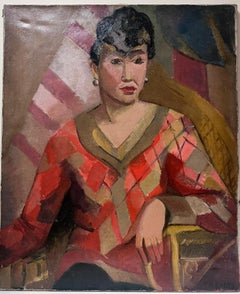
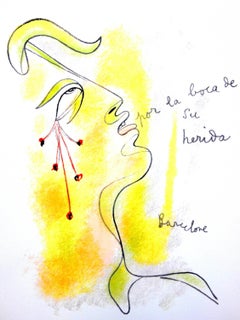
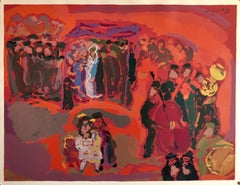
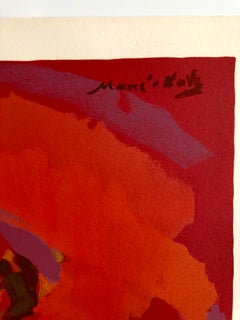
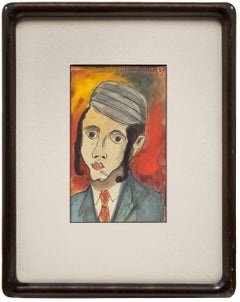
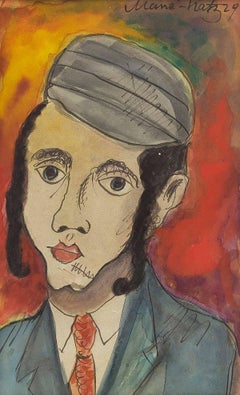
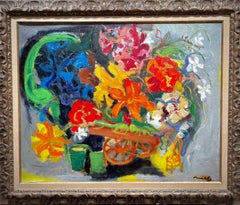
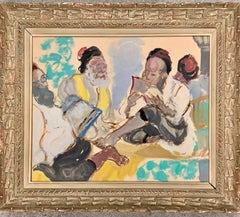
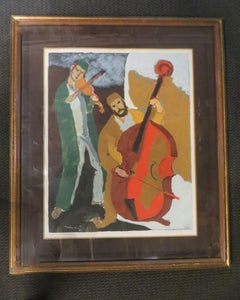
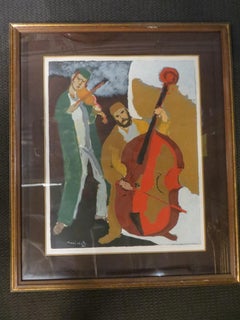
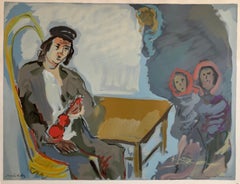
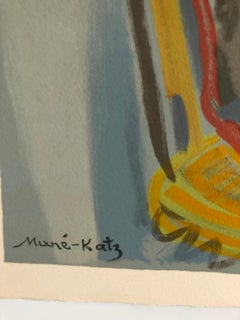
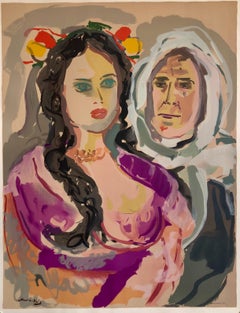
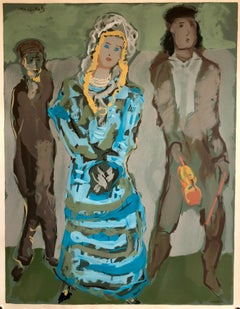
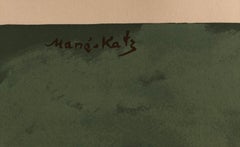
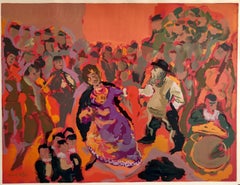
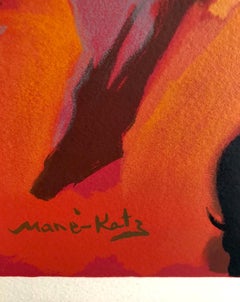
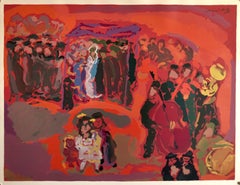
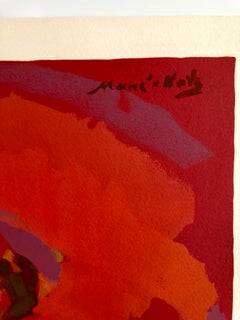
Mane-Katz (1894-1962) Original Lithograph published by Andre Sauret, Monte Carlo, 1966, printed in France, by Mourlot. The ouvrage sheet is not included. this is from a limited edition of 300 and some proofs. this is not individually signed and numbered.
Mane-Katz was a Litvak painter born in Ukraine best known for his depictions of the Jewish shtetl in Eastern Europe. Emmanuel Mané-Katz (Hebrew:מאנה כץ), born Mane Leyzerovich Kats (1894–1962), was a Litvak painter born in Kremenchuk, Ukraine, best known for his depictions of the Jewish shtetl in Eastern Europe.
Mane-Katz moved to Paris at the age of 19 to study art, although his father wanted him to be a rabbi. During the First World War he returned to Russia, at first working and exhibiting in Petrograd; following the October revolution, he traveled back to Kremenchuk, where he taught art. In 1921, due to the ongoing fighting in his hometown during the civil war, he moved once again to Paris. There he became friends with Pablo Picasso and other important artists, and was affiliated with the art movement known as the School of Paris; together with other outstanding Jewish artists of that milieu, he is sometimes considered to be part of a group referred to specifically as the Jewish School of Paris. Includes painters Jankel Adler, Arbit Blatas, Marc Chagall, Jacques Chapiro, Michel Kikoine, Pinchus Kremegne, Sigmund Menkees, Jules Pascin, Issachar Ryback, Jacques Lipchitz,Chana Orloff, and Ossip Zadkine. Ecole de Paris
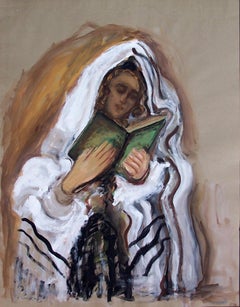
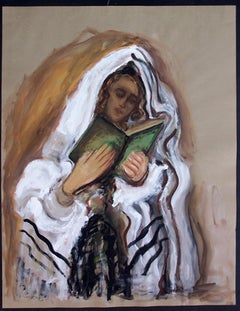
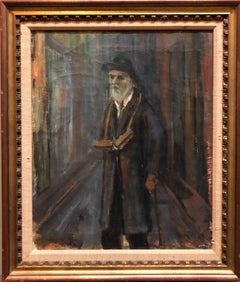
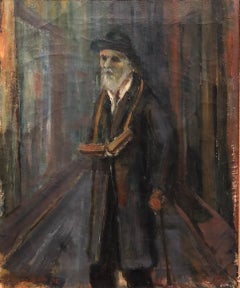
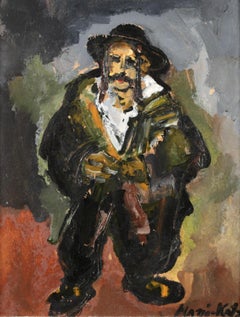
In 1931, Mane-Katz's painting The Wailing Wall was awarded a gold medal at the Paris World's Fair. Early on, his style was classical and somber, but his palette changed in later years to bright, primary colors, with an emphasis on Jewish themes. His oils feature Judaic Hasidic characters, rabbis, Jewish musicians, beggars, yeshiva students and scenes from the East European shtetl made famous in the west by Sholem Aleichem and Tevye.
Mane-Katz made his first trip to Mandate Palestine in 1928, and thereafter visited the country annually. He said his actual home was Paris, but his spiritual home was Eretz Yisrael, the Land of Israel. In 1939, as World War II was breaking out, he was drafted by the French and then was taken prisoner by the Germans. He escaped and went to the United States and remained there until 1945, exhibiting his paintings at Katia Granoff Gallery and Wildenstein Gallery. After the war, he returned to Paris where he had exhibited in the Salons. In Paris to the end of his career, he worked happily, painting hundreds of portraits of rabbis...
Category
1960s Modern Mane Katz Art