Mclean Jenkins Art

American, b. 1975

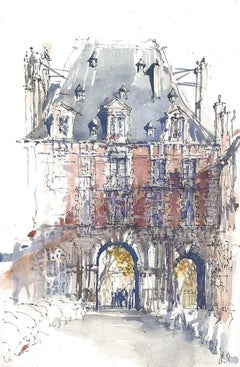
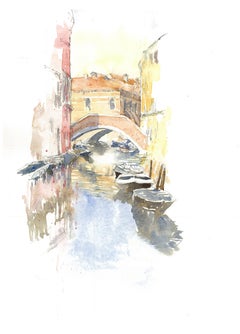
A. McLean Jenkins is inspired by the works of J. M. W. Turner, Richard Diebenkorn and Louis Isadore Kahn. Jenkins is a practising architect with McAlpine and his work derives from and celebrates the classical forms of his trade. Working in graphite, ink and watercolor, Jenkins employs a gestural approach that frees his hand to explore a subject’s essence. His compositions rely on the quick, decisive sketch and are then given over to the whims and splashes of watercolor. Spontaneity, movement and spirit are all emphasized and his drawings collectively form their own narrative of his passion for architecture. The city of Venice has captured his imagination since his first trip there as a 12-year-old boy. Over the years a kind of courtship with the city has evolved and its impact has motivated and sustained his development as both architect and artist. His work depicting the city has been recognized within the architectural profession by the Georgia Trust for Historic Preservation in its award to McLean of the J. Neel Reid Prize. His work has been shown in Atlanta’s Swan Coach House Gallery, Studio 21 in Charlotte and Gallery Left Bank in Prague. He has completed multiple commissions capturing classical architecture including his latest for a historic building on the Georgia Tech campus for the President’s office.

to
3
Overall Width
to
Overall Height
to
3
3
2
1
2
2
2
1
1
1
1
3
3
3
2
1
3
10,536
2,815
2,500
1,410
1
3
Artist: Mclean Jenkins
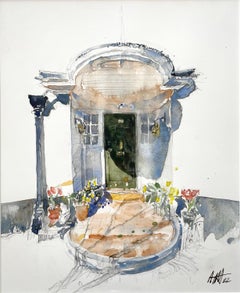
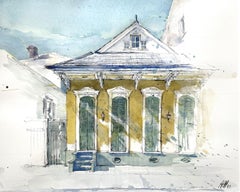
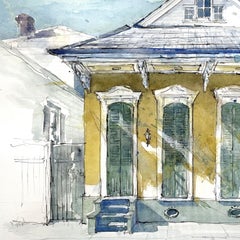
'Garden Entrance' - Architectural Watercolor Painting

'Garden Entrance' - Architectural Watercolor Painting

By Mclean Jenkins

Located in Atlanta, GA

"Garden Entrance" is a watercolor painting featuring subtle hues of green, blue and yellow. This work is framed measuring 15.5 by 14 inches. McLean Jenkins is inspired by the work of JMW Turner, Richard Diebenkorn and Louis Khan. McLean Jenkins is a practicing architect and his work derives from and celebrates the classical forms of his trade. Working in graphite, ink and watercolor, McLean employs a gestural approach that frees his hand to explore a subject’s essence. His compositions rely on the quick, decisive sketch and are then given over to the whims and splashes of watercolor. Spontaneity, movement and spirit are all emphasized and his drawings collectively form their own narrative of his passion for architecture. The city of Venice has captured McLean’s imagination since his first trip there as a 12 year old boy. Over the years a kind of courtship with the city has evolved, and its impact has motivated and sustained his development as both architect and artist. His work depicting the city has been recognized within the architectural profession by the Georgia Trust for Historic Preservation in its award to McLean of the J. Neel Reid...

Category

2010s Contemporary Mclean Jenkins Art

Materials

Ink, Watercolor, Graphite

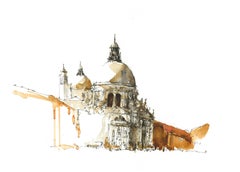
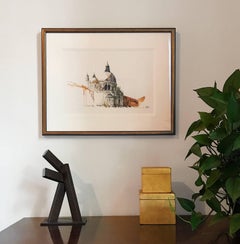
"Santa Maria della Salute" Venice - Architectural Watercolor Painting - Turner

"Santa Maria della Salute" Venice - Architectural Watercolor Painting - Turner

By Mclean Jenkins

Located in Atlanta, GA

"Santa Maria della Salute II" is a watercolor painting of the Santa Maria della Salute church and minor basilica in Venice, Italy. This work features hues of orange and tan. This piece is 16 by 20 inches framed. McLean Jenkins is inspired by the work of JMW Turner, Richard Diebenkorn and Louis Khan. McLean Jenkins is a practicing architect with McAlpine and his work derives from and celebrates the classical forms of his trade. Working in graphite, ink and watercolor, McLean employs a gestural approach that frees his hand to explore a subject’s essence. His compositions rely on the quick, decisive sketch and are then given over to the whims and splashes of watercolor. Spontaneity, movement and spirit are all emphasized and his drawings collectively form their own narrative of his passion for architecture. The city of Venice has captured McLean’s imagination since his first trip there as a 12 year old boy. Over the years a kind of courtship with the city has evolved, and its impact has motivated and sustained his development as both architect and artist. His work depicting the city has been recognized within the architectural profession by the Georgia Trust for Historic Preservation in its award to McLean of the J. Neel Reid...

Category

2010s Contemporary Mclean Jenkins Art

Materials

Paper, Ink, Watercolor

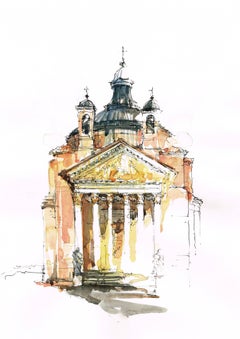
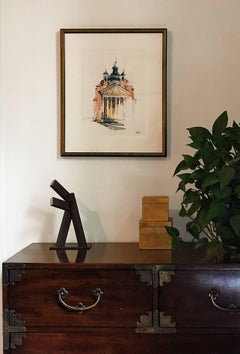
"Tempietto Barbaro" - Venice - Architectural Watercolor Painting - Turner

"Tempietto Barbaro" - Venice - Architectural Watercolor Painting - Turner

By Mclean Jenkins

Located in Atlanta, GA

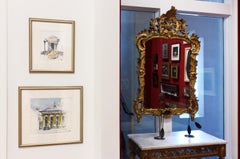
"Tempietto Barbaro" is a watercolor and architectural drawing of the church built to serve the Villa Barbaro and the village of Maser, in the Veneto region of northern Italy, by Andrea Palladio in 1580. This piece is 19.5 by 16.25 inches framed. McLean Jenkins is inspired by the work of JMW Turner, Richard Diebenkorn and Louis Khan...

Category

2010s Contemporary Mclean Jenkins Art

Materials

Paper, Ink, Watercolor

Related Items
Jeanne-marie Barbey (1876-1960), Trees in Winter, Brown ink wash

Jeanne-marie Barbey (1876-1960), Trees in Winter, Brown ink wash

Located in PARIS, FR

Jeanne-Marie BARBEY (1876-1960) Trees in winter Brown ink wash and graphite pencil on paper Signed lower right 26 x 20 cm frame 46 x 40 cm Born Louise Jeanne Marie Barbée in 1876 in...

Category

Early 20th Century Mclean Jenkins Art

Materials

Watercolor, Graphite

Farm Landscape, Zoar, Ohio, American Modern, Gouache on Paper, Signed, C. 1923

Farm Landscape, Zoar, Ohio, American Modern, Gouache on Paper, Signed, C. 1923

By August F. Biehle

Located in Beachwood, OH

August Frederick Biehle (1885-1979) Farm Landscape, Zoar, c. 1923 Gouache, litho crayon and graphite on paper Signed lower right 14 x 19 inches 17 x 23 inches, framed A versatile pa...

Category

1920s American Modern Mclean Jenkins Art

Materials

Crayon, Gouache, Graphite

Autumn Cotilion - Japanese Style Gyotaku Painting on Marbled Mulberry Paper

Autumn Cotilion - Japanese Style Gyotaku Painting on Marbled Mulberry Paper

By Jeff Conroy

Located in Chicago, IL

In Japan they are known as Nishikigoi, or living jewels. These brilliantly colored varieties of the Amur carp have been selectively bred by family owned fisheries for generations. When I began this series of Gyotaku (Japanese fish printing) I studied the many varieties of Koi, each with their own unique colors and patterns. My particular favorites are the Tanchos which can be identified by the distinct red spot on their heads. To create these pieces I print common carp I catch myself with sumi ink using traditional techniques used by Japanese fisherman dating back the mid 1800's. I then tint the images using watercolor. In each piece I hope to translate a sense of movement to give the viewer a sense of calm one might experience watching the living versions lazily meandering around a serene pond. —Jeff Conroy Several koi swim in a circle while autumn leaves fall on the surface of the water in this Gyo-tako method of painting by artist Jeff Conroy. After inking and taking impressions of the koi, the artist then uses watercolors to enhance their beauty. By using marbled mulberry paper to print on, he has created the illusion of water with the swirls of the mulberry paper. The paper itself has a soft hue and slightly wavy texture adding the overall feel of the artwork. This artwork is unframed. Contact gallery for framing options. Jeff Conroy Autumn Cotillion sumi ink and colored pencil on mulberry paper 25h x 37w in 63.50h x 93.98w cm JEC103 Gyotaku - A Japanese word translated from "gyo" meaning fish and "taku" meaning stone impression. It is the traditional Japanese method of printing fish, a practice which dates back to the mid-1800s. This form of nature printing was used by fishermen to record their catches, but has also become an art form of its own. Gyotaku is a Japanese method of printmaking that traditionally utilizes fish, sea creatures or similar subjects as printing "plates" in its process. The literal translation of the word is "fish stone rubbing...

Category

21st Century and Contemporary Contemporary Mclean Jenkins Art

Materials

Sumi Ink, Watercolor, Mulberry Paper

“Campo de Fiori, Roma”

“Campo de Fiori, Roma”

Located in Southampton, NY

Original watercolor with graphite underlining tracings of the historic Italian square Campo de Fiori. Condition is very good. Circa 1970. Signed by the artist middle bottom right. ...

Category

1970s Contemporary Mclean Jenkins Art

Materials

Watercolor, Archival Paper, Graphite

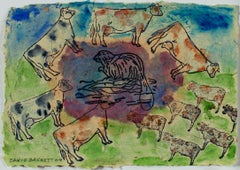
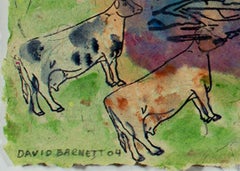
"Beaver Lake Beaver with Surround Sound Cows" signed by David and Sarah Barnett

"Beaver Lake Beaver with Surround Sound Cows" signed by David and Sarah Barnett

By David Barnett

Located in Milwaukee, WI

"Beaver Lake Beaver with Surround Sound Cows" is an original mixed media piece incorporating watercolor and ink on handmade paper by David Barnett and his daughter, Sarah. They both ...

Category

Early 2000s Contemporary Mclean Jenkins Art

Materials

Ink, Watercolor, Handmade Paper
'The Enduring Attractions of the Open Market', Capitalism Satire

'The Enduring Attractions of the Open Market', Capitalism Satire

By Antonio Manganaro

Located in Santa Cruz, CA

Signed lower right, 'A. Manganaro' for 'Antonio Manganaro (Italian, 20th Century), and titled lower center, 'The Enduring Attractions of the Open Market'. Matted Dimensions: 16 x 20

Category

Mid-20th Century Mclean Jenkins Art

Materials

Paper, Ink, Gouache, Pen, Graphite

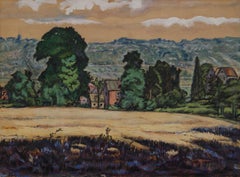
WOODED LANDSCAPE WITH HOUSES Signed Watercolor, c.1950 African American Artist

WOODED LANDSCAPE WITH HOUSES Signed Watercolor, c.1950 African American Artist

Located in Union City, NJ

WOODED LANDSCAPE WITH HOUSES Signed original brush and ink on wove paper, circa 1950. WOODED LANDSCAPE WITH HOUSES is an original watercolor brush and ink on paper, hand signed in ink pen by African-American artist, teacher, and printmaker Ronald Joseph (1910--1992) Artwork depicts an abstract landscape, is in good condition, paper tape remaining on reverse side edges, mounted in an archival acid-free mat, unframed. Artwork paper size - 18 x 21.5 in. Year created - c. 1950 About the artist - Ronald Joseph (1910 -1992) was born on the island of St. Kitts, West Indies In 1910. When he was very young, his mother decided to move to the United States but she could not afford to take him with her. Mr. and Mrs. Theophilus Joseph, a childless couple who were friends of Joseph’s mother, adopted him. Afterwards, the Joseph family moved to the Island of Dominica, where they stayed for ten years. In 1921, his foster parents also decided to come to the United States. In New York, Joseph met his mother but remained living with his foster parents. In 1926 Ronald Joseph received a scholarship for the Ethical Culture School, were he spent two and half years of his high school period. At this time he obtained an art scholarship through Dr. Henry Fritz, with whom he became acquainted through his art teacher in public school. Joseph was taken into the Saturday art class, where he was the only black participant. An artistic prodigy, Ronald Joseph had his student works shown at the Metropolitan Museum of Art. Ronald Joseph graduated from Ethical Culture Fieldston School in 1929. He was honored as “the most promising” young artist in New York City’s schools. He began his study at Pratt Institute in 1931 and graduated in 1934. During the 1930s and 1940s, Joseph participated in many exhibitions of African-American art, the Works Progress Administration mural project, and the Harlem Artists Guild. Ronald Joseph enlisted in the U.S. Army Air Corps at the declaration of World War II and was posted as a member of the ground crew in Tuskegee, Alabama, and in Michigan. At the end of the war in 1945, he received his G. I. Bill of Rights scholarship. In 1948, he was presented with the Rosenwald Fellowship. The funds allowed him to live and work abroad – first in Peru for two years, then in Paris. Joseph used the G.I. bill to study in Paris at the Grande Chaumière. He described this period of his life as being “independent of economy”. His work from these travels is largely undocumented; according to Rosenwald scholar, Daniel Schulman, many pieces of art are undated or simply dated “1948-1952”. After this period he came back to New York without money and work and indicated this as period of hardship. Ronald Joseph left the U.S. in 1956, disappointed in the unreceptiveness of the art world to his work with mixed feelings about this. On the one hand, he felt guilty for having left the U.S. during a period when blacks were struggling for their civil rights; on the other, he felt “lucky” to have been able to live and work in place where he did not feel discrimination as intensely. He emigrated to Belgium and later settled permanently in Brussels. Ronald Joseph was married to Claire Joseph and they had a son, Robin Joseph. In 1989 Joseph returned to the United States after an absence of thirty-three years to attend the Lehman College exhibition and symposium and to renew his old friendships. Afterward, he returned to Brussels where he continued to work as a painter, living there for the remainder of his life. Ronald Joseph started his artistic career in Harlem, New York City at the Harlem Community Arts Center, where he was one of the youngest pupils. Joseph studied lithography and other printmaking techniques with Riva Helfond, who taught him many aspects of the process based on simple techniques, including how to operate the press, and how to prepare the stones. Helfond played a significant role as a teacher of lithography at the Harlem Art Center. Joseph produced his first lithographs under her supervision, and this was at a time when she was just beginning to learn the medium herself. At the Harlem Community Arts Center Joseph met Robert Blackburn, who was his classmate. In 1937 Ronald Joseph depicted Blackburn, in one of his most famous works, that is now located at The Metropolitan Museum collection. Experimenting with lithography and etching, as well as woodblock and silkscreen printing, Joseph explored the techniques of printmaking alongside his friend Robert Blackburn. Joseph described the Harlem Art Center as a “healthy and lively” place, where he had made wonderful friends. In the late thirties, he also served as a teacher at the Harlem Community Arts Center. There Joseph met younger artist Jacob Lawrence and Gwendolyn Knight. They formed a friendship, where they enjoyed conversations and visiting museums together. Both Joseph and Knight would hire Lawrence to pose for them. Jacob Lawrence considered Ronald Joseph to be a very intellectual artist. In the 1930s, Joseph became chairman of the Harlem Artists Guild and represented it in Washington with Stuart Davis and Hugo Gellert. Ronald Joseph was also a participant in the mural section of WPA and a representative of the Harlem Artists’ Guild to the New York World’s Fair (1939-1940). Joseph’s early oil paintings were influenced by Picasso, Braque and other European artists while most of his contemporaries focused on social realism. By 1943, he was hailed by art historian James Porter as New York’s “foremost Negro abstractionist painter”. His pastels and gouaches from the late forties and early fifties showed a highly structured abstraction combined with a studied spontaneity. Ronald Joseph’s finely tuned abstractions often incorporated representational elements along with apparently “purer” forms. He described this aspect of his work in these terms: “It’s not abstract and abstract at the same time. It’s pure creation.” His works from the 1950s employed both still life and landscape as pretexts for masterly exercises in nearly abstract pictorial construction related to cubism and fauvism. During World War II, Joseph was drafted. After the war he formed “a kind of a group” with Robert Blackburn, Charles White, Larry Potter, and Reginald Gammon...

Category

1950s Contemporary Mclean Jenkins Art

Materials

Mixed Media, Watercolor, Ink

'Ebren Ha Dor, Shifting Sky'. Contemporary Landscape, Rural, Countryside, Clouds

'Ebren Ha Dor, Shifting Sky'. Contemporary Landscape, Rural, Countryside, Clouds

By Sophia Milligan

Located in Penzance, GB

'Ebren Ha Dor, Shifting Sky'. Contemporary landscape painting, Cornwall Original Artwork, Unframed _________________ The dancing light and rapidly changing skies, hung high above the the landscape of West Cornwall: a harshly beautiful peninsula, jutting out into the wild tireless ocean, shaped and moulded by powerful salt laden Atlantic winds. Criss-crossed by ancient, tangled hedgerows marking the stories of the leathered, labour-roughened hands worn like the granite, coloured as the bronze bracken covered land they toiled endlessly to tame, carving spaces of sanctuary against the raw elements. A plein air painting from the series 'Ebren ha Dor' (Meaning 'Sky and Earth in Cornish). In this series, Sophia's fluid expressive style captures the immediacy of the changing light in the seasonal landscapes, whilst exploring flux and balance in the nature of all things: The freedom of the air and solidity of the soil; Of human narratives written in the wild landscapes; in the sensual interplay of light and shadow. They capture an essence of the equilibrium between wild raw energy and serene stillness; chaos and harmony; and the enduring and the effervescent. Acrylic ink on handmade rough edge watercolour paper Signed in pencil to the lower right corner 30 x 30cm / 12 x 12 inches __________________________ About The Artist Sophia Milligan is a contemporary multidisciplinary artist, exploring discourses on permanence & evanescence; the eternal, cyclical absolutes of birth & death; motherhood & childhood; and ancient immutable connections. With resonating ripples of intuition and instinct Sophia illuminates the presence of the ordinary, creating moments of sublime present. 'Born among the wild cliffs and tempestuous seas of west Cornwall, I grew with the intimate details in the twisting lanes and the intense changing light throughout the turbulent seasons. I formed a primordial connection with a deep instinctual sense of being part of the natural narrative, and wherever in the world I may be, this connectivity underpins my practice. Like the wind sculpted hawthorns and sensual coves of weather worn granite, I have been shaped by the powerful energy entwined in this ancient raw environment.’ ‘We are the stories of the journeys that came before. I weave into my work the tales of transitory circumstance; of struggle and survival; of forms and textures holding records of evolutionary millennia. I paint, I draw: with marks, mixtures, photography, words; the raw earth; the restless oceans; the whispered breeze. I work with time, and the immeasurable spaces of experience within, giving subtleties of existence a pause for contemplation. There is beauty in such poignant breaths. All moments are significant, every pebble of now forms the vast mountain of yesterday, and the great realm of tomorrow's possibilities'. Sophia has a 1st class honours Bachelor of Arts Degree in Visual Arts and World History, and a Masters Degree in Contemporary Visual Arts. Her work is held in prestigious international private collections, and exhibitions of her interactive, immersive installation, photography and mixed media works include 'Tabula Rasa', London; 'Superlative', Plymouth; 'Transition', Newlyn; The Eden Project, Cornwall; The European Parliament, Brussels; Kew Gardens, London; and 'The Cameraless Film Festival', Chicago. _________________________________ Modern . Landscape . Contemporary . landscape . Stone . Cornwall . Sky . Yellow . Blue . Green . Brown . Rural...

Category

2010s Contemporary Mclean Jenkins Art

Materials

Ink, Watercolor, Handmade Paper
October 3:30 PM sketch

October 3:30 PM sketch

By Edward Minoff

Located in Greenwich, CT

Sketch for Minoff's painting October 3:30 PM.

Category

2010s Realist Mclean Jenkins Art

Materials

Gouache, Graphite, Paper
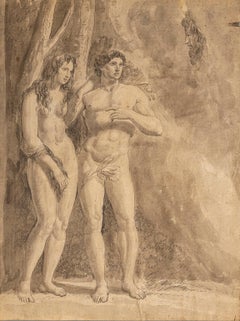
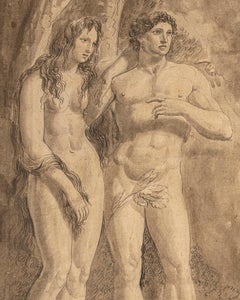
Italian neoclassical monochrome on paper with a religious theme Adam and Eve

Italian neoclassical monochrome on paper with a religious theme Adam and Eve

By Luigi Ademollo

Located in Florence, IT

With an immediately clean and elegant impact, we already know that this drawing can be counted among the valuable range of Ademollian early graphic art for two reasons: the subject, ...

Category

Early 19th Century Other Art Style Mclean Jenkins Art

Materials

Paper, Chalk, Watercolor, Pen, Graphite

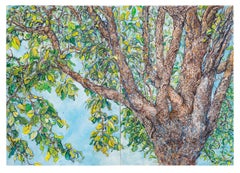
Elm Along The Bayou

Beth SecorElm Along The Bayou, 2014-2015

$6,000

H 20 in W 28 in D 0.1 in

Elm Along The Bayou

By Beth Secor

Located in Houston, TX

Beth Secor, Elm Along The Bayou, 2014-2015 Ink, gouache and pencil on paper overall diptych 20 x 28 inches 20 x 14 inches each Beth Secor understands tr...

Category

21st Century and Contemporary Contemporary Mclean Jenkins Art

Materials

Archival Paper, Gouache, Ink

Boom, Bust, Repeat - Nick Peña - Contemporary Landscape/Abstract Painting

Boom, Bust, Repeat - Nick Peña - Contemporary Landscape/Abstract Painting

Located in Signal Mountain, TN

In BOOM BUST REPEAT17, Peña creates a silhouette of house and fills it with sharpe-edged shapes that contain gradients and saturated hues of red, green, and violet. He balances these colors with muted tones of orange and yellow . The viewer can create a house that is yet to be built in between the gaps here. In "Boom, Bust, Repeat", Peña remarks on a house and landscape that has yet to take place. The painting is created with watercolor and acrylic paint on paper. In the foreground we see Sintra board or flattened PVC that has been CNC routed. In the "soil" beneath the house are small circular lines that have been hand drawn with India ink. The Sintra board has been cut to reveal arrows in the negative space pointing upwards as to hint at a boom in the market. Peña’s works range from painting to multimedia installations that question the ever-changing psychological landscape of America; asking the viewer to re-examine their perceptions of the “American Dream” and the affects that pursuit has on our environment and national psyche. The realization that both the idealistic pursuit of happiness and the relevance of painting in a technologically driven world informs his practice. With each composition the labor begins with digital composites of a fragmented American landscape in peril —where tension lies in the contrasts between past and present, analog and digital, representation and abstraction, and stability and instability. In his most recent series the American home (stability) and fragmented and shifting landscape (instability) are veiled by a digitally produced mat. Traditionally a mat is, by definition, a flat, thin piece of paper based material included within the picture frame and serves as additional decoration when framing artwork. He activates this commonly overlooked material by using a non-traditional material, Sintra (flattened sheet of PVC), that has a negative digitally drawn image cut-out. This cut-out might, at first glance, look hand cut however, a more astute viewer would realize the precision is mechanical. The mat has been transformed from inactive decoration to digitally produced veil that represents the technologically anxious precision we surround ourselves with. Nick Peña...

Category

2010s Contemporary Mclean Jenkins Art

Materials

PVC, Wood, Paper, India Ink, Acrylic, Watercolor

Previously Available Items
"Canal II" - Venice - Architectural Watercolor Painting - Turner

"Canal II" - Venice - Architectural Watercolor Painting - Turner

By Mclean Jenkins

Located in Atlanta, GA

"Canal II" is a graphite and watercolor painting of a canal in Venice featuring hues of yellow, blue, and orange. This piece is 19.5 by 14.25 inches framed. McLean Jenkins is inspir...

Category

2010s Contemporary Mclean Jenkins Art

Materials

Paper, Watercolor, Graphite

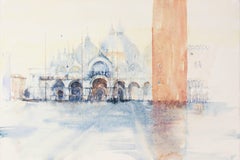
"San Marco After the Rain" - Venice - Architectural Watercolor Painting - Turner

"San Marco After the Rain" - Venice - Architectural Watercolor Painting - Turner

By Mclean Jenkins

Located in Atlanta, GA

Continuing the artistic tradition of works of art inspired by Venice, in this watercolor, McLean Jenkins masterfully captures San Marco after a summer rain. This work features hues o...

Category

2010s Contemporary Mclean Jenkins Art

Materials

Paper, Watercolor, Graphite

Mclean Jenkins art for sale on 1stDibs.

Find a wide variety of authentic Mclean Jenkins art available for sale on 1stDibs. You can also browse by medium to find art by Mclean Jenkins in paint, watercolor, ink and more. Much of the original work by this artist or collective was created during the 21st century and contemporary and is mostly associated with the contemporary style. Not every interior allows for large Mclean Jenkins art, so small editions measuring 7 inches across are available. Customers who are interested in this artist might also find the work of Peggy Leonard, Anne C. Weary, and Andrea Moreau. Mclean Jenkins art prices can differ depending upon medium, time period and other attributes. On 1stDibs, the price for these items starts at $550 and tops out at $2,400, while the average work can sell for $2,200.

Artists Similar to Mclean Jenkins