By Michael Powolny
Located in Vienna, AT
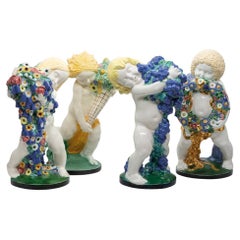
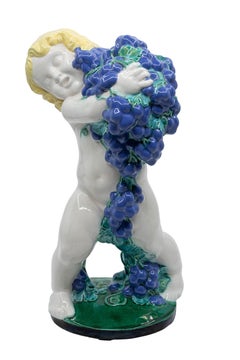
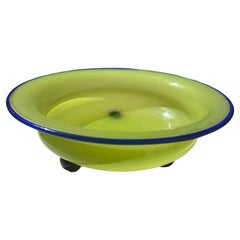
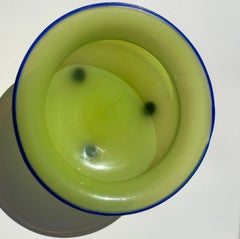
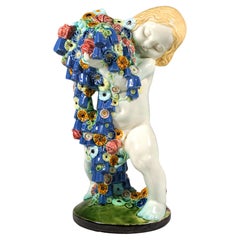
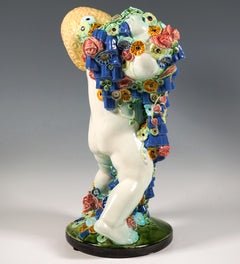
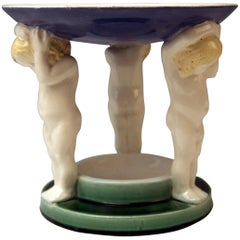
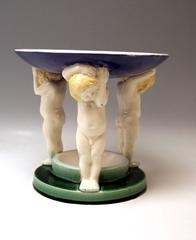
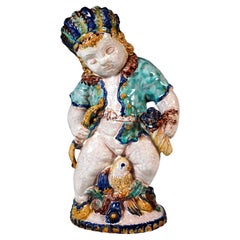
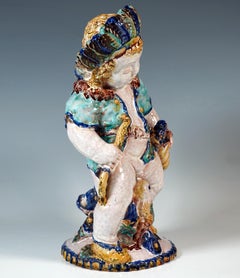
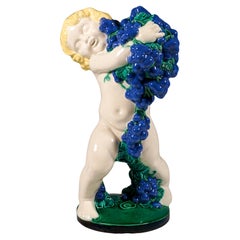
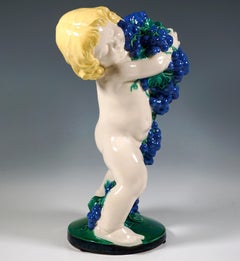
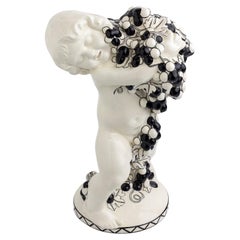
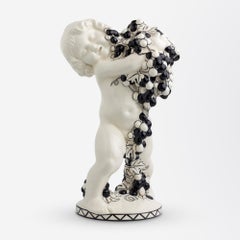
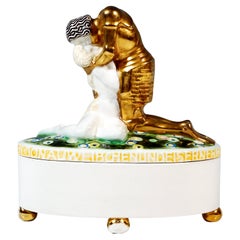
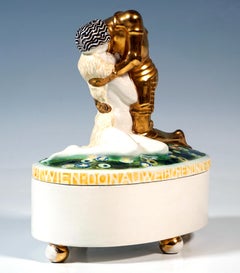
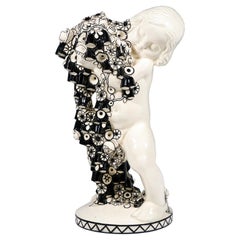
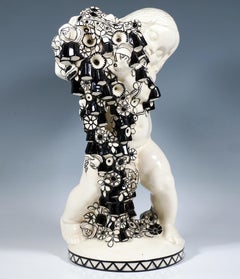
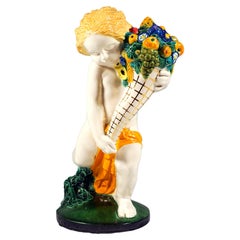
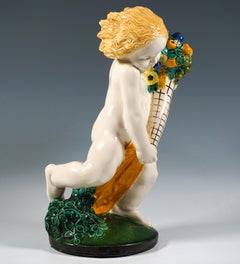
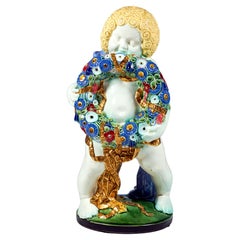
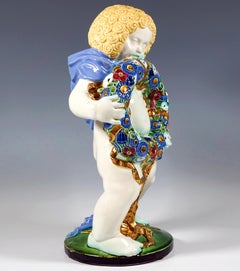
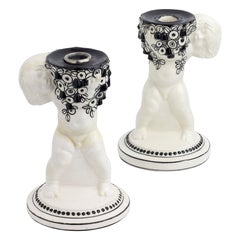
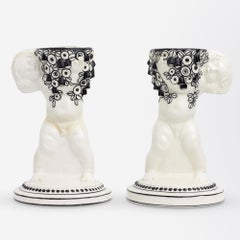
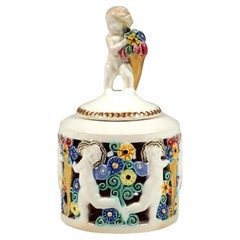
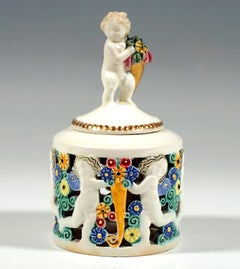
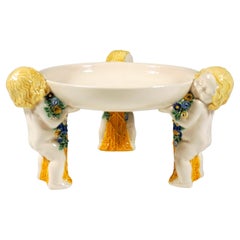
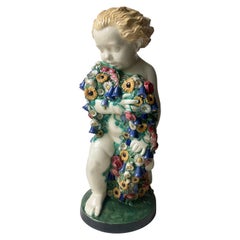
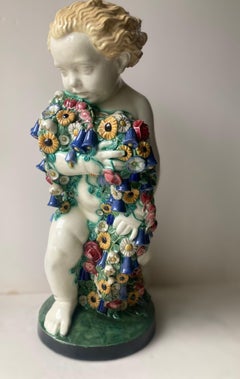
Michael Powolny Art Nouveau centrepiece with three cherubs - most lovely ceramics item!
Modelled by Michael Powolny (1871 - 1954), circa 1907.
Hallmarked:
Manufactured by Wiener Keramik (Vienna Ceramics) (WK / hallmarked).
Material is ceramics (multicolored painted / glossy finish).
Model 113 (model number is impressed / bottom glazed)
Monogram of "Michael Powolny (MP)" is impressed, too.
Made 1912.
________________________________________________________________________________
Subject:
Most lovely three naked male cherub's figurines holding a round plate attached to their heads / the mentioned plate is blue painted at bottom side / the surface of tiered round socle is partially moss green shaded.
________________________________________________________________________________
Height: 21.0 cm (= 8.66 inches)
Diameter of platter: 24.5 cm (= 9.64 inches)
________________________________________________________________________________
Bibliography:
Waltraud Neuwirth, Markenlexikon für Kunstgewerbe (3), Wiener Keramik / Modelle 1906-13; pages 100-101
Elisabeth Frottier, "Michael Powolny, Keramik und Glas aus Wien 1900-1950", Vienna 1990, page 200, List of Work (= Werkverzeichnis) number W 113 (WV 61), Model 113
________________________________________________________________________________
Experts of Fine Arts assess Michael Powolny's work nowadays as result of activity of one the most important ceramics sculptors / designers of Austrian Art Nouveau. Most of Powolny's successors were strongly under his sway since Powolny had left 'large steps' in Viennese Art of Ceramics.
Excellent condition.
____________________________________________________________________________________
About Michael Powolny (Sculptor).
As both a designer and a teacher, the Austrian ceramicist and glassware designer Michael Powolny was an important figure in the development of modernist aesthetics in Vienna at the turn of the 20th century. His romantic sculptural pottery figures embrace the lush, dynamic stylings of Gustav Klimt and other progressive artists, while his functional pieces — such as glass bowls and vases — employ the simple linear and geometric ornamentation that marked the work of Josef Hoffmann and other members of the Wiener Werkstätte Community of designers and craftsmen.
Powolny received classical training in ceramics from his father, a potter, and at the Vienna School of Applied Arts, but later joined in the modernizing movement in the Austrian arts at the close of the 19th century. In 1897, Klimt, Hoffman, Koloman Moser and other artists and architects founded the Vienna Secession, a group that fought for freedom of expression against the city’s
tradition-bound arts establishment. Powolny’s work reflects the changing times. He used classical figures in his ceramics — female nudes, cherubs — yet would dress them in modern ornament such as garlands of abstract, geometric flowers. Pieces from Powolny’s ceramics company were sold through the Wiener Werkstätte (Viennese Workshops) founded by Hoffmann and Moser, and Hoffman later hired Powolny to create ceramic ornamentation for his architectural masterpiece, the Palais Stoclet in Brussels.
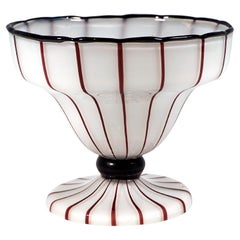
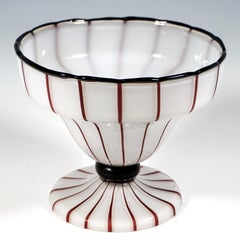
Powolny would go on to design glassware that combines elegant, tapering forms with precise linear decoration. His most influential work may have come as a professor at the School of Applied Arts, where he taught both Lucie Rie,
the great Austrian-British modernist ceramicist, and the American potter Viktor Schreckengost, creator of the “Jazz Bowl...
Category
1910s Austrian Art Nouveau Vintage Michael Powolny Furniture