Olga Fisch Art

Ecuadorian, Hungarian, 1901-1990

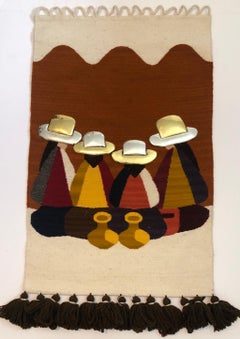
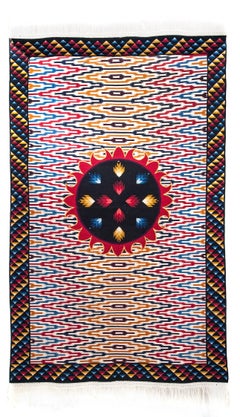
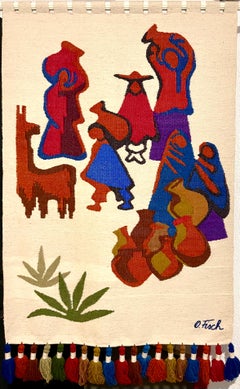
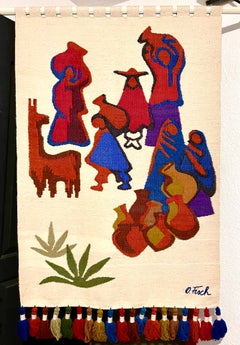
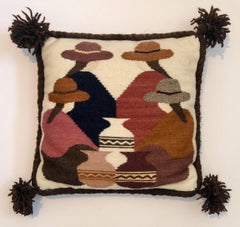
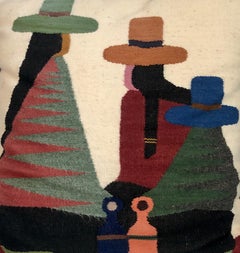
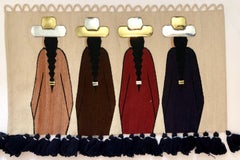
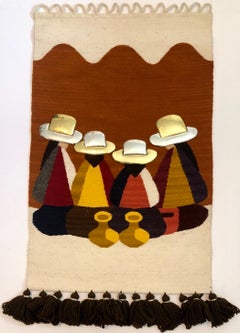
Despite her Hungarian roots, artist Olga Fisch is remembered as the “mother of Ecuadorian folk art” due to her love of Ecuador’s art and culture. Best known for her vibrant rug designs and tapestries, Fisch contributed greatly to promoting Ecuadorian folk art abroad and introducing the country’s traditions and heritage to the world. 

Born in Budapest in 1901, Fisch became interested in art at an early age. In her youth, she collected Hungarian folk crafts and was keen on becoming a painter. 

In the 1920s, Fisch studied realist painting at an art school in Düsseldorf, Germany. There, she met her first husband, the sculptor Jupp Rübsam, and the couple moved to Vienna, Austria, where she worked as a ceramics designer. Following their divorce, Fisch grew unsettled by the burgeoning anti-Semitism in pre-World War II Germany. After she married for a second time, Fisch and her husband traveled to Morocco, Eritrea, Italy and the United States before receiving asylum status in Ecuador in 1939.

Settling in Quito, Fisch became enamored with traditional Ecuadorian folk art and returned to her childhood hobby of collecting crafts — everything from pottery and hand-carved wood sculptures to colorful textiles. Fisch’s sizable collection prompted her to open a gallery, called Folklore, in 1942. However, what she considered beautiful art was regarded by others as crude.

“When I first started collecting the local Indian art and then opened this gallery, people were shocked,” she said in an interview with The Christian Science Monitor. “I remember someone asking, ‘How can you, as a cultured European woman, collect this trash?’” Nevertheless, Fisch’s collection soon garnered international attention and acclaim.

In the 1940s, Fisch began designing folk art-inspired rugs, hand-woven by indigenous Ecuadorian weavers. One rug caught the eye of acclaimed writer Lincoln Kirstein, then curator of New York’s Museum of Modern Art; he commissioned her to create a rug for the museum’s collection. Over the years, Fisch also made rugs for the United Nations Headquarters and the Metropolitan Opera

Fisch returned to Hungary in 1987 to visit family members who had survived the Nazi regime. She later came back to Quito, where she died in 1990. 

Today, Fisch’s legacy lives on through the Olga Fisch Folklore brand, store and museum, which still operates in Quito. Her works are in the collections of the Museum of Modern Art in New York and the Textile Museum in Washington, DC.

On 1stDibs, discover a range of vintage Olga Fisch rugs and other art.
to
1
2
Overall Width
to
Overall Height
to
3
2
1
3
3
3
10,164
2,784
2,504
1,382
3
Artist: Olga Fisch
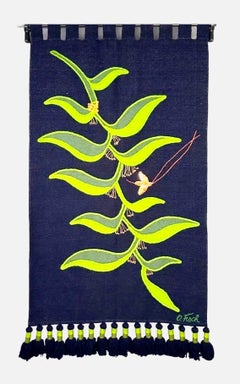
Vintage Handwoven Tapestry Wool Folk Art Rug Weaving Wall Hanging Olga Fisch
By Olga Fisch
Located in Surfside, FL
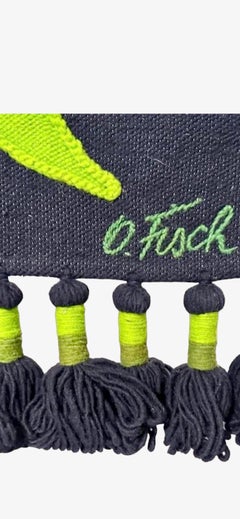
Olga Fisch ( American 1901-1990) Hummingbird and Pendant Flower, hand woven and stitched wool and sequins, signed lower right. Dimensions: 58 x 32 in. Olga Fisch was born in Hungary, studied in Germany and lived in Morocco and Ethiopia before receiving asylum as a Jewish refugee in Ecuador in 1939. For her Indian-inspired designs, Mrs. Fisch uses natural black and white sheep...
Category

20th Century Folk Art Olga Fisch Art

Materials

Wool

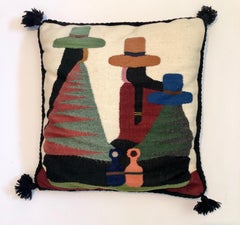
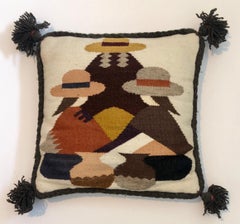
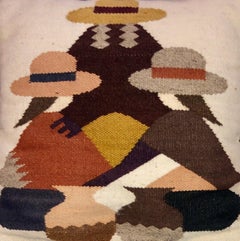
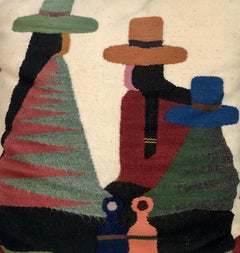
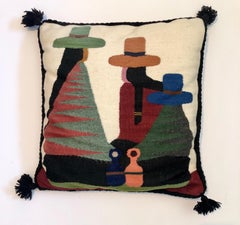
Vintage Handwoven Tapestry Wool Folk Art Rug Weaving Pillow or Wall Hanging
By Olga Fisch
Located in Surfside, FL
Olga Fisch was born in Hungary, studied in Germany and lived in Morocco and Ethiopia before receiving asylum as a Jewish refugee in Ecuador in 1939. For her Indian-inspired designs, Mrs. Fisch uses natural black and white sheep...
Category

1950s Folk Art Olga Fisch Art

Materials

Wool

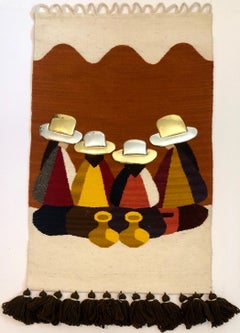
Vintage Handwoven Tapestry Wool, Metal Folk Art Rug Weaving Wall Hanging
By Olga Fisch
Located in Surfside, FL
Olga Fisch was born in Hungary, studied in Germany and lived in Morocco and Ethiopia before receiving asylum as a Jewish refugee in Ecuador in 1939. For her Indian-inspired designs, Mrs. Fisch uses natural black and white sheep...
Category

1950s Folk Art Olga Fisch Art

Materials

Wool

Related Items
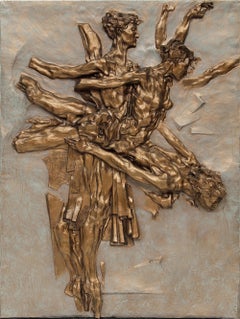
La Galère, 1950 - ceramic, 46x132x5
By Les Argonautes
Located in Nice, FR
Very Big Ceramic from "Les Argonautes" Vallauris Workshop "Les Argonautes", Vallauris: Isabelle Ferlay (1917-?) And Frédérique Bourguet (1925-1997) Isabelle Ferlay and Frédérique Bourguet founded their ceramic workshop in Vallauris in 1953, which they named "Les Argonautes", in reference to the famous Greek epic. Isabelle studied painting at the Fine Arts school of Lyon in 1940, then she attended the Fine Arts in Marseille. Finally, she finished her artistic training in Montpellier, at the Fontcarade national school, where she learned ceramics. Françoise dit Frédérique Bourguet studied at the Beaux-Arts in Montpellier until 1945 and it was in Sèvres, in Françoise Bizette's studio, that she trained in the art of ceramics. She created her first workshop in Paris in 1945, which she shared with Valentine Schlegel until 1951. The two women ceramicists then practiced modeling technique. It was in 1953 that she met Isabelle Ferlay and together, they decided to set up a workshop in Vallauris. They produce shaped pieces, sometimes molded, made of earthenware, enamelled in bright colors. In the 1970s they made stoneware cooked over a wood fire. Some ceramists frequented their workshop, notably the very talented Jacques Innocenti and François Raty.
Category

Mid-20th Century Modern Olga Fisch Art

Materials

Ceramic

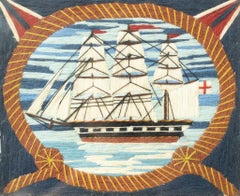
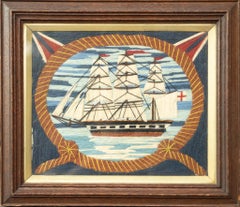
Rope Framed 19th Century Woolie featuring English Ship
Located in Austin, TX
19th Century British Woolie 11" x 13" Medium: Wool Framed Sailboat featuring British Flag
Category

Mid-19th Century Folk Art Olga Fisch Art

Materials

Wool

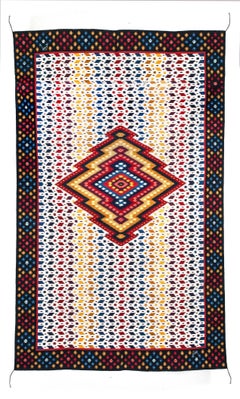
Diamante / Textiles Mexican Folk Art Rug
By Pedro Mendoza Gutierrez
Located in Jesus del Monte, MX
FREE SHIPPING TO WORLDWIDE! Artisan: Pedro Mendoza Gutierrez MASTERPIECE Rug made in treadle loom with Wool threads dyeing with natural tints: huizache, cochineal, indigo, pericon...
Category

2010s Folk Art Olga Fisch Art

Materials

Wool, Cotton

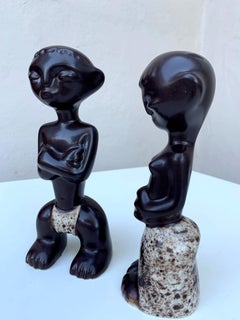
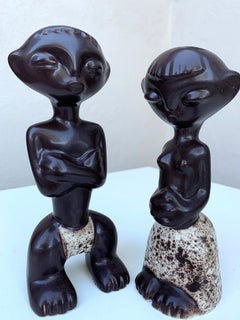
Pair Tiki Ceramic Figures
Located in San Diego, CA
Pair of Tiki ceramic figures by artist Howard Pierce (1912-1994). Howard Pierce's artistry is cherished among collectors, a following he gained in over 5...
Category

20th Century Folk Art Olga Fisch Art

Materials

Clay

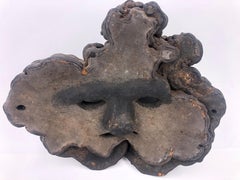
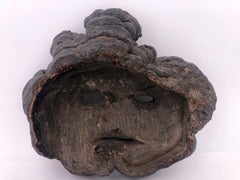
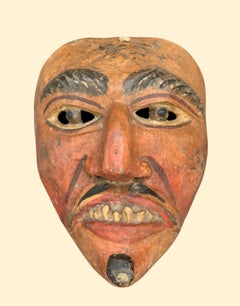
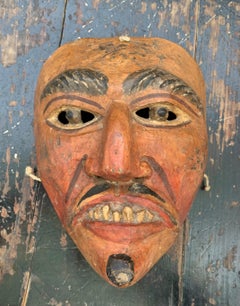
Vintage wood face mask, dark brown
Located in San Diego, CA
Vintage wood mask. The edge undulates and is lightweight. Date and artist unknown.
Category

20th Century Folk Art Olga Fisch Art

Materials

Wood

Vintage wood face mask, dark brown
$276 Sale Price
35% Off
H 9.75 in W 12 in D 3.5 in
African art tribal maternity figure, Lobi peoples Ghana - Ivory Coast
Located in Norwich, GB
A delightful African maternity figure from the Lobi peoples of the Ivory Coast/Ghana. With a serene yet feisty expression, the mother is carry...
Category

Mid-20th Century Folk Art Olga Fisch Art

Materials

Wood

El Sol / Textiles Mexican Folk Art Rug
By Pedro Mendoza Gutierrez
Located in Jesus del Monte, MX
FREE SHIPPING TO WORLDWIDE! Artisan: Pedro Mendoza Gutierrez MAIN MASTERPIECE EXPOSITION "MANOS Y ALMA DE OAXACA” Mexico City 2016 Rug made in treadle loom with Wool threads dyein...
Category

2010s Folk Art Olga Fisch Art

Materials

Wool, Cotton

Guatemala. Maschera di Baila de la Conquista. Inizio XX secolo
Located in Firenze, IT
Questa maschera guatemalteca del inizio del XX secolo, scolpita in legno e utilizzata per la danza della Riconquista (Baila de la Conquista) , raffigura vividamente un uomo europeo, ...
Category

Early 20th Century Folk Art Olga Fisch Art

Materials

Wood, Intaglio

Guatemala. Maschera di Baila de la Conquista. Inizio XX secolo
$236 Sale Price
20% Off
H 7.49 in W 5.71 in D 4.34 in
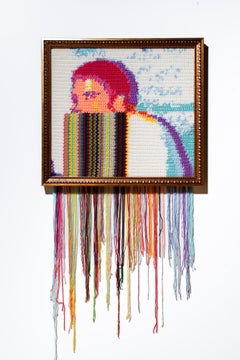
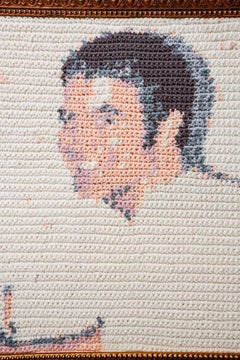
"MySpace Tom No. 4", "MySpace Tom No. 1" Textile Portrait, Glitch Motif, Crochet
Located in Philadelphia, PA
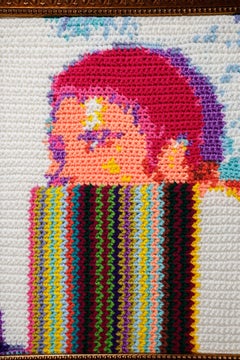
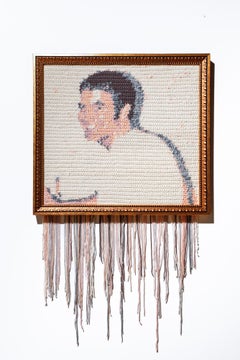
This piece titled "MySpace Tom No. 4" is a one-of-a-kind original piece by Nicole Nikolich (Lace in the Moon) and is made from crochet acrylic. This piece measures 30"h x 33"w framed...
Category

21st Century and Contemporary Contemporary Olga Fisch Art

Materials

Textile, Yarn

"MySpace Tom No. 6" Textile Portrait, Glitch Motif, Crochet Acrylic
Located in Philadelphia, PA
This piece titled "MySpace Tom No. 6" is a one-of-a-kind original piece by Nicole Nikolich (Lace in the Moon) and is made from crochet acrylic. This piece measures 30"h x 33"w framed...
Category

21st Century and Contemporary Contemporary Olga Fisch Art

Materials

Textile, Yarn

"MySpace Tom No. 7" Textile Portrait, Glitch Motif, Crochet Acrylic
Located in Philadelphia, PA
This piece titled "MySpace Tom No. 7" is a one-of-a-kind original piece by Nicole Nikolich (Lace in the Moon) and is made from crochet acrylic. This piece measures 30"h x 33"w framed...
Category

21st Century and Contemporary Contemporary Olga Fisch Art

Materials

Textile, Yarn

Pair of Iron Egret Wall Sculptures
Located in Milford, NH
A wonderful pair of patinated iron egret bird wall sculptures, one reaching for the sky and one focused forward, each signed on the weighted bases “Maxfield Parrish Jr, March 1956”. ...
Category

1950s Olga Fisch Art

Materials

Iron

Previously Available Items
Vintage Handwoven Tapestry Wool Folk Art Rug Weaving Pillow or Wall Hanging
By Olga Fisch
Located in Surfside, FL
Olga Fisch was born in Hungary, studied in Germany and lived in Morocco and Ethiopia before receiving asylum as a Jewish refugee in Ecuador in 1939. For her Indian-inspired designs, Mrs. Fisch uses natural black and white sheep...
Category

1950s Folk Art Olga Fisch Art

Materials

Wool

Vintage Handwoven Tapestry Wool Folk Art Rug Weaving Wall Hanging Olga Fisch
By Olga Fisch
Located in Surfside, FL
Olga Fisch was born in Hungary, studied in Germany and lived in Morocco and Ethiopia before receiving asylum as a Jewish refugee in Ecuador in 1939. For her Indian-inspired designs, Mrs. Fisch uses natural black and white sheep's wool colored with vegetable dye. To make one of her 9 by 12 rugs requires four weavers working eight hours a day for six weeks. Desiring to furnish her home with Ecuadorian-inspired rugs, she adapted designs from Indian pottery and tapas, sheets of native bark cloth. Taking the designs to Indian rugmakers, she had them woven into deep pile. Olga Fisch was respected both for her own art and for her collection of folk art. The folk art-inspired rugs she has designed can be admired, among other places, at the Museum of Modern Art, the United Nations Building, and the Metropolitan Opera House. Trained in the traditional German academic way in Dusseldorf in the 1920s, she is a painter of the realist school. Called the mother of Ecuadorian folk art, she discovered the beauty of Ecuadorian Indian textiles in the 1940s, when others regarded them as crude and worthless. Largely because of the efforts of Olga Fisch the artifacts produced by Ecuador's 250 Indian tribes are now highly regarded. Over the decades she has helped thousands of Indian artists and craftsmen acquire the means of placing their wares in the world market. In so doing she introduced their beauty to a once skeptical public. But when Mrs. Fisch first arrived in Quito as a Jewish refugee, she couldn't have guessed what direction her life would take. An artist who had studied painting in Dusseldorf, Germany, she managed to find work as a teacher in the Quito School...
Category

20th Century Folk Art Olga Fisch Art

Materials

Wool

Vintage Handwoven Tapestry Wool, Metal Folk Art Rug Weaving Wall Hanging
By Olga Fisch
Located in Surfside, FL
Olga Fisch was born in Hungary, studied in Germany and lived in Morocco and Ethiopia before receiving asylum as a Jewish refugee in Ecuador in 1939. For her Indian-inspired designs, Mrs. Fisch uses natural black and white sheep...
Category

1950s Folk Art Olga Fisch Art

Materials

Wool

Vintage Handwoven Tapestry Wool, Metal Folk Art Rug Weaving Wall Hanging
By Olga Fisch
Located in Surfside, FL
Olga Fisch was born in Hungary, studied in Germany and lived in Morocco and Ethiopia before receiving asylum as a Jewish refugee in Ecuador in 1939. For her Indian-inspired designs, Mrs. Fisch uses natural black and white sheep's wool colored with vegetable dye. To make one of her 9 by 12 rugs requires four weavers working eight hours a day for six weeks. Desiring to furnish her home with Ecuadorian-inspired rugs, she adapted designs from Indian pottery and tapas, sheets of native bark cloth. Taking the designs to Indian rugmakers, she had them woven into deep pile. Olga Fisch was respected both for her own art and for her collection of folk art. The folk art-inspired rugs she has designed can be admired, among other places, at the Museum of Modern Art, the United Nations Building, and the Metropolitan Opera House. Trained in the traditional German academic way in Dusseldorf in the 1920s, she is a painter of the realist school. Called the mother of Ecuadorian folk art, she discovered the beauty of Ecuadorian Indian textiles in the 1940s, when others regarded them as crude and worthless. Largely because of the efforts of Olga Fisch the artifacts produced by Ecuador's 250 Indian tribes are now highly regarded. Over the decades she has helped thousands of Indian artists and craftsmen acquire the means of placing their wares in the world market. In so doing she introduced their beauty to a once skeptical public. But when Mrs. Fisch first arrived in Quito as a Jewish refugee, she couldn't have guessed what direction her life would take. An artist who had studied painting in Dusseldorf, Germany, she managed to find work as a teacher in the Quito School...

Category

1950s Folk Art Olga Fisch Art

Materials

Wool

Vintage Handwoven Tapestry Wool Folk Art Rug Weaving Pillow or Wall Hanging
By Olga Fisch
Located in Surfside, FL
Olga Fisch was born in Hungary, studied in Germany and lived in Morocco and Ethiopia before receiving asylum as a Jewish refugee in Ecuador in 1939. For her Indian-inspired designs, Mrs. Fisch uses natural black and white sheep's wool colored with vegetable dye. To make one of her 9 by 12 rugs requires four weavers working eight hours a day for six weeks. Desiring to furnish her home with Ecuadorian-inspired rugs, she adapted designs from Indian pottery and tapas, sheets of native bark cloth. Taking the designs to Indian rugmakers, she had them woven into deep pile. Olga Fisch was respected both for her own art and for her collection of folk art. The folk art-inspired rugs she has designed can be admired, among other places, at the Museum of Modern Art, the United Nations Building, and the Metropolitan Opera House. Trained in the traditional German academic way in Dusseldorf in the 1920s, she is a painter of the realist school. Called the mother of Ecuadorian folk art, she discovered the beauty of Ecuadorian Indian textiles in the 1940s, when others regarded them as crude and worthless. Largely because of the efforts of Olga Fisch the artifacts produced by Ecuador's 250 Indian tribes are now highly regarded. Over the decades she has helped thousands of Indian artists and craftsmen acquire the means of placing their wares in the world market. In so doing she introduced their beauty to a once skeptical public. But when Mrs. Fisch first arrived in Quito as a Jewish refugee, she couldn't have guessed what direction her life would take. An artist who had studied painting in Dusseldorf, Germany, she managed to find work as a teacher in the Quito School...
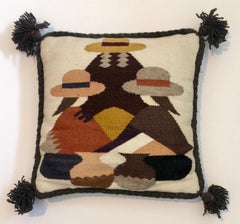
Category

1950s Folk Art Olga Fisch Art

Materials

Wool

Vintage Handwoven Tapestry Wool Folk Art Rug Weaving Pillow or Wall Hanging
By Olga Fisch
Located in Surfside, FL
Olga Fisch was born in Hungary, studied in Germany and lived in Morocco and Ethiopia before receiving asylum as a Jewish refugee in Ecuador in 1939. For her Indian-inspired designs, Mrs. Fisch uses natural black and white sheep...
Category

1950s Folk Art Olga Fisch Art

Materials

Wool

Vintage Handwoven Tapestry Wool Folk Art Rug Weaving Pillow or Wall Hanging
By Olga Fisch
Located in Surfside, FL
Olga Fisch was born in Hungary, studied in Germany and lived in Morocco and Ethiopia before receiving asylum as a Jewish refugee in Ecuador in 1939. For her Indian-inspired designs, Mrs. Fisch uses natural black and white sheep's wool colored with vegetable dye. To make one of her 9 by 12 rugs requires four weavers working eight hours a day for six weeks. Desiring to furnish her home with Ecuadorian-inspired rugs, she adapted designs from Indian pottery and tapas, sheets of native bark cloth. Taking the designs to Indian rugmakers, she had them woven into deep pile. Olga Fisch was respected both for her own art and for her collection of folk art. The folk art-inspired rugs she has designed can be admired, among other places, at the Museum of Modern Art, the United Nations Building, and the Metropolitan Opera House. Trained in the traditional German academic way in Dusseldorf in the 1920s, she is a painter of the realist school. Called the mother of Ecuadorian folk art, she discovered the beauty of Ecuadorian Indian textiles in the 1940s, when others regarded them as crude and worthless. Largely because of the efforts of Olga Fisch the artifacts produced by Ecuador's 250 Indian tribes are now highly regarded. Over the decades she has helped thousands of Indian artists and craftsmen acquire the means of placing their wares in the world market. In so doing she introduced their beauty to a once skeptical public. But when Mrs. Fisch first arrived in Quito as a Jewish refugee, she couldn't have guessed what direction her life would take. An artist who had studied painting in Dusseldorf, Germany, she managed to find work as a teacher in the Quito School...
Category

1950s Folk Art Olga Fisch Art

Materials

Wool

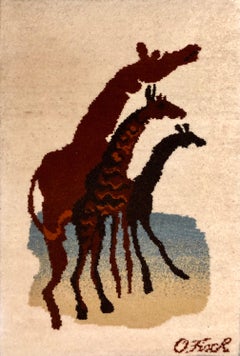
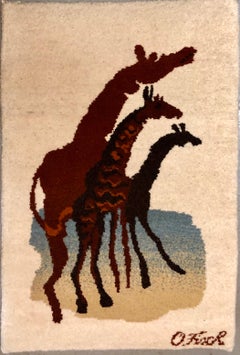
Vintage Handwoven Tapestry Wool Pile Folk Art Rug Caverna Series Giraffes
By Olga Fisch
Located in Surfside, FL
Olga Fisch was born in Hungary, studied in Germany and lived in Morocco and Ethiopia before receiving asylum as a Jewish refugee in Ecuador in 1939. For her Indian-inspired designs, Mrs. Fisch uses natural black and white sheep's wool colored with vegetable dye. To make one of her 9 by 12 rugs requires four weavers working eight hours a day for six weeks. Desiring to furnish her home with Ecuadorian-inspired rugs, she adapted designs from Indian pottery and tapas, sheets of native bark cloth. Taking the designs to Indian rugmakers, she had them woven into deep pile. Olga Fisch was respected both for her own art and for her collection of folk art. The folk art-inspired rugs she has designed can be admired, among other places, at the Museum of Modern Art, the United Nations Building, and the Metropolitan Opera House. Trained in the traditional German academic way in Dusseldorf in the 1920s, she is a painter of the realist school. Called the mother of Ecuadorian folk art, she discovered the beauty of Ecuadorian Indian textiles in the 1940s, when others regarded them as crude and worthless. Largely because of the efforts of Olga Fisch the artifacts produced by Ecuador's 250 Indian tribes are now highly regarded. Over the decades she has helped thousands of Indian artists and craftsmen acquire the means of placing their wares in the world market. In so doing she introduced their beauty to a once skeptical public. But when Mrs. Fisch first arrived in Quito as a Jewish refugee, she couldn't have guessed what direction her life would take. An artist who had studied painting in Dusseldorf, Germany, she managed to find work as a teacher in the Quito School...
Category

1950s Folk Art Olga Fisch Art

Materials

Wool

Olga Fisch art for sale on 1stDibs.

Find a wide variety of authentic Olga Fisch art available for sale on 1stDibs. You can also browse by medium to find art by Olga Fisch in fabric, wool and more. Not every interior allows for large Olga Fisch art, so small editions measuring 20 inches across are available. Customers who are interested in this artist might also find the work of Fidel Martinez Martinez, Curtis Jeré, and Ross Bonfanti. Olga Fisch art prices can differ depending upon medium, time period and other attributes. On 1stDibs, the price for these items starts at $400 and tops out at $1,800, while the average work can sell for $500.