Otto Neumann Prints and Multiples

German, 1895-1975

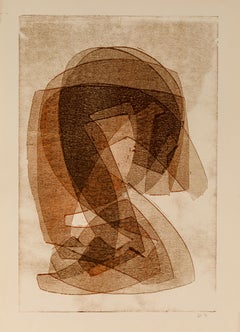
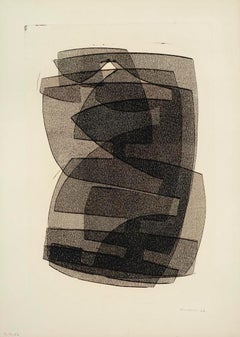
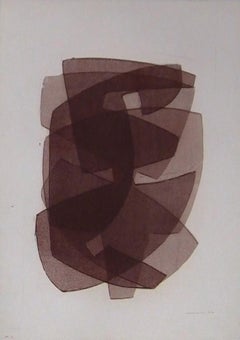
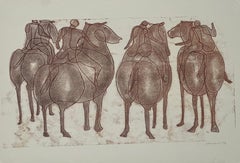
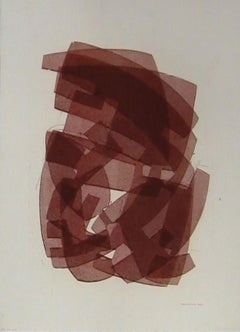
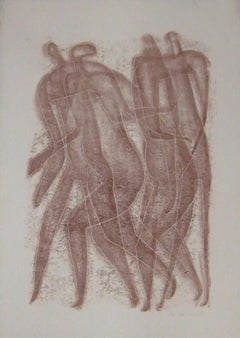
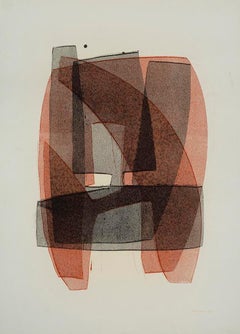
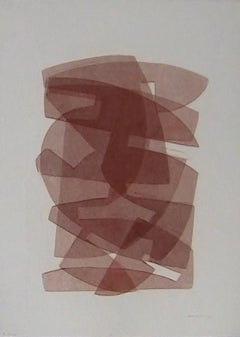
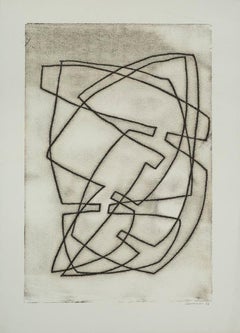
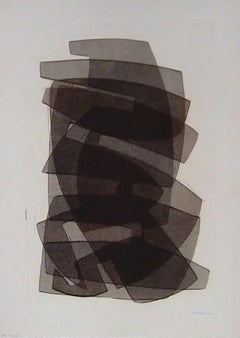
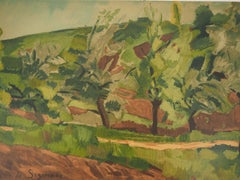
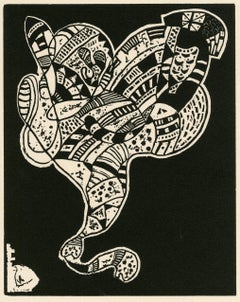
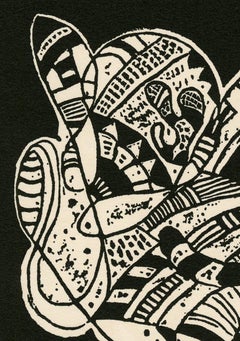
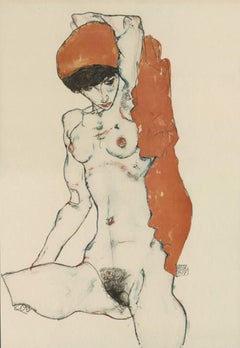
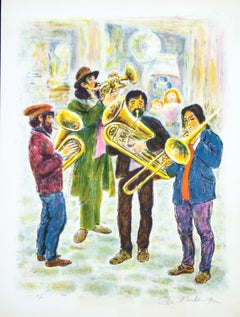
Otto Neumann was an Expressionist painter and printmaker born in Heidelberg, Germany. He was one of the most versatile and original artists of the 20th century.

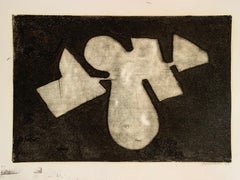
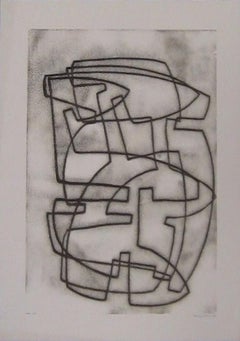
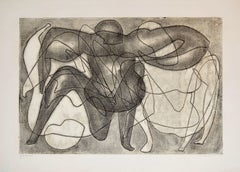
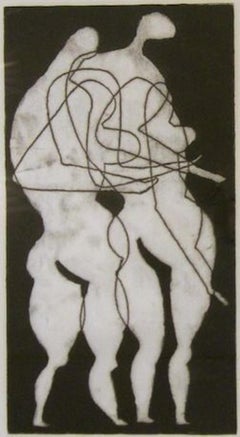
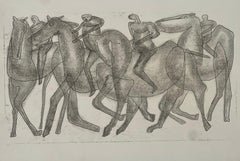
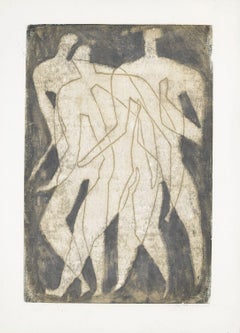
Neumann created works of stark brutality, sumptuous beauty, and sleek simplicity in an array of media oils, watercolors, chalk, graphite, lithographs, woodcuts and monotypes, among others. He lived through revolutionary changes in the art world of prewar and postwar Germany, and drew inspiration from his contemporaries and predecessors, as well as from sources literary and deeply personal. Today, Neumann is best known for his subtly hued woodcuts and monotypes of human, animal and abstract forms created in the last 25 years of his life.

Neumann's works are in the collections of the Art Institute of Chicago, Detroit Institute of Art, Goethe-Institut, Museum of Modern Art (New York), Portland Art Museum, Rose Art Museum, Tampa Museum of Art, Gibbes Museum of Fine Art and the Virginia Museum of Fine Art.

to
2
13
Overall Width
to
Overall Height
to
13
2
15
1,257
977
903
868
15
1
12
2
11
4
1
1
1
1
15
6
15
Artist: Otto Neumann
Estate No. 082024

Estate No. 082024

By Otto Neumann

Located in New Orleans, LA

Otto Neumann (1895-1975) was an expressionist painter and printmaker born in Heidelberg, Germany. He was one of the most versatile and original artists of the twentieth century. Neum...

Category

1960s Expressionist Otto Neumann Prints and Multiples

Materials

Monotype

Estate No. 044059

Estate No. 044059

By Otto Neumann

Located in New Orleans, LA

Signed and dated "55" in pencil. Otto Neumann (1895-1975) was a German Expressionist painter and printmaker. His monotypes evolved from sharp, angular, black and whites to late abst...

Category

1950s Expressionist Otto Neumann Prints and Multiples

Materials

Monotype

Estate No. 054047

Estate No. 054047

By Otto Neumann

Located in New Orleans, LA

Otto Neumann (1895-1975) was a German Expressionist painter and printmaker. His monotypes evolved from sharp, angular, black and whites to late abstract prints in a variety of colors. Neumann lived through revolutionary changes in the art world of prewar and postwar Germany. He was a prolific artist in Germany during a time of the country’s unprecedented academic and intellectual growth. His early work shows the influence of both French masters like Cezanne and the contemporary style that was then being developed by German Expressionists like Kirchner. A master printmaker, Neumann was also inspired by the works of Albrecht Durer, whose allegorical subject-matter and unmatched drawing technique Neumann would emulate throughout his career. A lifetime preoccupation with the human figure informs his work, with frieze-like human figures recalling ancient Greek art...

Category

1960s Expressionist Otto Neumann Prints and Multiples

Materials

Monotype

Estate No. 082126

Estate No. 082126

By Otto Neumann

Located in New Orleans, LA

Otto Neumann (1895-1975) was an expressionist painter and printmaker born in Heidelberg, Germany. He was one of the most versatile and original artists of...

Category

1960s Expressionist Otto Neumann Prints and Multiples

Materials

Monotype

Estate No. 044021

Estate No. 044021

By Otto Neumann

Located in New Orleans, LA

Signed and dated "52" in pencil Otto Neumann (1895-1975) was a German Expressionist painter and printmaker. His monotypes evolved from sharp, angular, black and whites to late abst...

Category

1960s Expressionist Otto Neumann Prints and Multiples

Materials

Monotype

Estate No. 082050

Estate No. 082050

By Otto Neumann

Located in New Orleans, LA

Otto Neumann (1895-1975) was a German Expressionist painter and printmaker. His monotypes evolved from sharp, angular, black and whites to late abstract prints in a variety of colors. Neumann lived through revolutionary changes in the art world of prewar and postwar Germany. He was a prolific artist in Germany during a time of the country’s unprecedented academic and intellectual growth. His early work shows the influence of both French masters like Cezanne and the contemporary style that was then being developed by German Expressionists like Kirchner. A master printmaker, Neumann was also inspired by the works of Albrecht Durer, whose allegorical subject-matter and unmatched drawing technique Neumann would emulate throughout his career. A lifetime preoccupation with the human figure informs his work, with frieze-like human figures recalling ancient Greek art...

Category

1960s Expressionist Otto Neumann Prints and Multiples

Materials

Monotype

Estate No. 091013

Estate No. 091013

By Otto Neumann

Located in New Orleans, LA

Otto Neumann (1895-1975) was a German Expressionist painter and printmaker. His monotypes evolved from sharp, angular, black and whites to late abstract p...

Category

1960s Expressionist Otto Neumann Prints and Multiples

Materials

Monotype

Estate No. 096009

Estate No. 096009

By Otto Neumann

Located in New Orleans, LA

Otto Neumann (1895-1975) was an expressionist painter and printmaker born in Heidelberg, Germany. He was one of the most versatile and original artists of the twentieth century. Neum...

Category

1970s Abstract Otto Neumann Prints and Multiples

Materials

Monotype

Estate No. 063062

Estate No. 063062

By Otto Neumann

Located in New Orleans, LA

Otto Neumann (1895-1975) was an expressionist painter and printmaker born in Heidelberg, Germany. He was one of the most versatile and original artists of the twentieth century. Neum...

Category

1960s Expressionist Otto Neumann Prints and Multiples

Materials

Monotype

Estate No. 067036

Estate No. 067036

By Otto Neumann

Located in New Orleans, LA

Otto Neumann (1895-1975) was an expressionist painter and printmaker born in Heidelberg, Germany. He was one of the most versatile and original artists of the twentieth century. Neum...

Category

1960s Abstract Otto Neumann Prints and Multiples

Materials

Monotype

Estate No. 091014

Estate No. 091014

By Otto Neumann

Located in New Orleans, LA

Otto Neumann (1895-1975) was an expressionist painter and printmaker born in Heidelberg, Germany. He was one of the most versatile and original artists of...

Category

1970s Expressionist Otto Neumann Prints and Multiples

Materials

Monotype

Estate No. 082031

Estate No. 082031

By Otto Neumann

Located in New Orleans, LA

Otto Neumann (1895-1975) was a German Expressionist painter and printmaker. His monotypes evolved from sharp, angular, black and whites to late abstract prints in a variety of colors. Neumann lived through revolutionary changes in the art world of prewar and postwar Germany. He was a prolific artist in Germany during a time of the country’s unprecedented academic and intellectual growth. His early work shows the influence of both French masters like Cezanne and the contemporary style that was then being developed by German Expressionists like Kirchner. A master printmaker, Neumann was also inspired by the works of Albrecht Durer, whose allegorical subject-matter and unmatched drawing technique Neumann would emulate throughout his career. A lifetime preoccupation with the human figure informs his work, with frieze-like human figures recalling ancient Greek art...

Category

1960s Expressionist Otto Neumann Prints and Multiples

Materials

Monotype

Estate No. 063091

Estate No. 063091

By Otto Neumann

Located in New Orleans, LA

Otto Neumann (1895-1975) was a German Expressionist painter and printmaker. His monotypes evolved from sharp, angular, black and whites to late abstract prints in a variety of colors. Neumann lived through revolutionary changes in the art world of prewar and postwar Germany. He was a prolific artist in Germany during a time of the country’s unprecedented academic and intellectual growth. His early work shows the influence of both French masters like Cezanne and the contemporary style that was then being developed by German Expressionists like Kirchner. A master printmaker, Neumann was also inspired by the works of Albrecht Durer, whose allegorical subject-matter and unmatched drawing technique Neumann would emulate throughout his career. A lifetime preoccupation with the human figure informs his work, with frieze-like human figures recalling ancient Greek art...

Category

1960s Expressionist Otto Neumann Prints and Multiples

Materials

Monotype

Estate No. 082025

Estate No. 082025

By Otto Neumann

Located in New Orleans, LA

Otto Neumann (1895-1975) was a German Expressionist painter and printmaker. His monotypes evolved from sharp, angular, black and whites to late abstract p...

Category

1960s Expressionist Otto Neumann Prints and Multiples

Materials

Monotype

Estate No. 082129

Estate No. 082129

By Otto Neumann

Located in New Orleans, LA

Otto Neumann (1895-1975) was a German Expressionist painter and printmaker. His monotypes evolved from sharp, angular, black and whites to late abstract prints in a variety of colors. Neumann lived through revolutionary changes in the art world of prewar and postwar Germany. He was a prolific artist in Germany during a time of the country’s unprecedented academic and intellectual growth. His early work shows the influence of both French masters like Cezanne and the contemporary style that was then being developed by German Expressionists like Kirchner. A master printmaker, Neumann was also inspired by the works of Albrecht Durer, whose allegorical subject-matter and unmatched drawing technique Neumann would emulate throughout his career. A lifetime preoccupation with the human figure informs his work, with frieze-like human figures recalling ancient Greek art...

Category

1960s Expressionist Otto Neumann Prints and Multiples

Materials

Monotype

Related Items
Kathe Kollwitz, Mother with Child, from Ten Lithographs, 1941 (after)

Kathe Kollwitz, Mother with Child, from Ten Lithographs, 1941 (after)

By Käthe Kollwitz

Located in Southampton, NY

This exquisite lithograph after Kathe Kollwitz (1867–1945), titled Mutter mit Kind (Mother with Child), from the folio Kathe Kollwitz, Ten Lithographs, originates from the 1941 edition published by Henry C. Kleemann, New York, and Curt Valentin, New York; printed by Duenewald Printing Corporation, New York. The composition reflects Kollwitz’s profound engagement with themes of maternal protection, tenderness, and human vulnerability, rendered with stark emotional intensity and a powerful graphic economy that underscores her enduring social message. Executed as a lithograph on velin paper, this work measures 19 x 16 inches (48.26 x 40.64 cm), overall; 13 x 10.5 inches (33.02 x 26.67 cm), image. Unsigned and unnumbered as issued. Artwork Details: Artist: After Kathe Kollwitz (1867–1945) Title: Mutter mit Kind (Mother with Child), from Kathe Kollwitz, Ten Lithographs Medium: Lithograph on velin paper Dimensions: 19 x 16 inches (48.26 x 40.64 cm), overall; 13 x 10.5 inches (33.02 x 26.67 cm), image Inscription: Unsigned and unnumbered as issued Date: 1941 Publisher: Henry C. Kleemann, New York, and Curt Valentin, New York Printer: Duenewald Printing Corporation, New York Condition: Well preserved, consistent with age and medium Provenance: From the folio Kathe Kollwitz, Ten Lithographs, 1941 About the Publication: Kathe Kollwitz, Ten Lithographs, published in New York in 1941 by Henry C. Kleemann in collaboration with Curt Valentin, represents an important early American presentation of Kollwitz’s graphic work at a time when her reputation was expanding internationally. Issued during the turbulence of the Second World War and following the suppression of her work in Germany under the Nazi regime, the folio played a crucial role in introducing her imagery to a broader audience outside Europe. The publication gathers a selection of her most powerful lithographic compositions, emphasizing her mastery of tonal contrast, expressive line, and psychological depth. Produced with careful attention to print quality by Duenewald Printing Corporation, the edition reflects the continued transmission of European modernist printmaking traditions into the American context, serving both as a document of artistic excellence and as a vehicle for the preservation and dissemination of Kollwitz’s humanistic vision. About the Artist: Kathe Kollwitz (1867–1945) was a German draughtsman, printmaker, and sculptor whose profoundly moving imagery, exceptional technical mastery, and unwavering social conscience established her as one of the most important and influential artists of the twentieth century, widely recognized as a master of modern printmaking and one of the most powerful visual chroniclers of human suffering, war, and social injustice. Born in Konigsberg, East Prussia, into a progressive and intellectually engaged family, Kollwitz was encouraged from an early age to pursue art and developed a deep awareness of social inequality that would shape her entire career, studying in Berlin and Munich at a time when women were largely excluded from formal academies while mastering drawing and graphic techniques with extraordinary discipline. Her breakthrough came with the monumental graphic cycle A Weavers’ Revolt (1893–1897), followed by The Peasants’ War (1901–1908), works that combined complex narrative structure with extraordinary technical command in etching, aquatint, and lithography, establishing her reputation as one of Europe’s leading graphic artists. Throughout her career, Kollwitz remained committed to portraying the lives of workers, mothers, and victims of poverty and conflict with unflinching honesty, creating compositions defined by bold, sculptural line, dense shadow, and unparalleled psychological depth that conveyed grief, resilience, and dignity. Working during a period transformed by the radical innovations of Pablo Picasso, Alexander Calder, Alberto Giacometti, Salvador Dali, Joan Miro, Wassily Kandinsky, Marcel Duchamp, and Man Ray, Kollwitz maintained a resolutely figurative and human-centered approach, aligning more closely with German Expressionism and artists such as Ernst Barlach, Max Liebermann, and Edvard Munch, whose emotional intensity and symbolic treatment of the human figure profoundly shaped her artistic language. Her later work, particularly the woodcut cycle War (1922–1923), stands among the most powerful anti-war statements in the history of art, reflecting both personal tragedy, including the death of her son in World War I, and a universal condemnation of violence and loss. In addition to her prints, Kollwitz created deeply moving sculptures that extended her exploration of grief and maternal protection into three dimensions, reinforcing her status as a multidisciplinary artist of exceptional range. She achieved significant recognition during her lifetime, becoming the first woman elected to the Prussian Academy of Arts, though her work was later condemned by the Nazi regime as degenerate, leading to her forced resignation and the removal of her works from public collections, yet her reputation expanded internationally after World War II and she is now regarded as a central figure in modern art. Her influence has been profound and far-reaching, shaping later artists including Francis Bacon, Anselm Kiefer, Leon Golub, Kiki Smith, and numerous contemporary figurative and socially engaged artists who continue to explore themes of trauma, memory, and human vulnerability. Today her works are held in major museum collections worldwide, including the Kathe Kollwitz Museum in Berlin, the Museum of Modern Art in New York, the British Museum in London, and the Art Institute of Chicago, and remain highly sought after by collectors for their emotional intensity and historical significance. The highest auction record for a work by Kathe Kollwitz is held by her sculpture Mutter mit totem Sohn (Mother with Dead Son), which achieved approximately 1.2 million EUR at auction, confirming her enduring importance. Kathe Kollwitz Mutter mit Kind 1941 lithograph German Expressionism social realism print.

Category

1940s Expressionist Otto Neumann Prints and Multiples

Materials

Lithograph

Kathe Kollwitz, Self-Portrait, from Ten Lithographs, 1941 (after)

Kathe Kollwitz, Self-Portrait, from Ten Lithographs, 1941 (after)

By Käthe Kollwitz

Located in Southampton, NY

This exquisite lithograph after Kathe Kollwitz (1867–1945), titled Selbstbildnis (Self-Portrait), from the folio Kathe Kollwitz, Ten Lithographs, originates from the 1941 edition published by Henry C. Kleemann, New York, and Curt Valentin, New York; printed by Duenewald Printing Corporation, New York. The composition reflects Kollwitz’s profound engagement with themes of identity, introspection, and human vulnerability, rendered with stark emotional intensity and a powerful graphic economy that underscores her enduring social message. Executed as a lithograph on velin paper, this work measures 19 x 16 inches (48.26 x 40.64 cm), overall; 10.5 x 9 inches (26.67 x 22.86 cm), image. Unsigned and unnumbered as issued. Artwork Details: Artist: After Kathe Kollwitz (1867–1945) Title: Selbstbildnis (Self-Portrait), from Kathe Kollwitz, Ten Lithographs Medium: Lithograph on velin paper Dimensions: 19 x 16 inches (48.26 x 40.64 cm), overall; 10.5 x 9 inches (26.67 x 22.86 cm), image Inscription: Unsigned and unnumbered as issued Date: 1941 Publisher: Henry C. Kleemann, New York, and Curt Valentin, New York Printer: Duenewald Printing Corporation, New York Condition: Well preserved, consistent with age and medium Provenance: From the folio Kathe Kollwitz, Ten Lithographs, 1941 About the Publication: Kathe Kollwitz, Ten Lithographs, published in New York in 1941 by Henry C. Kleemann in collaboration with Curt Valentin, represents an important early American presentation of Kollwitz’s graphic work at a time when her reputation was expanding internationally. Issued during the turbulence of the Second World War and following the suppression of her work in Germany under the Nazi regime, the folio played a crucial role in introducing her imagery to a broader audience outside Europe. The publication gathers a selection of her most powerful lithographic compositions, emphasizing her mastery of tonal contrast, expressive line, and psychological depth. Produced with careful attention to print quality by Duenewald Printing Corporation, the edition reflects the continued transmission of European modernist printmaking traditions into the American context, serving both as a document of artistic excellence and as a vehicle for the preservation and dissemination of Kollwitz’s humanistic vision. About the Artist: Kathe Kollwitz (1867–1945) was a German draughtsman, printmaker, and sculptor whose profoundly moving imagery, exceptional technical mastery, and unwavering social conscience established her as one of the most important and influential artists of the twentieth century, widely recognized as a master of modern printmaking and one of the most powerful visual chroniclers of human suffering, war, and social injustice. Born in Konigsberg, East Prussia, into a progressive and intellectually engaged family, Kollwitz was encouraged from an early age to pursue art and developed a deep awareness of social inequality that would shape her entire career, studying in Berlin and Munich at a time when women were largely excluded from formal academies while mastering drawing and graphic techniques with extraordinary discipline. Her breakthrough came with the monumental graphic cycle A Weavers’ Revolt (1893–1897), followed by The Peasants’ War (1901–1908), works that combined complex narrative structure with extraordinary technical command in etching, aquatint, and lithography, establishing her reputation as one of Europe’s leading graphic artists. Throughout her career, Kollwitz remained committed to portraying the lives of workers, mothers, and victims of poverty and conflict with unflinching honesty, creating compositions defined by bold, sculptural line, dense shadow, and unparalleled psychological depth that conveyed grief, resilience, and dignity. Working during a period transformed by the radical innovations of Pablo Picasso, Alexander Calder, Alberto Giacometti, Salvador Dali, Joan Miro, Wassily Kandinsky, Marcel Duchamp, and Man Ray, Kollwitz maintained a resolutely figurative and human-centered approach, aligning more closely with German Expressionism and artists such as Ernst Barlach, Max Liebermann, and Edvard Munch, whose emotional intensity and symbolic treatment of the human figure profoundly shaped her artistic language. Her later work, particularly the woodcut cycle War (1922–1923), stands among the most powerful anti-war statements in the history of art, reflecting both personal tragedy, including the death of her son in World War I, and a universal condemnation of violence and loss. In addition to her prints, Kollwitz created deeply moving sculptures that extended her exploration of grief and maternal protection into three dimensions, reinforcing her status as a multidisciplinary artist of exceptional range. She achieved significant recognition during her lifetime, becoming the first woman elected to the Prussian Academy of Arts, though her work was later condemned by the Nazi regime as degenerate, leading to her forced resignation and the removal of her works from public collections, yet her reputation expanded internationally after World War II and she is now regarded as a central figure in modern art. Her influence has been profound and far-reaching, shaping later artists including Francis Bacon, Anselm Kiefer, Leon Golub, Kiki Smith, and numerous contemporary figurative and socially engaged artists who continue to explore themes of trauma, memory, and human vulnerability. Today her works are held in major museum collections worldwide, including the Kathe Kollwitz Museum in Berlin, the Museum of Modern Art in New York, the British Museum in London, and the Art Institute of Chicago, and remain highly sought after by collectors for their emotional intensity and historical significance. The highest auction record for a work by Kathe Kollwitz is held by her sculpture Mutter mit totem Sohn (Mother with Dead Son), which achieved approximately 1.2 million EUR at auction, confirming her enduring importance. Kathe Kollwitz Selbstbildnis 1941 lithograph German Expressionism social realism print.

Category

1940s Expressionist Otto Neumann Prints and Multiples

Materials

Lithograph

"Stars" original lithograph

"Stars" original lithograph

By Wassily Kandinsky

Located in Henderson, NV

Medium: original lithograph. Printed in 1938 and published in Paris by Teriade for the art revue Verve (volume 1, number 2). Kandinsky was invited to contribute an original compositi...

Category

1930s Expressionist Otto Neumann Prints and Multiples

Materials

Lithograph

Marc Chagall, Tribe of Asher, from The Jerusalem Windows, 1962 (after)

Marc Chagall, Tribe of Asher, from The Jerusalem Windows, 1962 (after)

By Marc Chagall

Located in Southampton, NY

This exquisite lithograph after Marc Chagall (1887–1985), titled Tribe of Asher, from the album Marc Chagall, The Jerusalem Windows, originates from the 1962 edition published by And...

Category

1960s Expressionist Otto Neumann Prints and Multiples

Materials

Lithograph

Adoration of the Magi / - The Rider of the Sun -

Adoration of the Magi / - The Rider of the Sun -

Located in Berlin, DE

Walter Helbig (1878 Falkenstein - 1968 Ascona), Adoration of the Magi, 1918. Hand-colored linocut, 30 cm x 22.5 cm (depiction), 50 cm x 35 cm (sheet size), signed “W.[alter] Helbig” in pencil lower right, inscribed “Adoration of the Magi” lower left and dated “1918”. Below this a handwritten dedication “with heartfelt Christmas greetings”. - Paper somewhat darkened and with slight creases, thumbtack holes in the corners - The Rider of the Sun - The 'apocalypse' of World War I brought about a return to sacred art. Walter Helbig belonged to the circle of the 'Brücke' and the 'Blauer Reiter'. With his reinterpretation of religious themes in an expressionist formal language, Helbig shaped an avant-garde neo-sacred art. This is symbolically expressed in the silhouette of the rider against the sun-like yellow background. It refers to the awakening initiated by the Blue Riding, which is now linked back to the sacred. The rider and horse "look" at Mary and the Christ Child, who occupy the entire field. Opposite them are the three kings, the eldest of whom kneels before Christ and offers him a gold-filled casket. The expressionist lines give rise to a tower that rises into the "sun", so that the gift has become a Gothic church, expressing the hope that the fallen world will be resurrected in the name of Christ. This dimension of meaning is emphasized by the magical effect of the color scheme. About the artist In 1895, Walter Helbig began studying at the Dresden Academy of Art, where he became friends with the future Brücke artist Otto Müller, with whom he lived in Dresden from 1903 to 1905. While studying in Italy from 1897 to 1899, he met Arnold Böcklin and Adolf von Hildebrand. After completing his studies, he first worked for Otto Gussmann, painting churches. From 1905 to 1909 he worked as a freelance painter in Hamburg. In 1909, through the mediation of Otto Müller, Helbig made the acquaintance of artists from the 'Brücke'. In 1910 he exhibited at the founding exhibition of the Berlin 'Neue Sezession'. In the same year, he moved to Switzerland, where, together with Hans Arp and Oscar Lüthy, he founded the 'Moderne Bund' in Weggis, to which Cuno Amiet and Giovanni Giacometti also belonged. At the second exhibition of the 'Moderne Bund' in Zurich in 1911, Henri Matisse and Robert Delaunay were represented alongside artists from the 'Blauer Reiter'. In 1913, Helbig traveled to Paris with Arp and Lüthy. After the dissolution of the 'Moderne Bund', Helbig was represented at the first Dada exhibition in Zurich in 1914. In 1919, he joined the Berlin 'Novembergruppe'. After the devastation of World War I, Helbig turned increasingly to religious themes in his work. In 1924, like many other artists of his time, he moved to Ascona for financial reasons, where he became a naturalized citizen in 1938. There he founded the artists' association "The Great Bear", to which Marianne von Werefkin...
Category

1910s Expressionist Otto Neumann Prints and Multiples

Materials

Paper
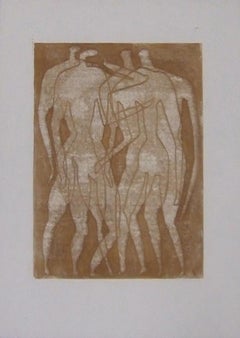
Marc Chagall, The Painter and his Double, from Derriere le miroir, 1981

Marc Chagall, The Painter and his Double, from Derriere le miroir, 1981

By Marc Chagall

Located in Southampton, NY

This exquisite lithograph by Marc Chagall (1887–1985), titled Le Peintre et son Double (The Painter and his Double), from the folio Derriere le miroir, No. 246, originates from the 1...

Category

1980s Expressionist Otto Neumann Prints and Multiples

Materials

Lithograph

Marc Chagall, Tribe of Levi, from The Jerusalem Windows, 1962 (after)

Marc Chagall, Tribe of Levi, from The Jerusalem Windows, 1962 (after)

By Marc Chagall

Located in Southampton, NY

This exquisite lithograph after Marc Chagall (1887–1985), titled Tribe of Levi, from the album Marc Chagall, The Jerusalem Windows, originates from the 1962 edition published by Andr...

Category

1960s Expressionist Otto Neumann Prints and Multiples

Materials

Lithograph

Kathe Kollwitz, Working Woman with Sleeping Boy, 1941 (after)

Kathe Kollwitz, Working Woman with Sleeping Boy, 1941 (after)

By Käthe Kollwitz

Located in Southampton, NY

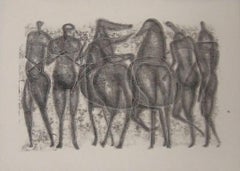
This exquisite lithograph after Kathe Kollwitz (1867–1945), titled Arbeiterfrau mit schlafendem Jungen (Working Woman with Sleeping Boy), from the folio Kathe Kollwitz, Ten Lithographs, originates from the 1941 edition published by Henry C. Kleemann, New York, and Curt Valentin, New York; printed by Duenewald Printing Corporation, New York. The composition reflects Kollwitz’s profound engagement with themes of maternal care, hardship, and human resilience, rendered with stark emotional intensity and a powerful graphic economy that underscores her enduring social message. Executed as a lithograph on velin paper, this work measures 19 x 16 inches (48.26 x 40.64 cm), overall; 15 x 13 inches (38.10 x 33.02 cm), image. Unsigned and unnumbered as issued. Artwork Details: Artist: After Kathe Kollwitz (1867–1945) Title: Arbeiterfrau mit schlafendem Jungen (Working Woman with Sleeping Boy), from Kathe Kollwitz, Ten Lithographs Medium: Lithograph on velin paper Dimensions: 19 x 16 inches (48.26 x 40.64 cm), overall; 15 x 13 inches (38.10 x 33.02 cm), image Inscription: Unsigned and unnumbered as issued Date: 1941 Publisher: Henry C. Kleemann, New York, and Curt Valentin, New York Printer: Duenewald Printing Corporation, New York Condition: Well preserved, consistent with age and medium Provenance: From the folio Kathe Kollwitz, Ten Lithographs, 1941 About the Publication: Kathe Kollwitz, Ten Lithographs, published in New York in 1941 by Henry C. Kleemann in collaboration with Curt Valentin, represents an important early American presentation of Kollwitz’s graphic work at a time when her reputation was expanding internationally. Issued during the turbulence of the Second World War and following the suppression of her work in Germany under the Nazi regime, the folio played a crucial role in introducing her imagery to a broader audience outside Europe. The publication gathers a selection of her most powerful lithographic compositions, emphasizing her mastery of tonal contrast, expressive line, and psychological depth. Produced with careful attention to print quality by Duenewald Printing Corporation, the edition reflects the continued transmission of European modernist printmaking traditions into the American context, serving both as a document of artistic excellence and as a vehicle for the preservation and dissemination of Kollwitz’s humanistic vision. About the Artist: Kathe Kollwitz (1867–1945) was a German draughtsman, printmaker, and sculptor whose profoundly moving imagery, exceptional technical mastery, and unwavering social conscience established her as one of the most important and influential artists of the twentieth century, widely recognized as a master of modern printmaking and one of the most powerful visual chroniclers of human suffering, war, and social injustice. Born in Konigsberg, East Prussia, into a progressive and intellectually engaged family, Kollwitz was encouraged from an early age to pursue art and developed a deep awareness of social inequality that would shape her entire career, studying in Berlin and Munich at a time when women were largely excluded from formal academies while mastering drawing and graphic techniques with extraordinary discipline. Her breakthrough came with the monumental graphic cycle A Weavers’ Revolt (1893–1897), followed by The Peasants’ War (1901–1908), works that combined complex narrative structure with extraordinary technical command in etching, aquatint, and lithography, establishing her reputation as one of Europe’s leading graphic artists. Throughout her career, Kollwitz remained committed to portraying the lives of workers, mothers, and victims of poverty and conflict with unflinching honesty, creating compositions defined by bold, sculptural line, dense shadow, and unparalleled psychological depth that conveyed grief, resilience, and dignity. Working during a period transformed by the radical innovations of Pablo Picasso, Alexander Calder, Alberto Giacometti, Salvador Dali, Joan Miro, Wassily Kandinsky, Marcel Duchamp, and Man Ray, Kollwitz maintained a resolutely figurative and human-centered approach, aligning more closely with German Expressionism and artists such as Ernst Barlach, Max Liebermann, and Edvard Munch, whose emotional intensity and symbolic treatment of the human figure profoundly shaped her artistic language. Her later work, particularly the woodcut cycle War (1922–1923), stands among the most powerful anti-war statements in the history of art, reflecting both personal tragedy, including the death of her son in World War I, and a universal condemnation of violence and loss. In addition to her prints, Kollwitz created deeply moving sculptures that extended her exploration of grief and maternal protection into three dimensions, reinforcing her status as a multidisciplinary artist of exceptional range. She achieved significant recognition during her lifetime, becoming the first woman elected to the Prussian Academy of Arts, though her work was later condemned by the Nazi regime as degenerate, leading to her forced resignation and the removal of her works from public collections, yet her reputation expanded internationally after World War II and she is now regarded as a central figure in modern art. Her influence has been profound and far-reaching, shaping later artists including Francis Bacon, Anselm Kiefer, Leon Golub, Kiki Smith, and numerous contemporary figurative and socially engaged artists who continue to explore themes of trauma, memory, and human vulnerability. Today her works are held in major museum collections worldwide, including the Kathe Kollwitz Museum in Berlin, the Museum of Modern Art in New York, the British Museum in London, and the Art Institute of Chicago, and remain highly sought after by collectors for their emotional intensity and historical significance. The highest auction record for a work by Kathe Kollwitz is held by her sculpture Mutter mit totem Sohn (Mother with Dead Son), which achieved approximately 1.2 million EUR at auction, confirming her enduring importance. Kathe Kollwitz Arbeiterfrau mit schlafendem Jungen 1941 lithograph German Expressionism social realism print.
Category

1940s Expressionist Otto Neumann Prints and Multiples

Materials

Lithograph

New York City Street Scene (L.18), Fairfield Porter

New York City Street Scene (L.18), Fairfield Porter

By Fairfield Porter

Located in Fairfield, CT

Artist: Fairfield Porter (1907-1975) Title: Street Scene (L.18) Year: 1969 Medium: Lithograph on Arches paper Edition: 69/100, plus proofs Size: 22.25 x 30 inches Condition: Excellen...
Category

1960s Expressionist Otto Neumann Prints and Multiples

Materials

Lithograph

Mid Century Modern Clown print, hand signed 144/250 Russian born American artist

Mid Century Modern Clown print, hand signed 144/250 Russian born American artist

By Nahum Tschacbasov

Located in New York, NY

Nahum Tschacbasov Mid Century Modern Clown, 1956 Lithograph Signed, dated and numbered 144/250 in graphite on the front 34 x 27.5 inches Unframed, affixed to matting Published by American Color Slide Co, Ltd., New York Terrific uncommon vintage signed, numbered and dated mid Century modern lithograph from this interesting and distinctive -and undervalued Russian American artist. Highly collectible clown...

Category

Mid-20th Century Expressionist Otto Neumann Prints and Multiples

Materials

Lithograph

BLACK FACE
BLACK FACE

Karel AppelBLACK FACE, 1969

$750

H 22 in W 26 in

BLACK FACE

By Karel Appel

Located in Santa Monica, CA

KAREL APPEL (1921 - 2006) BLACK FACE, 1969 Lithograph in colors signed in pencil. Edition 26/75, Image: 19 3/4 x 25 1/4, sheet: 22 x 30 inches. Just hint of a mat line Appel was a member of the Cobra art movement

Category

1960s Expressionist Otto Neumann Prints and Multiples

Materials

Lithograph

Previously Available Items
051058

Otto Neumann051058, 1959

Sold

H 24.57 in W 17.69 in

051058

By Otto Neumann

Located in New Orleans, LA

Otto Neumann (1895-1975) was a German Expressionist painter and printmaker. His monotypes evolved from sharp, angular, black and whites to late abstract p...

Category

1960s Expressionist Otto Neumann Prints and Multiples

Materials

Monotype

045005

Otto Neumann045005, 1957

Sold

H 17.63 in W 24.63 in

045005

By Otto Neumann

Located in New Orleans, LA

Otto Neumann (1895-1975) was a German Expressionist painter and printmaker. His monotypes evolved from sharp, angular, black and whites to late abstract prints in a variety of colors...

Category

1960s Expressionist Otto Neumann Prints and Multiples

Materials

Monotype

055065

Otto Neumann055065, 1959

Sold

H 24.63 in W 15.75 in

055065

By Otto Neumann

Located in New Orleans, LA

Otto Neumann (1895-1975) was an expressionist painter and printmaker born in Heidelberg, Germany. He was one of the most versatile and original artists of the twentieth century. Neum...

Category

1960s Expressionist Otto Neumann Prints and Multiples

Materials

Monotype

Otto Neumann prints and multiples for sale on 1stDibs.

Find a wide variety of authentic Otto Neumann prints and multiples available for sale on 1stDibs. You can also browse by medium to find art by Otto Neumann in monotype and more. Much of the original work by this artist or collective was created during the 20th century and is mostly associated with the Expressionist style. Not every interior allows for large Otto Neumann prints and multiples, so small editions measuring 16 inches across are available. Customers who are interested in this artist might also find the work of Karl Schmidt-Rottluff, Paul Klee, and Käthe Kollwitz.