By Philip Pearlstein
Located in Surfside, FL
Philip Pearlstein (American, 1924-)
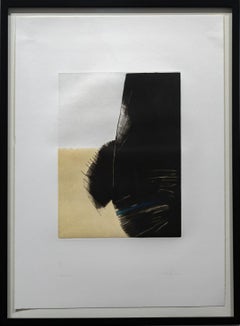
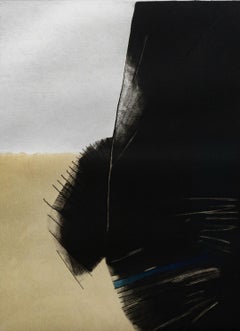
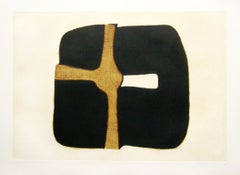
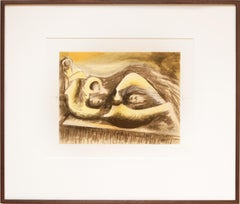
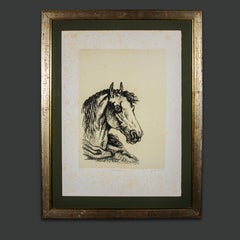
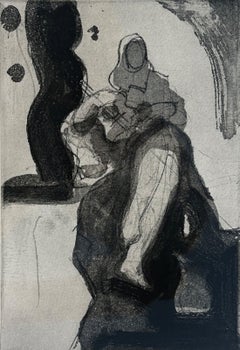
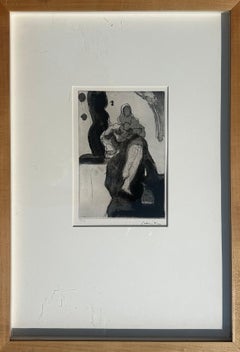
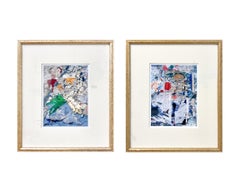
Large Sacsahuaman Landscape Etching Aquatint, 1979
From the series Ruins and Landscapes.
Sugar-lift, aquatint and roulette on ivory wove paper.
Sacsayhuamán, often spelled Sacsahuaman or Saqsaywaman (from Quechua Saqsaywaman (pukara) '(fortress) of the royal falcon or hawk') is a citadel on the northern outskirts of the city of Cusco, Peru, the historic capital of the Inca Empire. The site is at an altitude of 3,701 m (12,142 ft).
The complex was built by the Incas in the 15th century, particularly under Sapa Incan Pachacuti and his successors. Dry stone walls constructed of huge stones were built on the site, with the workers carefully cutting the boulders to fit them together tightly without mortar.
In 1983, Cusco and Sacsayhuamán together were designated as sites on the UNESCO World Heritage List, for international recognition and protection.
Philip Pearlstein is an influential American painter best known for Modernist Realism nudes. Cited by critics as the preeminent figure painter of the 1960s to 2000s, he led a revival in realist art. He is a Distinguished Professor Emeritus with paintings in the collections of over 70 public art museums.
Philip M. Pearlstein was born on May 24, 1924 in Pittsburgh, PA. He attended Saturday morning classes at Pittsburgh's Carnegie Museum of Art. In 1942, at the age of 18, two of his paintings won a national competition sponsored by Scholastic Magazine, and were reproduced in color in Life magazine. In 1942, he enrolled at Carnegie Institute of Technology's art school, in Pittsburgh, where he painted two portraits of his parents now held by the Carnegie Museum of Art, but after one year he was drafted by the US Army to serve during World War II. He was initially assigned to the Training Aids Unit at Camp Blanding, Florida, where he produced charts, weapon assembly diagrams and signs. In this role, he learned printmaking and the screenprinting process, and subsequently was stationed in Italy making road signs. While in Italy, he took in as much renaissance art as was accessible in Rome, Florence, Venice and Milan, and also produced numerous drawings depicting life in the Army.
In 1946, sponsored by the GI Bill, he returned to Carnegie Institute, and first met Andy Warhol, who was attracted to Pearlstein because of his notoriety in the school, having been featured in Life magazine. During the summer of 1947, the three rented a barn as a summer studio. Immediately after graduating in June 1949 with a BFA, Pearlstein and Warhol moved to New York City, at first sharing an eighth-floor walkup tenement apartment on St. Mark's Place at Avenue A. He was eventually hired by Czech designer Ladislav Sutnar, mainly doing industrial catalog...
Category
1970s American Modern Patricia Wilder Art