By Lawrence Kupferman
Located in Surfside, FL
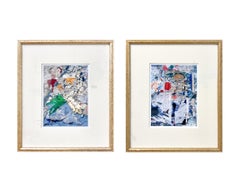
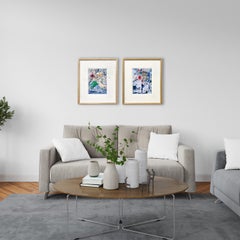
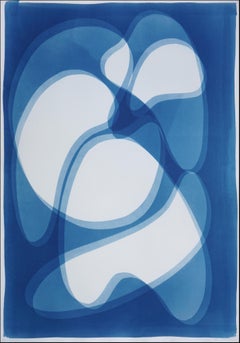
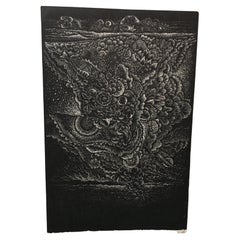
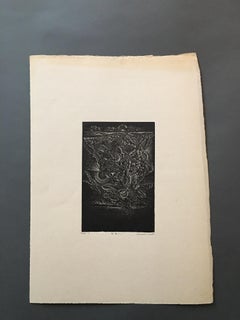
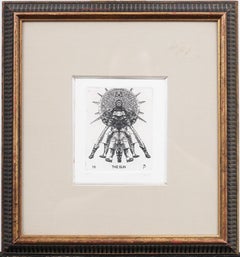
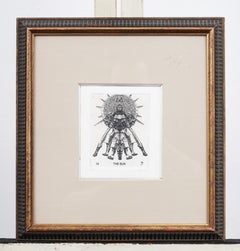
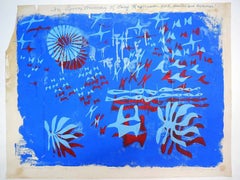
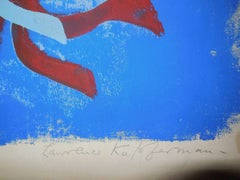
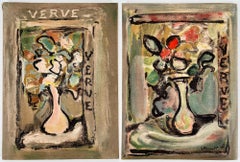
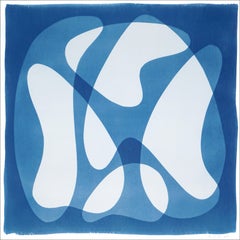
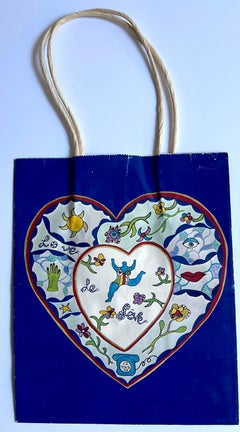
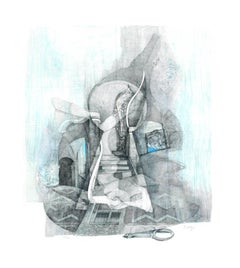
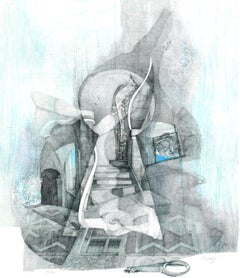
Silkscreen on paper. with some sort of experimental poured stuff on it. there is some loss to the margin but the image is strong. edition 2/6.
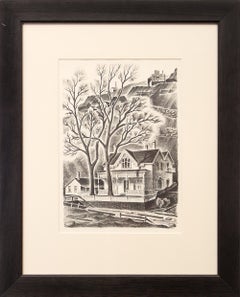
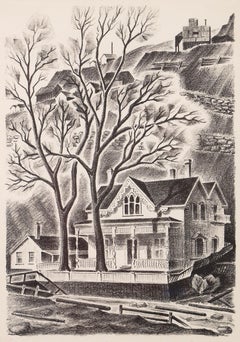
During the 1930s, Lawrence Edward Kupferman was employed by the WPA Works Progress Administration, making a series of etchings and dry points, mostly of the facades of houses. His style changed completely in the 1940s, becoming first political and expressionist, and later abstract expressionist.
He served as chairman of the department of painting at the Massachusetts College of Arts.He studied at the Boston Museum School with Philip Leslie Hale and H. Alden Ripley (1929-1931); Massachusetts School of Art with Ernest L. Majors and Otis Philbrick (1931-1935). Kupferman took motifs from tangible and sensed realities. His atmospheres symbolize cosmic space. Existence is spiritualized as a connected covenant with all of creation. Veil-like, mysterious lines move like vapors over washes of opaque translucent colors that blend, erupt or fade into seas of time-like space and souls become one with an ever-moving, deepening milieu.
He admitted, "My figures journey to greet an eternal fellowship with nature’s every particle. . . .
"Around 1941, I started to pour paint onto canvases in Provincetown. Jackson Pollock came into my studio to observe how I let paint take on a liquid life or path of its own. Those ethereal poured paintings may have stimulated Pollock's more frantic splashed-on techniques” Kupferman said thoughtfully.Some critics gave him credit for having been one of the pioneering fathers of the poured painting technique. As early as 1943, the Museum of Modern Art, the Whitney Museum of American Art and various publications acknowledged him as a humanistic innovator whose work bluntly exposes humans to themselves. Kupferman, Jack Levine (b. 1915), Hyman Bloom (b. 1913) and David Aronson (b. 1923) founded the "The Boston Urban Jewish School," whose roots ran deep into traditional Hebraic scholarship."Throughout my career," Kupferman admitted, "Boston was a mental and physical prison in which genuineness and spontaneity in art was absent. I summered in Provincetown for artistic sanity. Mark Rothko, Hans Hofmann, Adolph Gottlieb, William Baziotes, Leo Manzu, Byron Brown and I hung out together in an invigorating atmosphere of rediscovery. We started our own renaissance! Together with Robert Motherwell, Richard Pousette-Dart, Weldon Kees...
Category
20th Century Modern Patricia Wilder Art