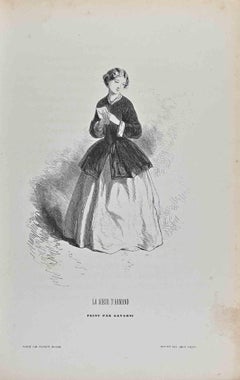
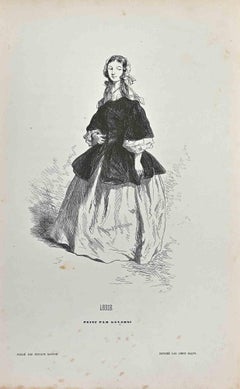
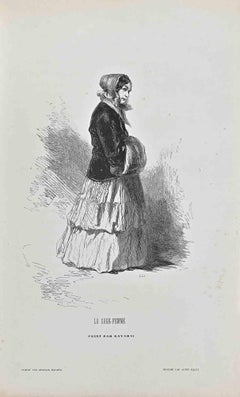
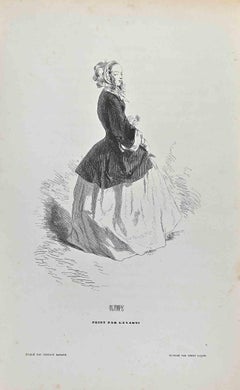
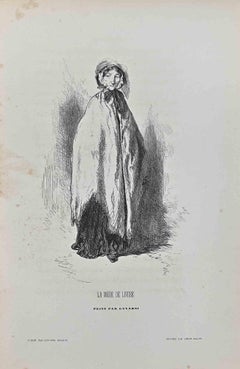
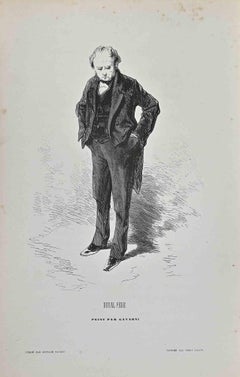
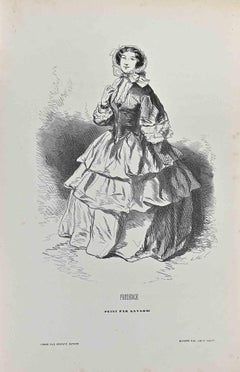
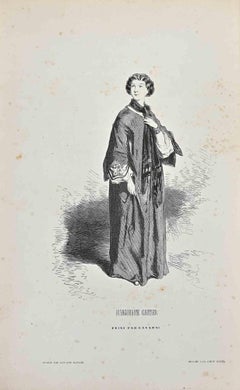
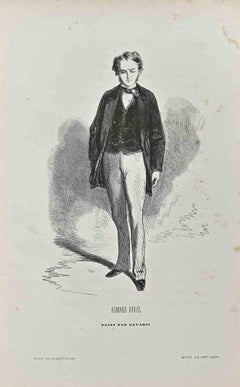
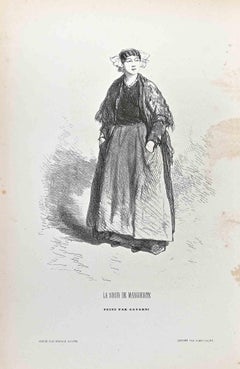
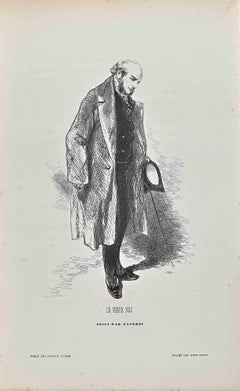
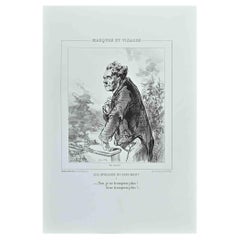
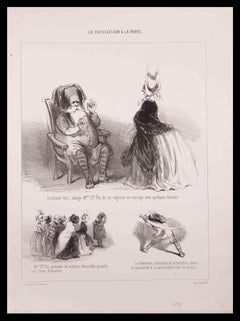
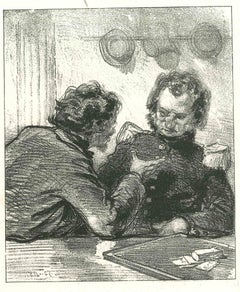
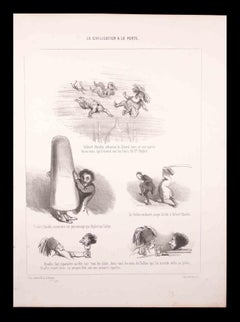
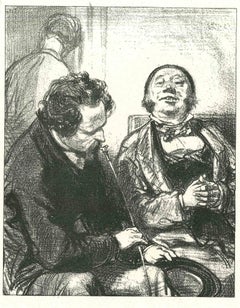
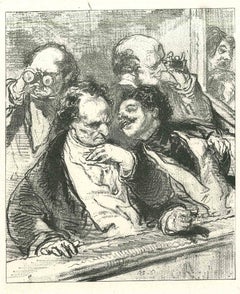
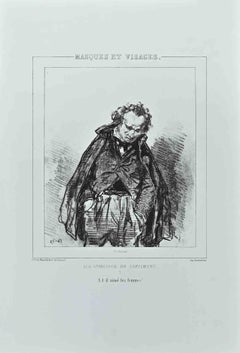
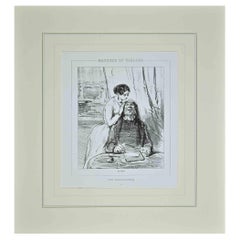
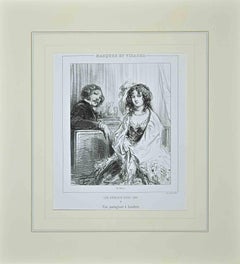
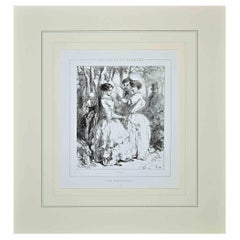
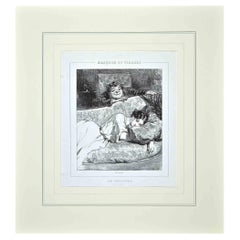
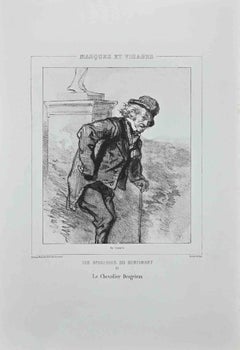
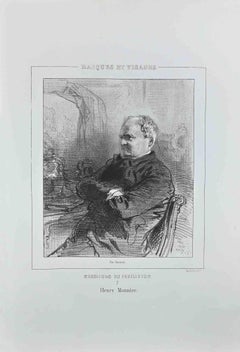
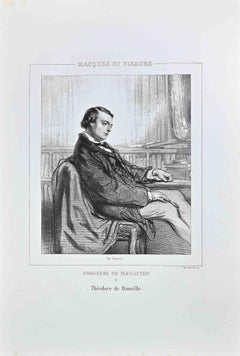
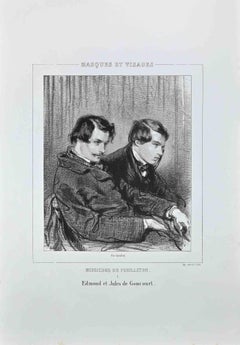
By Paul Gavarni
Located in Roma, IT
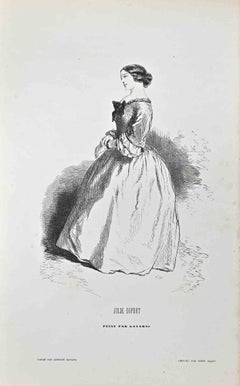
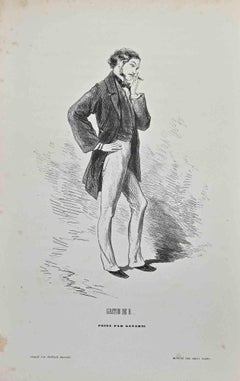
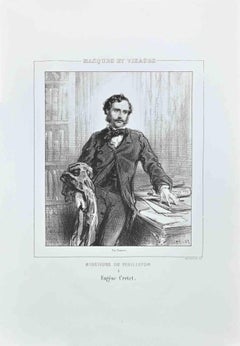
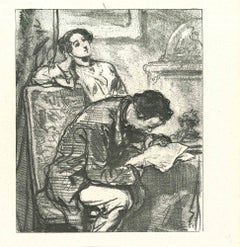
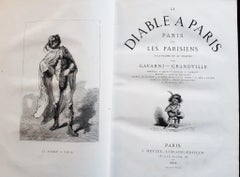
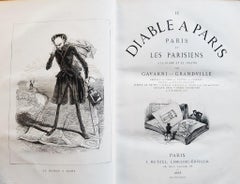
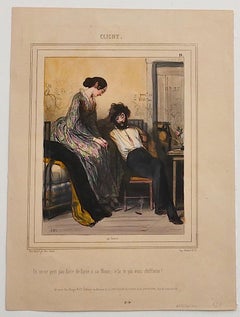
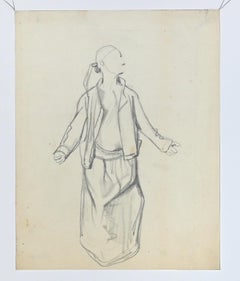
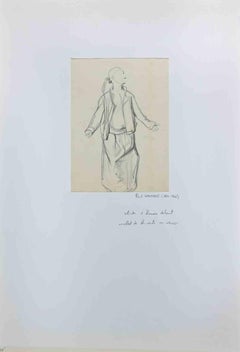
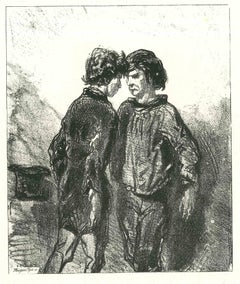
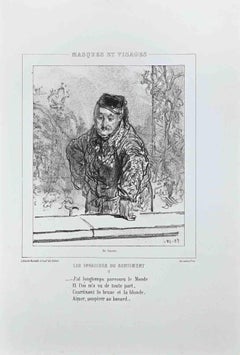
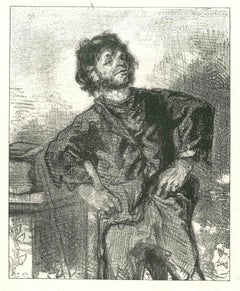
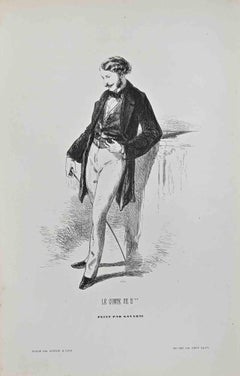
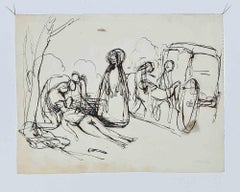
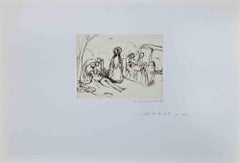
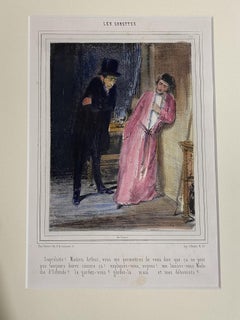
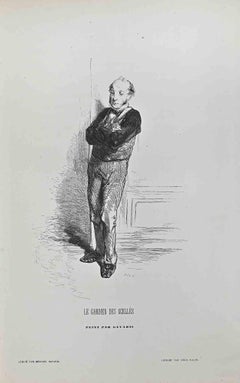
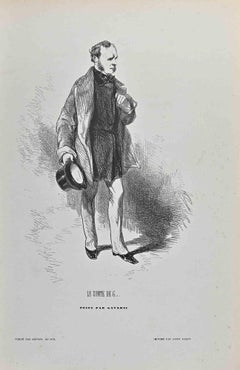
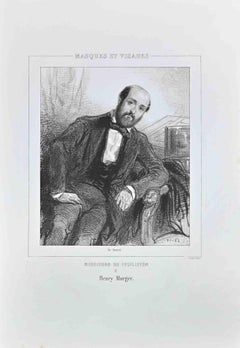
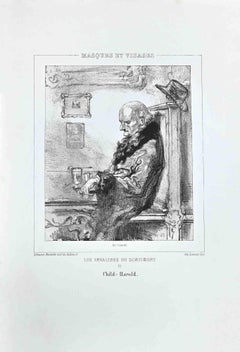
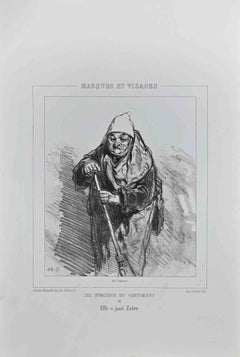
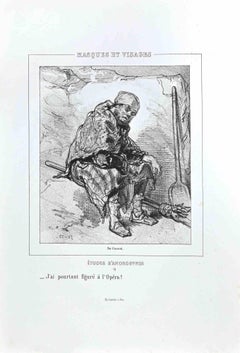
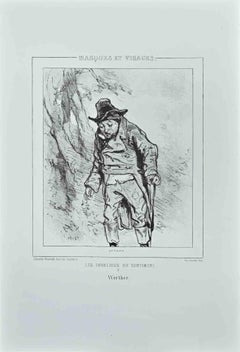
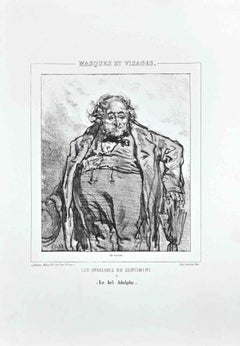
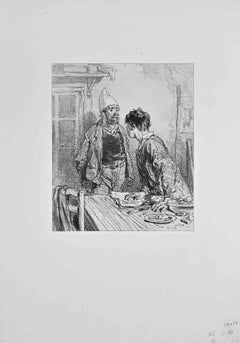
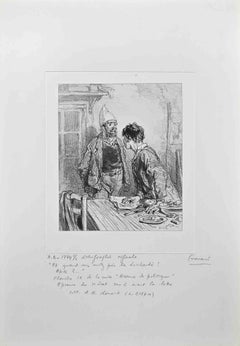
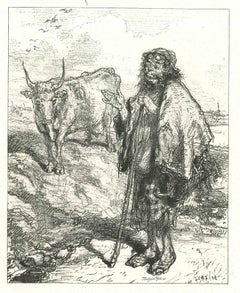
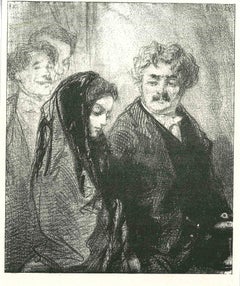
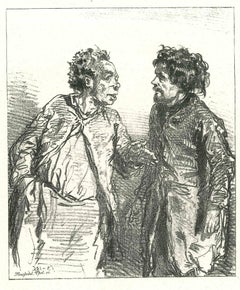
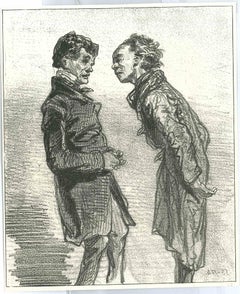
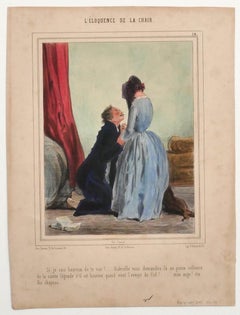
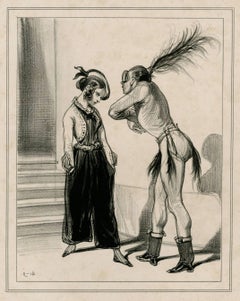
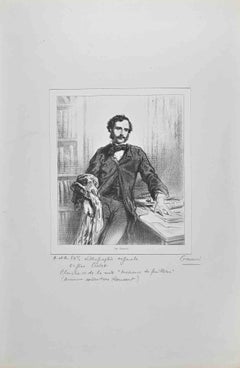
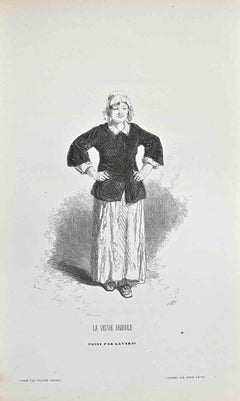
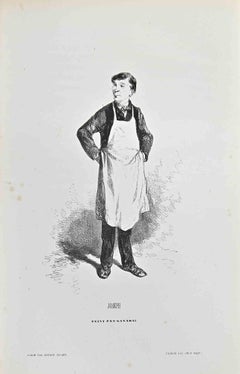
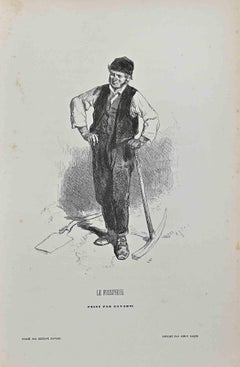
Le Diable à Paris is an original modern rare book written by Various Authors and illustrated by Paul Gavarni (1804 – 1866) and by Jean Ignace Isidore Gérard (Nancy, 1803 – Vances, 1847) in 1869.
Original First Edition.
Published by Hetzel & Cie, Paris.
Format: 4°.
The book includes 816 pages in 4 volumes.
Hundreds of lithographs (several are full page Lithographs).
Very good conditions.
Paul Gavarni (1804 – 1866) and by Jean Ignace Isidore Gérard (Nancy, 1803 – Vances, 1847). Paul Gavarni was the nom de plume of Sulpice Guillaume Chevalier (1804 – 1866), a French illustrator, born in Paris. Among his illustrated works were Les Lorettes, Les Actrices, Les Coulisses, Les Fasizionables, Les Gentilshommes bourgeois, Les Artistes, Les Débardeurs, Clichy, Les Étudiants de Paris, Les Baliverneries parisiennes, Les Plaisirs champêtres, Les Bals masqués, Le Carnaval, Les Souvenirs du carnaval, Les Souvenirs du bal Chicard, La Vie des jeunes hommes, and Les Patois de Paris. He had now ceased to be director of Les Gens du monde; but he was engaged as ordinary caricaturist of Le Charivari, and, while making the fortune of the paper, he made his own. His name was exceedingly popular, and his illustrations for books were eagerly sought for by publishers. Le Juif errant, by Eugene Sue (1843, 4 vols. 8vo), the French translation of Hoffman's tales (1843, 8 vo), the first collective edition of Balzac's works (Paris, Houssiaux, 1850, 20 vols. 8 vo), Le Diable à Paris (1844–1846, 2 vols. 4 vo), Les Français peints par eux-mêmes (1840–1843, 9 vols. 8vo), the collection of Physiologies published by Aubert in 38 vols. 18mo (1840–1842), all owed a great part of their success at the time, and are still sought for, on account of the clever and telling sketches contributed by Gavarni.
Jean Ignace Isidore Gérard (Nancy, 1803 – Vanves, 1847), generally known by the pseudonym of Jean-Jacques, J. J. Grandville or most commonly simply Grandville, was a French caricaturist. Grandville's ability for political provocation made his work much in demand. He worked in a wide variety of formats, from his first job illustrating the parlor game Old Maid, to illustrated newspaper strips of which he was a master. His illustrations for Le Diable à Paris ("The Devil In Paris"; 1844–46) were used by Walter Benjamin for his study of that city as an urban organism. One of Grandville's supreme achievements, at a time when French printing technology was ascendant, was Les Fleurs Animées, a series of images that are both poetic and satirical. But perhaps his most original contribution to the illustrated book form was Un Autre Monde, which approaches the status of pure...
Category
1860s Modern Paul Gavarni Art
MaterialsPaper, Lithograph