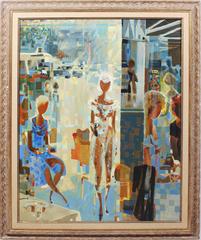
Pierre LeLong Art

French, 1908-1984

Pierre Emile Lelong was born in the Paris suburbs in 1908. He began to draw and paint at an early age. In the 1920s, he took classes at the Atelier Julien in Paris. After a stint with an insurance company, he started to paint again in 1933 and took a studio in Montmartre. He first exhibited his work at the Salon des Indépendants in 1935, and as part of a group at the Galerie Rotgé. Lelong married Marie-Rose Salvatori, whose family came from Trinidad. When WWII broke out, he became a liaison officer for a British regiment. He was taken prisoner and spent his time sketching his fellow prisoners and the events in the camp. After at least one failed attempt at escape, he succeeded in 1942 and returned to France, where he turned his sketches into a book Une Vie de Camp, published in 1943. Lelong spent the remainder of the war in Trinidad with his wife’s family. During this period (1943–45), he worked on his painting technique, which had been interrupted by his earlier military service and professional career. He and his wife moved to New York City after the war, where their only son, Jean-François, was born. The family returned to France in 1947 when he produced illustrations for various journals, including Cavalcade, Paysage, La Pensée Française, Lisez-moi, Champs-Elysées, Paris-Dimanche and Fantasia as his work became increasingly well-known. Lelong spent most summers in the south of France and created a large body of work depicting boats, beaches, bathers and southern towns. He received the Grand Prix of the Peintres Témoins de Leur Temps in 1973 after a successful exhibit at the Galerie Minet. A retrospective of his work was mounted in 1974 in Nice at the Palais de la Méditerranée. His last major exhibition was at the Galerie d’art de la Place Beauvau in 1980, a series of works depicting the city of Paris. Lelong’s health began to fail the following year and he died on June 29th, 1984. Six months later, his only son was killed in a car accident in Morocco.

to
1
Overall Width
to
Overall Height
to
1
1
1
1
1
1
1
1
1
1
1
11,259
2,855
2,494
1,459
1
1
Artist: Pierre LeLong
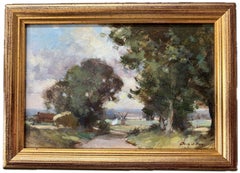
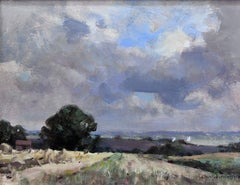
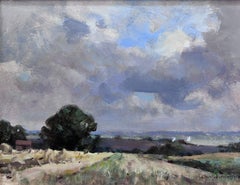
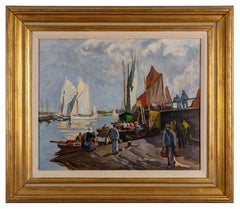
Brittany Coast
Brittany Coast

Brittany Coast

By Pierre LeLong

Located in Sheffield, MA

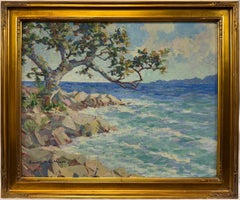
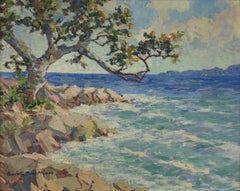
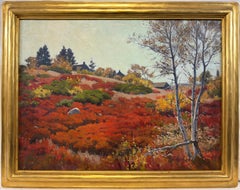
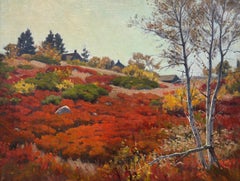
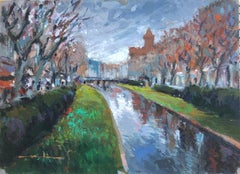
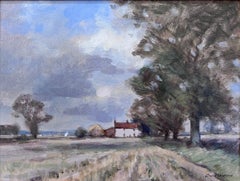
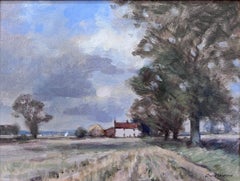
Pierre Emile Lelong French, 1908-1984 Brittany Coast Oil on canvasboard 17 ¾ by 21 ¾ in, w/ frame 25 ⅝ by 29 ⅝ in Signed lower right Pierre Emile Gabriel Lelong was a neo-Impressio...

Category

Mid-20th Century Impressionist Pierre LeLong Art

Materials

Oil, Board

Related Items
"Manayunk" Walter Emerson Baum, Pennsylvania Impressionist Landscape of Manayunk

"Manayunk" Walter Emerson Baum, Pennsylvania Impressionist Landscape of Manayunk

By Walter Emerson Baum

Located in New York, NY

Walter Emerson Baum Manayunk, 1953 Signed and dated lower right; titled and dated on the reverse Oil on board 12 x 14 inches Walter Baum was born December 14, 1884 in Sellersville,...

Category

1950s American Impressionist Pierre LeLong Art

Materials

Oil, Board

Looking over to Maugersbury Hill, Eleanor Woolley, Contemporary art

Looking over to Maugersbury Hill, Eleanor Woolley, Contemporary art

Located in Deddington, GB

Looking over to Maugersbury Hill by Eleanor Woolley [2019] Original painting and hand signed by the artist Gesso and oil on board Image size: H40cm x W:50cm Complete size of unfra...

Category

21st Century and Contemporary Impressionist Pierre LeLong Art

Materials

Gesso, Oil, Board

Autumn Landscape in Sunlight - Indian Summer -

Autumn Landscape in Sunlight - Indian Summer -

Located in Berlin, DE

Frederick Vezin (1859 Torresdale Philadelphia - 1933 Düsseldorf), Autumn Landscape in the Sunlight, oil on canvas, mounted on cardboard, 32 x 41 cm (inside measurement), 44 x 51 cm (frame), signed and dates lower right "F. Vezin. [19]05". - Cardboard slightly curved, small inconspicuous retouch at the centre of the upper edge of the picture. About the artwork Although the painting appears to be a sketch, Frederick Vezin considered it to be a finished work of art, as evidenced by his signature on the lower right. And it is precisely this sketchy quality that leads to an understanding of the painting, which was certainly created in the landscape itself: the natural phenomena were to be depicted artistically at the moment of their observation. This is not done by meticulously sketching nature, but - and here Vezin follows the teaching of French Impressionism - by illustrating nature in its visual fullness. The artist's eye is, as it were, immersed in the visuality of nature, which is made visible by his hand. The painting is therefore not a reflection of the landscape, but its artistic intensification. This intensification also includes the fact that the foreground of the painting - corresponding to the field of vision - eludes a detail-oriented close-up view. Instead, the spatula-like application of paint, the vertical structure of which corresponds to the structure of the floral growth, has the effect of making nature tangible in its colourful substance. At the same time, the foreground, which remains indeterminate in its concrete objectivity, creates an atmospheric space that connects with the actual protagonist of the picture, the group of trees, which flares up in shades of red and brown. Here, too, the leaves are more speckled than clearly outlined. It is precisely this 'sketchiness' that opens up a visual experience that makes the landscape accessible in its visual fullness, thus revealing its essence. In addition to this abundance, the landscape is presented as a structure of order in that the composition of the picture makes the composition of the landscape visible. For example, the group of trees forms a distinct dark green shadow, which is repeated in the shadows cast by the trees behind it. A patterned diagonal axis is created in the picture, which is composed in this way by the landscape itself. Strictly speaking, this is a cultivated landscape: a fence at the bottom and a low stone wall at the top, running from left to right, are two elements that also have a strong compositional effect. And on the top of the hill, a stone house is embedded in the landscape as the brightest surface in the picture. Nature and culture here form a harmonious synthesis, giving the painting an Arcadian touch. In order to give the landscape as much space as possible, the horizon line is raised, but the design of the sky is also crucial. The clouds, combined with the shapes of the trees, create a bright blue sky. To the European eye, such a sky is reminiscent of a summer landscape. Accordingly, within the seasonal cycle, the blue sky is reserved for summer, and French Impressionism is also primarily an ode to summer. In Vezin's painting, however, the brilliant blue sky stands above an autumnal landscape, some of the trees even defoliated. It can therefore be assumed that the painting was made not in Europe but in the United States, and that it illustrates the proverbial Indian summer, making Frederick Vezin a pioneer of American landscape painting. About the artist Frederick Vezin was the son of a French immigrant to the United States and a German-born mother. This predestined him to promote artistic exchange between the old and new worlds. Having spent part of his schooling in Germany, in 1876, at the age of 20, he enrolled at the Düsseldorf Academy of Art, where he studied with Peter Janssen the Elder, Eduard von Gebhardt and Wilhelm Sohn, among others. He graduated in 1883, settled in Munich and returned to Düsseldorf in 1895, where he lived until his death in 1933. A native of the United States, he travelled to the country frequently and became a popular portrait and society painter. His artistic talent, however, was most evident in his landscape paintings. Trained in French Impressionism, he developed a virtuoso use of colour and a free brushwork that remained tied to the landscape motif, opening up the landscape itself in a new way. Frederick Vezin turned his attention primarily to the landscape of his homeland, becoming a pioneer of modern American landscape...

Category

Early 1900s Impressionist Pierre LeLong Art

Materials

Oil, Cardboard

British Impressionist View of Tower Bridge from the Thames, December Afternoon

British Impressionist View of Tower Bridge from the Thames, December Afternoon

Located in Woodbury, CT

William Howard Jarvis December Afternoon on the Thames, London Bridge Oil on board Circa 1950 Signed lower left; inscribed verso with original price “45 Guineas” A beautifully atmos...

Category

1950s Impressionist Pierre LeLong Art

Materials

Oil, Board

"Ladies' Sketch Club" Pauline Palmer, Female American Impressionist Provincetown

"Ladies' Sketch Club" Pauline Palmer, Female American Impressionist Provincetown

By Pauline Palmer

Located in New York, NY

Pauline Palmer Ladies' Sketch Club Signed lower left Oil on board 20 x 24 inches Pauline Palmer (1867 - 1938) was one of Chicago's early twentieth-century portrait and landscape pa...

Category

1920s American Impressionist Pierre LeLong Art

Materials

Oil, Board

"Torrey Cliff, Palisades, New Jersey" William Quinlan, American Impressionism

"Torrey Cliff, Palisades, New Jersey" William Quinlan, American Impressionism

Located in New York, NY

William Quinlan Torrey Cliff, Palisades, New Jersey, 1939 Signed and dated lower right; titled on reverse Oil on artist board 10 x 8 inches Private collection, New York c. 1955 Esta...

Category

1930s American Impressionist Pierre LeLong Art

Materials

Oil, Board

Paysage a Moulineux - Impressionist Landscape Oil Painting by Maximillien Luce

Paysage a Moulineux - Impressionist Landscape Oil Painting by Maximillien Luce

By Maximilien Luce

Located in Marlow, Buckinghamshire

Signed oil on board landscape by French impressionist painter Maximilien Luce. The work depicts a view of rolling French countryside on a summer's day with white clouds contrasting t...

Category

1890s Impressionist Pierre LeLong Art

Materials

Oil, Board

Unloading the catch - Impressionist Figures Seascape Oil by Richard Hayley Lever

Unloading the catch - Impressionist Figures Seascape Oil by Richard Hayley Lever

By Richard Hayley Lever

Located in Marlow, Buckinghamshire

Signed figures in landscape oil on board circa 1905 by Australian-American impressionist painter Richard Hayley Lever. The work depicts fishing vessels docked in the harbour in Douar...

Category

Early 1900s Impressionist Pierre LeLong Art

Materials

Oil, Board

Mid Century Figurative Landscape -- Aptos Village Apple Shed and Market

Mid Century Figurative Landscape -- Aptos Village Apple Shed and Market

By Jon Blanchette

Located in Soquel, CA

Mid Century Figurative Landscape -- Aptos Village Apple Shed and Market Charming mid century figurative landscape of Aptos Village Apple Shed and Market by listed California artist ...

Category

1960s American Impressionist Pierre LeLong Art

Materials

Canvas, Oil, Illustration Board

Soleil de Novembre - Impressionist Riverscape Oil by Alexandre Jacob

Soleil de Novembre - Impressionist Riverscape Oil by Alexandre Jacob

By Alexandre Louis Jacob

Located in Marlow, Buckinghamshire

Signed oil on board landscape circa 1950 by popular French impressionist painter Alexandre Louis Jacob. The piece depicts a view of a marsh water mill. The yellow glow of the low Nov...

Category

1950s Impressionist Pierre LeLong Art

Materials

Oil, Board

Western Landscape by New England Impressionist painter

Western Landscape by New England Impressionist painter

By Richard Edward Miller

Located in Doylestown, PA

This Western Landscape by New England Impressionist painter Richard Edward Miller is a 12.5 x 23.5 inches, oil on board painting from 1931. A plein-air and impressionist painter as ...

Category

1930s American Impressionist Pierre LeLong Art

Materials

Oil, Board

Impressionist view of sail boats on the American coast

Impressionist view of sail boats on the American coast

By Charles Bertie Hall

Located in Woodbury, CT

Charles Bertie Hall (Anglo-American, 20th/21st Century) Sailboat at Sunset Oil on board, unsigned, from the artist’s studio This intimate seascape by Charles Bertie Hall captures a s...

Category

2010s Impressionist Pierre LeLong Art

Materials

Oil, Board

Previously Available Items
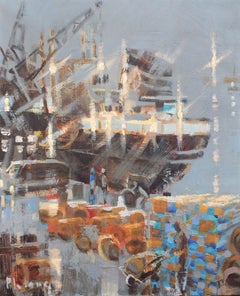
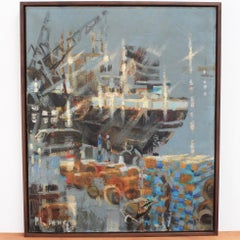
Stopover in Port
Stopover in Port

Stopover in Port

By Pierre LeLong

Located in London, GB

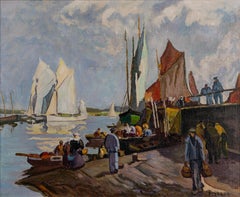
'Stopover in Port' (Escale), oil on canvas, by Pierre Lelong (circa 1960s-70s). A ship replenishes its cargo in the early hours of the morning. The pier ...

Category

1960s Impressionist Pierre LeLong Art

Materials

Canvas, Oil

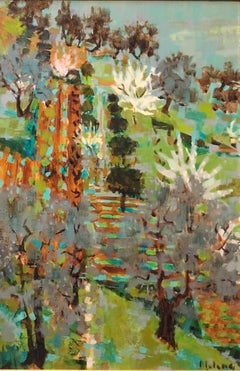
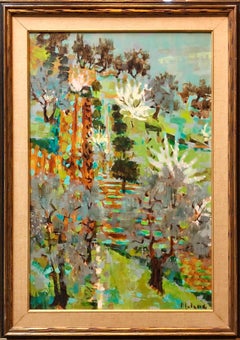
Foliage, "Paysage du Midi" Large Oil Painting

Foliage, "Paysage du Midi" Large Oil Painting

By Pierre LeLong

Located in Surfside, FL

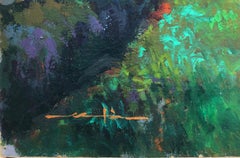
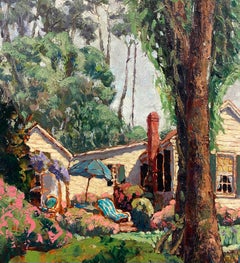
Pierre Emile Gabriel Lelong (24 March 1908 – 29 June 1984) was a neo-Impressionist painter based in France, winner of the Grand Prix des Peintres Témoins de Leur Temps in 1972. He is considered one of the postwar group of artists referred to as La Nouvelle Ecole de Paris. Pierre Emile Lelong was born in 1908 in Neuilly-sur-Seine. He began to draw and paint at an early age. In the 1920s he took classes at the Atelier Julien in Paris. In about 1933 he started to paint again and by 1935 had rented a studio in Montmartre (91, rue Caulaincourt). His work appeared in newspapers and magazines. He first exhibited his work at the Salon des Indépendants in 1935, and as part of a group at the Galerie Rotgé. He later destroyed much of his earliest work, so few paintings from this period survive. In 1939 he moved his studio to 30 quai de Passy (later the avenue President Kennedy). When World War II broke out, he became a liaison officer for a British regiment. He was taken prisoner at Dunkirk and sent to Camp Oflag IV-D near Dresden. He spent his time sketching his fellow prisoners and the events in the camp. He was later transferred to an outpost of Stalag IV-A, at Zittau, near the Czech frontier. After at least one failed attempt at escape, he succeeded in 1942 and returned to France, where he turned his sketches into a book Une Vie de Camp, published in 1943. He spent the remainder of the war in Trinidad with his wife’s family. During this period (1943–45), he worked on his painting technique, which had been interrupted by his earlier military service and professional career. He and his wife moved to New York City after the war, where their only son, Jean-François, was born. The family returned to France in 1947, and Lelong took a studio at 10, rue des Batignolles. During the late 1940s, he produced illustrations for various journals, including Cavalcade, Paysage, La Pensée Française, Lisez-moi, Champs-Elysées, Paris-Dimanche, and Fantasia. La Galerie Doucet arranged a solo exhibition for Pierre Lelong...

Category

Mid-20th Century Post-Impressionist Pierre LeLong Art
Materials

Canvas, Oil

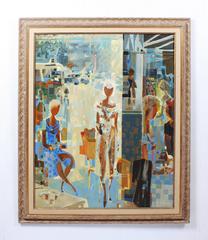
"Lunch in the Marais" by Pierre Lelong

"Lunch in the Marais" by Pierre Lelong

By Pierre LeLong

Located in Buffalo, NY

Modernist style painting of a French cafe. Oil on canvas by Pierre Lelong (1908-1984). Provenance from the Cornell Museum. Signed lower right, "P. Lel...

Category

1940s Modern Pierre LeLong Art
Materials

Canvas, Oil

Pierre Lelong art for sale on 1stDibs.
Find a wide variety of authentic Pierre Lelong art available for sale on 1stDibs.

Artists Similar to Pierre LeLong