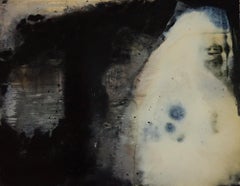
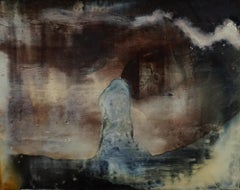
Raymond Jonson Abstract Paintings

American, 1891-1992
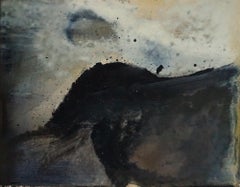
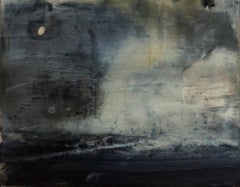
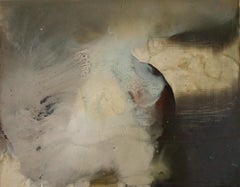
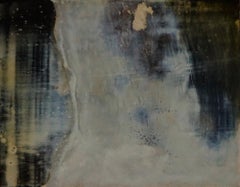
Raymond Jonson (1891-1982) is best known as one of the founders of the Transcendental Painters Group in Santa Fe, where he settled in 1924 and painted works that were pure abstraction. Before this time, he was in Chicago for fourteen years and there had many formative experiences that led to his later career. His mentor in Chicago was modernist B.J.O. Nordfeldt, and he was much affected by the Armory Show Exhibition of 1913 when it traveled to Chicago.
to
1
Overall Width
to
Overall Height
to
1
1
1
1
1
2
681
644
560
336
1
1
Artist: Raymond Jonson
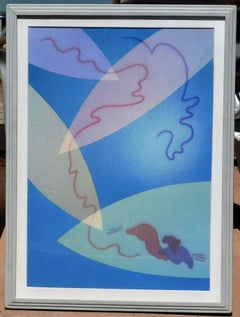
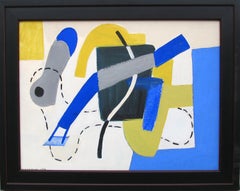
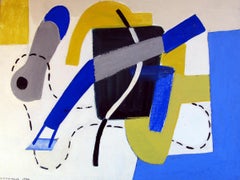
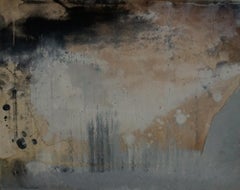
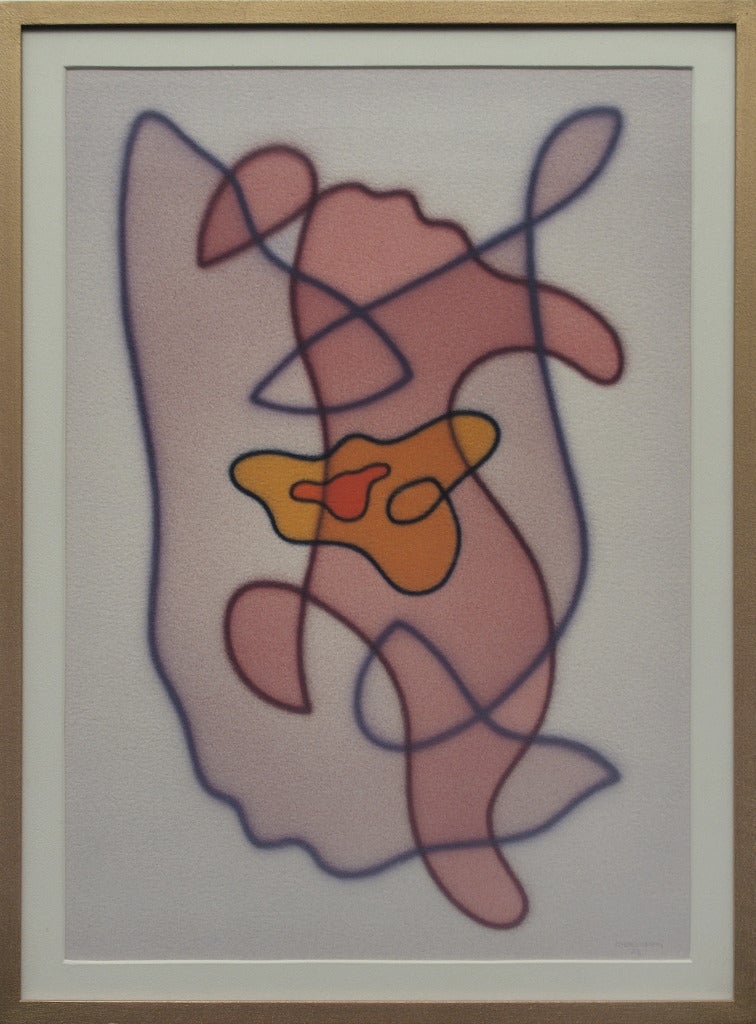
Raymond Jonson Abstract Watercolor, 1941 - Casein Tempera No. 1

Raymond Jonson Abstract Watercolor, 1941 - Casein Tempera No. 1

By Raymond Jonson

Located in Phoenix, AZ

Great abstract work by Transcendental painter Raymond Jonson (1891-1982) Titled: “Casein Tempera No. 1”. Medium: Tempera. Dated: 1941. Image measures: 30" H x 22" W. Frame measures: ...

Category

Mid-20th Century Abstract Raymond Jonson Abstract Paintings

Materials

Tempera

Related Items
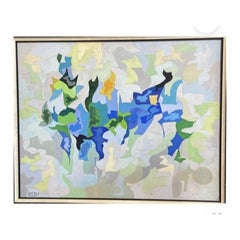
Abstract Composition

Abstract Composition

By Roland Bierge

Located in Boca Raton, FL

Roland Bierge (1922–1991) was a French artist best known for his expressive abstract paintings and work across multiple media, including sculpture, ceramics, and tapestry. Born in Hé...

Category

1950s Abstract Raymond Jonson Abstract Paintings

Materials

Egg Tempera, Archival Paper

Abstract Composition

Andre LanskoyAbstract Composition

$6,000

H 26 in W 33.5 in

Abstract Composition

Located in Sheffield, MA

Andre Lanskoy Russian, 1902-1976 Abstract Composition Pastel and tempera on paper 18 ¼ by 25 ¾ in, w/ frame 26 by 33 ½ in Signed lower right Inventory Number: 01777 Andre Lanskoy ...

Category

Mid-20th Century Abstract Raymond Jonson Abstract Paintings

Materials

Paper, Pastel, Tempera

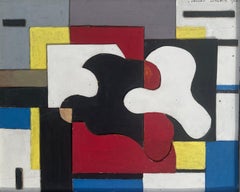
Abstract Cubist Construction Collage Mid 20th Century American Modernism Cubism

Abstract Cubist Construction Collage Mid 20th Century American Modernism Cubism

By Vaclav Vytlacil

Located in New York, NY

Abstract Cubist Construction Collage Mid 20th Century American Modernism Cubism Vaclav Vytacil (1892 - 1984) Abstract Construction #2 Caesin on board collage 11 x 13 1/2 th inches S...

Category

1930s Abstract Raymond Jonson Abstract Paintings

Materials

Casein, Board

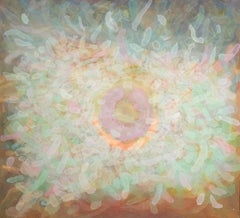
Abstract Flock - Monotype, Oil and Tempera on Paper - 1965 ca.

Abstract Flock - Monotype, Oil and Tempera on Paper - 1965 ca.

By Mark Tobey

Located in Roma, IT

This original artwork by Mark Tobey is a Monotype with tempera, heightened with tempera on paper. Signed Tobey lower right Signed Mark Tobey with the remark GOOD! on the back. Prove...

Category

1960s Abstract Raymond Jonson Abstract Paintings

Materials

Mixed Media, Oil, Tempera

Collage, 1958
Collage, 1958

Berto LarderaCollage, 1958

$16,000

H 42 in W 31.5 in D 2.5 in

Collage, 1958

Located in Wilton Manors, FL

Berto Lardera (1911-1989). Collage, 1958. Paper, cardboard, paint. 29 x 40.5 inches; 31.5 x 42 inches framed. Signed and dated lower right. Bears origina...

Category

1950s Abstract Expressionist Raymond Jonson Abstract Paintings

Materials

Paper, Tempera, Cardboard

Nude Figure (Nude woman)

Nude Figure (Nude woman)

By Serge Hollerbach

Located in Wilton Manors, FL

Serge Hollerbach (1923-2021). Nude Figure, 1968. Casein on illustration board, image measures 8.5 x 11 inches; 14.5 x 17 inches in a custom Kulicke welded steel frame. Signed and dated lower margin. Painter, Instructor Born in Pushkin, Russia November 1, 1923. Education : Academy of Fine Arts in Munich; Art Students League with Ernest Fiene; American Art Scholarship with Gordon Samstag. Holdings : St. Paul Gallery...

Category

Mid-20th Century Abstract Raymond Jonson Abstract Paintings

Materials

Casein

Theatre with Signals 3 - Tempera by Leo Guida - 1986

Theatre with Signals 3 - Tempera by Leo Guida - 1986

By Leo Guida

Located in Roma, IT

Theatre with signals 3 is an original sketch in tempera by Leo Guida (1986). The artwork is in good conditions. Hand-signed with pencil by the artist on the lower right corner, an...

Category

1980s Abstract Raymond Jonson Abstract Paintings

Materials

Tempera

Kibbutz Abstract Jerusalem Nightscape Israeli Tempera Collage Painting Judaica

Kibbutz Abstract Jerusalem Nightscape Israeli Tempera Collage Painting Judaica

Located in Surfside, FL

Abstract Expressionist cityscape of Old City of Jerusalem in moody blues and gold. Yitzhak Greenfield, painter, born 1932, Brooklyn, New York His focus is on the heavenly and the terrestrial Jerusalem; on the Hebrew alphabet; and on central themes in Jewish tradition and culture. He deals with the tension between figurative and abstract. Education 1946 Educational Alliance Art School, New York City, with Abba Ostrowsky, Chaim Gross, and Louis Lozowick. 1948 Thomas Jefferson High School, Brooklyn, New York, Art 1953 Drawing and Drawing Wall Murals,Seminar at Givat Haviva with P. Pelzig, Yohanan Simon, and Naftali Bezem. 1960 Printmaking with the artist and printmaker Borin, Venice, Italy 1979-1981 Morris Blackburn Print Workshop, New York City, U.S.A. Teaching Art Kibbutz Gal-On and Gat 1961-1963 Arts, regional school at Mateh-Yehuda Regional school, Mate-Yehuda Anglican school, Jerusalem 1965–70 Bet Ha'am, Popular University Outreach Program, Jerusalem Ruth Youth Wing, Israel Museum, Jerusalem Shira Mushkin: Majestic scenes in blue, gold and indigo, radiating spheres and grand expanses hover above architectural forms and clusters of Hebrew letters, revealing dreamlike realities. These are the creations of the artist Yitzhak Greenfield who works in watercolor and acrylic paints layered with collages of painted papers, discarded book materials, and fragments of his own prints. Applying parts of broken furniture, clock springs, iron locks and keys, the artist forms assemblages that hint at familiar settings, resonating the past. For Brooklyn born, Israeli artist Yitzhak Greenfield, these visions are the essence of the Jerusalem landscape, inspired by the city’s ever-changing magical scenery. For generations, Jerusalem has been a focal point for the Jewish people. It is the center of Jewish life, faith, hope, history, and consciousness. Jerusalem holds a particular significance for Greenfield, who moved to Ein Kerem, Jerusalem over fifty years ago, after living on a kibbutz. Greenfield is a Jerusalem artist, and he remarks: “Living and working in Jerusalem is a special journey for me. My works are visionary landscapes, which are reconstructions of Jerusalem, not always relating to specific sites.” The artist has always been intrigued by the historical and dynamic nature of the city, as he constantly explores his own connection to the traditional and spiritual forms of Judaism. Greenfield’s art is linked to Jewish and Israeli history and symbols, such as the Hebrew letters, Jewish amulets, and the Ten Sephirot (Kabbalah emanations), containing aesthetic qualities of the material and the spiritual. Working in a distinctive modernist method, Greenfield’s artwork lends itself to rich possibilities of expression. The exhibition Yitzhak Greenfield: Exploring Jerusalem comprises three main series from the artist’s career, which span over the course of many years and continue to this day; Jerusalem Visions, Jerusalem Assemblages, and Landscape and Meditation on the Hebrew Letter. These artworks portray timeless dream-landscapes of Jerusalem. The hidden secrets of the city are locked away in assemblage constructions, and prints depicting Hebrew letters illuminate into mystical meanings. The spectator travels along with Greenfield through his creations, exploring Jerusalem and experiencing a spiritual and living Judaism, in which the artist constantly searches for the expression of his cultural and spiritual legacy as he reconstructs Jerusalem. 1966 General Exhibition - Jerusalem Artists' House Artists: Hirszenberg, Samuel Boris Schatz, Lilien, Ephraim Moses, Joseph Budko, Leopold Krakauer, Meir Gur Arie, Jacob Eisenberg, Ben Zvi, Zeev Palombo...

Category

1960s Abstract Expressionist Raymond Jonson Abstract Paintings

Materials

Mixed Media, Tempera

The Metamorphosis Room - Tempera by Leo Guida - 1998

The Metamorphosis Room - Tempera by Leo Guida - 1998

By Leo Guida

Located in Roma, IT

The Metamorphosis Room is a Contemporary artwork realized in 1998 by the italian artist Leo Guida (1992 - 2017). Original mixed colored tempera on ...

Category

1990s Abstract Raymond Jonson Abstract Paintings

Materials

Paper, Tempera

Georgian Contemporary Art by Giorgi Kavelashvili - Expand

Georgian Contemporary Art by Giorgi Kavelashvili - Expand

By Giorgi Kavelashvili

Located in Paris, IDF

Acrylic, tempera on wood panel Giorgi Kavelashvili is a Georgian artist born in 1994 who lives and works in Tbilisi, Georgia. He is graduated from the Tbilisi State Academy of Arts,...

Category

2010s Abstract Raymond Jonson Abstract Paintings

Materials

Canvas, Acrylic, Tempera, Wood Panel

Piccolo Archivio Tempera Drawing on Cardboard, Abstract, Signed, 1988

Piccolo Archivio Tempera Drawing on Cardboard, Abstract, Signed, 1988

By Leo Guida

Located in Roma, IT

Piccolo Archivio is an original Contemporary artwork realized in 1988 by the italian Contemporary artist Leo Guida (1992 - 2017). Original drawing in beautiful colored tempera o...

Category

1980s Abstract Raymond Jonson Abstract Paintings

Materials

Tempera, Cardboard

Previously Available Items
Oil No. 9
Oil No. 9

Oil No. 9

By Raymond Jonson

Located in Denver, CO

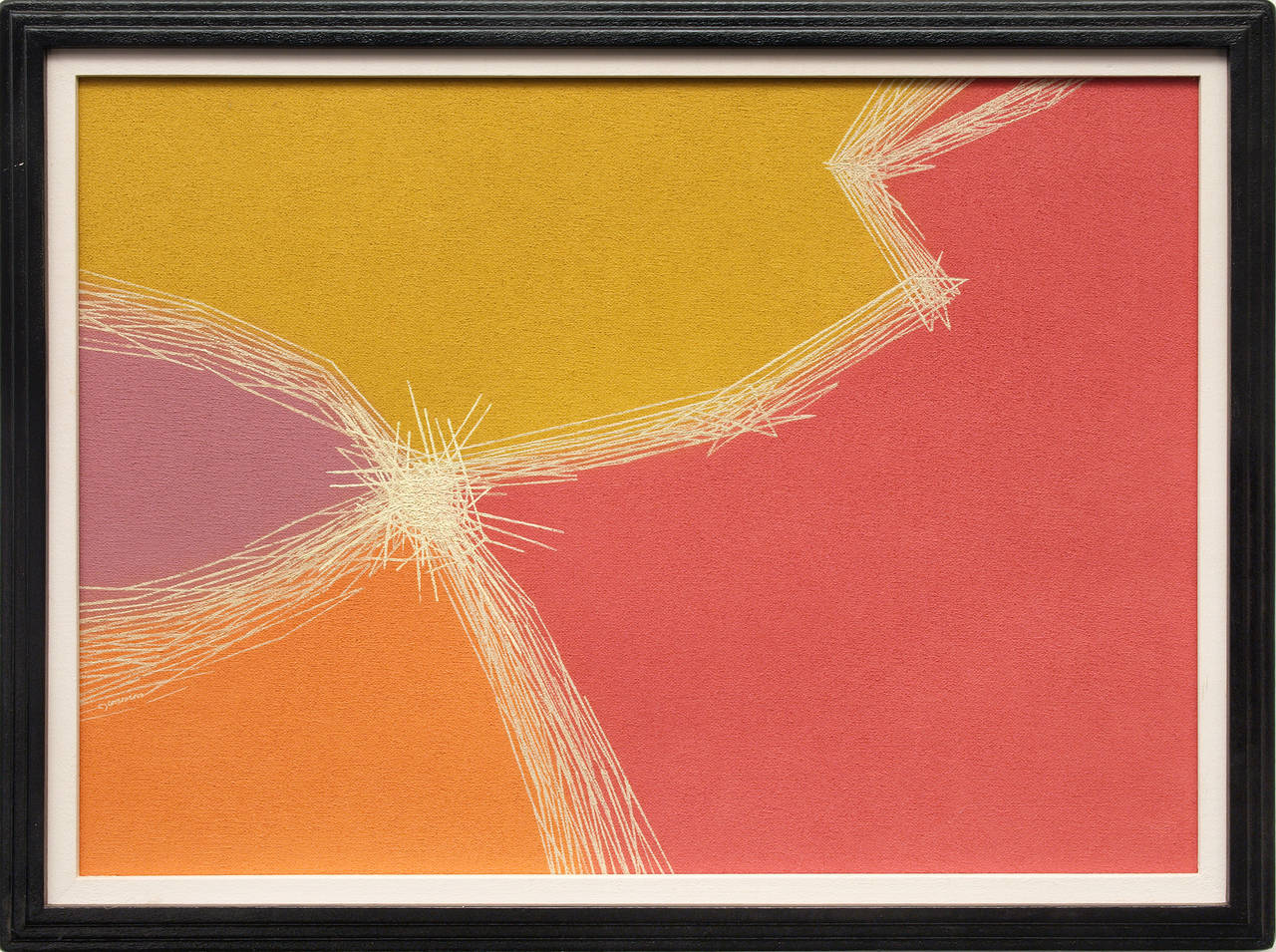
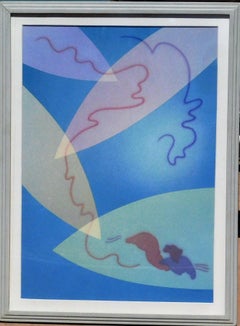
Framed dimensions measure 23.5 x 31.5 inches. Expedited and International Shipping available; please contact us for a quote. About the artist: Seeking the spiritual in art, Raymond Jonson developed an abstract style of painting that was unique in pre-1940s New Mexico. While his colleagues in the Transcendentalist Painting Group similarly shared his interest in the metaphysical, Jonson alone found his means in a non-objective relationship of forms. Strongly influenced by Kandinsky, the painter moved from stylized representations of nature to formalist expressions of universal harmony. In order to achieve his aims, he became a master of materials, known for his meticulous working methods. Born in Iowa, Jonson spent his early years moving around the country with his family, necessitated by his minister father's work. They finally settled in Portland, Oregon, in 1902, and this same year Raymond had a spiritual experience in which he sensed the presence of God. When his family's Baptist faith disappointed him, he transposed this feeling to art, to which he committed his life. When the Portland Art Association established its Museum Art School, Jonson enrolled as its first student. His dedication led him to Chicago to study at the Academy of Fine Arts, a very good commercial school, which afforded a strong grounding in drawing. Here he met B.J.O. Nordfedlt, a Swedish immigrant, who introduced the younger Jonson to the colorist experimentation of the Fauves. The Arthur Dove exhibition and the Armory Show brought to Chicago both expanded his awareness of the emotive possibilities of modernist art movements. From 1912 to 1917, Jonson was lighting, stage set, costume, and graphics designer for the Chicago Little Theater, America's first experimental theater. Among their bold departures was a minimalist aesthetic, which reduced the stage elements and enhanced the dramatic content with light. Devising the 9-switch dimmer board, Jonson (going by C. Raymond Johnson) became an international theater figure. He also met his wife, Vera White, secretary for the theater and poet. On a trip to the Colorado Rockies in 1917, Jonson was moved by the power of this sublime landscape and its clarity of light. He began to consider how paint could express light -- material into immaterial. Teaching at the Chicago Art Institute, he was able to get away to the MacDowell Art Colony in 1919, and his elevated sensibilities increasingly perceived the oppressive side of city life. Believing the aim of life was toward harmony, Jonson placed new emphasis on design as a unifying principle. Reading Kandinsky's "The Art of Spiritual Harmony" further convinced him that the mission of art was to make this harmony visible. In 1922, he spent the entire summer in Santa Fe, and his experience there filtered into his work upon returning to Chicago. When his mother supplied the money for a studio, he moved to New Mexico in 1924, building his home across the street from his friend Nordfeldt. Jonson pursued the concept of order as found in "simple basic motives of spaces and interesting variety of shapes and spaces, a balance of line direction." In the work of the late 20s, he submits natural forms, such as mesas and even the Grand Canyon, to a dynamic patterning in which the quality of light becomes a design element. Significantly, Jonson thought that emotion could be included by creating juxtaposed rhythms within the composition. Influenced by Indian design, these paintings recall Art Deco ornamentation in the combination of organic and geometric motifs and the electric color effects. Taking the next leap, Jonson set about purifying his work of all representation. Beginning in the thirties, he explored new ways applications of color and tonality to suggest the quality of transparency, which created the sense of different planes within one surface. Philosophically, this transparency was the artistic means to "expose the spirit of man." Carefully painting gradations, he achieved luminosity and, with colors close to each other, vibration. He eventually used an airbrush for further ethereal effects. Rather than suggest the metaphysical with subject matter, Jonson proposed an approach to painting which de-materialized the actual physical object. In 1938, he and Emil Bisttram were the core of the Transcendentalist Painters Group, which advanced these principles among other artists in Santa Fe and Taos. As advocate and impresario, Jonson casts a long shadow. Although there was strong sentiment against it, he organized the modern wing of the Museum of New Mexico. In 1934, he painted six murals for the University of New Mexico, which began his relationship with the Albuquerque institution. For many years, he commuted there from Santa Fe but in 1950 he moved there to the gallery/studio provided. Upon his retirement in 1954, he continued to stage exhibitions, thus making the gallery a citadel of modernism in the Southwest. The building itself is a landmark of Pueblo Revival...

Category

1950s Abstract Expressionist Raymond Jonson Abstract Paintings
Materials

Alabaster

Watercolor, NO. 20
Watercolor, NO. 20

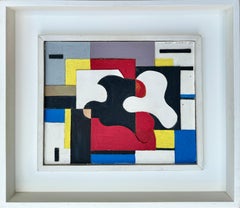
Watercolor, NO. 20

By Raymond Jonson

Located in Denver, CO

Provenance: Private Collection, Colorado

Category

1940s Abstract Raymond Jonson Abstract Paintings
Materials

Watercolor

Raymond Jonson abstract paintings for sale on 1stDibs.

Find a wide variety of authentic Raymond Jonson abstract paintings available for sale on 1stDibs. Customers who are interested in this artist might also find the work of William (Bill) Alpert, Doug Frohman, and Carolanna Parlato.