By Robert Kasimir
Located in San Francisco, CA
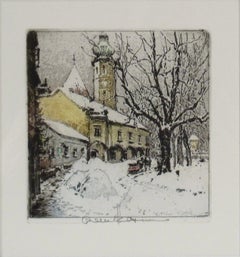
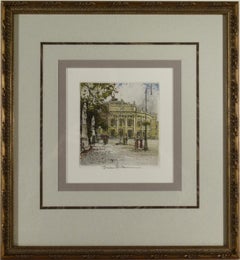
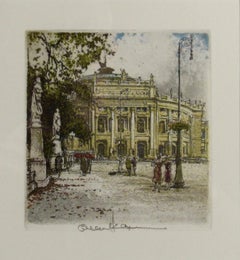
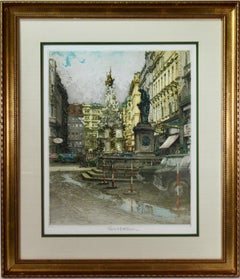
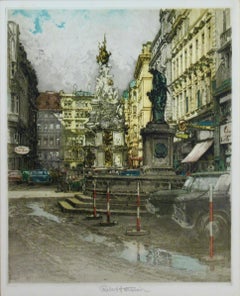
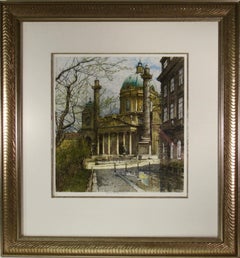
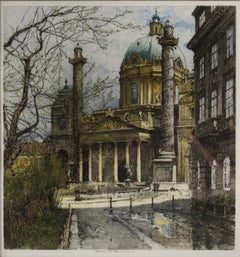
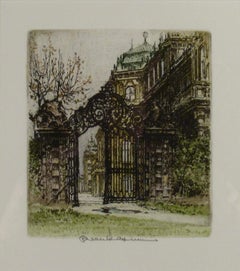
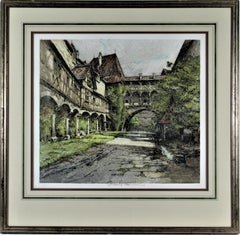
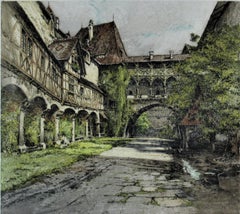
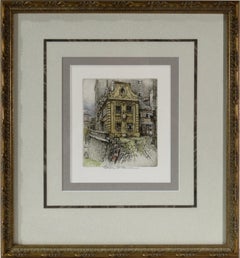
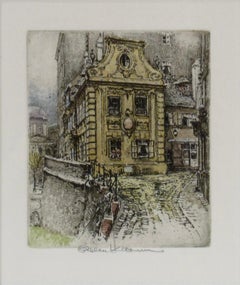
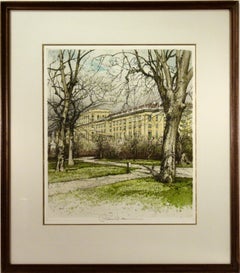
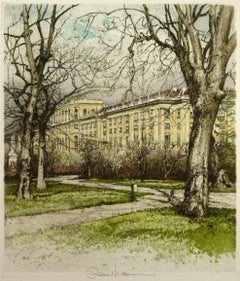
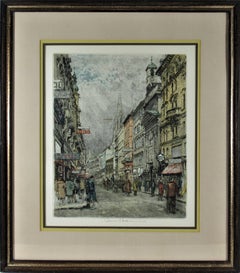
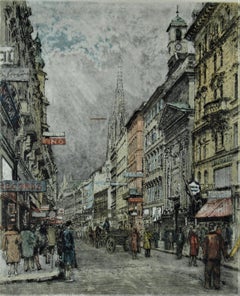
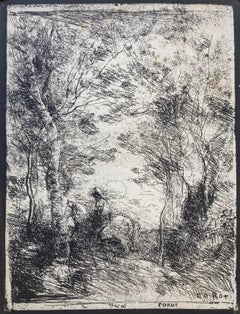
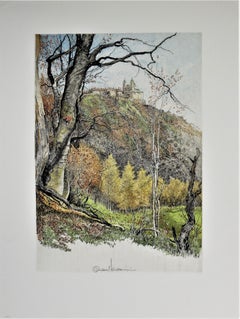
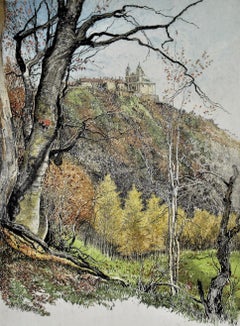
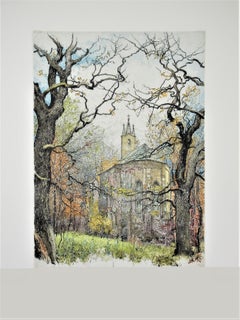
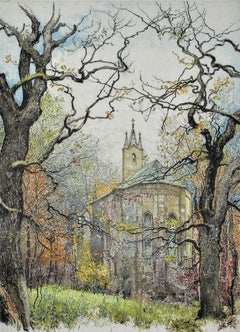
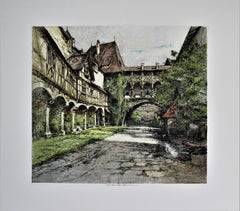
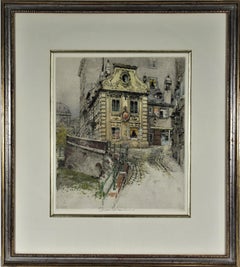
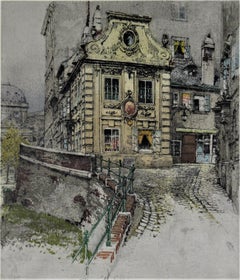
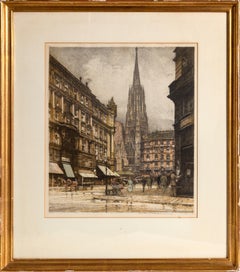
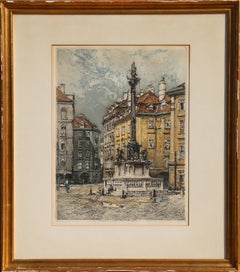
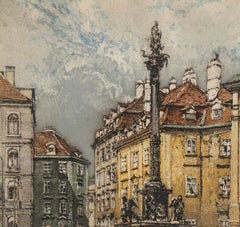
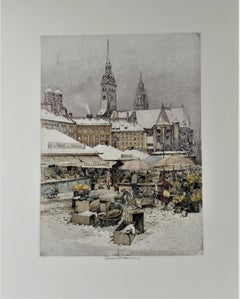
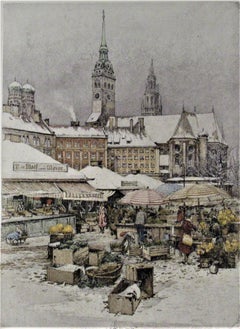
This artwork titled "Kreuzenstein Courrtyard, Austria" c. 1960 is a color etching on wove paper by noted Austrian artist Robert Kasimir, 1914-2002. It is hand signed in pencil by the artist at the lower center. The image (plate mark) size is 15.75 x 17.35 inches, framed size is 25.25 x 26 inches. Custom framed in a wooden antique silver frame, with decorated matting. It is in excellent condition, the colors are fresh and bright, the frame has minor restorations, practically invisible.
About the artist.
Born in Vienna in 1914, Robert Kasimir began drawing at age 4, taught by his grandfather Alois. He made his first etching at age 5. He graduated from Vienna schools and attended the Technological College before switching to the Academy for Graphic Art, where he studied under Professor Hans Frank, a painter and graphic artist.
Robert inherited the talent of his famous parents. His technique and subject matter are quite similar to those of his father. He signed his early etchings with the pseudonym "F.O. Robert" until he became established as a successful artist in his own right. Only then did he begin signing his etchings with his own name. In 1936 he came to the United States for a year of study at the Academy of Fine Arts, Philadelphia. During that year he made drawings for his American etchings, including the Capitol in Washington, Yale University, Broad Street, New York, and the University of California in Berkeley. He completed the actual etchings after his return to Vienna.
In 1938 he was drafted into the army. He was sent to several fronts (Belgium, Holland, France, Russia) as a war reporter. He did many drawings during the war. In 1945 he returned to Vienna.
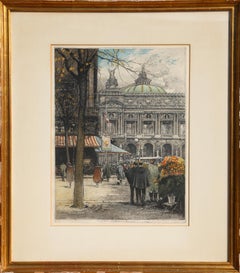
For the next several years industrial commissions comprised most of his work, though he did several of his Viennese and Austrian scenes such as the Vienna Opera House...
Category
Late 20th Century Realist Robert Kasimir Art