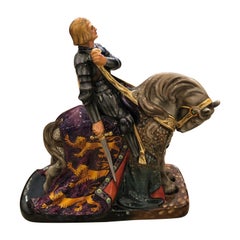
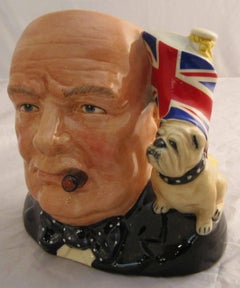
By Royal Doulton
Located in Bloomfield Hills, MI
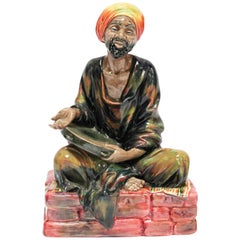
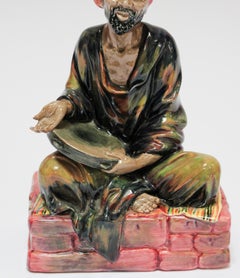
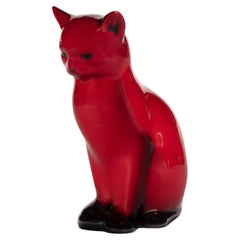
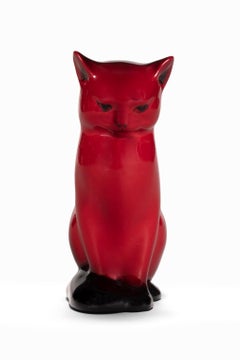
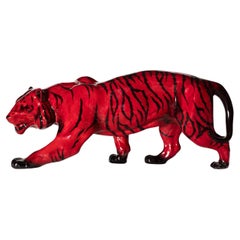
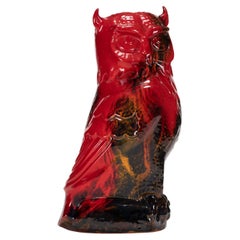
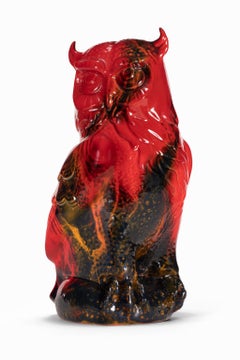
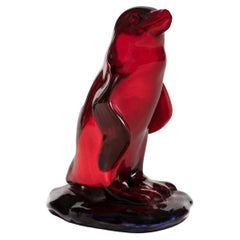
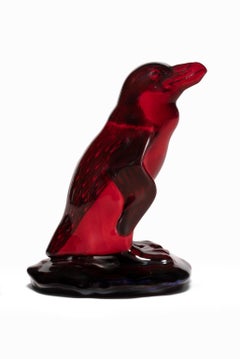
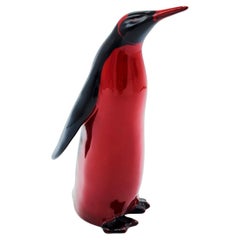
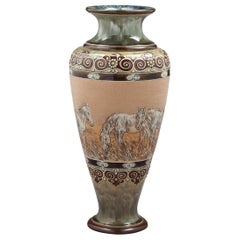
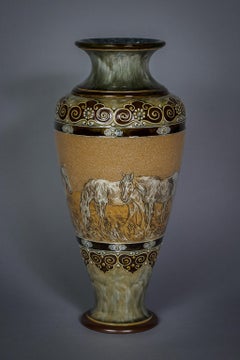
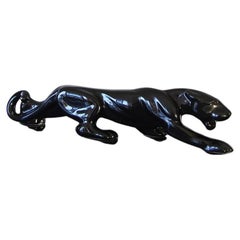
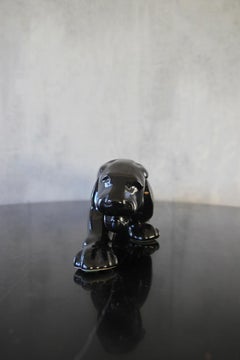
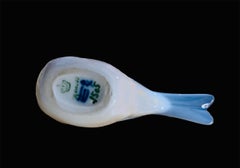
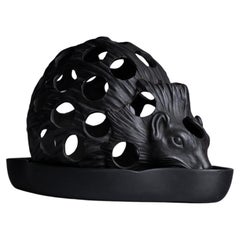
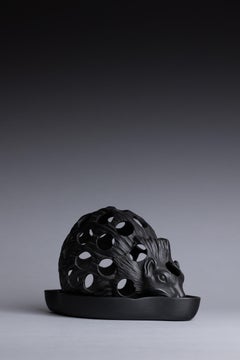
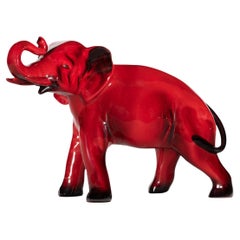
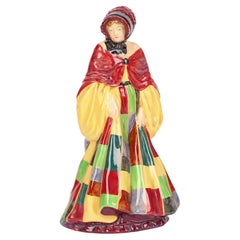
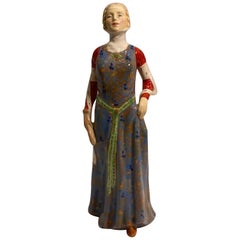
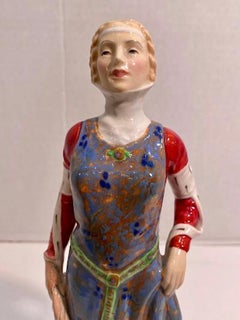
Over 500 years ago Chinese potters first experimented with copper oxide glazes to create a fiery red finish that became known as Flambe. When these Sung Dynasty (AD 960 to 1279) porcelain pieces reached Europe, they were collectively called flambe, because the glaze’s resemblance to flames, and were instantly prized by collectors. Sung Dynasty ceramics are considered by many to be history’s foremost expression of the ceramic art. Although the origin of these striking flambe ( or transmutation) glazes is lost in legend, one of the greatest achievements of Royal Doulton’s artisans was the rediscovery of long-lost secrets from China’s master potters, and their ceramic ware that was renowned for its rich, blood-red and ruby effects. Marks on verso indicated the piece was made after 1930.
After much experimenting and hard work, the Doulton company found immediate success at the St. Louis Exhibition in 1904. More experimenting continued in order to perfect the art of flambe and in 1920 Royal Doulton exhibited its new “Sung” wares and proved they were still the pioneers in the flambe field. Later generations of Europeans dubbed the color sang-d-boeuf, because it resembled ox blood.
Royal Doulton is an English ceramic and home accessories manufacturer that was founded in 1815 by John Doulton at Lambeth, London in association with John Watts and known as Doulton and Watts. Operating originally in Vauxhall, London, and later moving to Lambeth, in 1882 it opened a factory in Burslem, Stoke-on-Trent, in the centre of English pottery. From the start, the backbone of the business was a wide range of utilitarian wares, mostly stonewares including storage jars, tankards and the like, and later extending to other technical ceramics. From 1853 to 1901, its wares were marked Doulton and Co., then from 1901, when a royal warrants was given, Royal Doulton.
It always made decorative wares, mostly stoneware, and from the 1860s, the firm made considerable efforts to get a reputation for design, in which it was largely successful, as one of the first British makers of art pottery initially done through artistic stonewares made in Lambeth, but in 1882 the firm bought a Burslem factory, which was mainly intended for making bone china, tablewares and decorative items. It was a latecomer in this market compared to firms such as Royal Crown Derby, Royal Worcester, Wedgwood, Spoke and Mintons, but made a place for itself in the later 19th century . Today Royal Doulton mainly produces tableware and figurines.
The company took the name Doulton & Co. in 1854 after the retirement of John Watts in 1853, and a merger with Henry Doulton and Co., although the trading name of Doulton & Watts continued to be used for decades. For some of the 19th century there were three different businesses, run by the sons of John Doulton, and perhaps with cross-ownership, which later came back together by the end of the century. By 1897 the total employees exceeded 4,000.
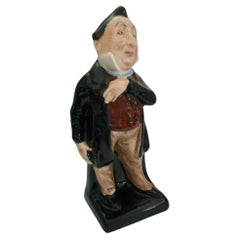
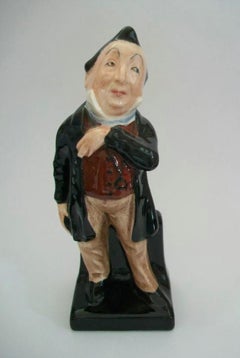
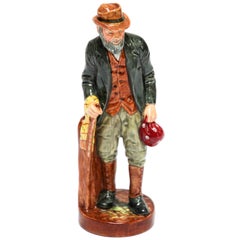
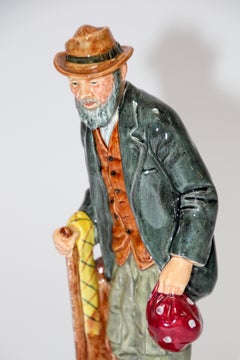
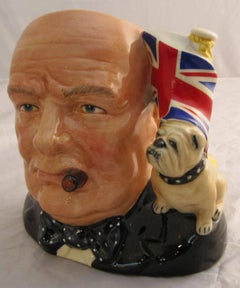
By this time Doulton was popular for stoneware and ceramics, under the artistic direction of John Slater who worked with figurines, vases, character jugs, and decorative pieces designed by the prolific Leslie Harradine...
Category
Mid-20th Century English Royal Doulton Sculptures