Satsuma Bowls and Baskets

to
1
1
1
1
1
1
1
1
Height
to
1
1
1
17
151
142
120
99
Creator: Satsuma
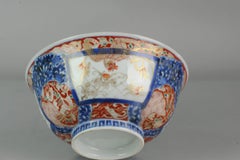
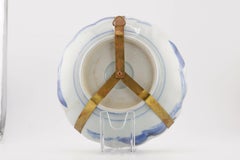
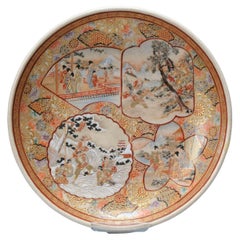
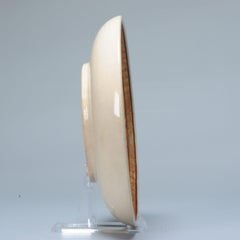
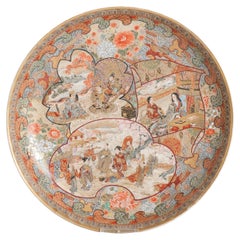
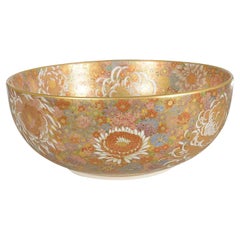
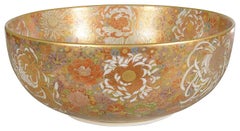
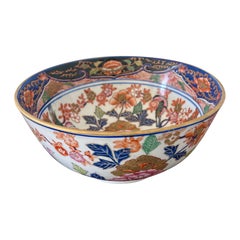
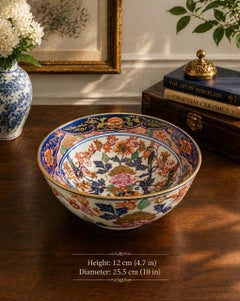
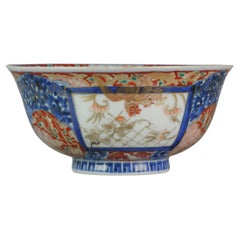
Japanese Satsuma Millefleur bowl, Meiji period. 30cm diameter.

Japanese Satsuma Millefleur bowl, Meiji period. 30cm diameter.

By Satsuma

Located in Brighton, Sussex

A fine quality Japanese (Meiji period 1868-1912) Satsuma Millefleur bowl, painted with 'A thousand flowers' pattern & gilt decoration. Signed to the base. Batch 83 62047 DUAZN

Category

Late 19th Century Japanese Antique Satsuma Bowls and Baskets

Materials

Porcelain
Related Items
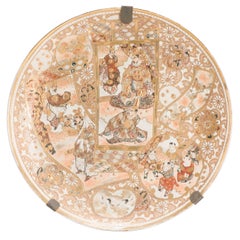
Antique Japanese Kinkozan Satsuma Large Dish Meiji Period, Japan, 19th Century

Antique Japanese Kinkozan Satsuma Large Dish Meiji Period, Japan, 19th Century

Located in Amsterdam, Noord Holland

A lovely and classic Kinkozan Satsuma dish with figural scene. Additional information: Material: Porcelain & Pottery Tea Bowls & Cups Japanese Style: Arita Region of Origin: Japan P...

Category

19th Century Japanese Meiji Antique Satsuma Bowls and Baskets

Materials

Porcelain
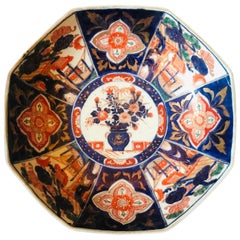
Meiji Period Large Japanese Imari Bowl Centerpiece

Meiji Period Large Japanese Imari Bowl Centerpiece

$625Sale Price|50% Off

H 3.5 in Dm 11.25 in

Meiji Period Large Japanese Imari Bowl Centerpiece

By Imari Porcelain

Located in Vero Beach, FL

Meiji period large Japanese Imari bowl centerpiece This large, distinctive, octagonal porcelain Imari bowl is painted in rich, inky blue, co...

Category

19th Century Japanese Meiji Antique Satsuma Bowls and Baskets

Materials

Porcelain
Meiji Period Japanese Imari Bowl Attributed to Fukagawa, Circa 1880

Meiji Period Japanese Imari Bowl Attributed to Fukagawa, Circa 1880

By Fukagawa

Located in West Palm Beach, FL

Meiji Period Japanese Imari Bowl Attributed to Fukagawa, Circa 1880 Japan, 6.5" H x 12" Diameter An exceptional Meiji-period Imari porcelain bowl attributed to the esteemed Fukagawa...

Category

Late 19th Century Japanese Meiji Antique Satsuma Bowls and Baskets

Materials

Porcelain
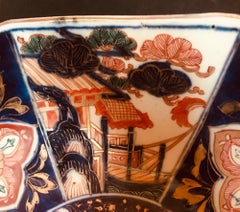
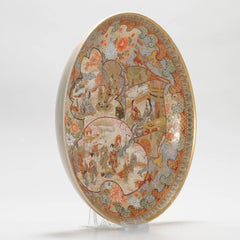
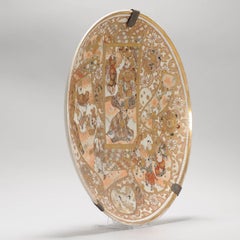
Large Antique Meiji period Japanese Satsuma Plate After a Figural Scene

Large Antique Meiji period Japanese Satsuma Plate After a Figural Scene

Located in Amsterdam, Noord Holland

Fabulous Japanese earthenware Satsuma dish depicting different figural scenes. Marked at the base. Japan – Meiji period (1868-1912) Condition Perfect condition. Size: 32.5x5.7CM D...

Category

20th Century Japanese Satsuma Bowls and Baskets

Materials

Porcelain
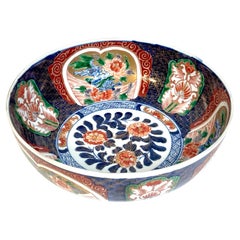
Antique Japanese Imari Porcelain Bowl Decorative Meiji Period Centrepiece

Antique Japanese Imari Porcelain Bowl Decorative Meiji Period Centrepiece

Located in Suffolk, GB

A striking antique Japanese Imari porcelain bowl of generous proportions beautifully hand painted in the traditional Imari palette of rich cobalt blue iron red and soft gilded highli...

Category

19th Century Japanese Antique Satsuma Bowls and Baskets

Materials

Porcelain
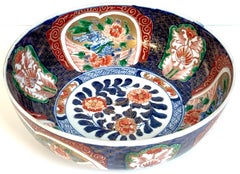
Large Antique Japanese Arita Imari Bowl Edo Meiji Period, 19th Century

Large Antique Japanese Arita Imari Bowl Edo Meiji Period, 19th Century

Located in Amsterdam, Noord Holland

Large Antique 19th Japanese Arita Imari Bowl Edo Meiji Period Birds Flowers. A very nice bowl. Additional information: Material: Porcelain & Pottery Region of Origin: Japan Period:...

Category

19th Century Japanese Edo Antique Satsuma Bowls and Baskets

Materials

Porcelain

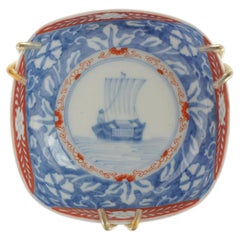
Antique Japanese Porcelain Meiji Period Arita Polychrome Bowl Ship 19th Century

Antique Japanese Porcelain Meiji Period Arita Polychrome Bowl Ship 19th Century

Located in Amsterdam, Noord Holland

Sharing with you this unusual and magnificent bowl from the Meiji period (19th century). It has a very interesting and lovely blue, red and gold scene Unmarked at the base. Addition...

Category

19th Century Japanese Meiji Antique Satsuma Bowls and Baskets

Materials

Porcelain
Antique Japanese Porcelain Meiji Period Arita Polychrome Bowl Dish 19th Century

Antique Japanese Porcelain Meiji Period Arita Polychrome Bowl Dish 19th Century

Located in Amsterdam, Noord Holland

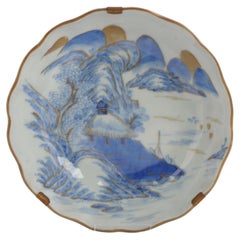
Sharing with you this unusual and magnificent bowl from the Meiji period (19th century). It has a very interesting and lovely blue and gold scene Unmarked at the base. Additional in...

Category

19th Century Japanese Meiji Antique Satsuma Bowls and Baskets

Materials

Porcelain
Antique Meiji Period Japanese Satsuma Plate Figures with Mark Japan 19th Century

Antique Meiji Period Japanese Satsuma Plate Figures with Mark Japan 19th Century

Located in Amsterdam, Noord Holland

Fabulous Japanese earthenware Satsuma dish depicting Figures. Satsuma Ceramic with mark. Japan – Meiji period (1868-1912) Mark at the base: Made by Hotoda Additional information: M...

Category

19th Century Japanese Meiji Antique Satsuma Bowls and Baskets

Materials

Porcelain
Antique Meiji Period Japanese Satsuma Pate Figures, 19th Century

Antique Meiji Period Japanese Satsuma Pate Figures, 19th Century

Located in Amsterdam, Noord Holland

Fabulous Japanese earthenware Satsuma dish depicting Figures and flowers. Japan – Meiji period (1868-1912) Additional information: Material: Porcelain & Pottery Region of Origin...

Category

19th Century Meiji Antique Satsuma Bowls and Baskets

Materials

Porcelain
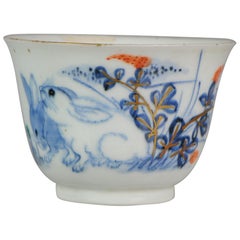
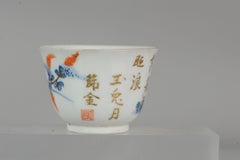
Rare Antique Japanese Tea Bowl Edo/Meiji Period Japan, 18/19th Century

Rare Antique Japanese Tea Bowl Edo/Meiji Period Japan, 18/19th Century

Located in Amsterdam, Noord Holland

A very nice bowl with two rabbits in underglaze blue. Additional information: Material: Porcelain & Pottery Region of Origin: Japan Period: 19th century Condition: Overall Condition...

Category

19th Century Japanese Antique Satsuma Bowls and Baskets

Materials

Porcelain
Previously Available Items
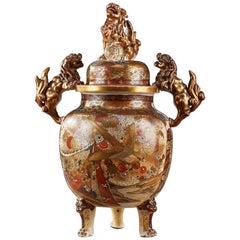
Japanese Satsuma Perfume-Burner with Dogs of Fô

Japanese Satsuma Perfume-Burner with Dogs of Fô

Sold

H 14.97 in W 11.03 in D 7.09 in

Japanese Satsuma Perfume-Burner with Dogs of Fô

By Satsuma

Located in Paris, FR

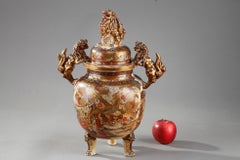
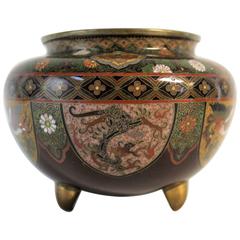
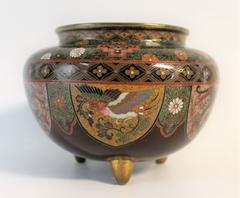
Tripod Satsuma perfume-burner painted in polychrome enamels and gold. The paunch is decorated with Japanese courtiers, the reverse with birds in landscapes. The shoulder and lid are embellished with flowers and geometric patterns. The handles and lid are topped by dogs of Fô...

Category

19th Century Japanese Japonisme Antique Satsuma Bowls and Baskets

Materials

Enamel

Japanese Porcelain Center Bowl

Japanese Porcelain Center Bowl

Sold

H 7.5 in Dm 16.5 in

Japanese Porcelain Center Bowl

By Satsuma

Located in Los Angeles, CA

1900 - 1930's Very Fine Large Japanese Porcelain Center Bowl. Gilded and Hand Painted. Signed by Satsuma.

Category

1930s Japanese Vintage Satsuma Bowls and Baskets

Materials

Porcelain
Satsuma bowls and baskets for sale on 1stDibs.

Satsuma bowls and baskets are available for sale on 1stDibs.
Questions About Satsuma Bowls and Baskets
  • 1stDibs ExpertOctober 12, 2021
    A type of Japanese pottery originated from Satsuma province in Japan is termed as Satsuma ware. A vase of this kind is known as a Satsuma vase. An interesting fact about Satsuma ware is that they feature a "makers mark" or marking as a key to help collectors unlock the value, age and authenticity of the piece. Shop a range of antique and vintage Japanese vases on 1stDibs.
  • 1stDibs ExpertMarch 22, 2022
    To date a Satsuma vase, study its mark. Vases made before World War II normally feature a mark in Japanese. A vase that says "Royal Satsuma" likely dates back to the late 20th century. You'll find a variety of expertly vetted Satsuma vases on 1stDibs.
  • 1stDibs ExpertOctober 7, 2024
    The difference between Satsuma and moriage is that the former is a type of pottery, and the latter is a technique for decorating pottery. Satsuma pottery is the term for earthenware pottery from Japan's Satsuma region. Although there are different styles, the most common element of Satsuma pottery is a heavy, dark glaze. Moriage is the term for when potters add raised slip decorations to pottery, creating a three-dimensional effect. Some Satsuma pieces show off moriage details, while others do not. Shop a range of Satsuma pottery on 1stDibs.
  • 1stDibs ExpertApril 5, 2022
    Satsuma porcelain or pottery includes a maker’s mark with the name of the person who made the item. Japanese numbers may also indicate that a Satsuma piece was part of a collection. Genuine Satsuma pieces will not have a “Made in Japan” label and should only include Japanese characters. When in doubt, work with a certified appraiser to determine the authenticity of your Satsuma piece. Find a variety of expertly vetted Satsuma porcelain and pottery collectibles on 1stDibs.
  • 1stDibs ExpertApril 26, 2024
    Yes, some Satsuma pottery is valuable. The age, type, style and condition will determine how much a particular piece is worth. In addition, the history of ownership may also make a piece more valuable. For example, if a piece was previously in the collection of a notable person, such as a member of the Japanese Imperial Family, it may be worth more. To get an estimated value for a particular piece, consult a certified appraiser or knowledgeable antiques dealer. Find a range of Satsuma pottery on 1stDibs.
  • 1stDibs ExpertSeptember 9, 2024
    Yes, some Satsuma pottery is worth something. Depending on their age, maker, type, style, condition and other factors, pieces may sell for a few hundred to several thousand dollars. Looking at sales and auction histories can give you a rough idea of the value of a piece. For a more definitive valuation, use the services of a certified appraiser or knowledgeable antique dealer. On 1stDibs, explore a collection of Satsuma pottery.
  • 1stDibs ExpertFebruary 1, 2024
    One way to tell if your Satsuma vase is valuable is to look for markings on it. The oldest and typically most expensive pieces will usually have the Shimazu family crest — a circle with a cross through it — hand-painted on the bottom. If the piece is stamped with the marking or says "Made in Japan" in the Roman alphabet, it is a newer vase. Factors like the style of the vase and its condition will also impact its price. It's a good idea to have a certified appraiser or knowledgeable dealer evaluate your vase to determine its value. Find a variety of Satsuma vases on 1stDibs.
  • 1stDibs ExpertNovember 4, 2024
    To identify Satsuma pottery marks, you'll typically need to perform research using trusted online resources. Satsuma is a region in Japan known for its pottery, and many factories and artisans have operated there, including Kinkozan, Taizan, Yasuda, Choshuzan, Fuzan, Gyozan, Koshida and Maruni Kobe. Each maker has its own marks associated with it, and these typically are in Japanese kanji characters. You can compare the characters on your piece to pictures shared online to find a match. Alternatively, a certified appraiser or experienced antique dealer can help you identify your pottery markings. On 1stDibs, shop a selection of Satsuma pottery.