By Thomas Rowlandson
Located in Fairlawn, OH
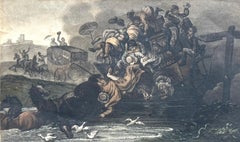
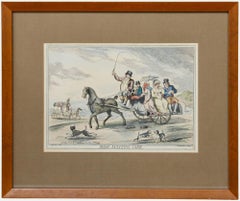
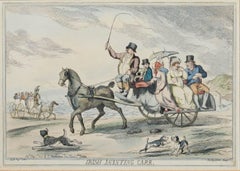
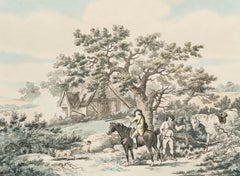
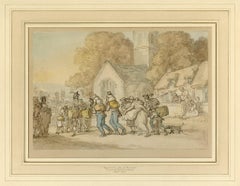
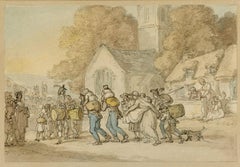
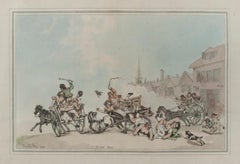
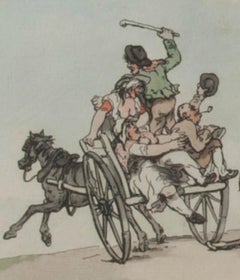
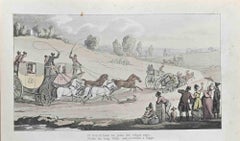
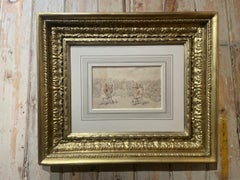
A Cart Race
Hand colored etching & aquatint, 1788
Signed in the plate (see photo)
Published by William Hollande, London
Inscribed in the plate with title, artist's name and publication line 'Rowlandson. 1788./ London. Pubd 1789 by Wm Holland No 50. Oxford Street.'
Reference: M.Dorothy George, 'Catalogue of Political and Personal Satires in the British Museum', VI, 1938)
British Museum Satires 7607
Grego, 'Rowlandson', i. 260, Grego II.392
Provenance: Chris Beetles Ltd., London (label), 2003
Jeffrey M. Kaplan, Washington, D.C.
(label)
Fursten zu Oettingen-Wallerstein, Lugt 2715a,
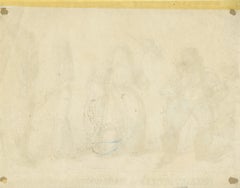
verso (see photo)
Condition: Excellent
Printed on 18th century laid paper
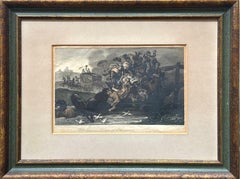
Archival framing by Chris Beetles Ltd., London
Note: The British Museum has two impressions, one trimmed the other full sheet as this example. Accession Number: 1868,0711.35
The Metropolitan Museum has an impression: Accession number 59.533.314
Fitzwilliam Museum: Accession number: 34.14-286
Cleveland Museum of Art accession number: 1958.10
Image description per BM: Three ramshackle two-wheeled carts drawn by wretched horses race (right to left) against a background formed by the church...
Note: The British Museum has two impressions, one trimmed the other full sheet as this example. Accession Number: 1868,0711.35
The Metropolitan Museum has an impression: Accession number 59.533.314
Fitzwilliam Museum: Accession number: 34.14-286
Cleveland Museum of Art accession number: 1958.10
Image description per BM: Three ramshackle two-wheeled carts drawn by wretched horses race (right to left) against a background formed by the clouds of dust which they have raised, with a row of gabled houses (right) inscribed 'St Giles', terminating in a church spire (left), and probably representing Broad St. Giles. The occupants of the carts are Irish costermongers typical of St. Giles. The foremost horse gallops, urged on by the shouts of a standing man brandishing a club. The other occupants, two women and a man, cheer derisively the next cart, whose horse has fallen, one woman falling from it head-first, another lies on the ground. The driver lashes the horse furiously. The third cart, of heavier construction, is starting. The horses are partly obscured by the clouds of dust, but denizens watch from casement windows and a door. Two ragged urchins (right) cheer the race; a dog barks.
"It was said that the amount of copper Thomas Rowlandson etched would sheathe the British Navy. An inveterate gambler, for much of his life Rowlandson had to produce a flood of his comic prints to stay ahead of financial losses.A wealthy uncle and aunt raised Rowlandson after his textile-merchant father went bankrupt. His career developed quickly. He entered London's Royal Academy Schools in 1772, visited Paris in 1774, exhibited at the Royal Academy in 1775, and won a silver medal in 1777. He left school in 1778 to set up in business. Rowlandson's depictions of life in Georgian England exposed human foibles and vanity with sympathy and rollicking humor. During the 1780s he consolidated the delicate style he used for his coarse subjects. He worked mainly in ink and watercolor, his rhythmic compositions, flowing line, and relaxed elegance inspired by French Rococo art...
Category
1780s Romantic Thomas Rowlandson Art