Palatial Sculpture of Henri Robert-Marcel Duchamp by Ursula Meyer
By Ursula Meyer
Located in Stamford, CT
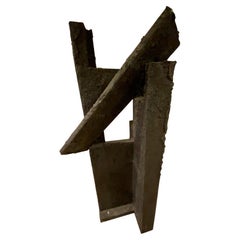
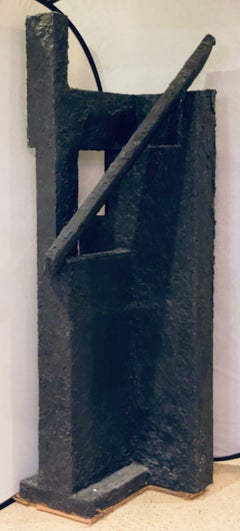
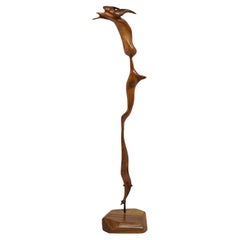
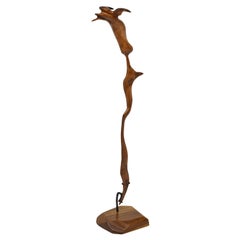
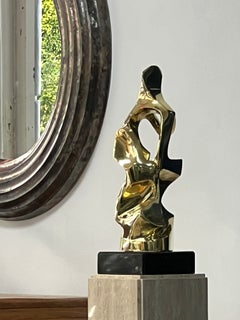
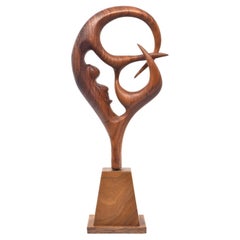
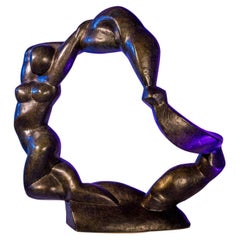
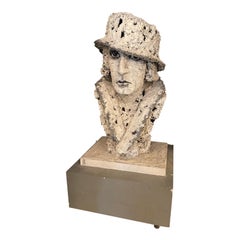
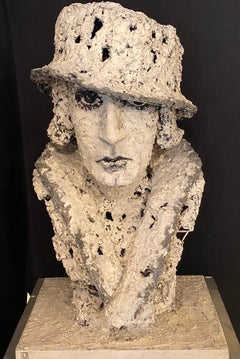
Palatial bust of Henri Robert-Marcel Duchamp by Ursula Meyer. The sculpture itself measures 47" in height, 27.5" in width, and 21.5" depth acquired from the home of the most prolific American conceptual artist. Signed and dated. Provenance: From the Estate of Ann Pollon Re: The Collection of Ursula Meyer. Descendant. Acquired from the artist. Henri-Robert-Marcel Duchamp French: (28 July 1887-2 October 1968) was a French-American painter, sculptor, chess player, and writer whose work is associated with Cubism, Dada, and conceptual art He was careful about his use of the term Dada and was not directly associated with Dada groups. Duchamp is commonly regarded, along with Pablo Picasso and Henri Matisse, as one of the three artists who helped to define the revolutionary developments in the plastic arts in the opening decades of the 20th century, responsible for significant developments in painting and sculpture. Duchamp has had an immense impact on twentieth-century and twenty first-century art, and he had a seminal influence on the development of conceptual art. By the time of World War I he had rejected the work of many of his fellow artists (such as Henri Matisse) as "retinal" art, intended only to please the eye. Instead, Duchamp wanted to use art to serve the mind. Ursula Meyer was a German-born American sculptor, art-focused academician, and fine art critic, who proved an influential player in the transmission of and appreciation for European born Modernism to the United States in the post-World War II era. At first a ceramicist beholden to the teachings of 1930s Germany’s Bauhaus and Italy’s Futurists, she eventually became a creator and exponent of a crisp, geometry-focused sculptural lexicon in ceramics, and later wood and metal sculpture. Her legacy includes a decades-long exploration of Minimalism, as well as experimentations in creating and deciphering Conceptual and Expressive genres. Born in Hanover, Germany in 1915 to Ernst Josef Meyer and Elsa Katzenstein, Ursula Meyer is recorded as having “studied with former Bauhaus masters after the Bauhaus itself had closed under threat of National Socialism” in 1933. Spanning the years 1934 through 1937, Ursula’s Bauhaus tutorial is not fully documented, but it may well have included at least brief study with the French-born Marguerite Friedlaender Wildenhain (1896-1985), the first woman to earn the Master Potter certification in Germany, and who worked with Paul Klee, Wassily Kandinsky, Max Kehan and Gerhard Marcks (1889-1981). Meyer is recorded as having directly worked with Marcks, as well as with Otto Lindig...
1970s American Mid-Century Modern Vintage Ursula Meyer Furniture
Wood