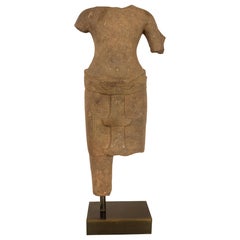
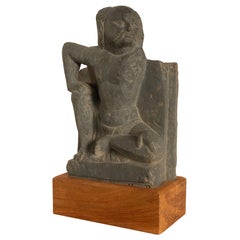
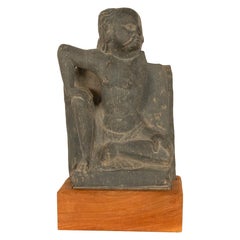
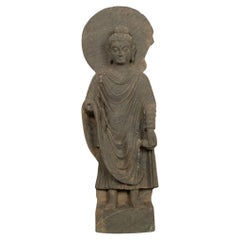
A finely carved Ancient Gandharan statue of Atlas, Kushan Empire, 2nd-3rd century CE.
The Gandharan "Atlas figure" is depicted as a powerful, muscular male figure that emerged from Greco-Buddhist art (2nd-3rd century CE) that adopted the Greek Titan Atlas, sometimes the figure is portrayed with wings. This figure appears crouched with one knee raised high with his arm resting above, the other hand on his other knee resting down. The statue is bare chested and is wearing a pleated kilt type garment (Fustenella), he sports a substantial moustache and tresses of hair to the raer of his head.
The statue has a museum accession code to the rear, "1365.78". The statue will be accompanied with a COA.
This figure blends the culture of ancient Greece with Indian Hindu and buddhist influences. The figure is made of gray schist, it showcases the fusion of Hellenistic and Indian styles, very often such figures were used as ornamental supports (Stupas) for Buddhist monuments.
Provenance
From an important West Coast collection of antiquities
Literature
For related examples in various attitudes, see W. Zwalf, A Catalogue of the Gandhara Sculpture...
Category
Antique 15th Century and Earlier Indian Antiquities