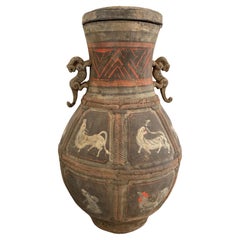
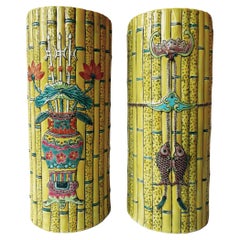
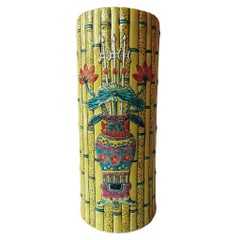
Faux bamboo Chinese vases were a type of decorative art that emerged during the Qing Dynasty (1644-1912) in China. These porcelain vases were designed to mimic the appearance of bamboo, a plant highly regarded in Chinese culture for its resilience, elegance, and symbolism. Bamboo is associated with attributes such as flexibility, strength, and modesty, making it a popular motif in Chinese art.
In the Qing Dynasty the color yellow held significant symbolism and represented imperial authority, power, and the emperor himself. Yellow was considered the most sacred and prestigious color in Chinese culture, and it had strong associations with the emperor's position as the Son of Heaven and the ruler of all under heaven.
The marks at the bottom of the vases indicate that these were crafted more specifically during the Tongzhi period – an emperor who reigned from 1861 to 1875, which effectively lasted nthrough his adolescence and was largly overshadowed by the rule of his mother, Empress Dowager Cixi. Although he had little influence over state affairs, the events of his reign gave rise to what historians call the “Tongzhi Restoration”, an unsuccessful modernization program.
The polychrome enamels representing on one vase a traditional Chinese kite...
Category
Antique Late 19th Century Chinese Chinese Export Ceramics