Located in VALLADOLID, ES
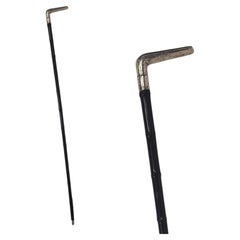
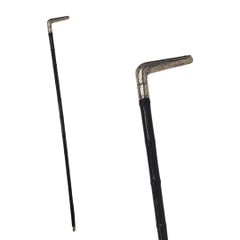
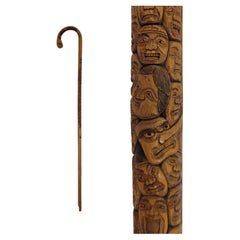
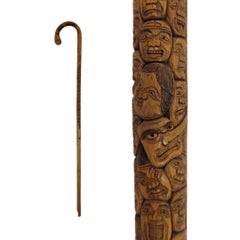
Japanese carved wooden walking stick featuring multiple faces; Meiji period, late 19th century.
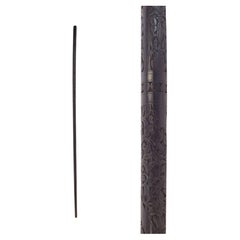
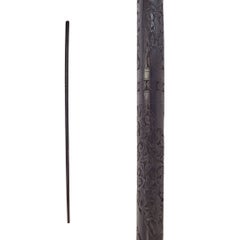
The shaft of the cane, made of thick bamboo, displays a continuous, overlapping relief—reminiscent of a totem pole—depicting various theatrical masks that represent characters from Japanese artisanal and folklore traditions.
The expressions range from serene to intensely dramatic and theatrical.
Among the masterfully carved masks featured on the cane, one can recognize:
- Hannya: a female demon consumed by jealousy.
- Oni: a demon used to ward off bad luck.
- Tengu: a long-nosed mountain spirit that protects forests and martial arts.
- Mempo: an iron or leather samurai mask designed to intimidate the enemy.
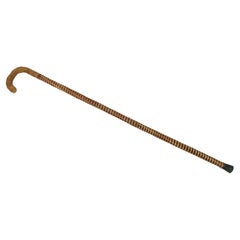
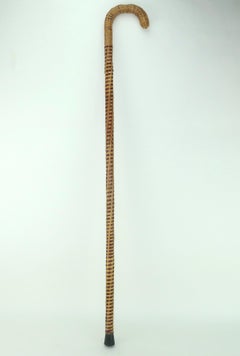
The handle is curved like a shepherd's crook and features a textured finish with the characteristic knots and rings found in bamboo root.
The entire cane bears a beautiful, aged patina.
In Japan, masks blend art, classical theater, and spiritual beliefs, forming an integral part of popular folklore.
Originating in Korea, masks in Japan took on greater significance from the 14th century onwards as they became part of Noh theater.
Carved from wood, they featured expressions so diverse and lifelike that they could evoke genuine emotion.
(The cane has a small loss of bamboo at the tip, which does not detract from the piece as a whole.)
Item: Japanese walking stick...
Category
1890s Japanese Canes and Walking Sticks