By Jan Henkels
Located in New Orleans, LA
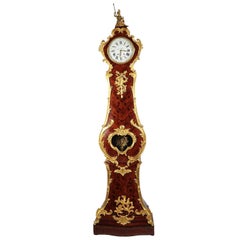
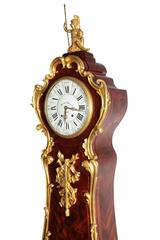
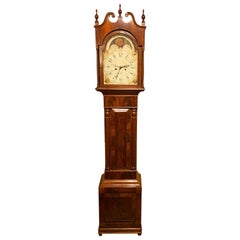
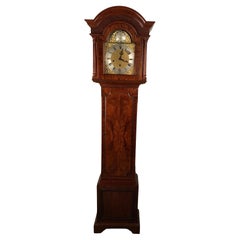
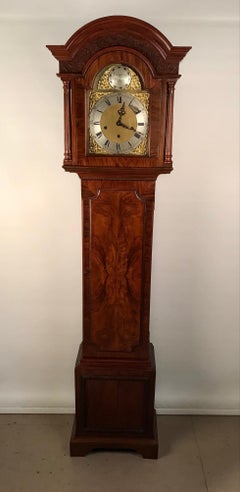
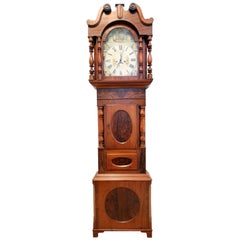
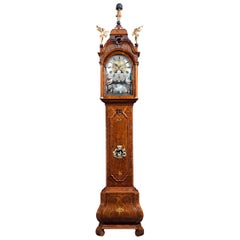
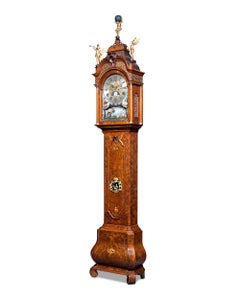
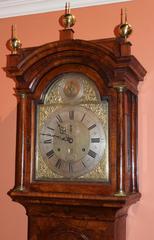
An exceptional example of 18th century Dutch clockmaking, this marvellous longcase clock was crafted by Jan Henkels of Amsterdam (c.1722-1778), one of the most respected of the great Dutch clockmakers. The late Baroque-style case is exemplary of those clocks commissioned specifically by the wealthy, featuring lush timbers and ingenious mechanical features that were utilized for only the most important timepieces of this period.
This particular clock is set apart by the inclusion of an exceptionally rare and elaborate “scheepjes mechaniek”, or automaton ship mechanism. The automaton brings to life the Greek mythological tale of Perseus’ rescue of the princess Andromeda from the fury of Poseidon. The god had sent the sea monster Cetus to kill the helpless princess. Perseus is seen slaying the fire-breathing creature, as the mechanism allows the hero’s head to turn. Above, the hero’s steed, the winged Pegasus, flies back and forth surveying the scene, while Dutch sailing ships watch the spectacle while rocking with the tumultuous waves.
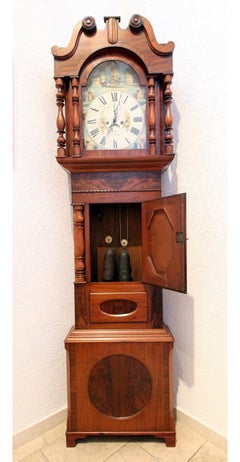
The 8-day movement within is a brass-plated anchor escapement with a pendulum that also operates the ship automaton. The striking train mechanism features Dutch striking (the hours and half hours are rung on low- and high-pitched bells, respectably) and quarter-hour striking on two additional bells. The movement is distinguished by the very rare addition of an alarm, which can be set with the desired time. The going, alarm and striking trains are weight driven.
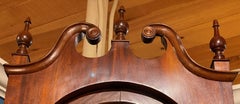
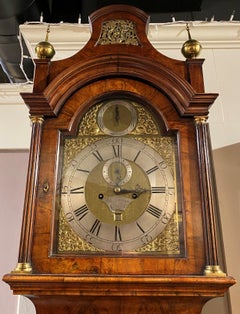
The clock’s face is technically advanced for the period, featuring indicators for the hours, minutes, seconds, month, day, date, and moon phase. The triangular-shaped apertures, which in this case are used for the calendar information and alarm setting, are characteristic of fine Dutch clocks of this time and are an important feature that helps to date the timepiece. The majestic clock case is crafted of oak veneered in walnut with elegant citron wood inlays. The beautifully-formed pendulum door features a cast brass ornament of Chronos, while the figures of Atlas and a pair of trumpeting angels stand atop. Adding an air of elegance to the case is its bombé formed base, which became a distinguishing feature of mid-18th century Dutch longcase clocks...
Category
18th Century Dutch Baroque Antique Veneer More Clocks