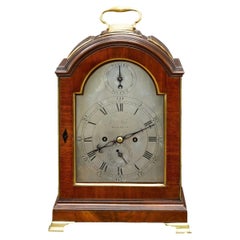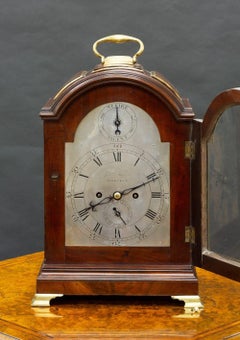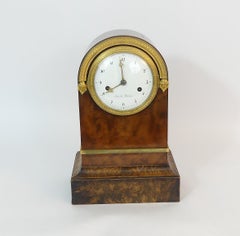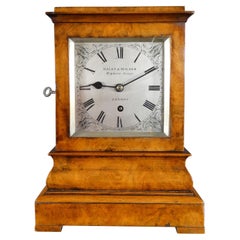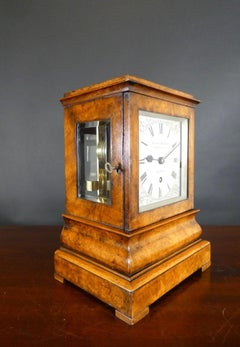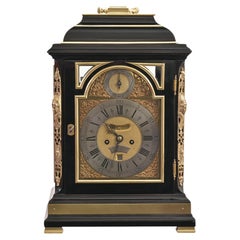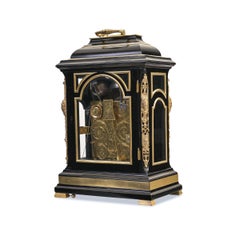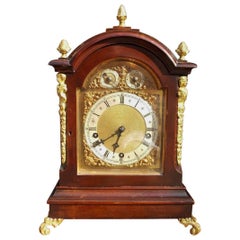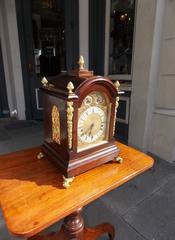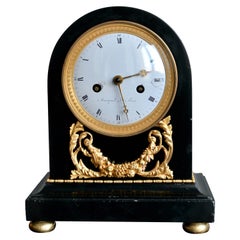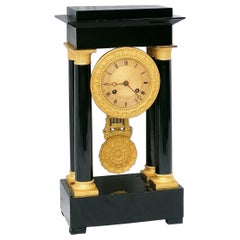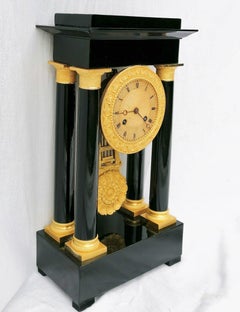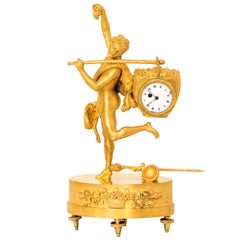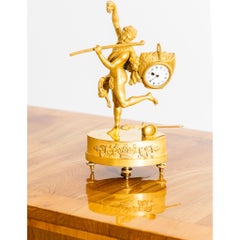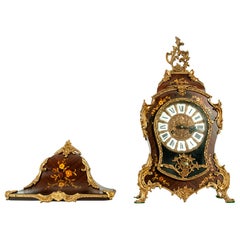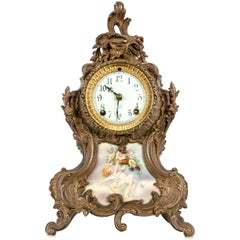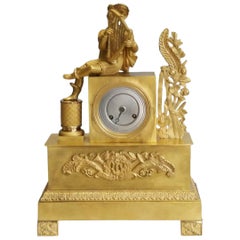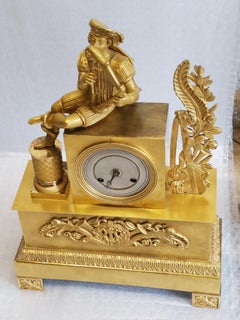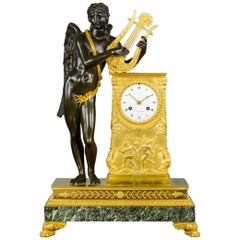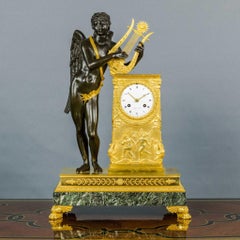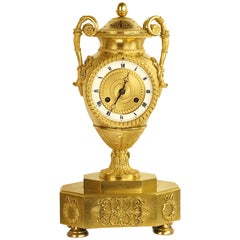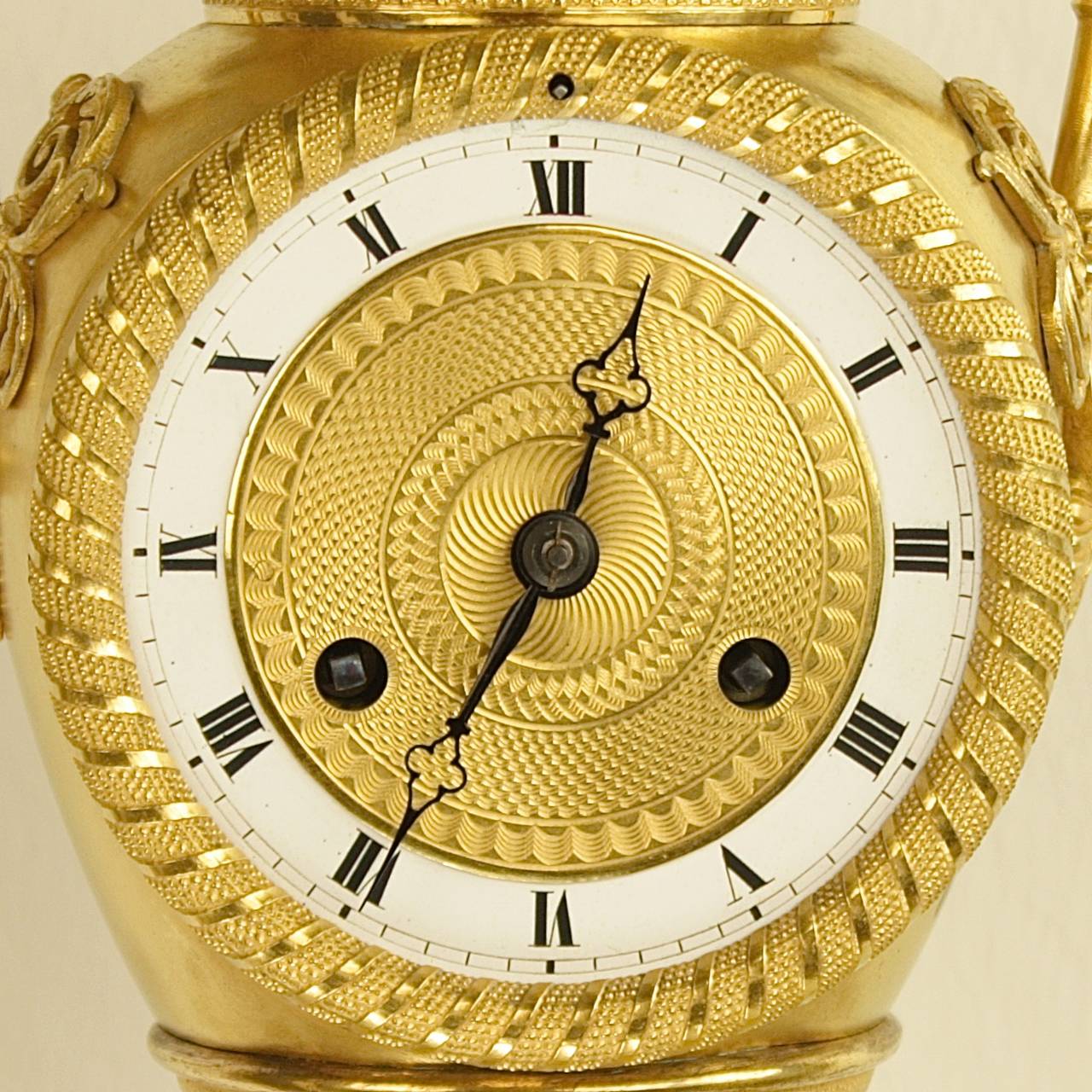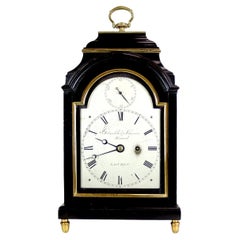
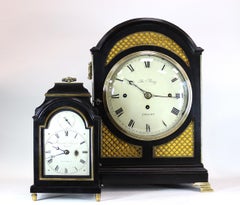
Grimaldi and Johnson, Strand, London. Miniature Bracket Timepiece
By Grimaldi & Johnson
Located in Amersham, GB
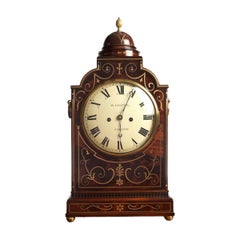
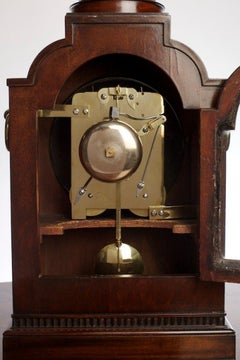
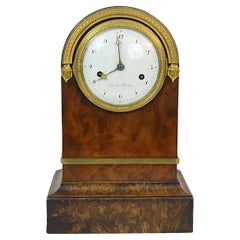
A very fine and rare miniature bracket timepiece made by one of Britain’s most revered horological partnerships. The eight day single fusee movement held by four turned pillars with anchor escapement, adjustable lenticular pendulum and hold fast, is of exceptional quality. Housed in an ebonised and glazed bell top bracket clock case of a design particularly associated with this firm, the silvered roman dial with subsidiary date dial in the break arch is signed and also on back plate. This clock is in excellent original condition with a fully glazed back door and side panels with the U shaped carrying handle, a distinctive trademark of Grimalde and Johnson, standing on turned acorn feet. William Johnston is first recorded in partnership with Peter Grimalde between 1810 and 1825, before setting out on his own, Grimalde & Johnston were celebrated precision chronometer makers, and are known for making this style of miniaturised bracket clock during this period in very limited numbers. Examples of clocks by Grimalde and Johnson can be found in, “The Georgian Bracket Clock, 1714-1830” by Richard Barber and “English Bracket and Mantel Clocks” By Andrew Nicholls...
English Regency Antique 1810s Table Clocks and Desk Clocks
Brass, Steel