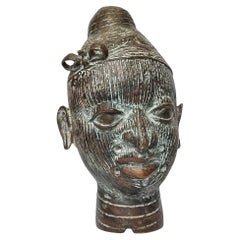
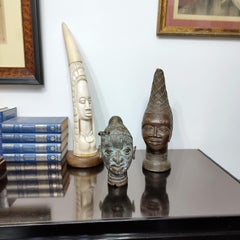
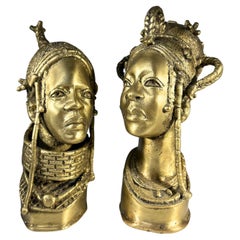
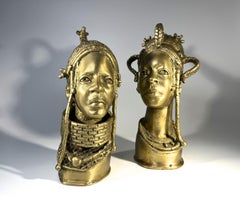
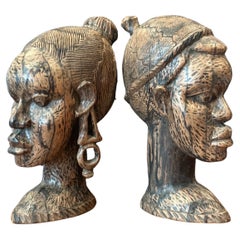
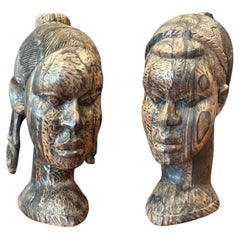
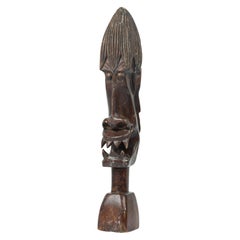
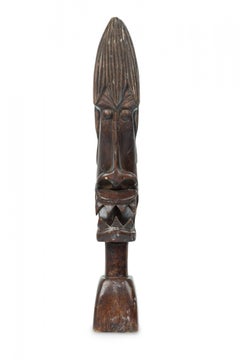
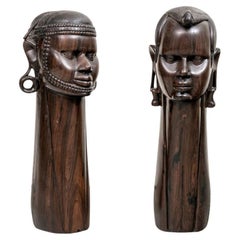
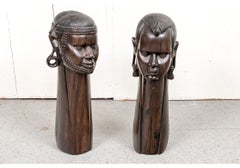
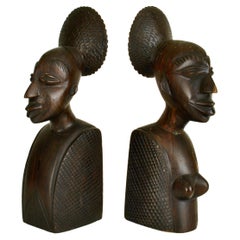
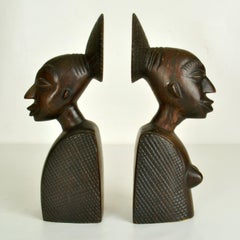
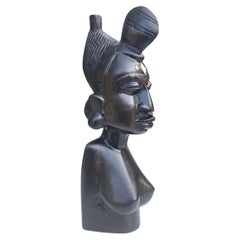
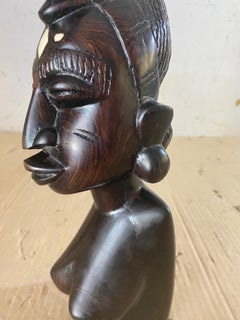
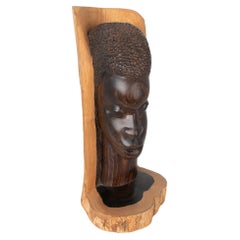
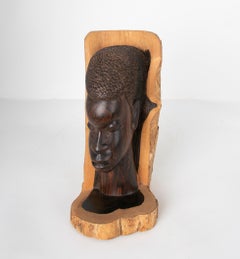
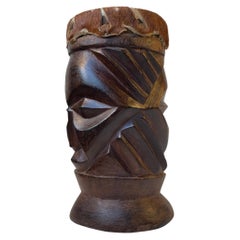
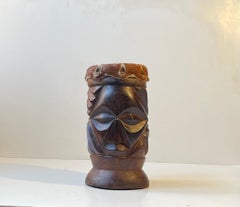
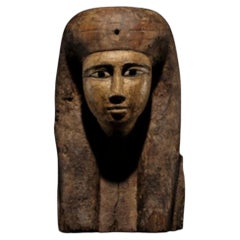
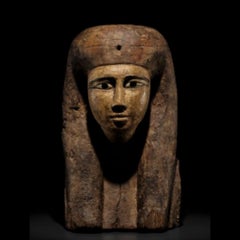
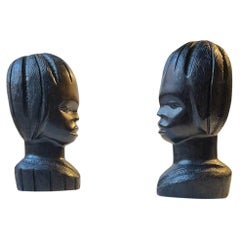
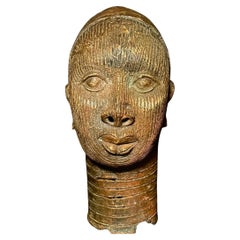
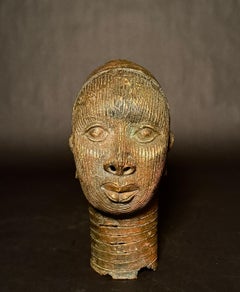
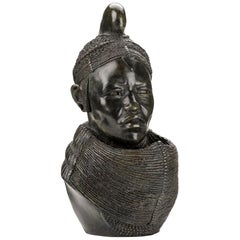
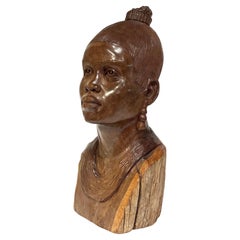
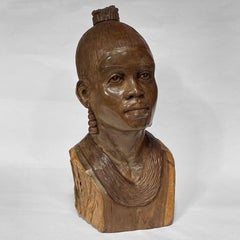
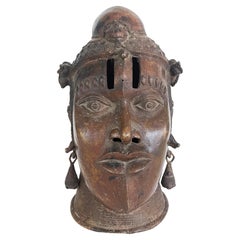
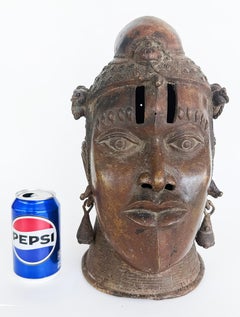
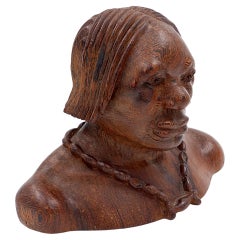
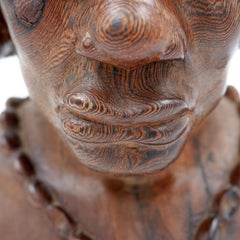
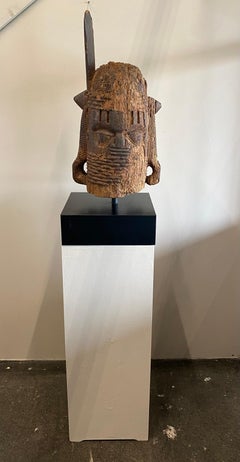
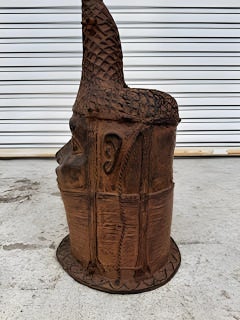
Carved from reddish brown hardwood, the hollow form rises from a cylindrical neck, the lowest part being a rounded base, then surrounded by diagonal sections. The neck is surrounded by nine rows of coral beaded necklaces (odigba) that extend to a thread motif on the back of the head. Face in full relief with straight lips, flared, flattened nose and oval eyes with set shell (nut) for the pupils. Along the forehead are six frontal scars treated with rectangular cavities in which should have inserts nutshells. In this case there is only one left
Small ears on each side of the head, each C-shaped. A headband consisting of three rows of almost completely distroyed.
On the right side of the head, a single feather extends upward from a beaded rosette. Behind the ear, two long braids of hair hang down to the beaded collar and then become bows that reach the roots. The left side of the head has a long, single braid behind the ear that hangs down to the beaded collar and becomes a bow that ends at the base. On each side, three strands of hair appear at the temples under the headband. Featuring an open hole with a circular motif on the top of the head and a rectangular open slit down the back. Insect damage in different areas; very old worn finish showing a lot of age.
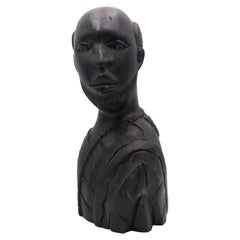
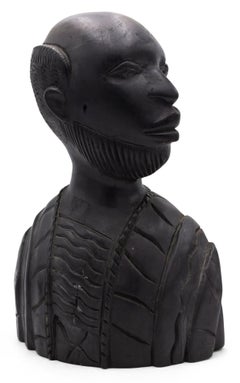
Very heavy insect damage in all areas; very old worn finish showing a lot of age.
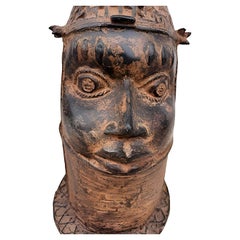
“Wooden shrine heads were permitted to sit on the altars of chiefs and important figures, in contrast to the copper alloy heads used exclusively by the kings of Benin. (Frederic Backlar, Bonhams, New York, 2012, lot 172)
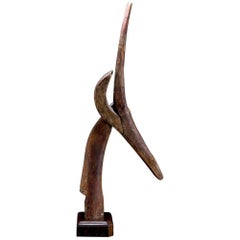
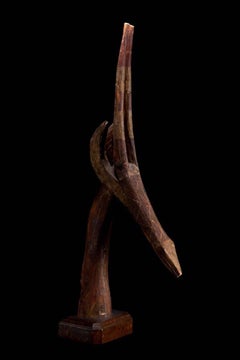
Osemwede (reigned 1816-1848) was the first Oba to decree that human heads could be carved for the altars of chiefs of royal lineage, rather than just wooden antelope and perhaps goat heads. Therefore, chiefs of blood enjoyed in Benin City (but not throughout the Kingdom of Benin, where antelope heads continued to be placed on the altars of their ancestors well into the 20s. Thus, the (wooden) human heads are said to be later than ca. 1816, but the actual age depends condition, insect damage, etc." (Fagg, William, Christie's, London, 1988, lot 206)
"Feathers were worn by chiefs as a sign of status. The heads have a hole at the top intended to hold a large carved ivory tusk...
Category
Mid-19th Century Antique African Busts