By Richard Yasmine
Located in Geneve, CH
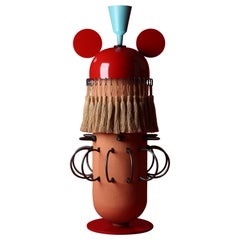
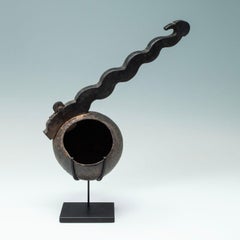
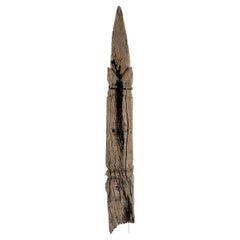
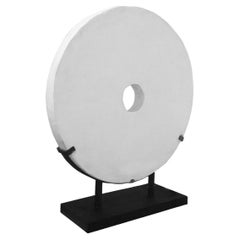
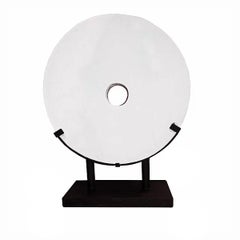
Ô-CULT TOTEM by Richard Yasmine
Materials: Powder coated st.steel, blackened brass, neo cement on st.steel & raffia tassels
Dimensions: Height 120 x diameter 40 cm.
Ô-CULT our latest commissioned design piece for the Ministry of Foreign Affairs of Italy curated by La Triennale di Milano design Museum, a social design project related to the use of water for the exhibition titled “The shapes of Water”.
Water, one of the elements that make up everything in this world. The symbolism of water has a universal trace of purity and fertility, it is the source of life since the ancient cultures and considered an aspect of wisdom that takes the form in which it is held. It does not resist, it flows, but always goes where it wants to go to fill empty spaces.
As water is becoming rare yet more and more precious due to the environmental problems such as global warming, pollution, climate changes etc… our concept, to create a fantastic water safe taking the shape of a mascot /Genie imitating the authentic type of liquid containers descending since the Neolithic period till the ancient Roman era passing by our heritage but definitely in a contemporary Silhouette using multiple materials. In addition to the shape, providing a faucet, using the whole component as a useful water dispenser...
Category
2010s Modern Asian Mounted Objects
MaterialsCement, Brass, Steel