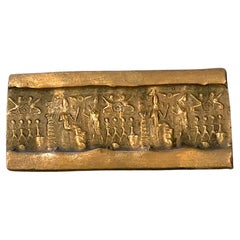
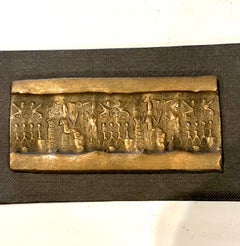
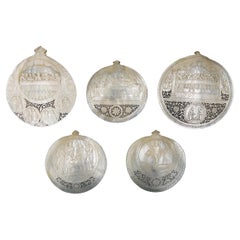
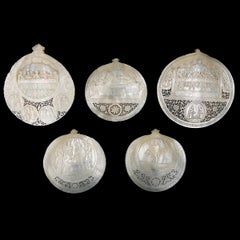
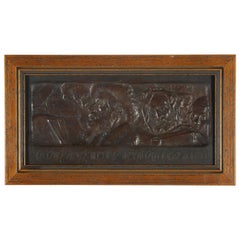
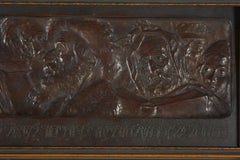
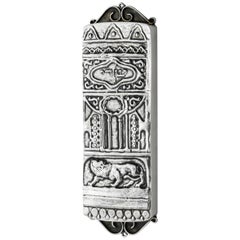
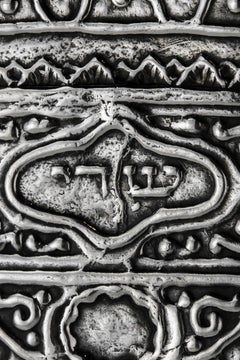
The Mezuzah is a tiny receptacle that houses a parchment scroll which contains two verses from the scriptures. It is attached to the doorway of every Jewish home. Yehia's Mezuzahs followed the "Bezalelite" pattern, meaning that they are of silver, brass, alpaca and copper and include numerous and parallel hammered motifs. Some examples of these motifs are: paired Temple columns with an Oriental roof structure headed by the letter "shin" (denoting "Shadai", a name for G-d), stars of David, or inscriptions such as "and thou shalt write them upon the doorposts of thy house and upon thy gates" (Deuteronomy 6:9). This particular Mezuzah features the Lion of Judah, the frontal face of the Temple of antiquity, and the name "Shadai" in holy lettering.
Yehia Yemini Born in 1897 into a family of San'a silversmiths, Yehia Yemini reached Jerusalem with his family at the young age of three. When Bezalel founded its Silver Department In 1908, Yemini became one of its employees, and helped other Yemenites to forge Bezalel's unique synthesis of East and West. After the dismissals of 1914, Yemini joined three groups of Jerusalem craftsmen who specialized in silver crafting in the manner of Bezalel: "Keter," "Kav Lavan," and "Sharar" (directed respectively by Shneior, Ossanovitch and Rabinovitz). Yemini was exceptionally talented and skilled in blending the traditions of Yemenite silver...
Category
Early 20th Century Israeli Mounted Objects