Located in Hamilton, Ontario
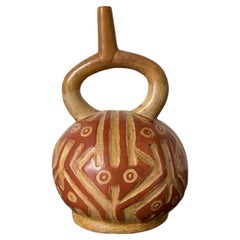
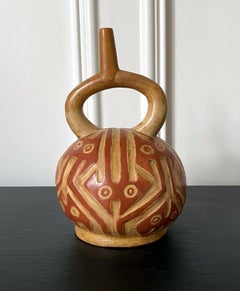
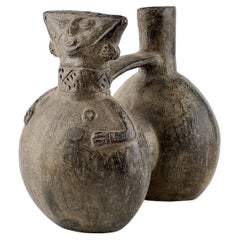
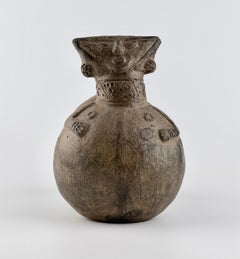
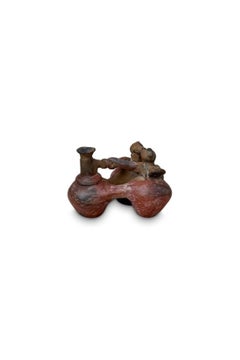
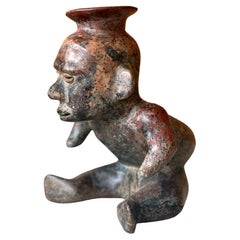
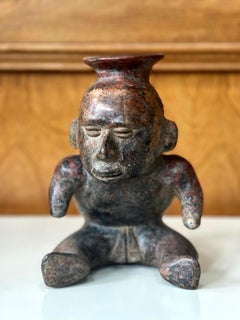
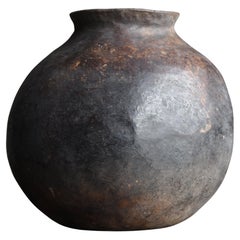
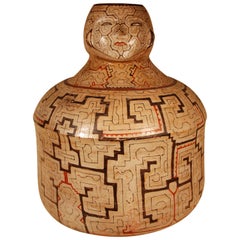
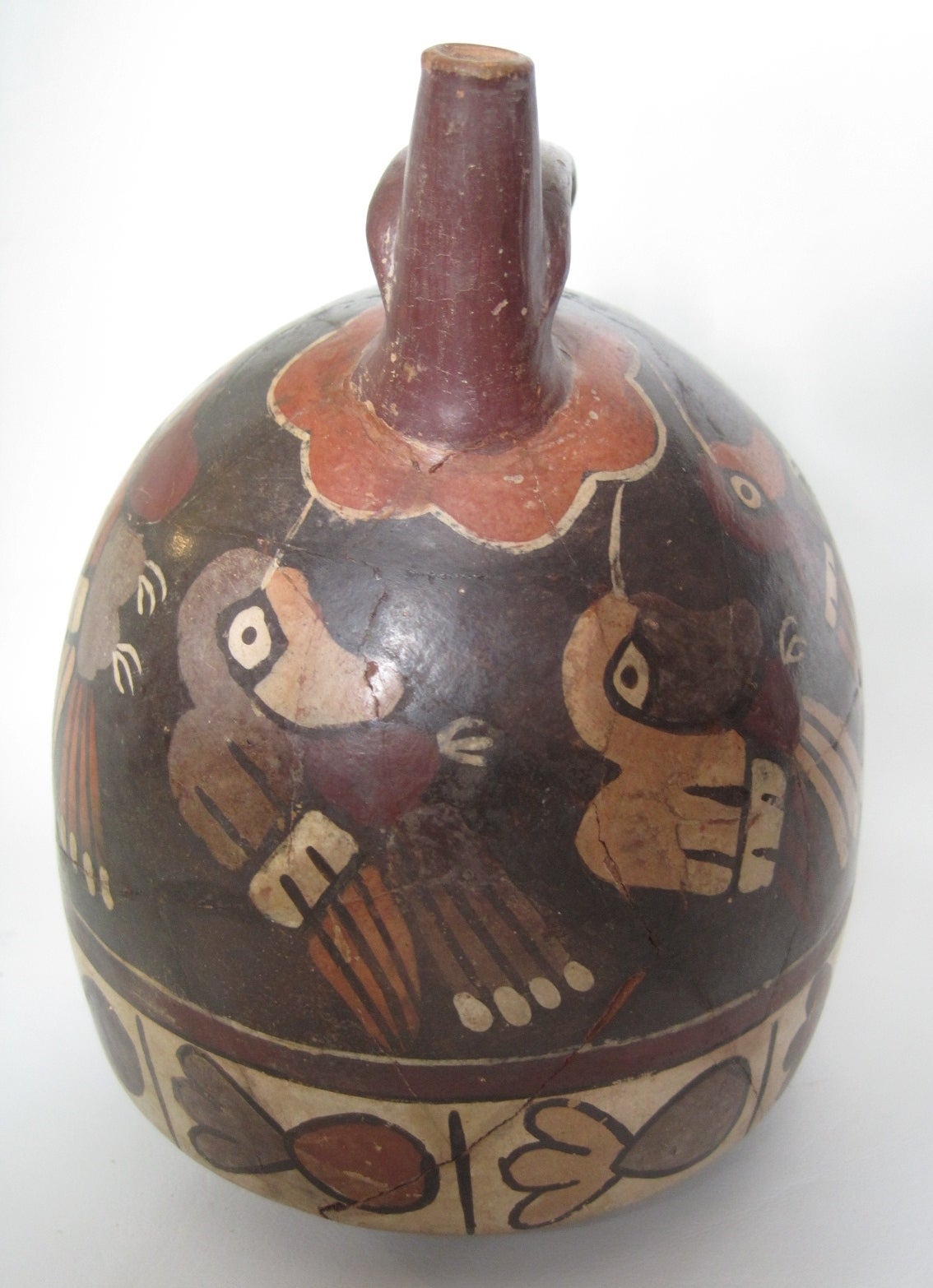
Pre-Columbian Nazca Polychromed pottery vessel, circa 100 B.C.
Double spout and bridge pottery vessel. The exterior is painted in red, orange, light pink, grey, crimson, white and brown, and depict a repeating motif of a multicolored bird with small talons. The two spouts are surrounded by two flowers, while the base is painted with a repeating fish motif.
Not all birds depicted in Nazca art can be identified to a particular species. Some representations are quite naturalistic, while others combine fantastic and anthropomorphic elements. Certain birds are still revered in the Andean region today. The people of the modern town of Nazca believe that the condor and other birds, such as the pelican and the heron, are manifestations of the mountain gods. To catch sight of one of these birds means that rain will fall in the mountains.
The technique and range of colors used on this large vessel mark the peak of Nazca achievements. The number of colors used by Nazca artists is larger than that used by any other culture in the Americas before European contact.
Free Shipping within the United States and Canada.
More on Nazca culture and pottery.
The Nazca culture (also Nasca) was the archaeological culture that flourished from 100 BC to 800 AD beside the dry southern coast of Peru in the river valleys of the Rio Grande de Nazca drainage and the Ica Valley. Having been heavily influenced by the preceding Paracas culture, which was known for extremely complex textiles, the Nazca produced an array of beautiful crafts and technologies such as ceramics, textiles, and geoglyphs (most commonly known as the Nazca lines...
Category
15th Century and Earlier Antique Peruvian Jars