Located in Haddonfield, NJ
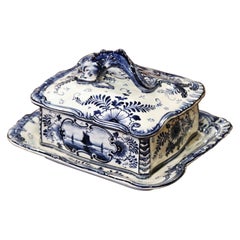
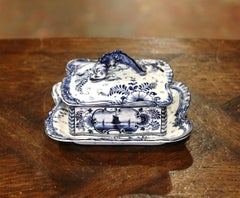
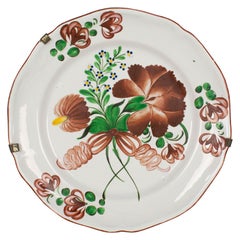
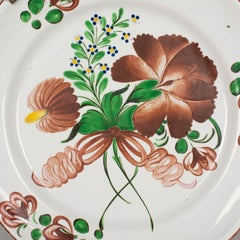
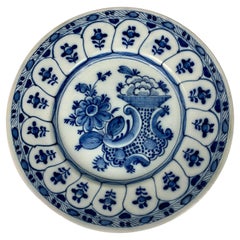
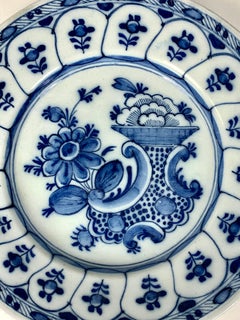
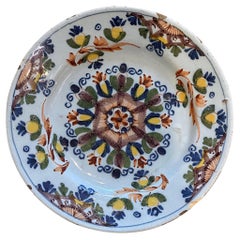
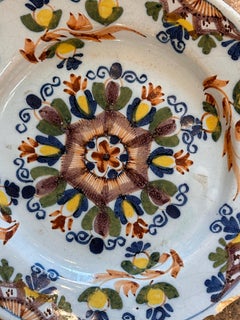
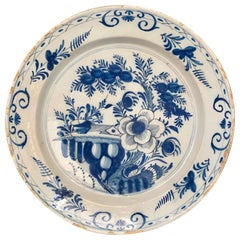
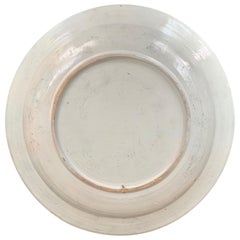
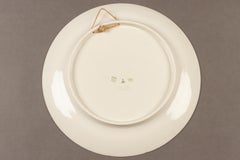
A large Danish (or Northern German) faience charger from circa 1780 in blue and white flower decor.
The decoration is inspired by, or actually exact copies of the contemporary Chinese Qianlong dynasty porcelain that came to Europe during the "Florissant Period", second half of the 18th century. This 1750-1790 period was dominated a "blooming" inter-connected maritime trade between Hong Kong, China and Western Europe, with the Danes, Dutch, English and Swedes being the main merchant participants.
Because the Chinese kept their unique porcelain recipe a deadly secret, the faience factories of Denmark, Germany, France, Sweden etc. decided to simply copy the Chinese decorations, this large charger being a fine example of the workmanship and tradition.
An interesting fact, that in the early 1700 hundreds, the German Meissen Porcelain factory was the first to crack the secret Chinese porcelain manufacturing process, so Meissen enforced the death penalty...
Category
Late 18th Century Rococo Antique Danish Delft and Faience