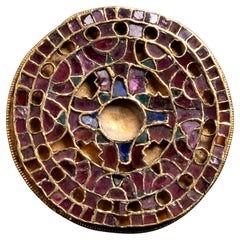
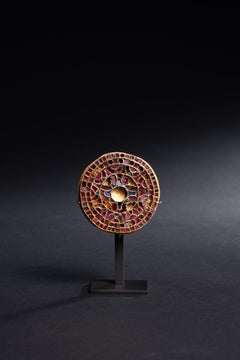
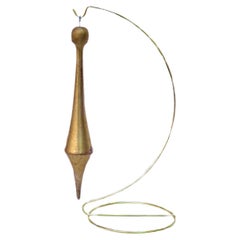
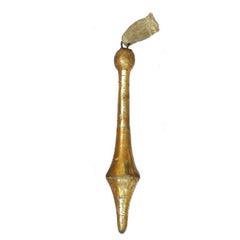
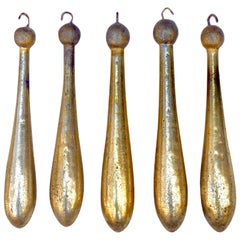
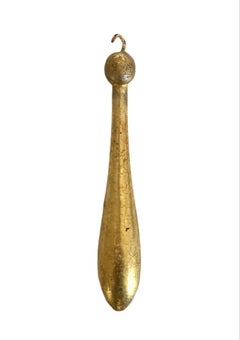
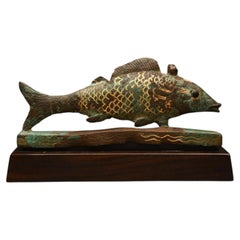
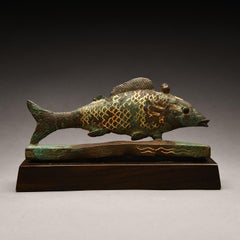
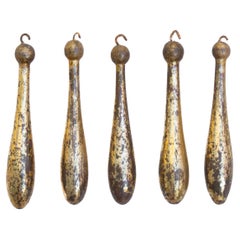
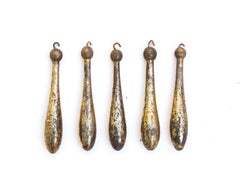
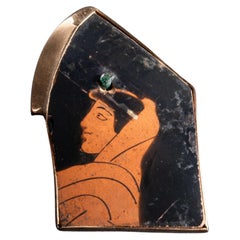
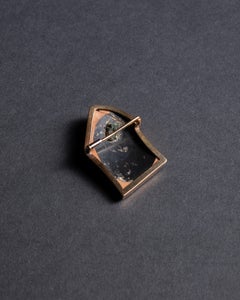
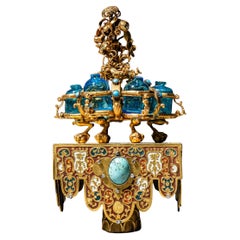
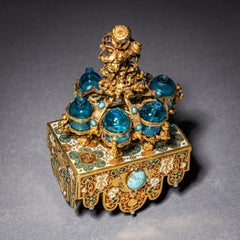
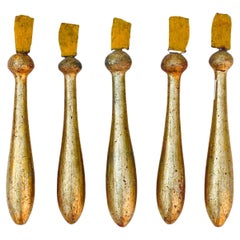
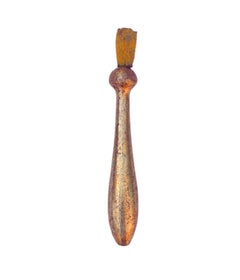
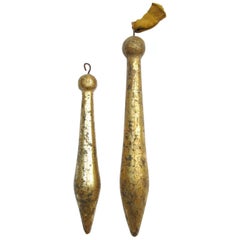
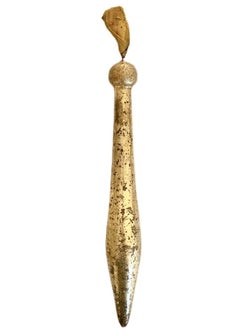
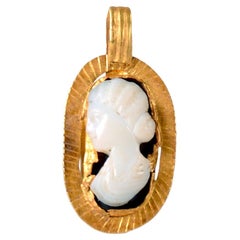
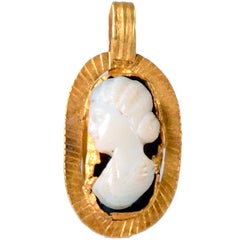
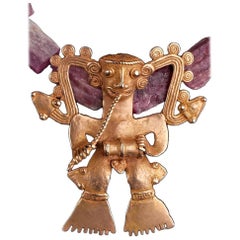
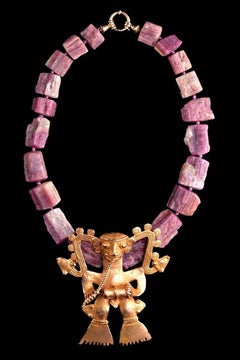
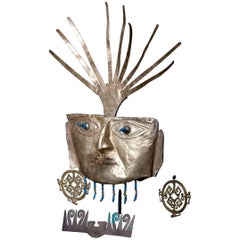
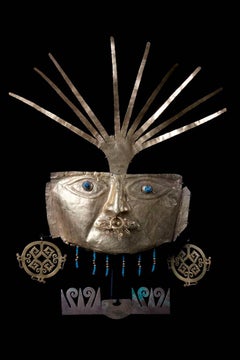
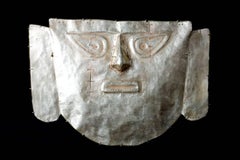
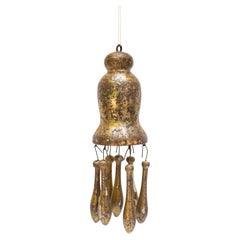
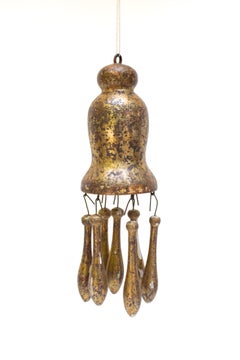
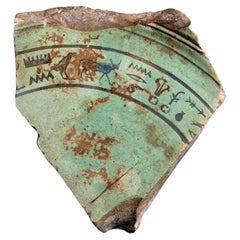
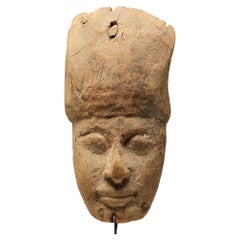
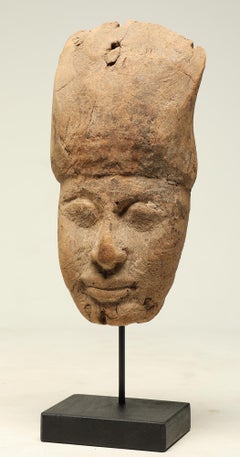
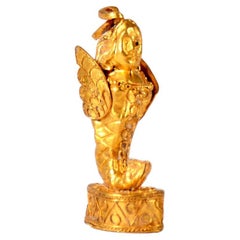
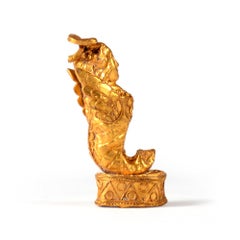
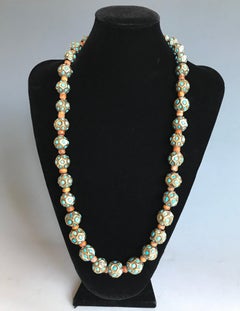
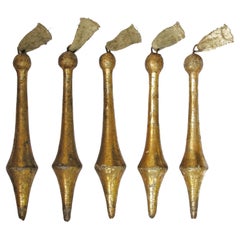
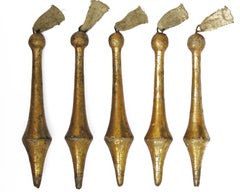
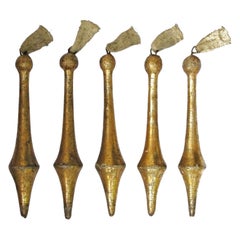
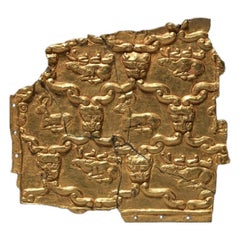
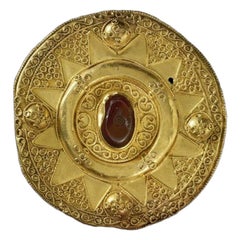
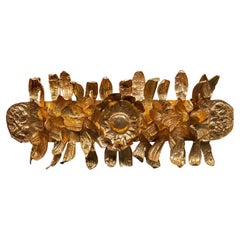
This fragment forms part of the famed Ziwiye hoard of treasure, reputably found in 1947 in modern day Kurdistan. As the contents of a royal tomb of a great ancient king, the pieces were quickly dispersed and only in the following years did the huge significance become understood in scholarship. These objects have become famous as the keystone in explaining underpinning socio-economic and political cultural ties across the silk route, reflected by these works of art. These objects exhibit styles and motifs associated with the four pre-eminent cultures at this juncture in history: Assyrian, Scythian, proto-Achaemenid and the provincial native pieces. The Scythians, a seminomadic people from the Eurasian steppes who moved out from Southern Russia into the territory between the Don and the Danube and then into Mesopotamia are responsible for the basis of an ‘animal style’ design found on the elaborate metalwork and jewellery produced in Central Asian ancient world. This style starts to appear in the 7th century B.C typically on pierced plaques made of gold and silver, which depict running or fighting animals (reindeer, lions, tigers, horses) alone or in pairs facing each other, embossed with powerful plasticity and free interpretation of the forms. The animal- style had a strong influence in western Asia during the 7th century B.C. Such ornaments as necklaces, bracelets, pectorals, diadems, and earrings making up the Ziwiye treasure (discovered in Iran near the border between Kurdistan and Azerbaijan) provide evidence of this Asiatic phase of Scythian gold...
Category
15th Century and Earlier Central Asian Antique Gold Antiquities