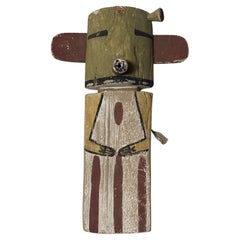
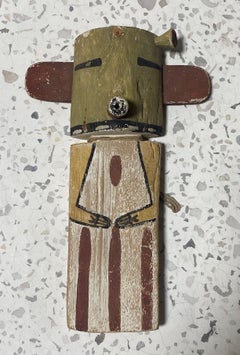
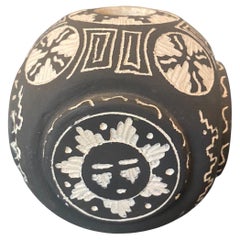
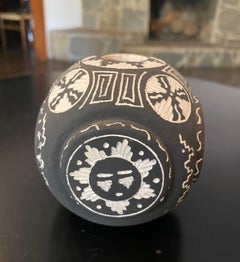
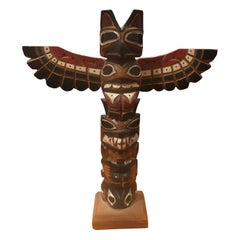
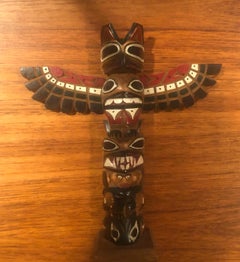
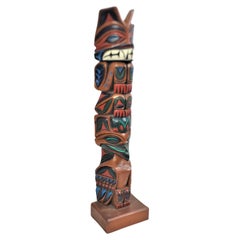
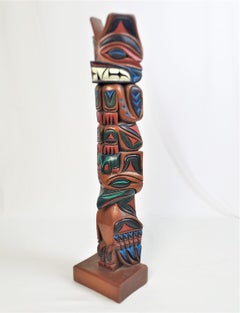
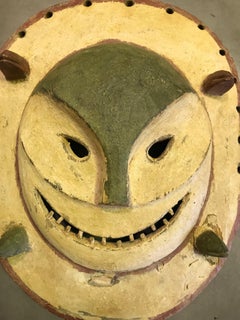
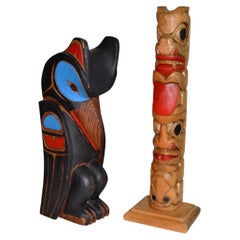
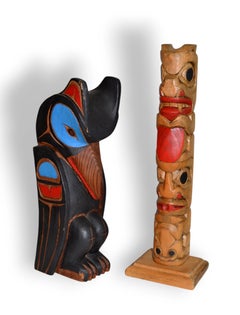
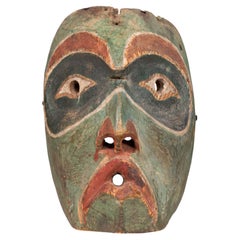
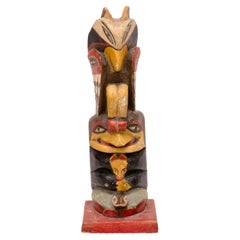
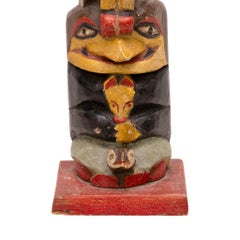
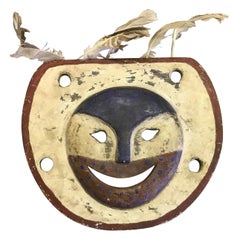
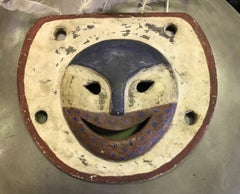
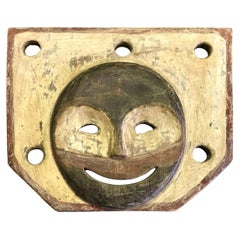
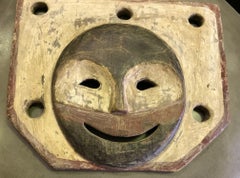
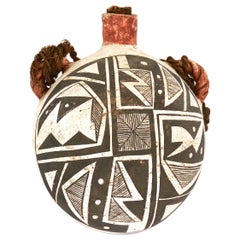
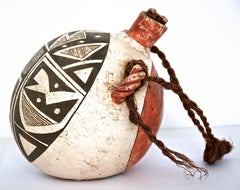
Northwest Coast Killer Whale Mask Attrib. Johnny Johns c.1961 Tlingit
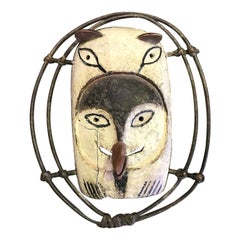
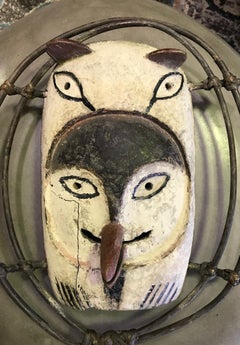
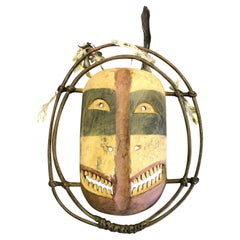
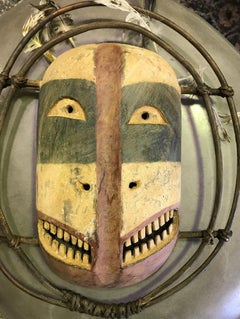
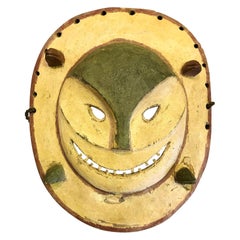
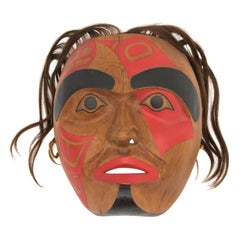
This striking hand-carved Northwest Coast Killer Whale (Orca) mask, dated 1961 and attributed to artist Johnny Johns, is a powerful example of mid-20th-century Native American carving rooted in the traditions of the Pacific Northwest Coast—particularly the Tlingit and related cultural groups.
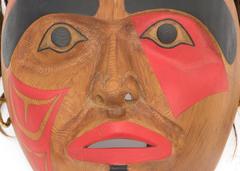
Expertly carved from wood and painted in the classic Northwest Coast palette of deep black and vibrant red, the mask features bold formline design—an iconic visual language defined by fluid, ovoid shapes and precise linework that has been central to Indigenous coastal art for centuries.
The Killer Whale, or “Blackfish,” is among the most important crest figures in Northwest Coast culture, symbolizing strength, protection, family lineage, and a profound connection between the human and spirit worlds. It frequently appears in ceremonial regalia, storytelling, and clan identity, embodying both ancestral presence and supernatural power.
Signed on the reverse with initials “JJ,” this mask is attributed to Johnny Johns, a recognized carver whose work reflects traditional Indigenous design principles while engaging with the 20th-century market for Northwest Coast art. The scale, craftsmanship, and stylistic execution are consistent with works produced for both ceremonial-inspired use and collector audiences during this period.
Compact yet visually impactful, the mask displays strong sculptural depth and expressive detailing, making it ideal for wall display or inclusion in a curated collection of Native American or tribal art. Its bold graphic presence aligns seamlessly with both traditional and modern interiors.
The piece remains in good antique condition, with professional restoration noted—having been repaired after a historical break. The repair is stable and minimally visible, preserving both the integrity and visual appeal of the mask.
Key Features:
Attributed to Johnny Johns, signed “JJ” and dated 1961
Northwest Coast / Tlingit style carving
Hand-carved and hand-painted wood construction
Killer Whale (Orca) crest motif with symbolic significance
Classic black and red formline design
Mid-20th century Native American artwork
Professionally restored with stable structure
Ideal for collectors of Indigenous, tribal, and ethnographic art
A compelling and highly decorative example of Northwest Coast carving...
Category
Mid-20th Century American Native American Hand-Painted Native American Objects