Located in Port Washington, NY
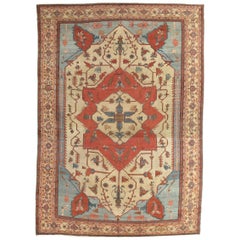
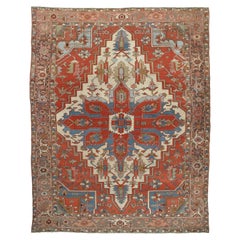
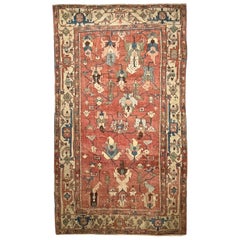
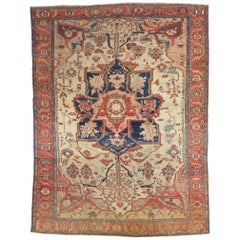
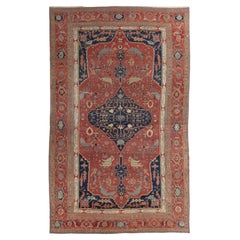
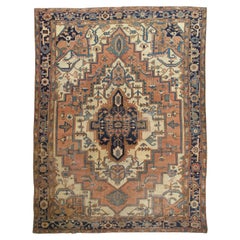
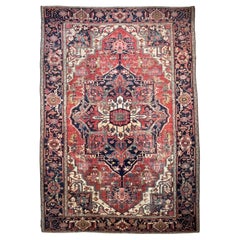
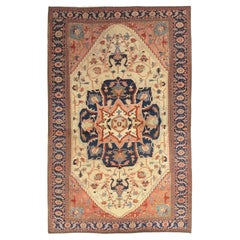
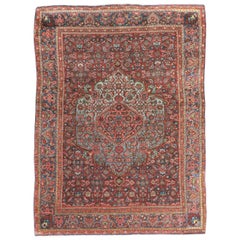
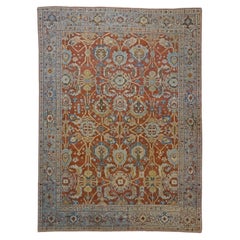
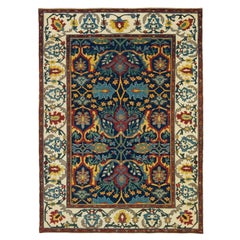
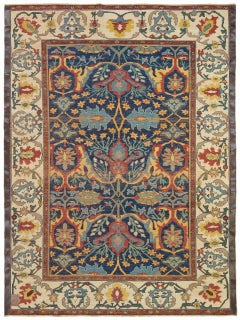
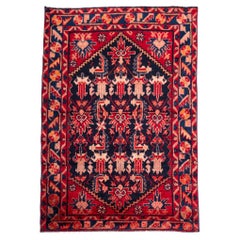
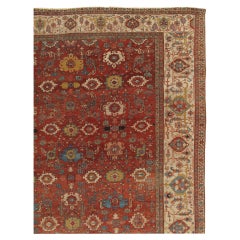
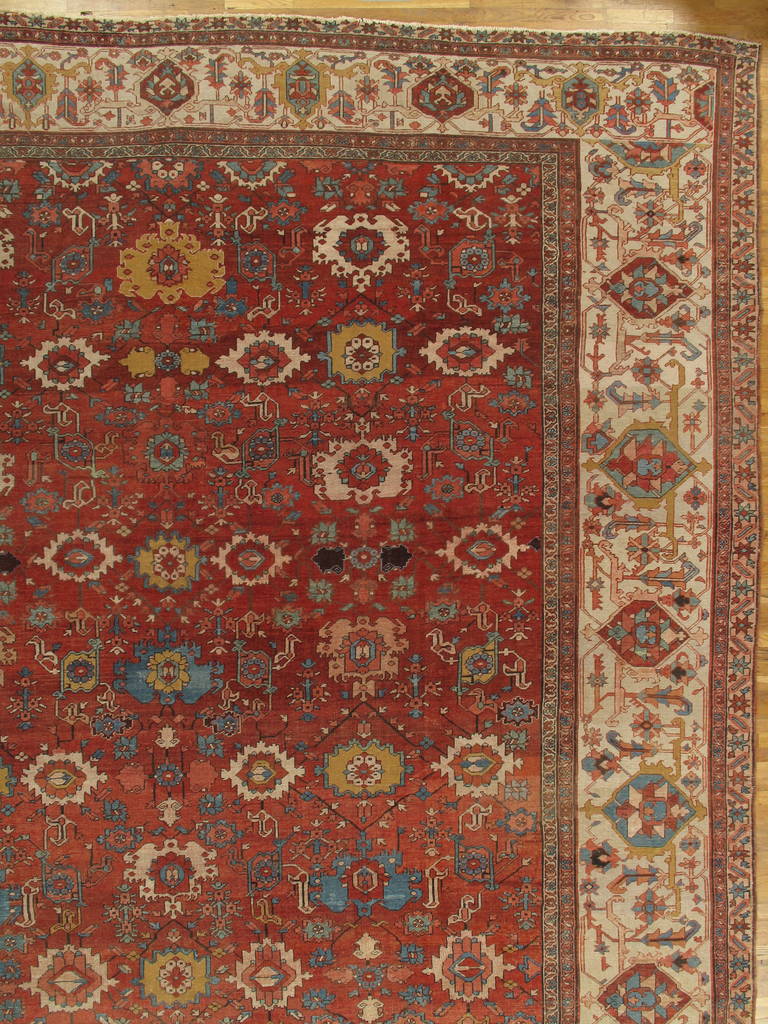
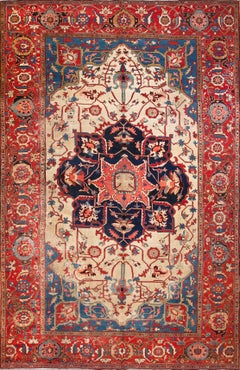
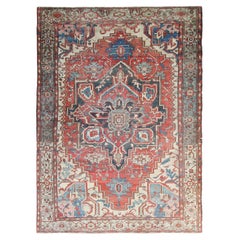
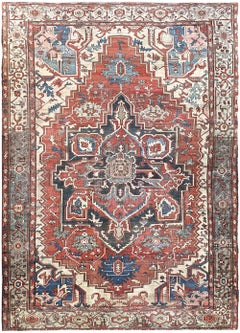
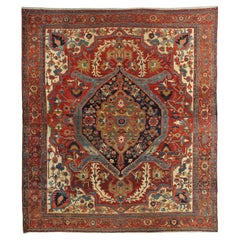
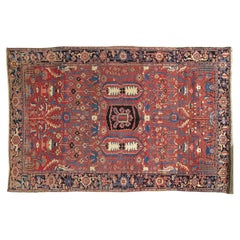
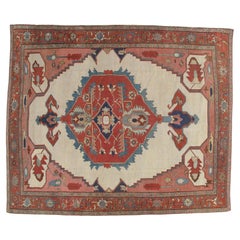
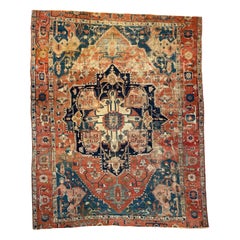
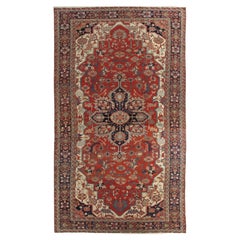
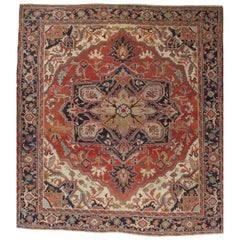
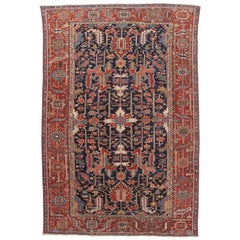
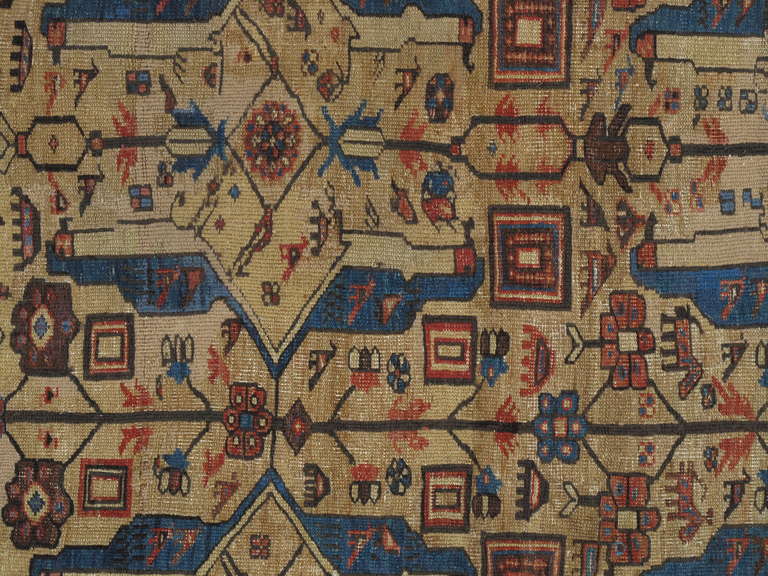
19th century Persian Serapi carpets are some of the most highly prized and sought-after antique Persian carpets in the world. They are characterized by their bold, geometric designs, vivid colors, and exceptional quality.
Serapi carpets were originally woven in the Heriz region of northwestern Iran, but the term "Serapi" was coined by Western carpet dealers in the late 19th century to distinguish a higher-quality version of the Heriz carpet. Serapi carpets were made using the finest wool, which was dyed using natural, vegetable-based dyes. The wool was then spun by hand and woven into carpets using a symmetrical knotting technique.
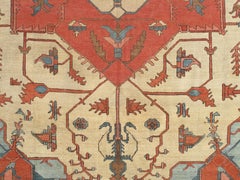
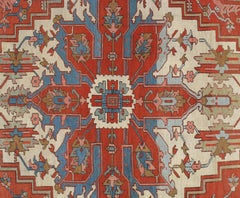
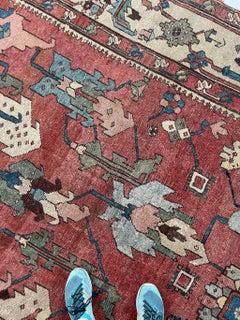
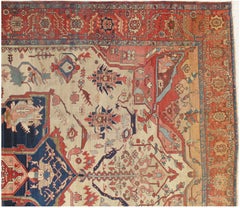
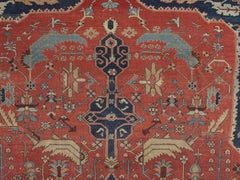
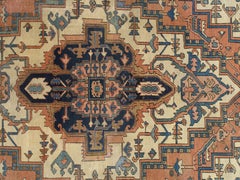
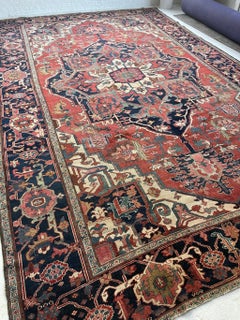
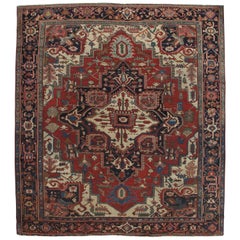
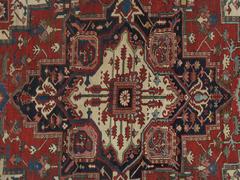
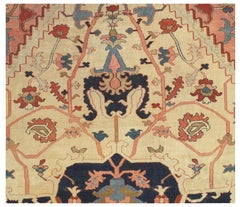
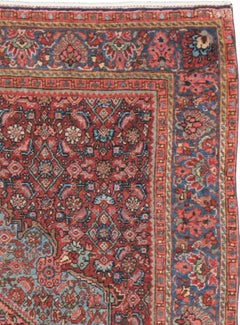
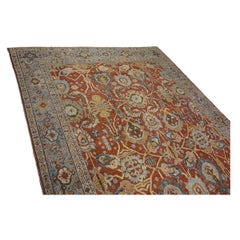
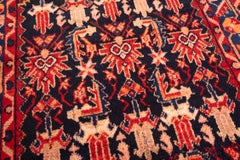
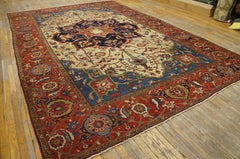
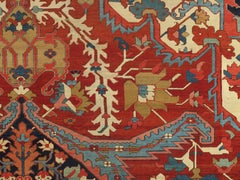
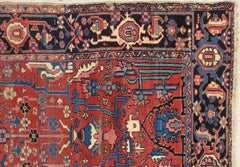
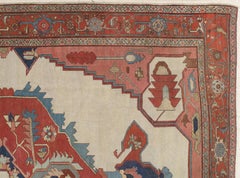
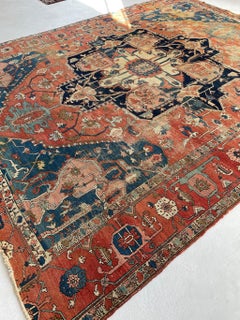
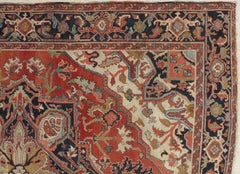
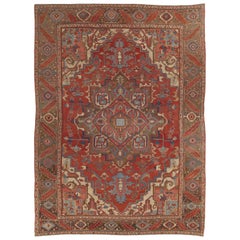
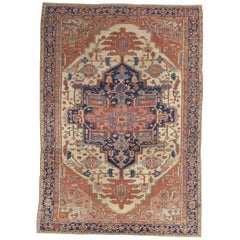
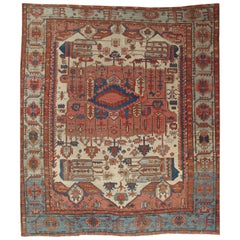
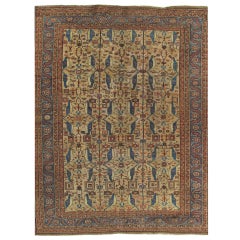
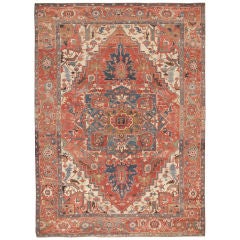
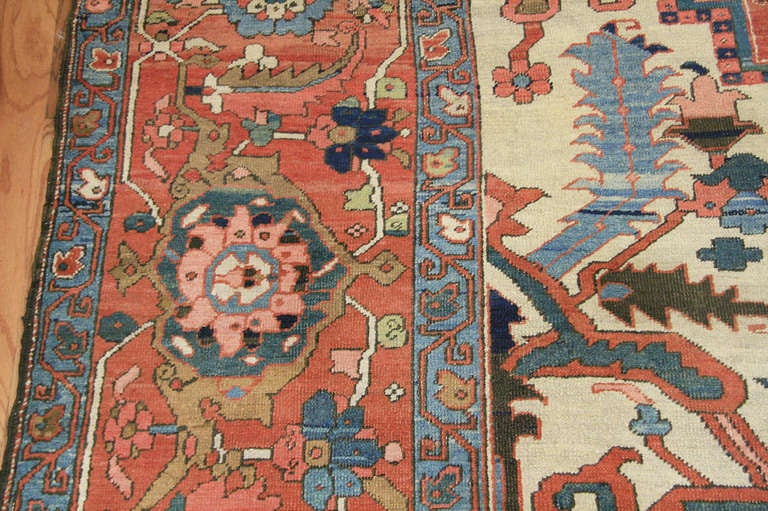
One of the defining features of 19th century Persian Serapi carpets is their bold, large-scale geometric designs. These designs often feature medallions, rosettes, and intricate borders, rendered in a palette of rich, saturated colors such as crimson, indigo, and gold. The colors used in Serapi carpets were achieved through a painstaking dyeing process that involved boiling the wool in vats of natural dyes, such as madder root or indigo.
Another hallmark of 19th century Persian Serapi carpets is their durability and sturdiness. The wool used to make these carpets was of exceptional quality, with a high lanolin content that made it resistant to wear and tear. Additionally, the carpets were woven with a tight, dense pile that added to their strength and longevity.
The size of 19th century Persian Serapi carpets is another factor that sets them apart from other antique Persian carpets. These carpets were typically large, with sizes ranging from 9 feet by 12 feet to 12 feet by 18 feet. Their large size was made custom for use in grand, formal spaces such as ballrooms and reception halls.
Overall, 19th century Persian Serapi carpets are considered to be some of the most beautiful and valuable...
Category
Late 19th Century Persian Antique Serapi Rugs