By Seng
Located in Forney, TX
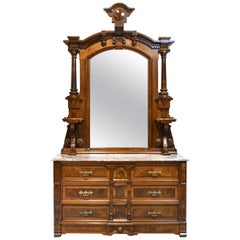
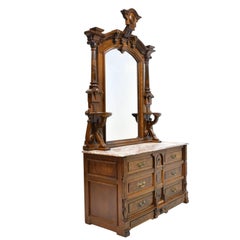
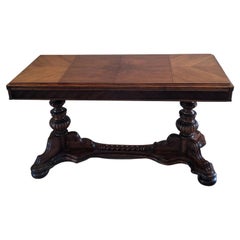
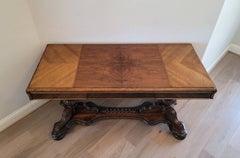
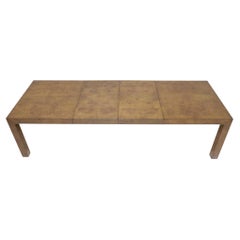
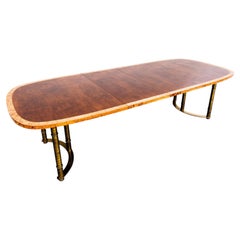
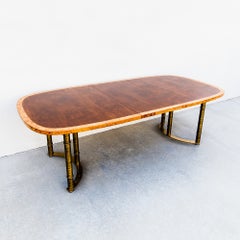
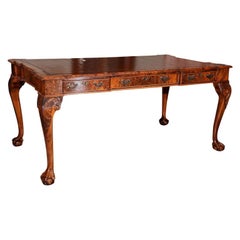
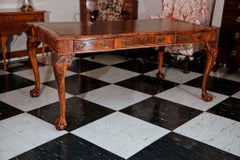
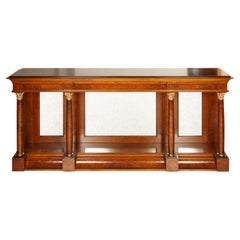
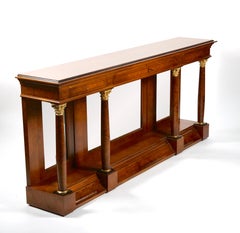
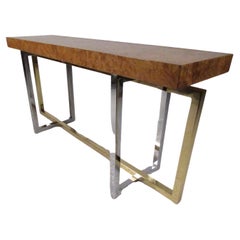
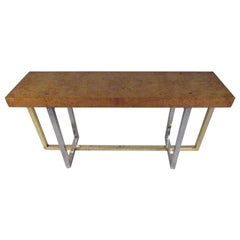
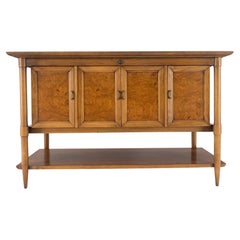
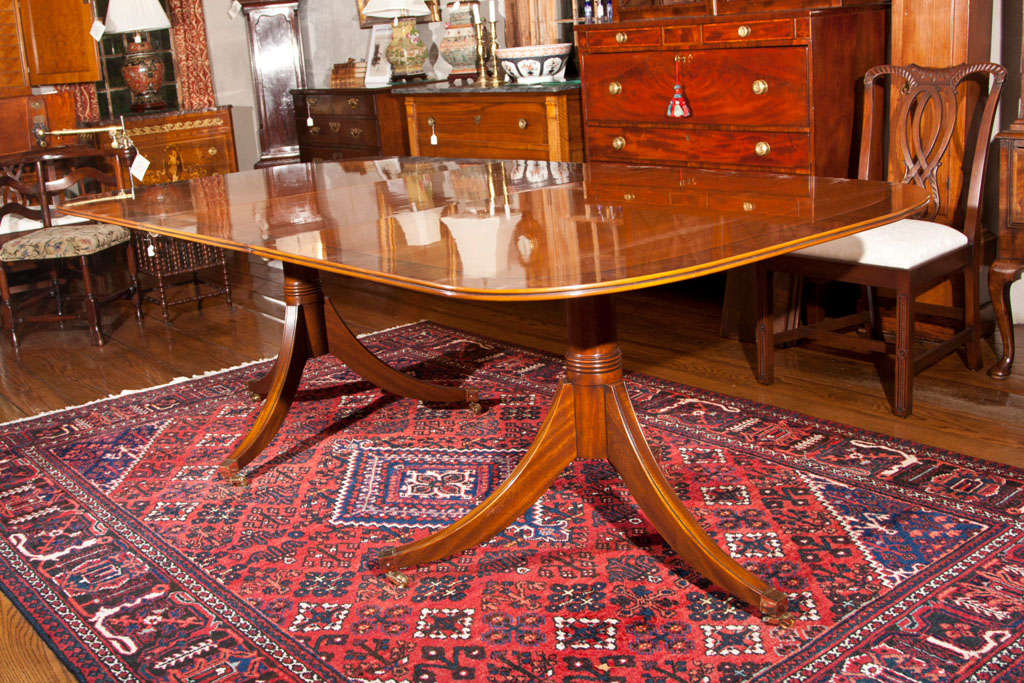
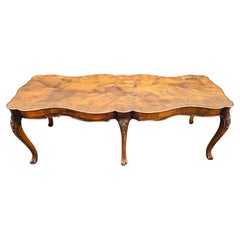
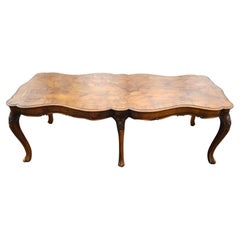
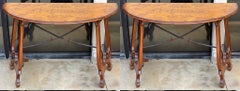
A scarce antique American Renaissance Revival style carved walnut extension table by Seng, Chicago, Illinois. circa 1920/1930
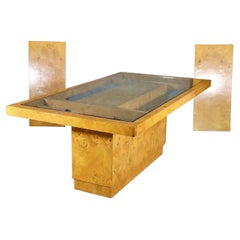
Born in the United States in the early 20th century, featuring a rare and unusual form and extension mechanism. Slightly lift the rectangular top and the slide the mechanical horizontal draw-leaf style extensions to expand the the width of the top, morphing the library table / sofa console into a kitchen table / dining table.
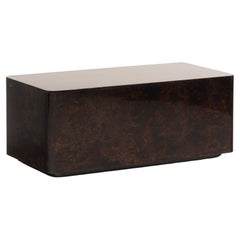
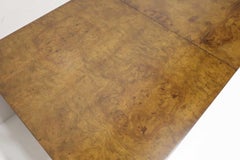
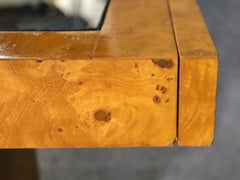
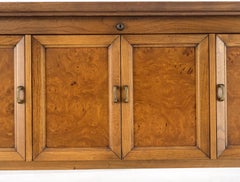
Having a bookmatched burl wood, oak and walnut banded, parquetry inlay top, molded apron with dovetailed frieze drawer, rising on turned urn baluster-form standards, over shaped stretcher joined trestle base with twist ornamentation, resting on bun feet, signed, stamp to frame under top.
Dimensions: (approx)
31" High, 54" Wide, 23.5" Deep
Extended: 37.5" Deep
Provenance / Acquisition:
John Phifer Marrs collection.
Important auction house J. Garrett Auctioneers, Dallas, Texas, May 2021 catalog, presented a special curated collection from John Phifer Marrs, premier Southern interior designer known for an elegant, fresh and inviting design method, often called The New Southern Style...
Category
Early 20th Century American Renaissance Revival Burl Furniture
MaterialsOak, Walnut, Burl